100+ Attractive Rangoli Designs: Create Stunning Art in Minutes
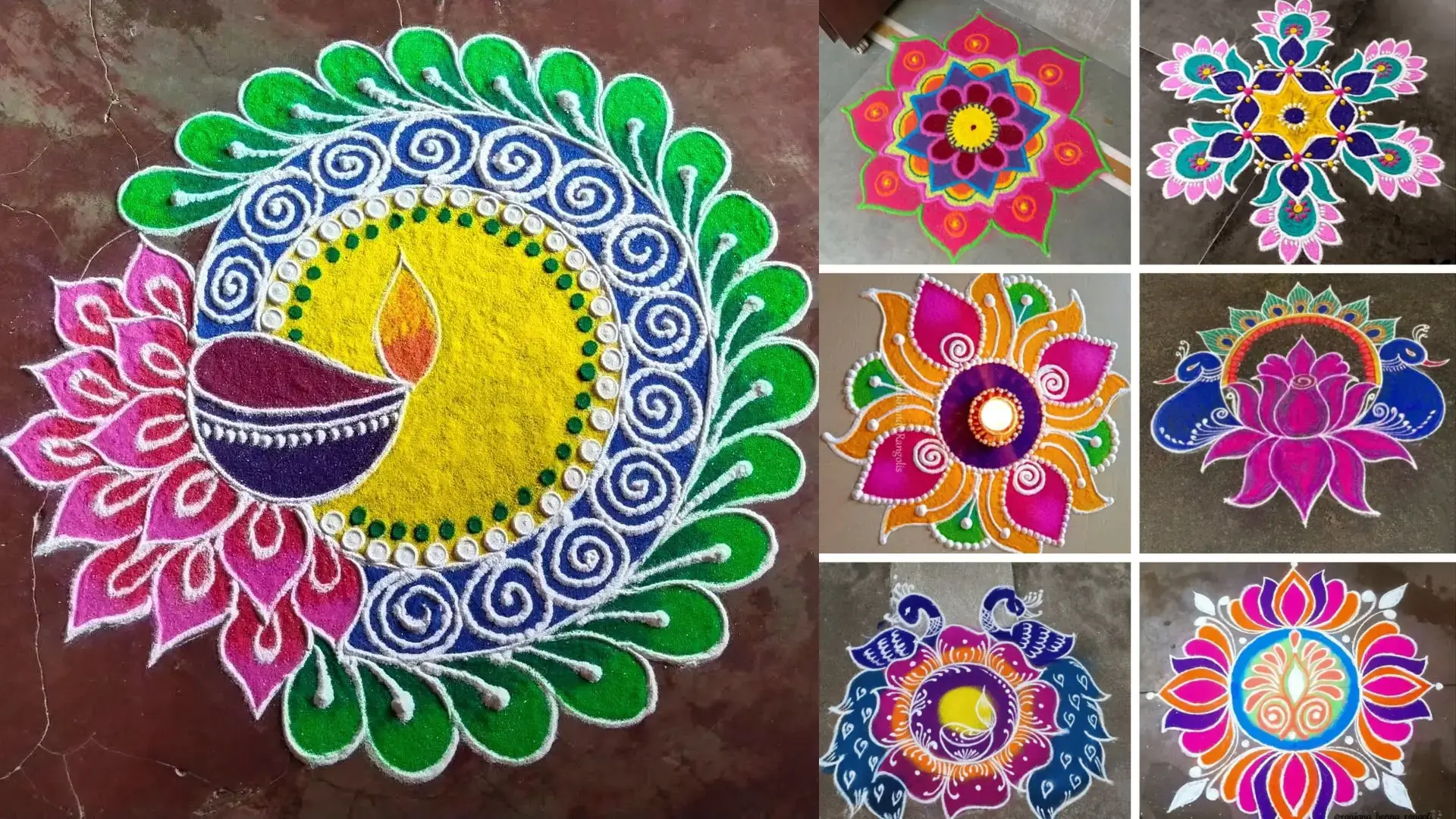
No Indian festival or family function feels complete without a vibrant Rangoli at the doorstep. The moment we look at those beautiful colors and patterns first thing in the morning, our mood instantly lifts, and the whole house fills up with positive vibes.
But have you ever wondered why we actually make them? Is it just for home decoration, or is there a deeper secret behind these traditional patterns?
Whether you want to know the real facts behind this ancient art form or you are just looking for fresh, attractive rangoli design images to copy for your big festival, I have got you covered. Let’s dive straight into it!
What is Rangoli?
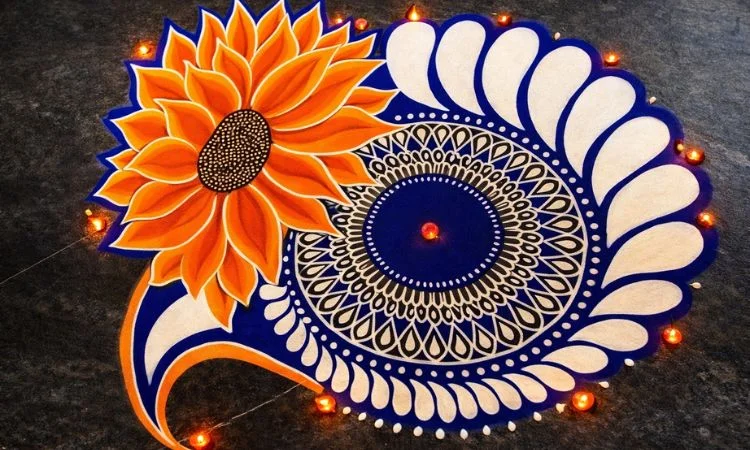
Rangoli is a traditional Indian floor art created using colored powders, rice flour, flower petals, or pulses. The word originates from the Sanskrit ‘Rangavalli’, meaning a row of colors.
- The Legend: According to ancient texts like the Chitra Lakshana, Lord Brahma asked a king to draw a deceased boy’s portrait on the floor using dust. Brahma breathed life into the drawing, making it the first-ever floor art meant to welcome life and divinity.
- The Science: Traditional Rangoli uses coarse rice powder. This acts as Bhuta Yajna – a daily practice of feeding ants, insects, and birds.
- The Energy Filter: The symmetrical, geometric shapes of Rangoli act as a spiritual ‘Yantra’. It is believed these precise lines trap negative energy at the doorstep, keeping your home pure.
Regional Names Across India:
- Tamil Nadu: Kolam (geometric lines made with dry rice powder)
- Bengal: Alpana (liquid rice paste designs)
- Rajasthan: Mandana (chalk and red clay art)
- Andhra Pradesh: Muggulu (dot-based patterns)
The Importance of Rangoli in Indian Festivals
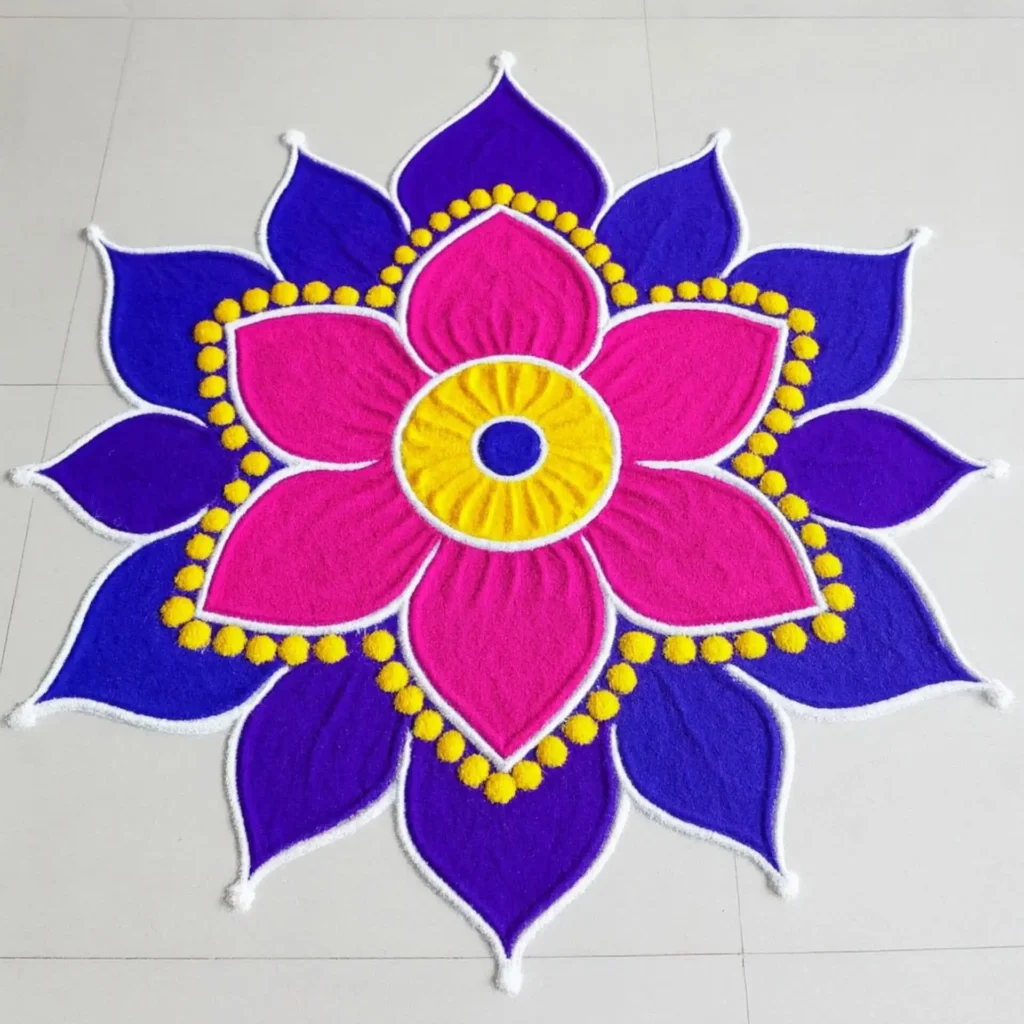
A festival entry feels incomplete without a vibrant Rangoli. It serves as the ultimate visual marker that a celebration has begun.
- Inviting Prosperity: The main doorstep is the gateway for energy. A festive Rangoli acts as a direct invitation to Goddess Lakshmi to enter and bless the home with wealth.
- Psychological Impact: Bright festive colors like turmeric yellow, vermilion red, and indigo blue instantly boost environmental energy and lift the mood of guests.
- Family Bond: It serves as a shared family activity, passing traditional design skills down from older generations to kids.
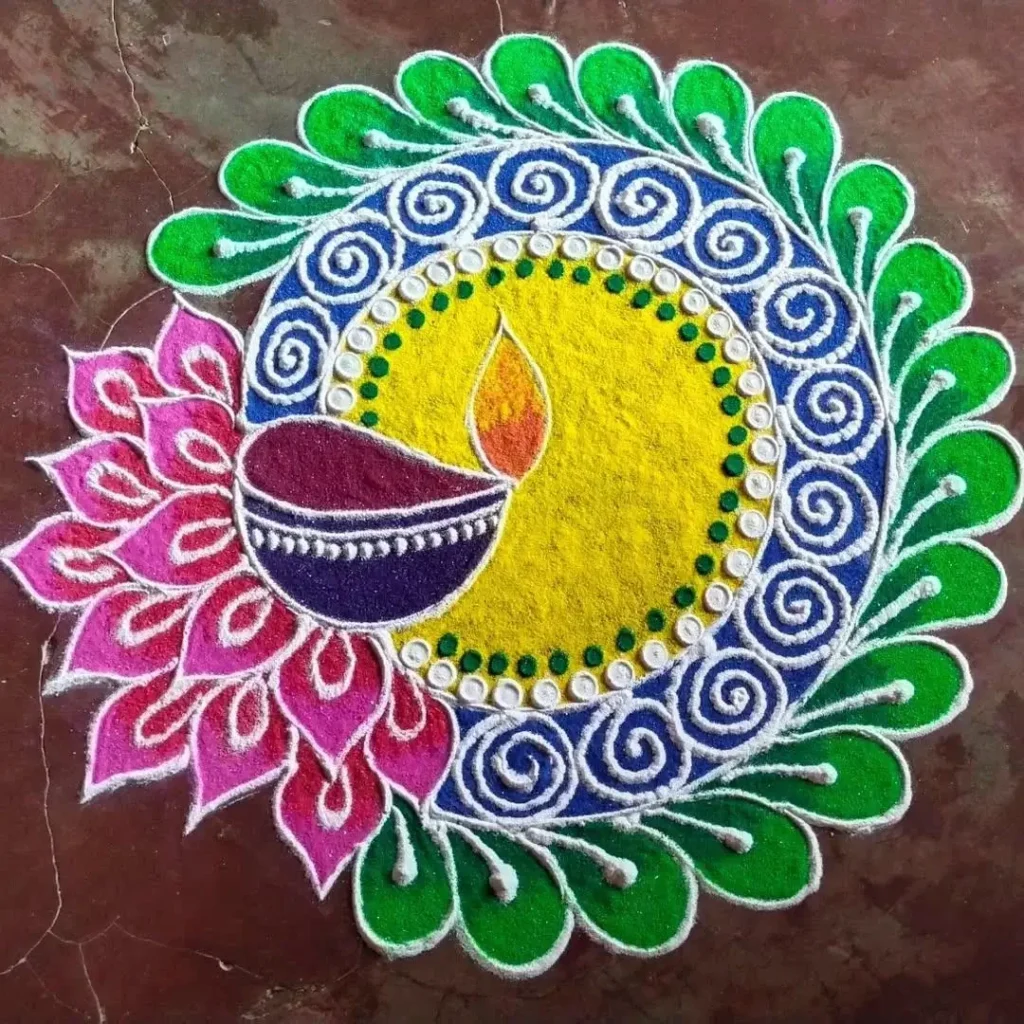
Simple & Easy Rangoli Designs
Not everyone has hours to spend creating a massive floor masterpiece. Most of the time, especially during busy mornings or unexpected guest visits, you just need something quick, clean, and beautiful that takes less than 15 minutes.
These rangoli designs are all about those effortless, stress-free designs that look stunning without requiring any professional skills.
Simple Rangoli Designs for Home
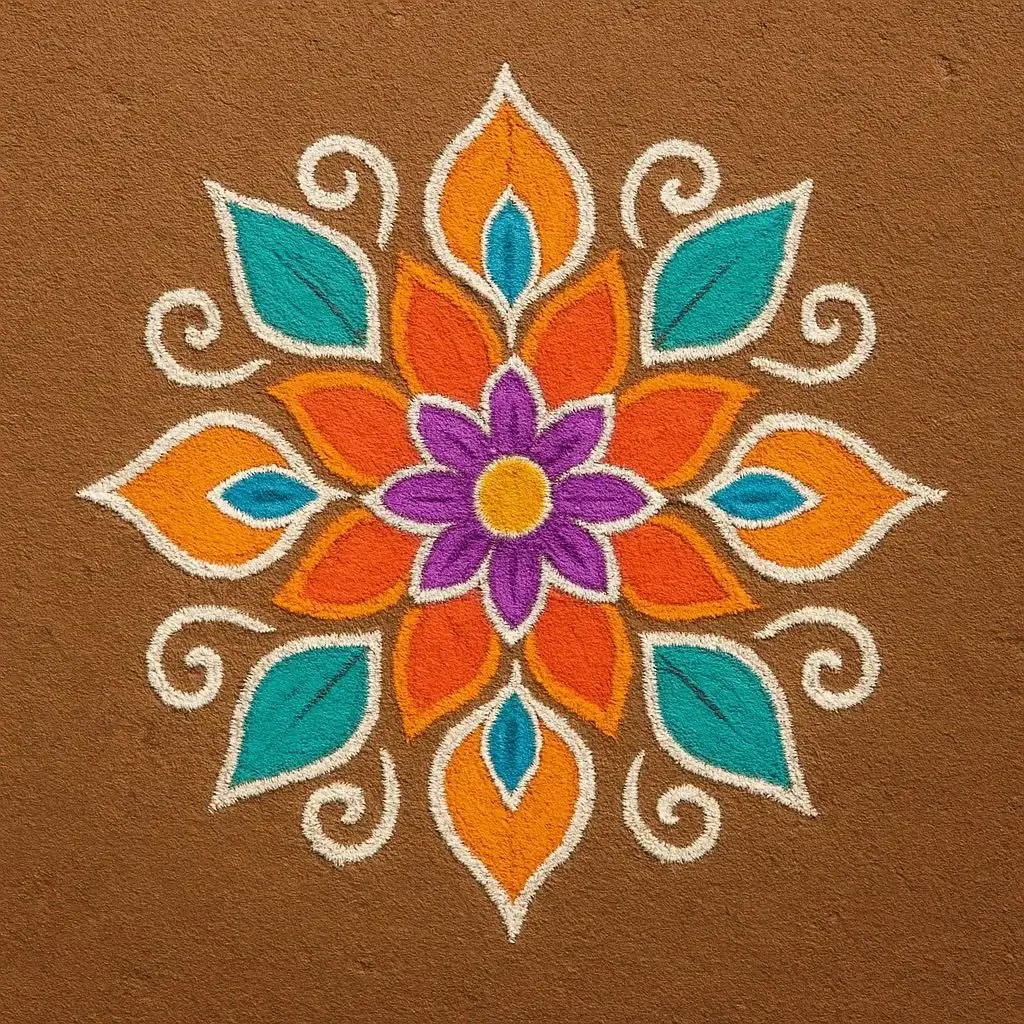
You don’t need bright, dramatic colors for your daily home decor. A simple 4-petal flower or a basic border near your main door or home temple is perfect. These designs keep your walking path clear while instantly shifting your home’s daily energy from mundane to welcoming.
Quick Tip: Use a combination of just turmeric yellow and vermilion red for a classic, auspicious look in less than 5 minutes.
Easy Rangoli Designs for Beginners
If your hands shake while handling powder and your circles turn into messy ovals, don’t worry, we have all been there. The secret trick for beginners is using household tools instead of relying solely on your fingers.
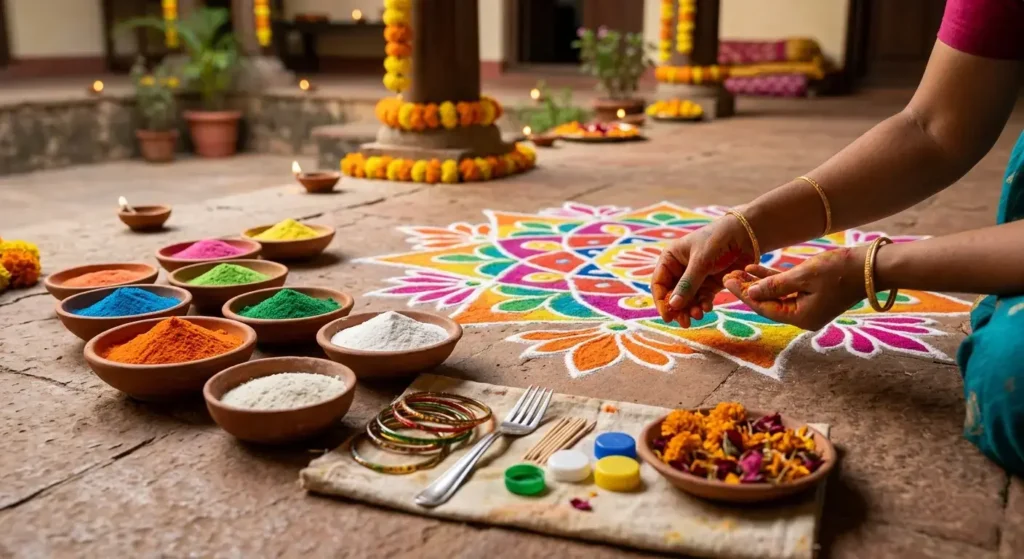
The Hacks: Grab a bangle to trace a perfect circle, use a kitchen fork to scratch neat lines, or press a plastic bottle cap to stamp out clean round dots. Drop a few color blocks, stretch them out with a toothpick, and your art is ready.
Easy Rangoli Designs for Kids
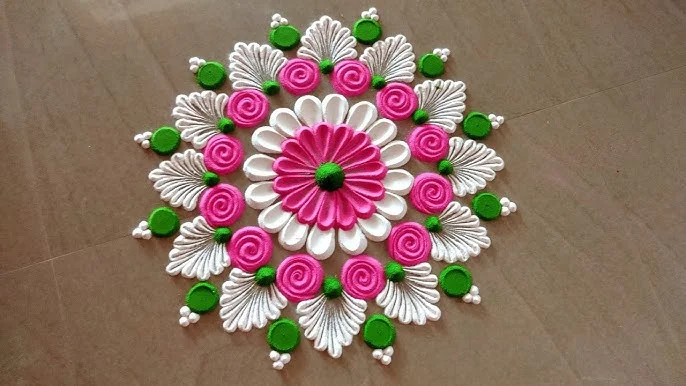
Getting kids involved in making Rangoli is a great way to connect them with Indian traditions. For children, the design needs to be engaging and less messy.
The Trick: Stick to basic shapes like a smiling sun, an easy star, or a simple geometric triangle. Instead of fine loose powder, which they might spill everywhere, let them fill the outlines using chunky flower petals or thick, colorful chalks.
Free Hand Simple Rangoli Designs
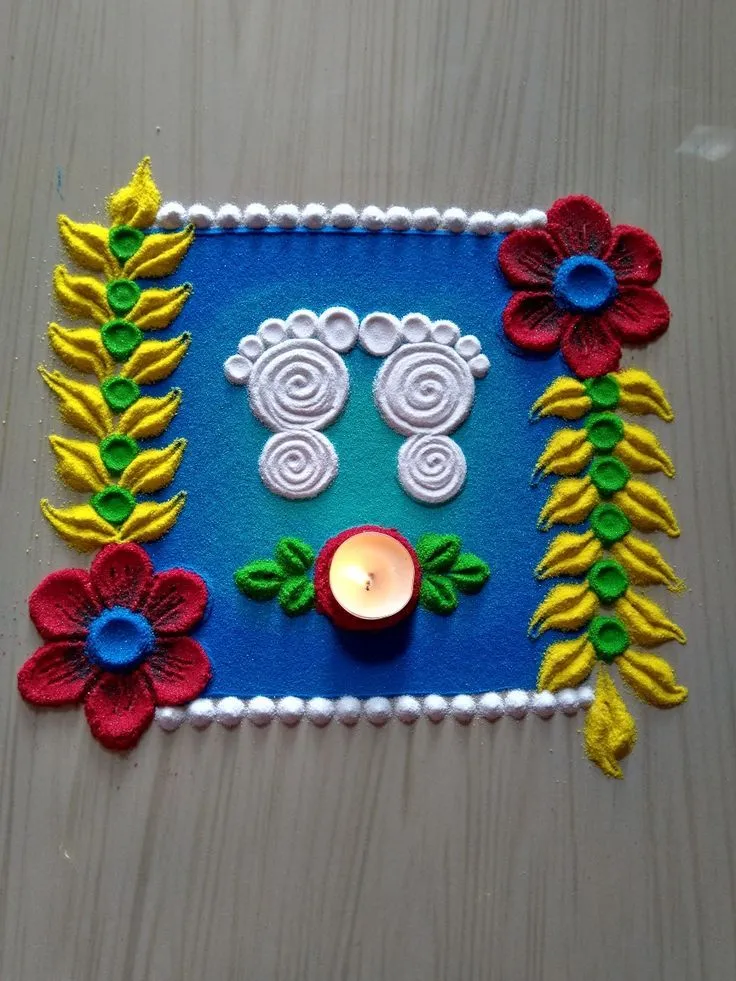
Freehand means freedom from strict grids and counting dots. If you hate calculating dot structures, freehand is your best friend.
How to Start: Start from a central point and let your fingers glide outward to create organic shapes like wavy lines, mango leaves (Kalka), or simple heart patterns. Even if one side turns out slightly asymmetrical, the flowing nature of freehand art makes it look intentional and gorgeous.
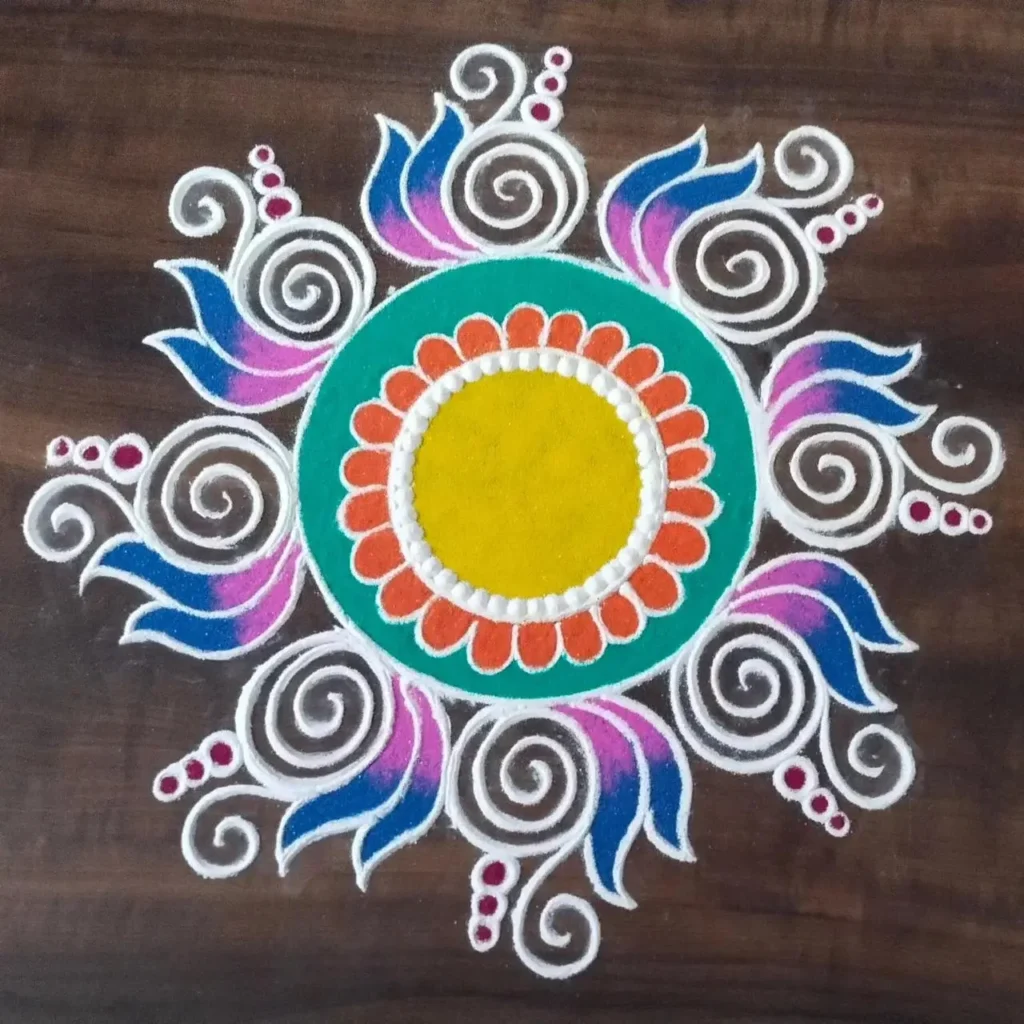
Small Rangoli Design
What if you live in an apartment with a tight corridor or a tiny doorstep? A massive circular design is out of the question. Small Rangoli designs focus entirely on space optimization.
Where to place: Utilize the corners of your entryway or create a sleek horizontal border along the wall. A tiny pair of Goddess Lakshmi’s feet (Charan Paduka) or a miniature 3-inch lotus motif is all it takes to bring positive vibes into a compact space.
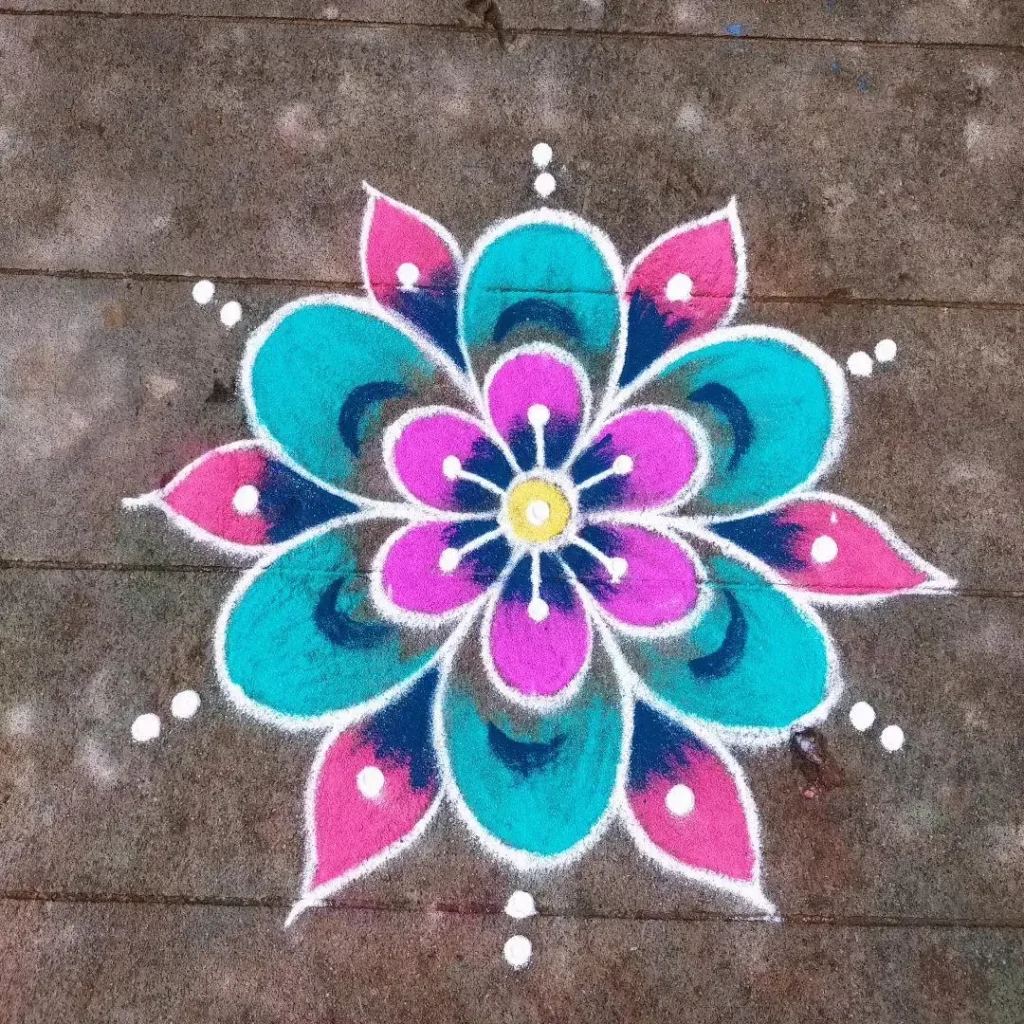
Diwali Special Rangoli Designs
Diwali is the grand king of all festivals, and your doorstep needs to reflect that festive energy. Instead of making the same generic pattern every day, you can match your Rangoli to the specific spiritual theme of each day of the 5-day celebration.
Here is your day-by-day design roadmap for Diwali, including the exact elements you should add to make them authentic.
Rangoli Design for Diwali
This is your main festive design. It needs to be bright, welcoming, and grand. When people look at your house on the main festival night, this design should stand out immediately.
Key Elements: Use a mix of heavy, vibrant colors (deep pink, teal, violet) and frame the outer border with real marigold flowers.
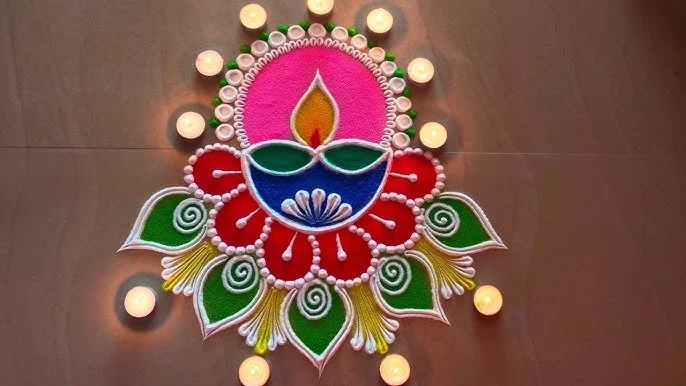
Dhanteras Rangoli
Dhanteras marks the arrival of wealth, prosperity, and Lord Dhanvantari (the deity of health). The art on this day should directly symbolize abundance.
Key Elements: Keep the design centered around wealth icons. Draw small footprints entering your home to invite prosperity.
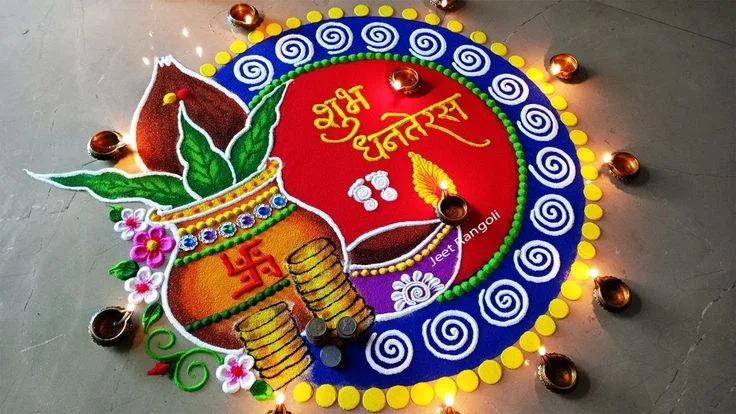
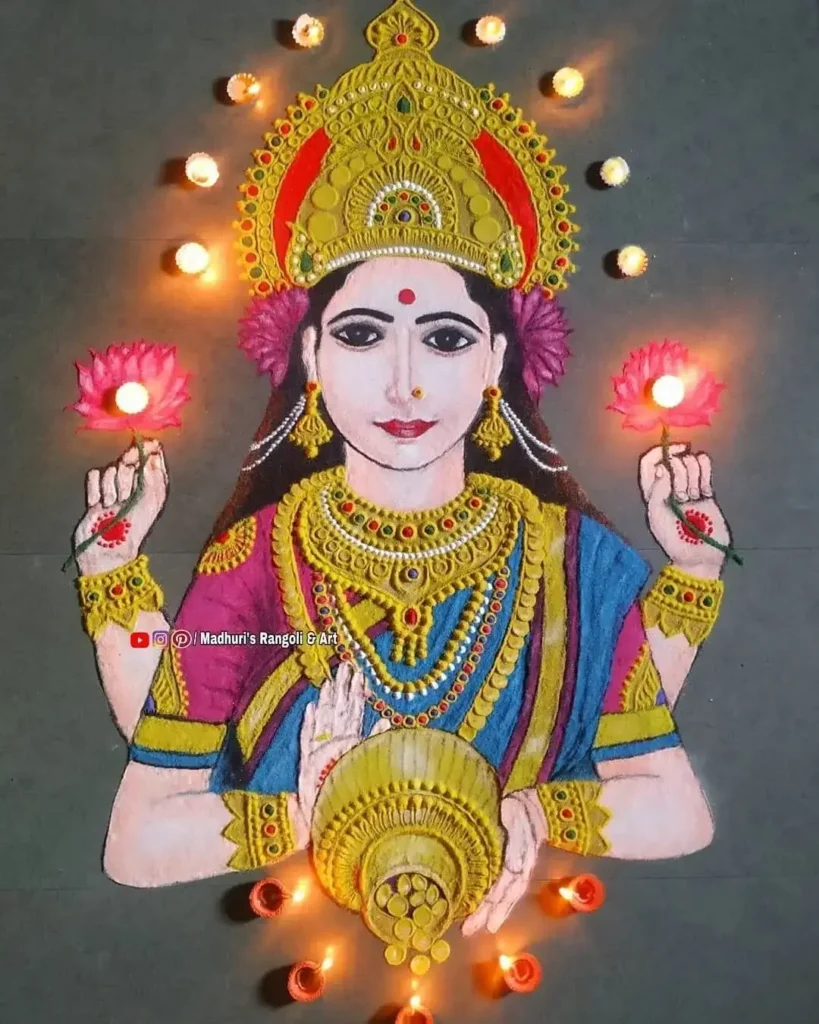
Laxmi Mata Rangoli Designs for Diwali
This design is dedicated completely to Goddess Lakshmi. It is usually placed right in front of your home temple or at the main entrance where the deity enters.
Key Elements: A central pink lotus motif is mandatory here, as it is the favorite seat of Goddess Lakshmi. Frame it with elegant white borders.
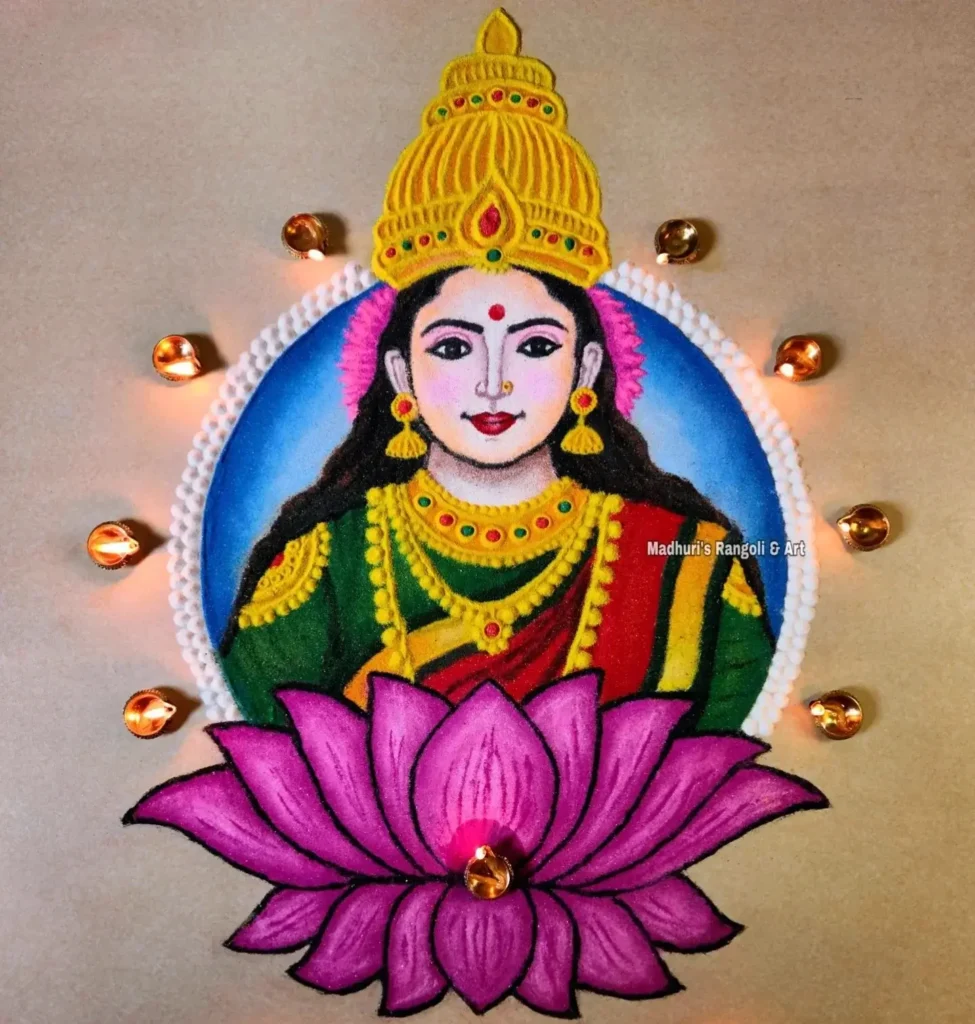
Laxmi Pujan Rangoli
Made specifically on the evening of Diwali during the main muhurat of the puja. This design is highly sacred and acts as the focal point of your evening prayers.
Key Elements: Integrate a holy Swastik or Om symbol right in the center. Surround the pattern with exactly 5 or 11 lit clay diyas to radiate positive energy.
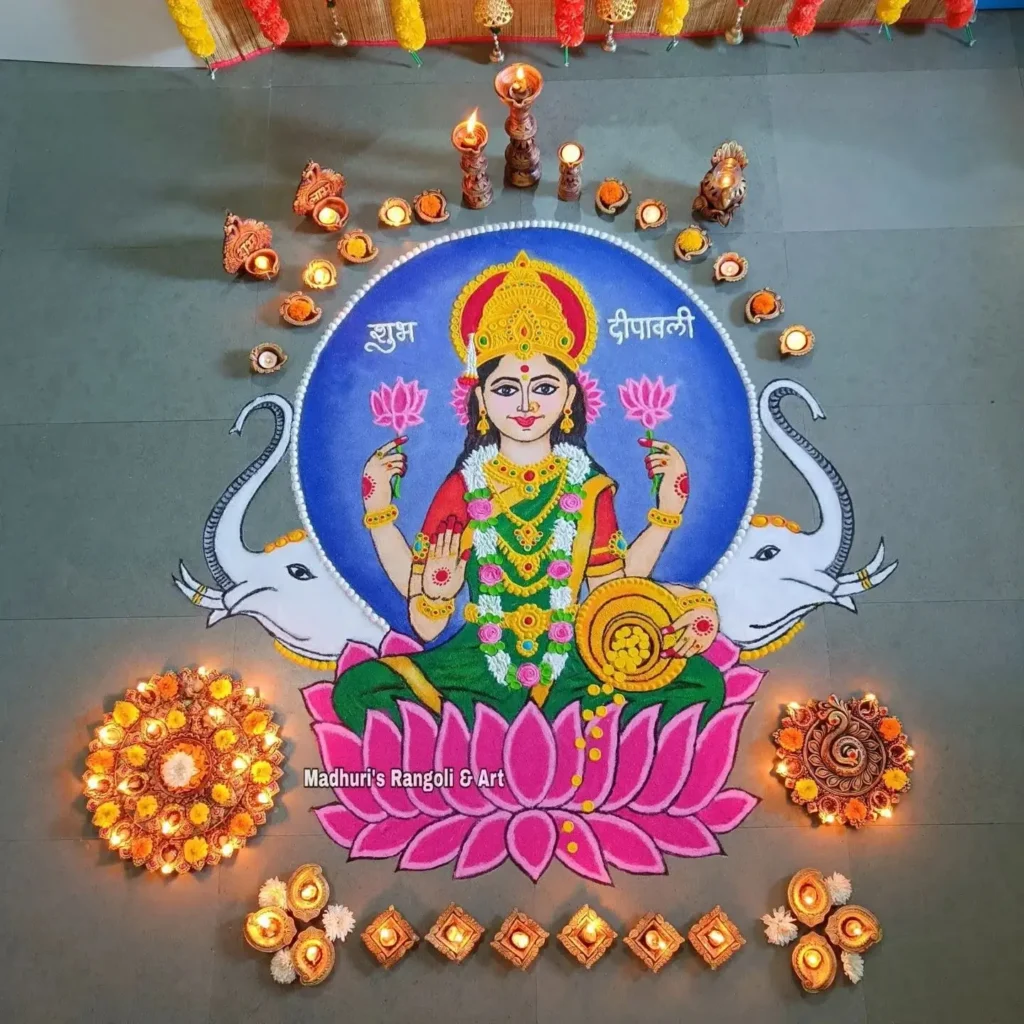
Kalash Dhanteras Rangoli
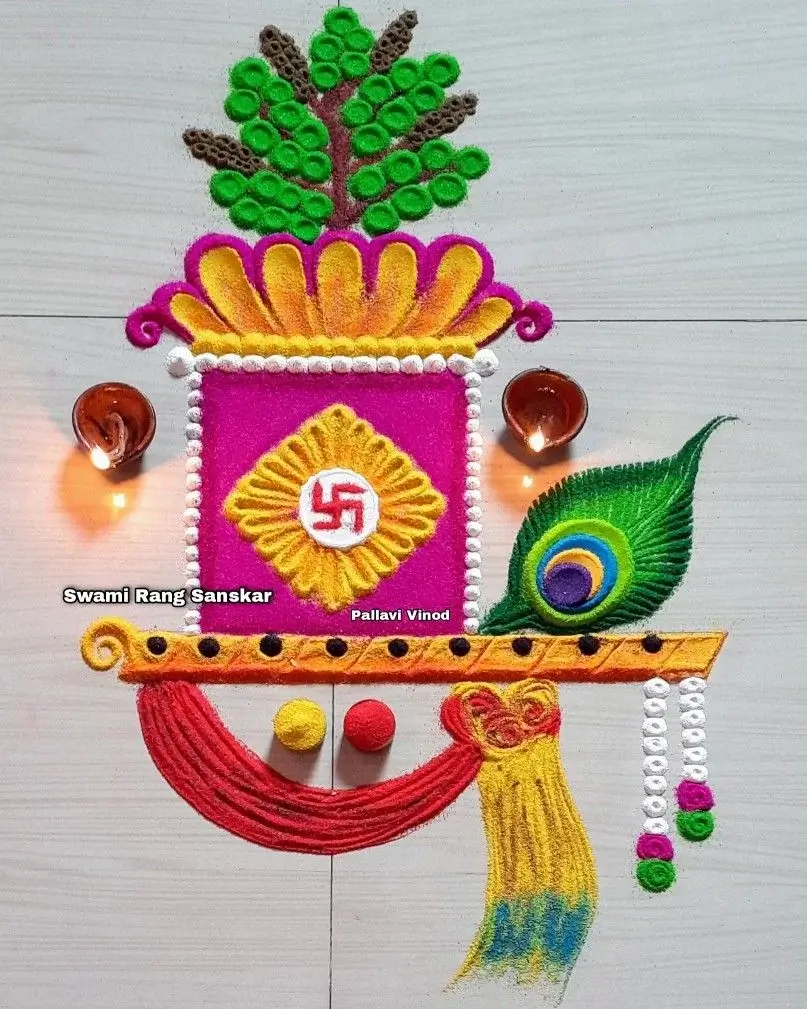
The Mangal Kalash represents divine energy, health, and a fulfilled life. Combining a Kalash with your Dhanteras pattern makes it deeply traditional.
Key Elements: Draw a beautiful urn (Kalash) filled with water, topped with coconut and mango leaves (Amra Pallav). Use metallic gold or bright yellow powder for the pot.
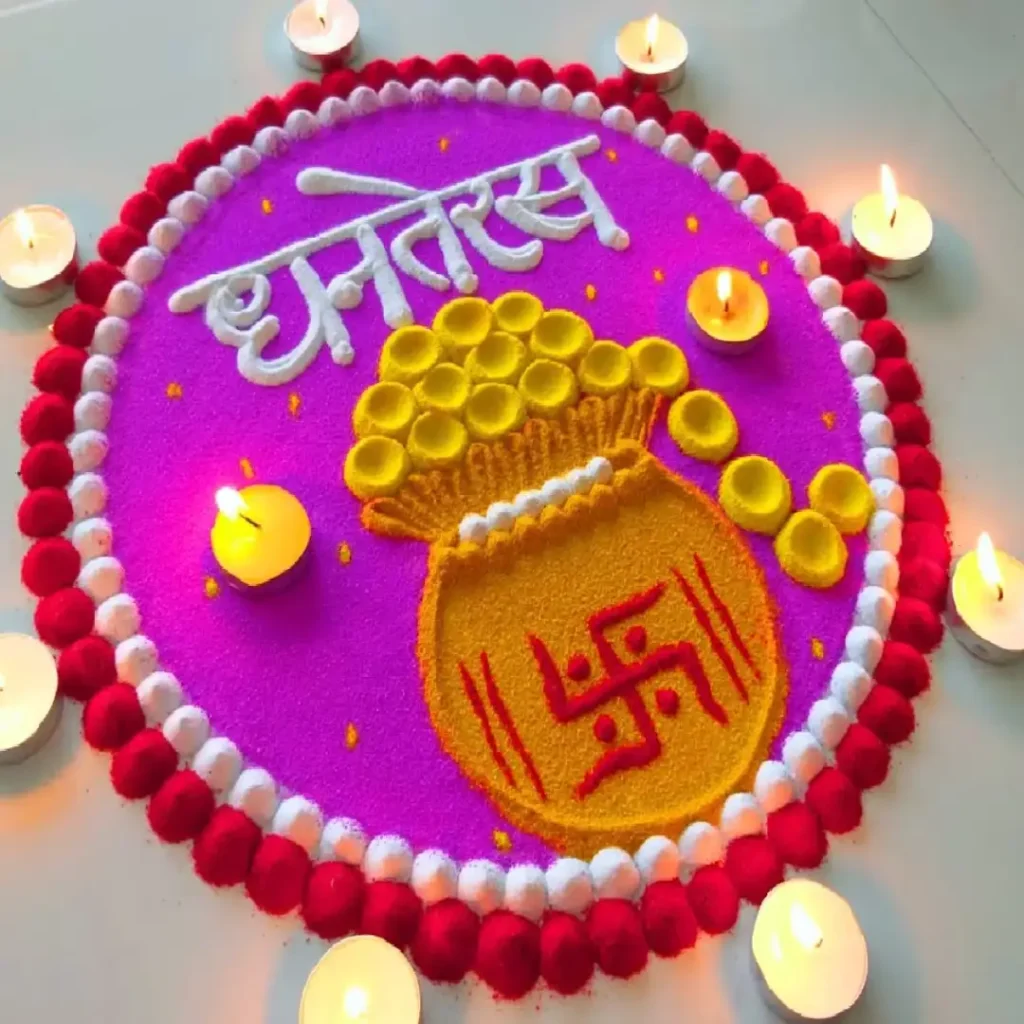
Narak Chaturdashi Rangoli
Also known as Choti Diwali, this day celebrates the victory of Lord Krishna over the demon Narakasura, erasing darkness and laziness from our lives.
Key Elements: Keep this design light and circular. Use geometric rings of bright orange and white to symbolize the rising morning sun, marking the destruction of darkness.
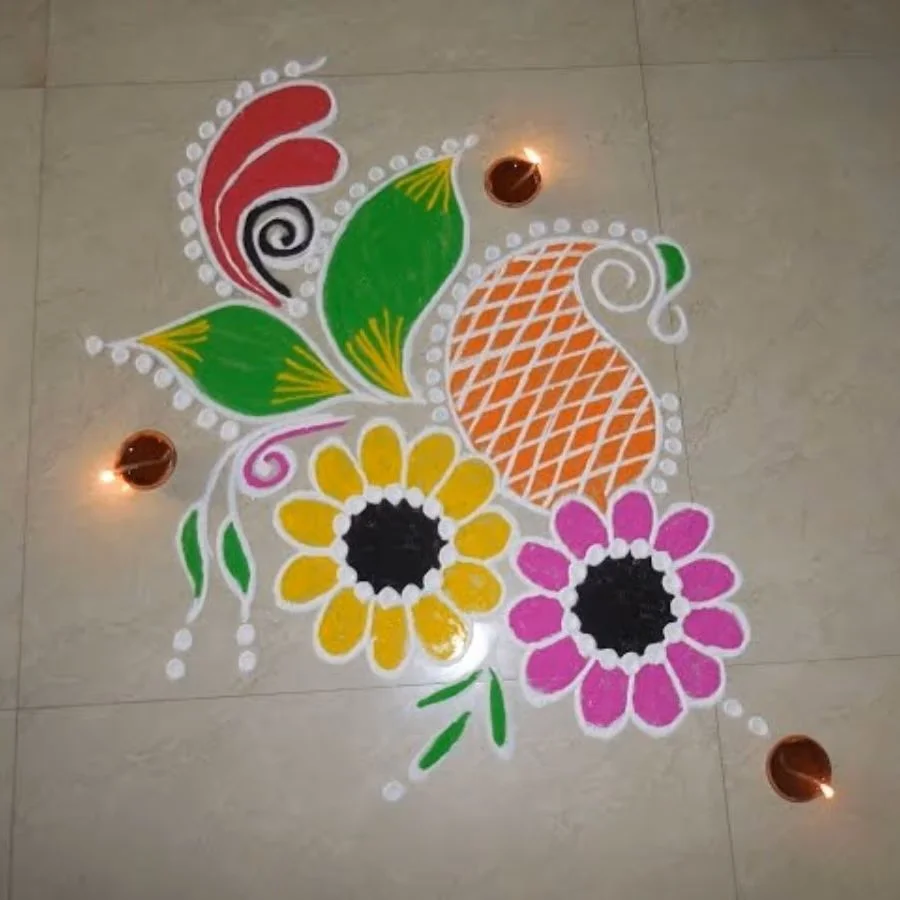
Kali Chaudas Rangoli
Celebrated predominantly in Western India, this night is dedicated to Goddess Kali or Lord Hanuman to ward off evil energies and negative thoughts.
Key Elements: Use strong, protective geometric patterns. Borders made with white and dark blue/indigo powders work beautifully to represent strength and protection.
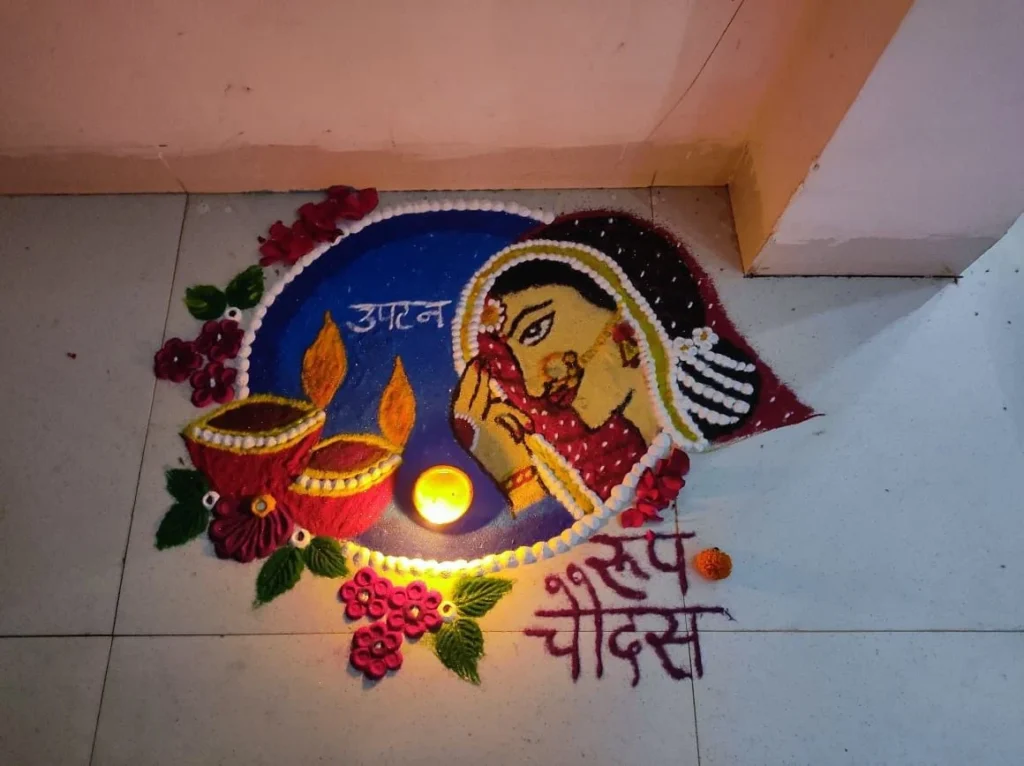
Roop Chaudas Rangoli
This day focuses on physical and spiritual purification, health, and radiant beauty. It is the morning when traditional Ubtan (herbal paste) is used for a holy bath.
Key Elements: Use soft, elegant floral patterns. Incorporate shades of rose pink, soft green, and turmeric yellow to mimic the fresh, glowing vibe of the day.
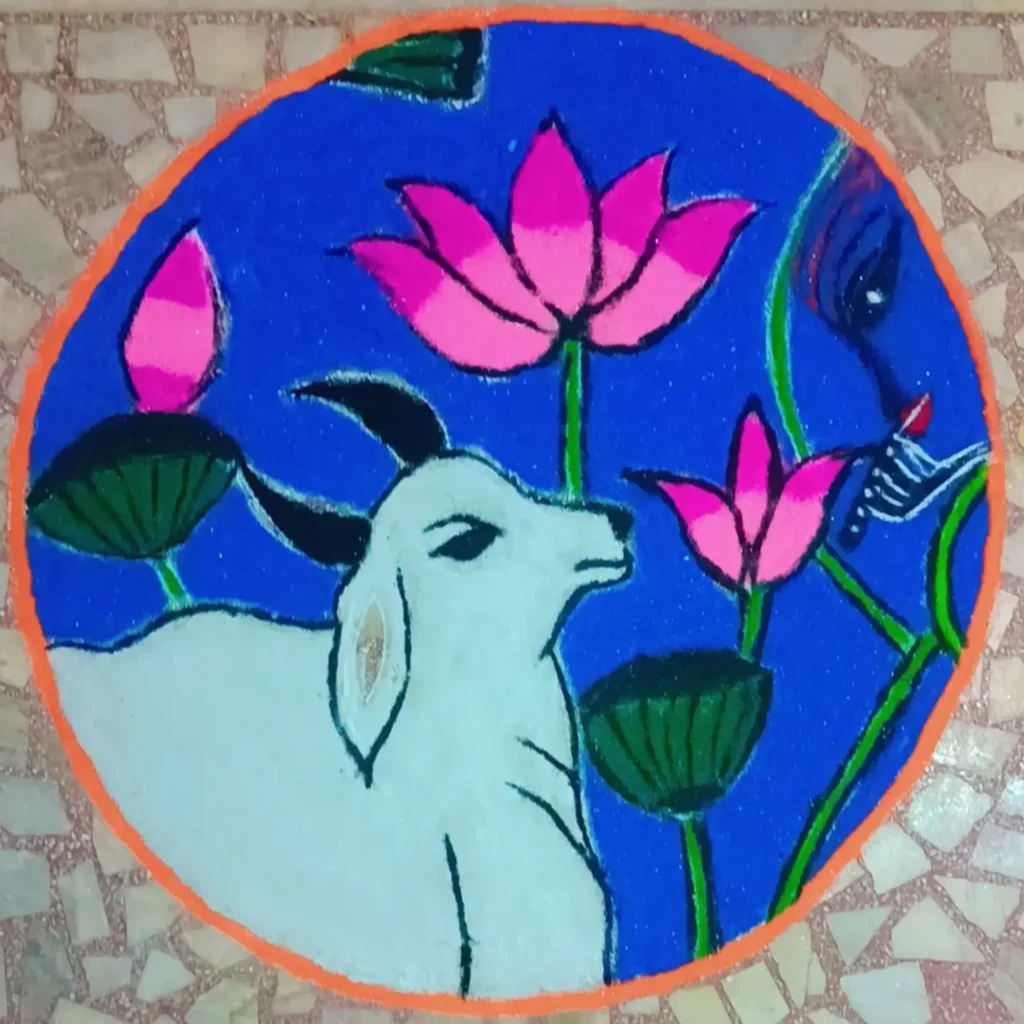
Govardhan Puja Rangoli
This day celebrates Lord Krishna lifting the massive Govardhan Mountain on his little finger to protect his villagers from torrential rains.
Key Elements: Draw a stylized hill structure or a beautiful mountain silhouette. Add a small flute (Bansuri) or a peacock feather (Mor Pankh) on top to represent Krishna.
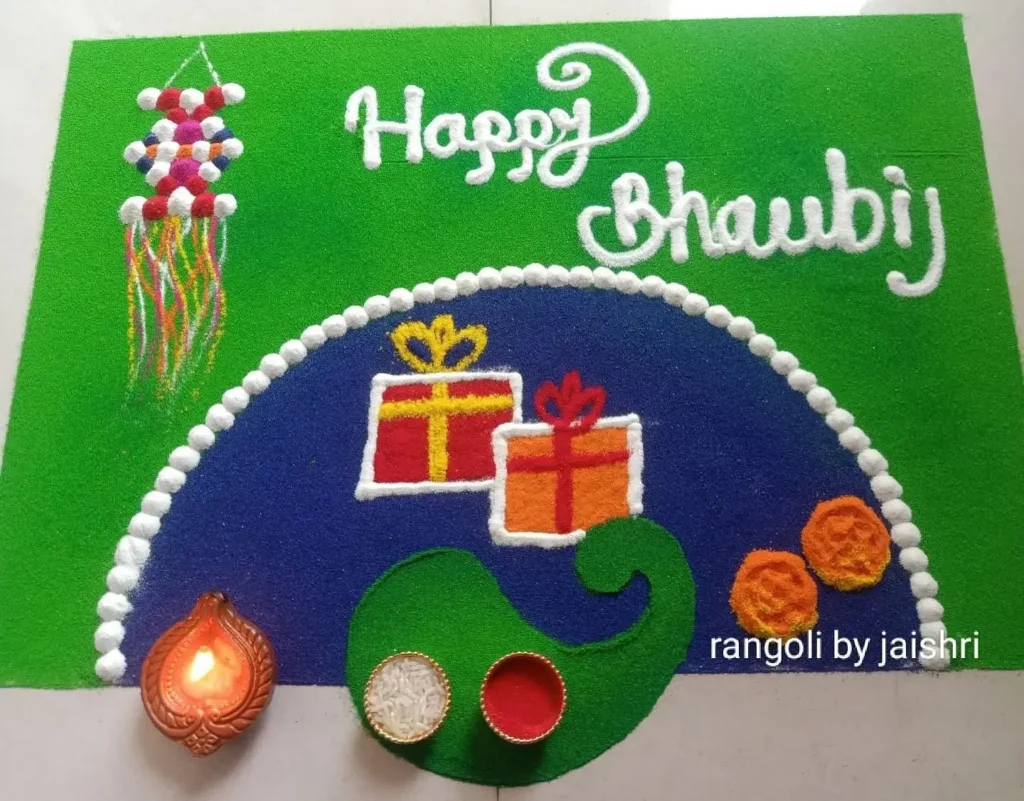
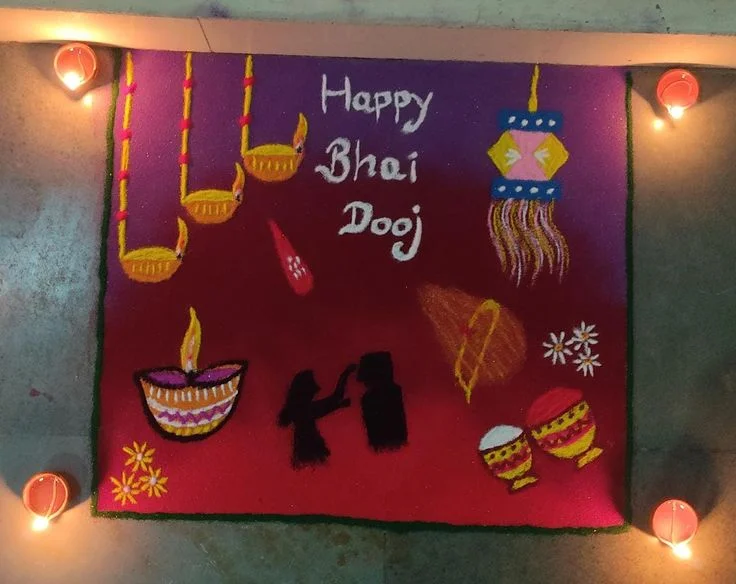
Bhaubij Rangoli
The final day of the long festival celebrates the pure bond of love and protection between a brother and a sister.
Key Elements: Draw a simple, warm design featuring a traditional prayer thali (Aarti Thali) with a Tilak pattern and a sweet (Mithai) sketch in the center.
Beautiful Diya Rangoli
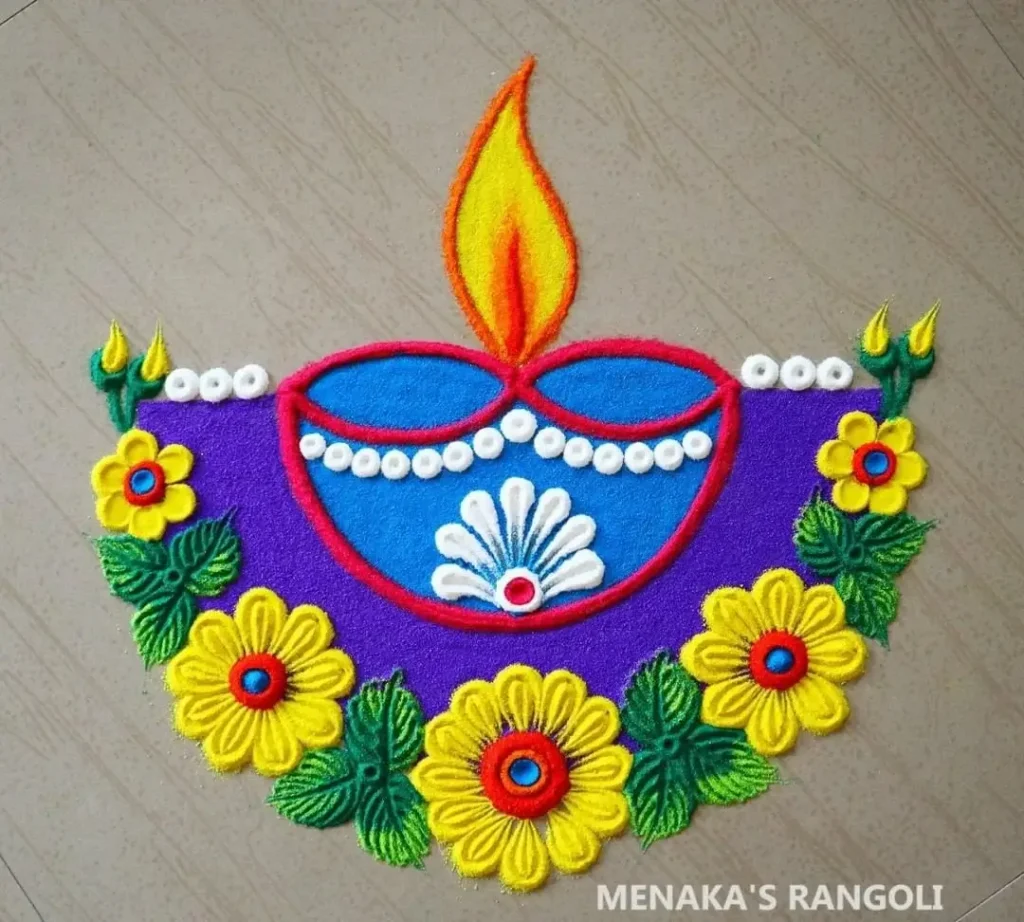
If you run out of colors or time during the hectic five days, a Diya-centric design is your ultimate savior. It is timeless and never goes out of style.
Key Elements: The entire structural shape of the Rangoli is a giant oil lamp. Fill the inner body with vibrant orange or red, and use bright yellow at the tip to create a realistic burning flame effect.
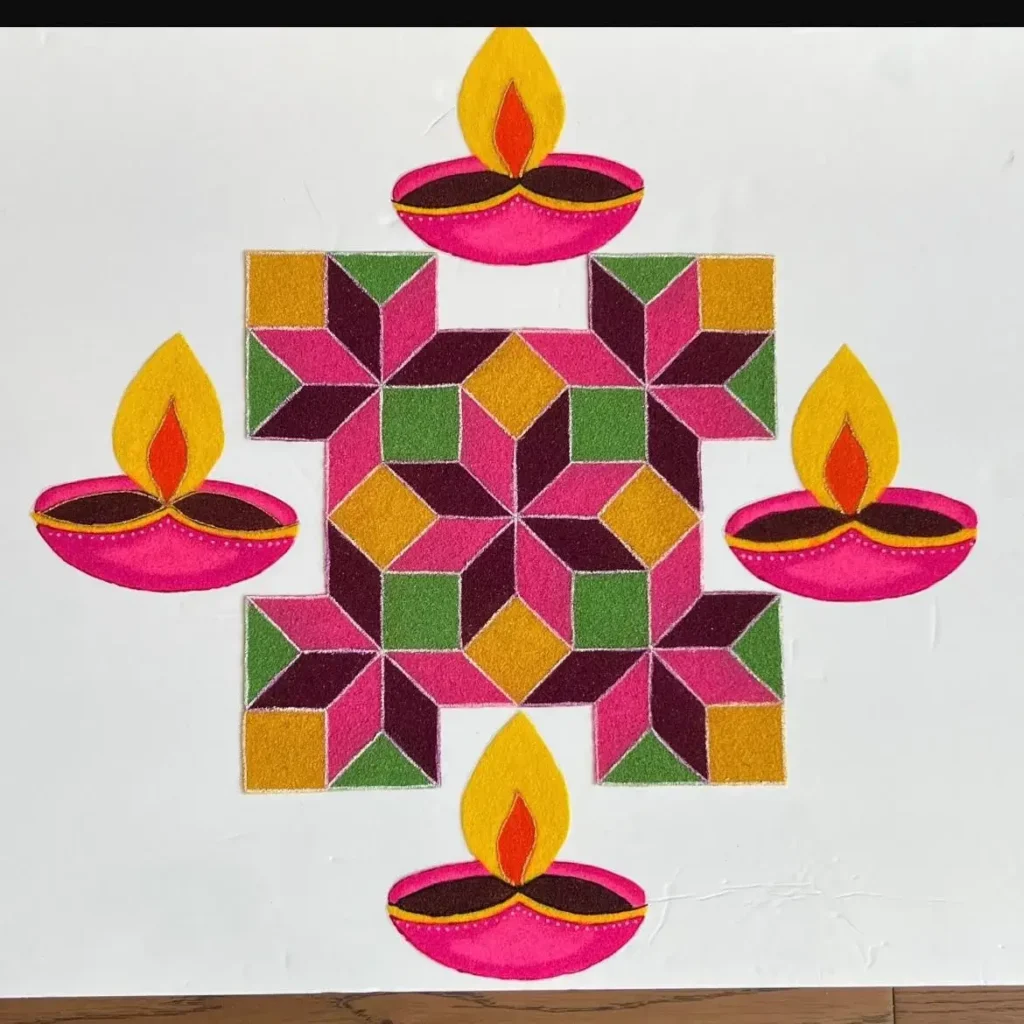
Deepavali Rangoli
Deepavali literally translates to a “row of lights.” This design uses the physical contrast of dark floor spaces and bright light structures.
Key Elements: Create a clean, linear horizontal layout along your entire corridor or balcony. Line up small, identical geometric squares and place a physical, lit diya inside every single block.
Flower & Nature Rangoli Designs
If you dislike dealing with messy, colored powders that stick to your fingers or blow away with the wind, nature has the perfect solution. Flower-based designs – traditionally known as Pookalam or Fulanchi Rangoli are eco-friendly, fast to assemble, and fill your entire house with a refreshing natural fragrance.
Here is how you can use fresh petals and leaves to create beautiful, organic floor art.
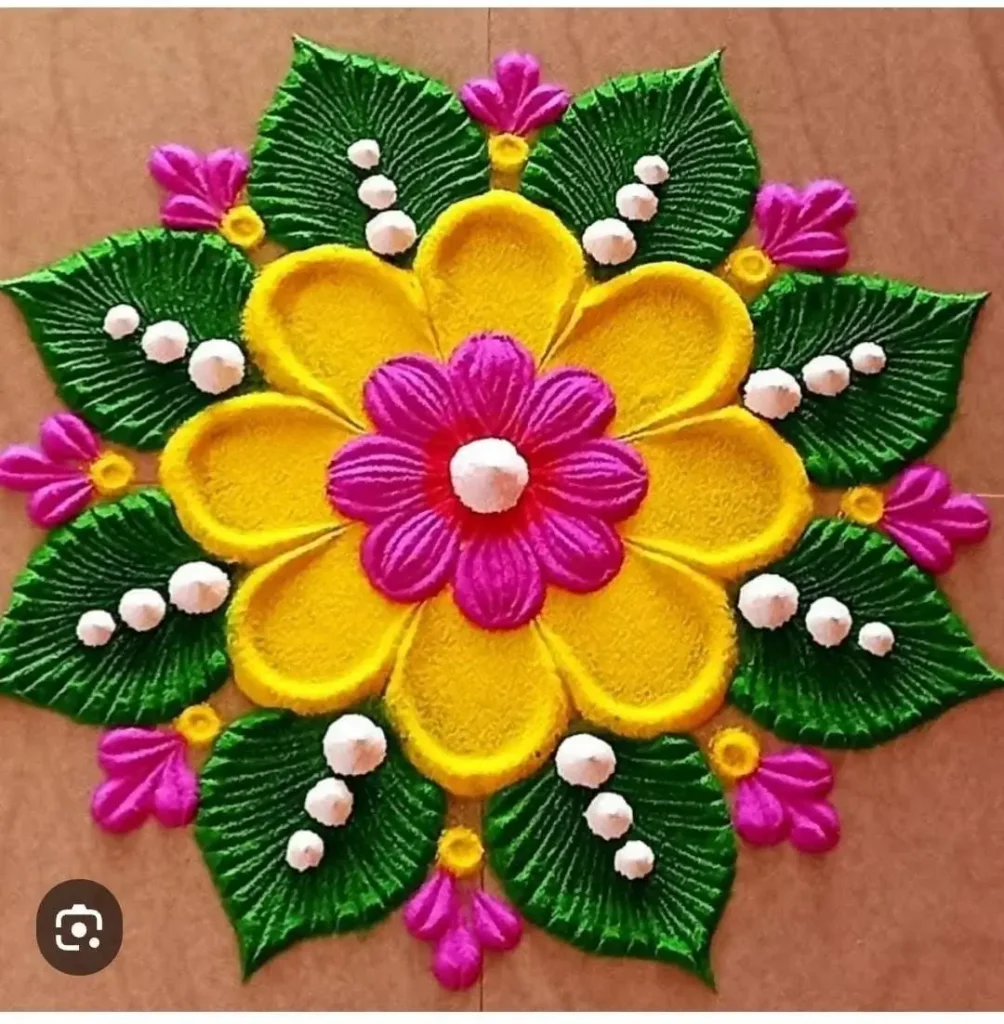
Flower Rangoli
A classic flower Rangoli relies entirely on color contrast and texture. Instead of using whole flowers, shredding them into individual petals gives you clean lines and a smooth, carpet-like finish.
Color Hack: Use bright yellow and orange marigolds (Genda Phool) for the base blocks, deep red rose petals for contrast, and white jasmine (Mogra) or chrysanthemum petals to create sharp highlights.
Flower Rangoli Design for Door
The main entrance door needs a design that welcomes guests without blocking their walking path. A massive circular flower design will just get stepped on and ruined.
The Setup: Create sleek, semi-circular crescent shapes right under the door frame, or build two identical square flower pillars on the left and right corners of the doorstep. This keeps the walkway free while making the entrance look grand.
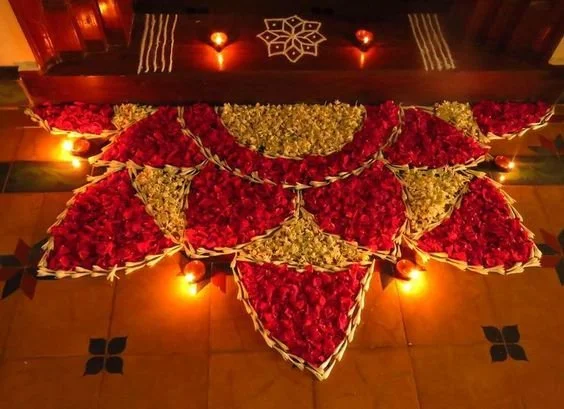
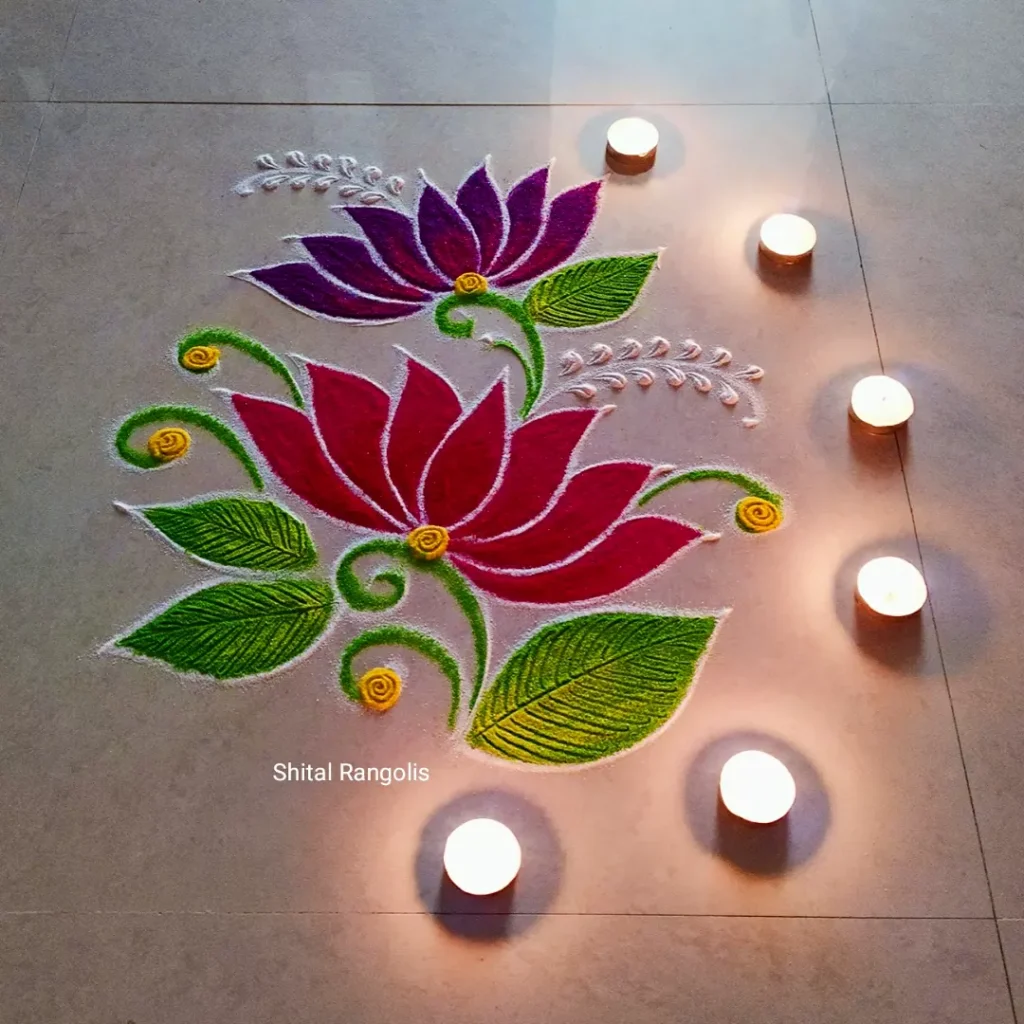
Lotus Rangoli
The lotus (Kamal) is the ultimate symbol of purity, prosperity, and divinity in Indian culture. It is also the favorite seat of Goddess Lakshmi and Lord Ganesha, making it perfect for auspicious days.
How to Make It: Sketch a simple outline of a blooming lotus with white powder or chalk first. Fill the inner petals with pink or red rose petals, and use fresh green leaves or grass clippings to fill the outer leaves and stem.
Easy Rangoli with Flowers and Leaves
You don’t need a huge budget or boxes of expensive flowers to make a great design. You can easily elevate cheap or limited flower petals by mixing them with free green leaves from your garden.
The Arrangement: Alternate between a layer of bright orange marigold petals and a layer of whole green Ashoka or mango leaves arranged in a circular star pattern. The deep green instantly makes the orange and yellow pop beautifully.
Fulanchi Rangoli
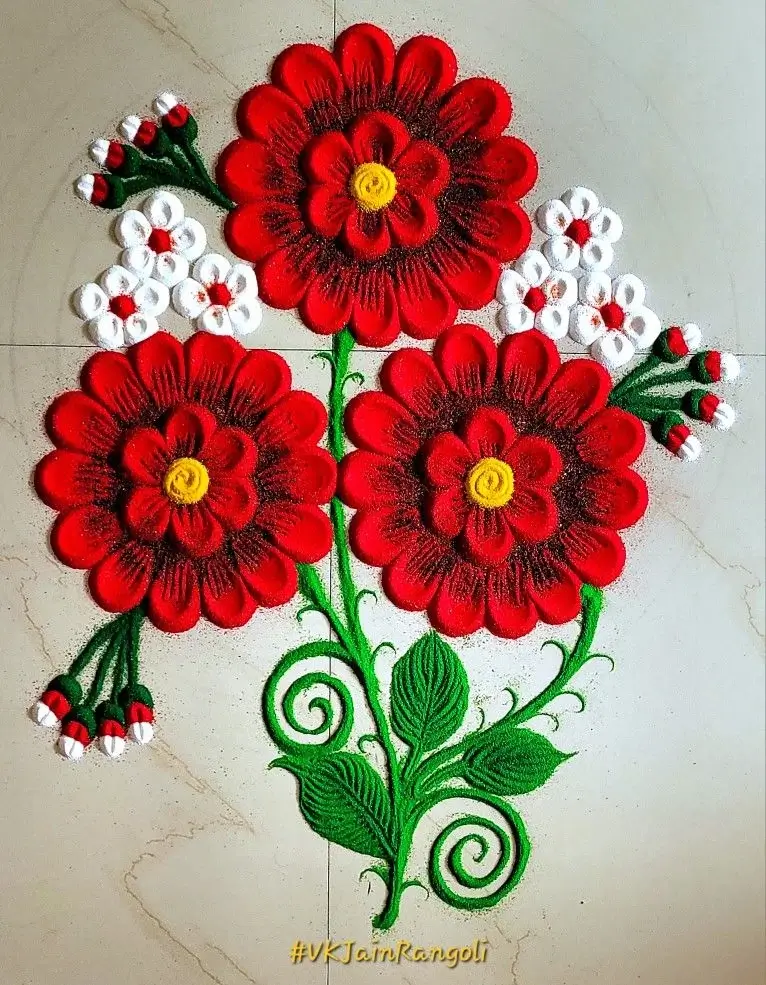
In Maharashtra, flower rangolis are fondly called Fulanchi Rangoli. These are heavily featured during Gudi Padwa, Ganpati festival, and local weddings, focusing on traditional symmetry.
Key Elements: These designs typically feature a central oil lamp (Samai) surrounded by neat concentric circles of marigolds, roses, and green leaves. The heavy use of orange and yellow symbolizes sunshine and positive beginnings.
Shape-Based Rangoli Designs
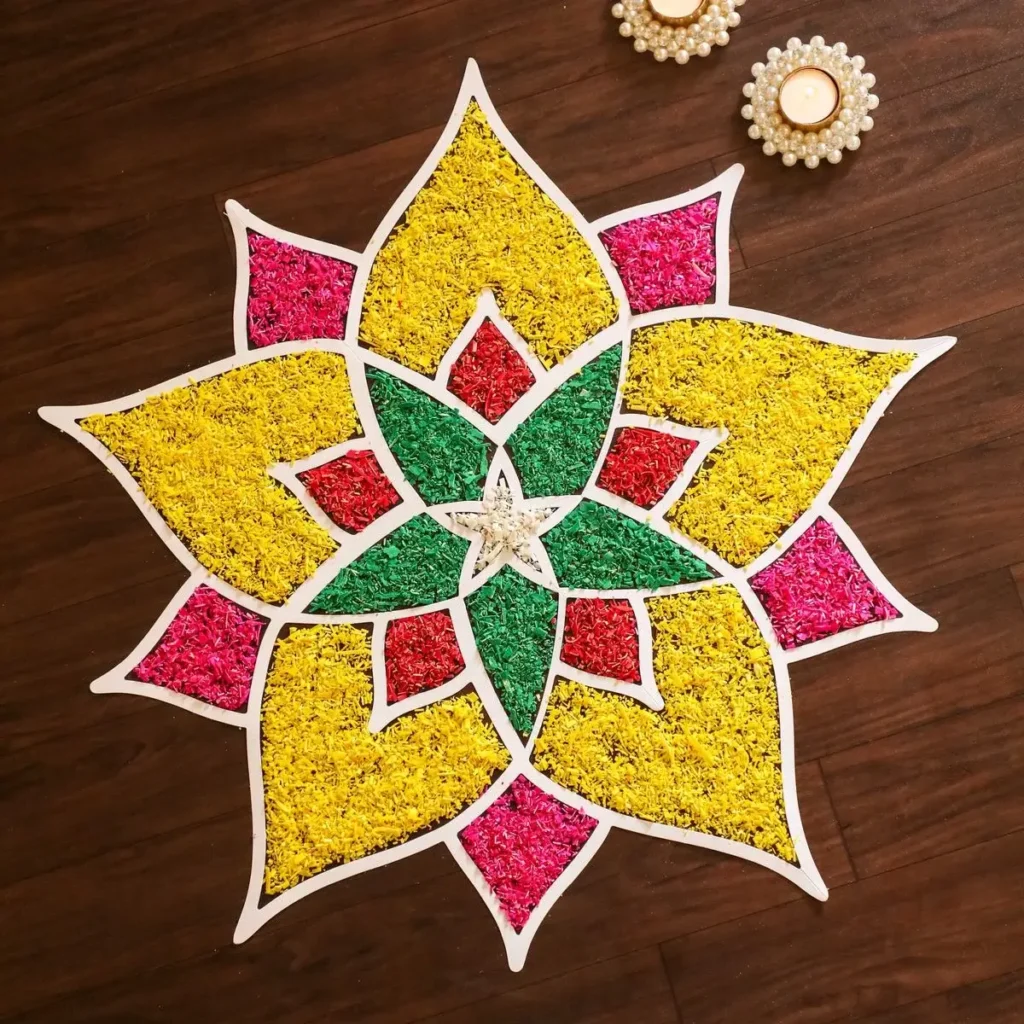
Geometry is the secret backbone of all great floor art. When you base your patterns on solid structural shapes like lines, grids, or circles, your design automatically looks symmetric, clean, and professional.
Whether you want to follow a traditional dot grid or experiment with modern dimensions, using geometric shapes is the easiest way to ensure your art never looks messy.
Rangoli Designs with Dots
This technique uses a precise grid of dots as a connect-the-dots map. It is the most structured, traditional way to create flawless symmetry without needing to guess your alignment.
How it Works: First, drop a grid of white powder dots on the floor (e.g., a 5×5 or 7×7 grid). Then, either connect the dots with sharp straight lines to form stars and flowers, or loop curved lines around the dots without touching them.
Circle Rangoli Design
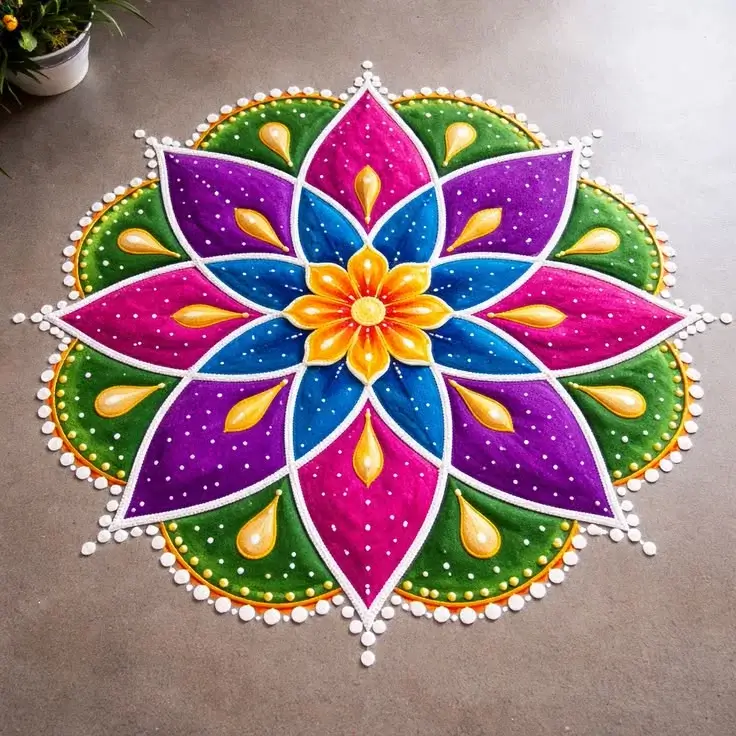
The circle represents unity, infinity, and cosmic balance. Circular designs are the most popular choices for central courtyards, living rooms, and open verandas because they look beautiful from every single angle.
The Setup: You can create a perfect base circle by tying a piece of thread to a chalk piece, holding one end in the center, and rotating it out. Fill the inner space with concentric rings of alternating colors to create a beautiful, spinning target effect.
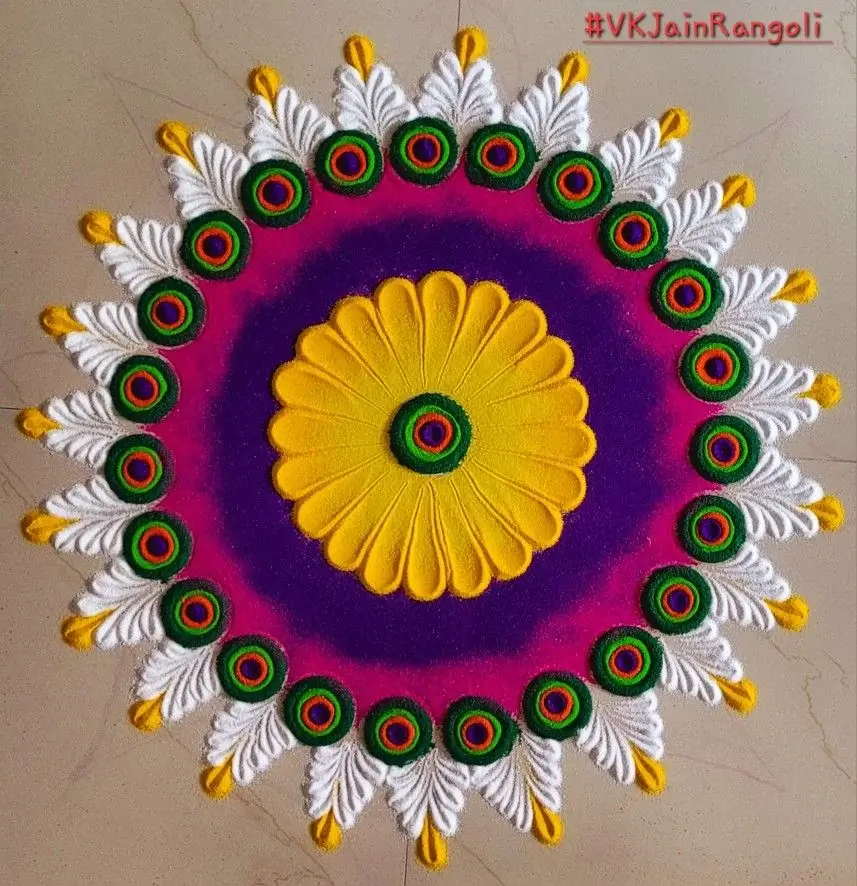
Big Circle Rangoli Design
When you have a massive open space like a building society lobby, a marriage hall, or a large courtyard, a small design will look lost. You need a grand, sweeping circular statement.
Key Elements: A big circle design requires a strong focal point in the center (like a large blooming lotus or a sunburst motif). Expand outward using multiple rings of intricate meshwork (Jaali work), petals, and heavy geometric borders.
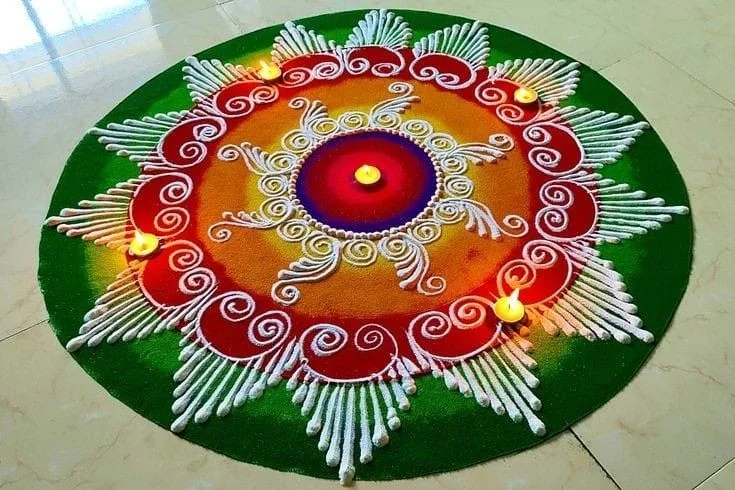
Square Rangoli Design
Square layouts look incredibly modern, sharp, and structured. They are perfect for framing a specific spot, such as around a festive seating arrangement (Chaurang or Pat) or directly in front of your home temple.
Design Trick: Draw a large square outline, and then turn it into a multi-layered frame. You can place a traditional circular mandala inside the square to create a gorgeous contrast between sharp corners and soft curves.
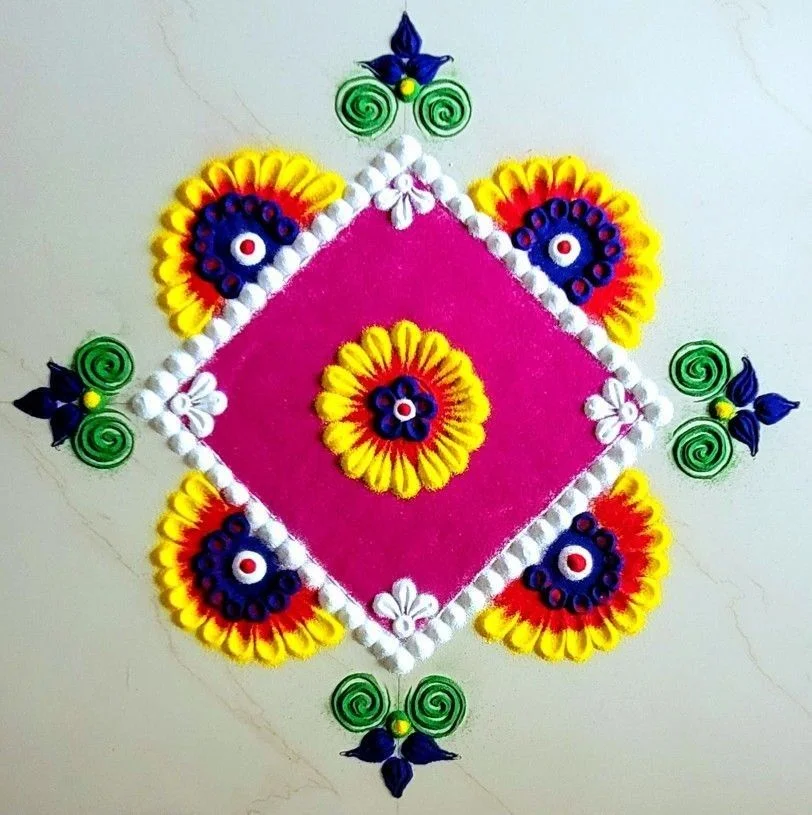
Border Rangoli Design
You don’t always need a giant centerpiece. If you want to decorate narrow hallways, long balconies, stairs, or the edges of your living room walls, a border design is your best option.
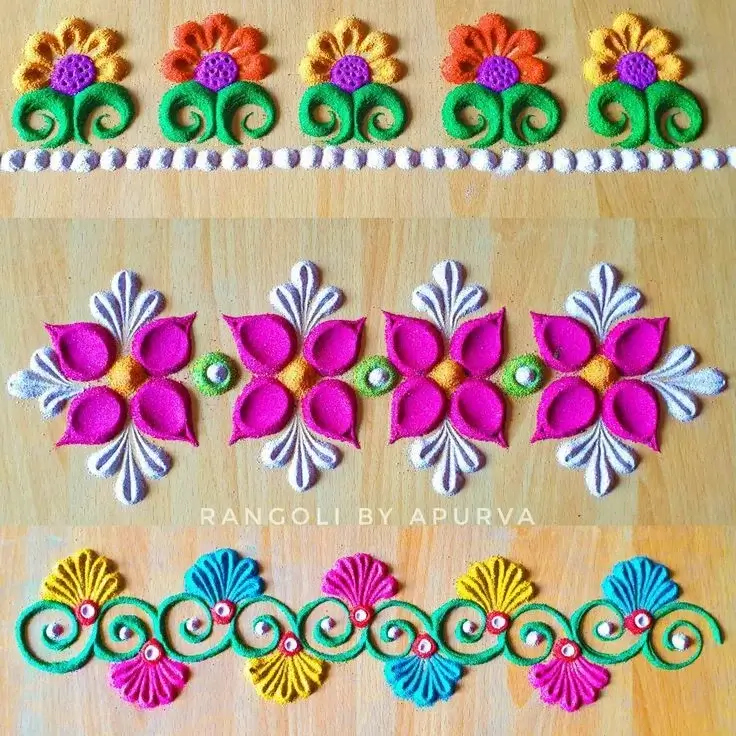
How to Style: Create a continuous, repeating pattern of small elements like alternating mango leaves, tiny oil lamps, or simple wave lines. It frames your living space beautifully without eating up any walking area.
3D Rangoli Design
If you want to absolutely blow your audience away, a 3D design is the ultimate showstopper. It uses clever color shading and forced perspective to make the artwork look like it is popping right out of the floor or dropping into a deep hole.
The Illusion Technique: It is all about highlights and shadows. Pick a base shape (like steps, a star, or cubes). Use deep black or dark brown powder on one side to create a drop shadow, and bright white on the opposite edges for a light reflection.
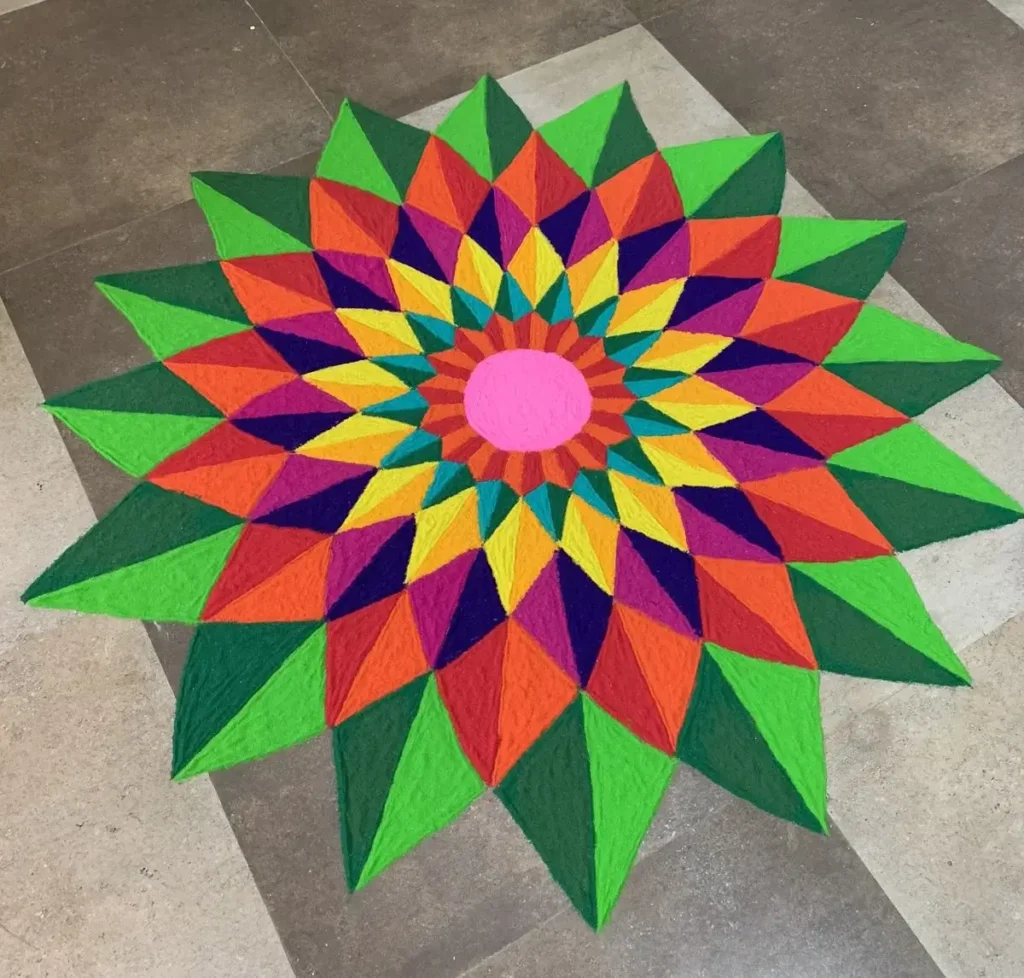
Unique & Attractive Rangoli Designs
If you want your floor art to stand out from the typical patterns your neighbors are making, these designs are for you. We are moving away from basic floral shapes and diving into specialized styles, creative textures, and artistic illusions that instantly catch the eye and gather compliments.
Unique Rangoli Designs
A unique design avoids predictable patterns. Instead of filling pre-made stencils, it focuses on mixing unconventional elements like combining liquid colors with dry powders, or layering real flower buds on top of powder bases.
Style Tip: Try creating abstract splashes of color as a background, and then sketch a sharp, minimalistic silhouette over it using white chalk or powder. It gives a gallery-art feel right at your doorstep.
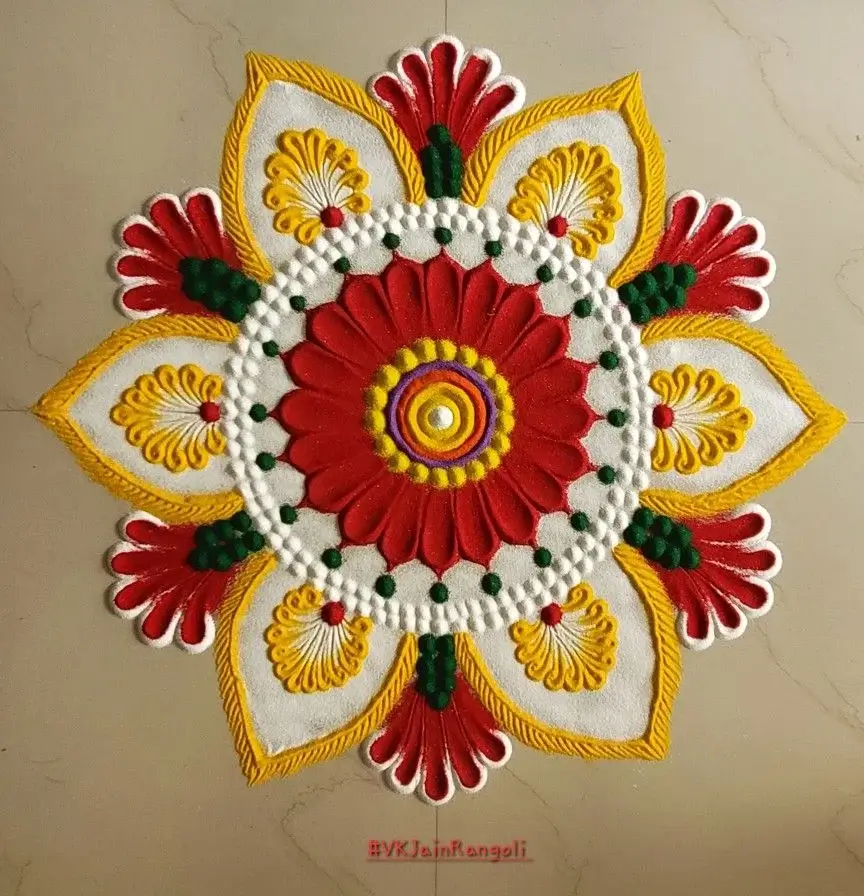
Attractive Rangoli Designs
An attractive design is all about color psychology and high-contrast visuals. To make a pattern visually magnetic, you need to place contrasting colors right next to each other so they make each other pop.
The Color Rule: Pair deep royal blue next to bright canary yellow, or vivid neon pink against a crisp white border. The sharp contrast immediately draws the eyes of anyone walking past your house.
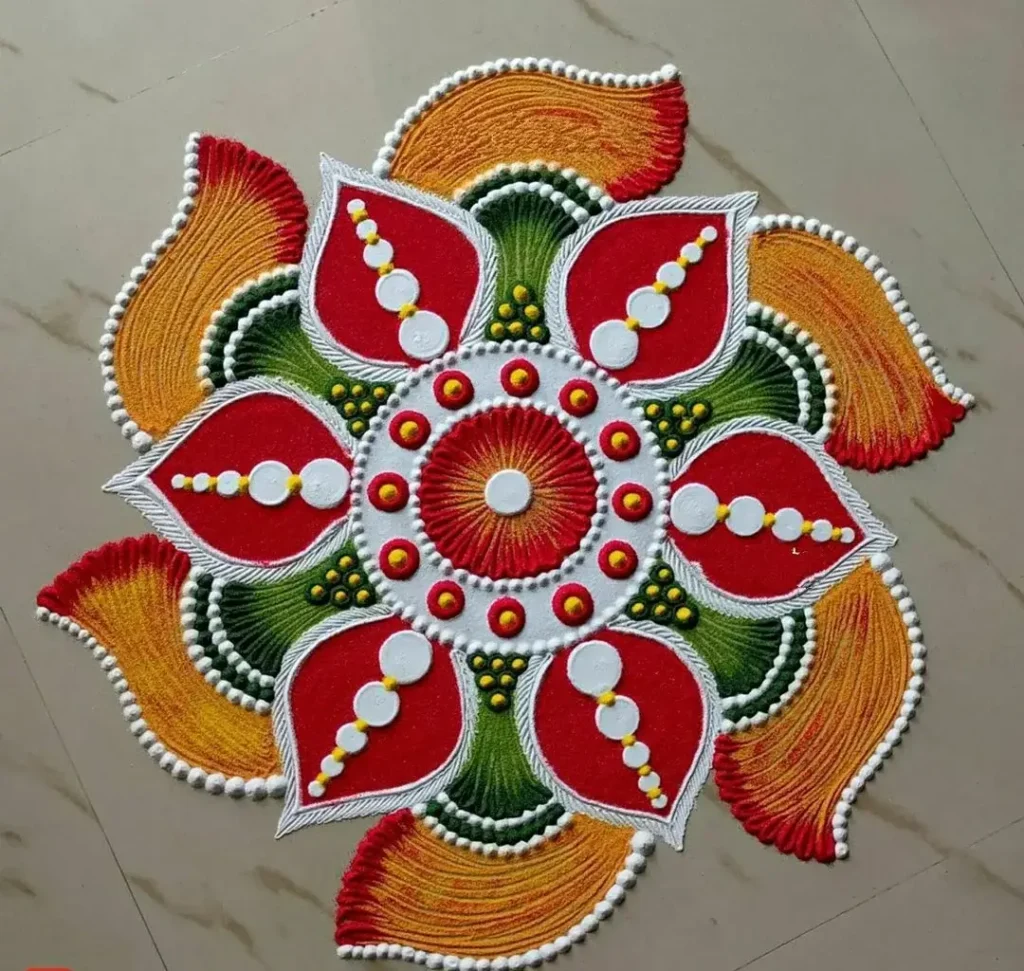
Attractive Big Rangoli Designs
When you are decorating large spaces like a building compound, a temple courtyard, or a society hall, size matters. A large design needs to look cohesive from a distance without losing its neatness.
The Strategy: Break the giant canvas into smaller quadrants. Use a massive central circle, and extend outward with uniform geometric rays or large matching petals so the design looks massive yet perfectly balanced.
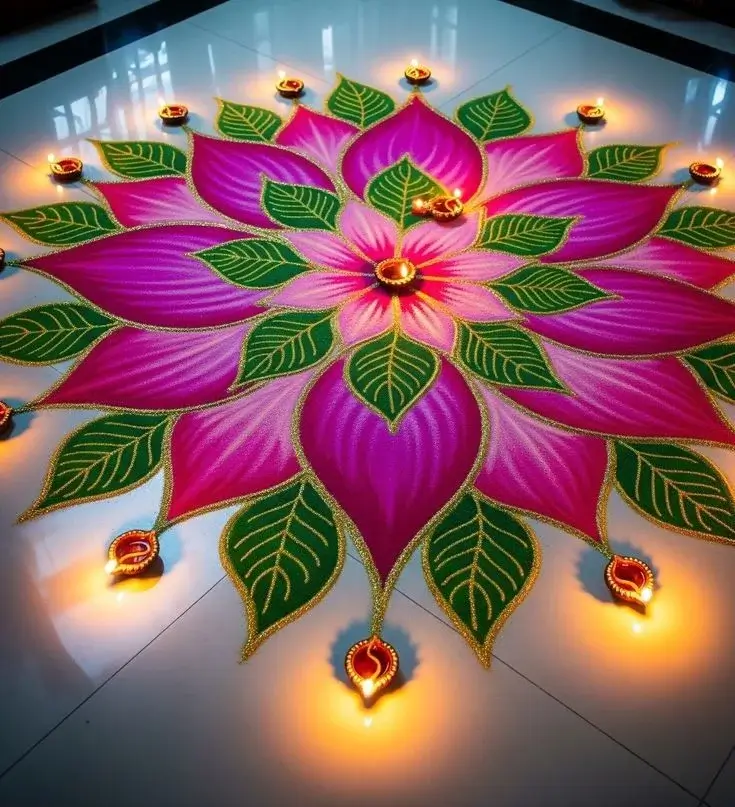
Attractive Sanskar Bharti Rangoli
Originating from Maharashtra, the Sanskar Bharti style is famous for its grand, free-flowing circular patterns filled with rich colors and intricate white meshwork.
The Five-Finger Trick: The base is created by spreading vibrant color powders evenly in large concentric rings. Then, using three or five fingers filled with white powder, traditional motifs like waves, lines, and dots are drawn rapidly over the colored background.
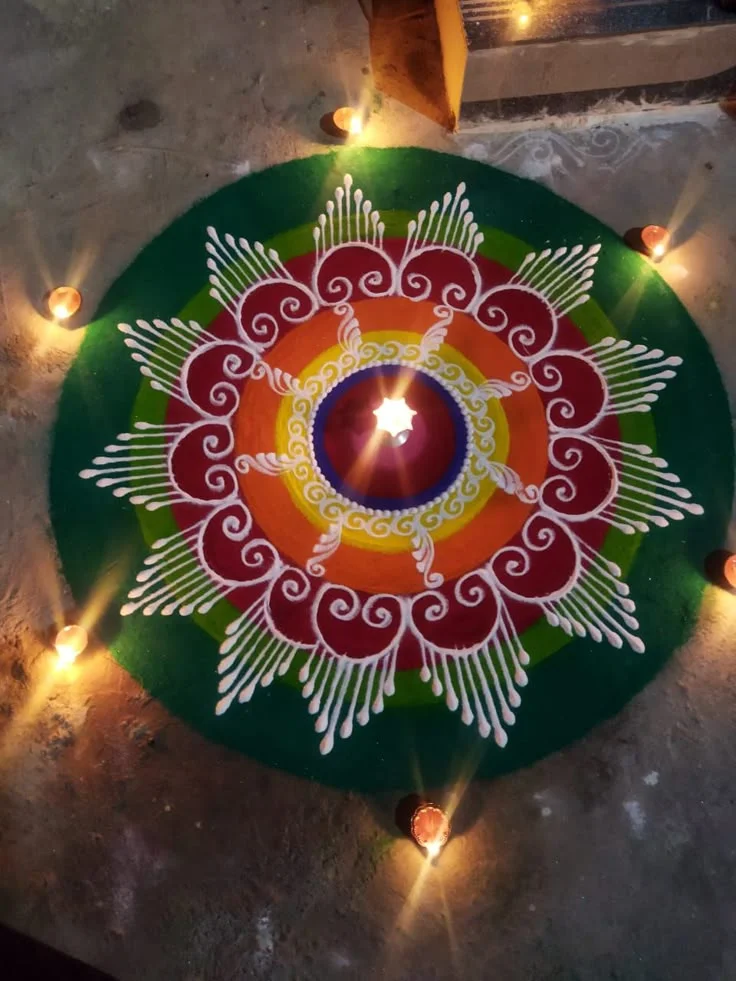
Modern Poster Rangoli
Poster Rangoli treats the floor exactly like a canvas painting. Instead of patterns and symmetry, it focuses on realistic shading, human faces, scenic landscapes, or current social themes.
How to Master It: It requires finely sieved colors to create smooth blending gradients, mimicking a real oil painting. It is highly popular in college festivals and fine arts exhibitions.
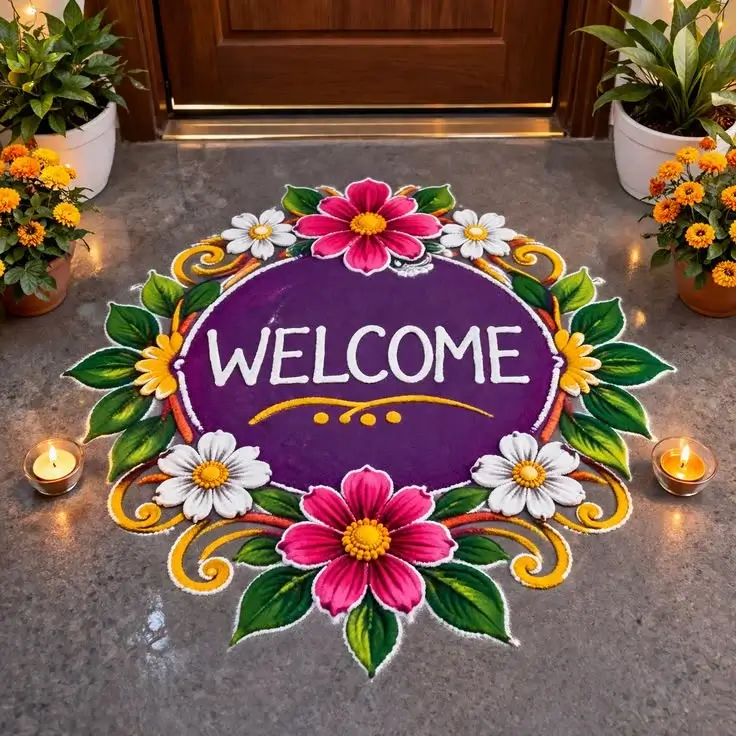
Optical Illusion Jeet Rangoli
Named after the viral trends popularized by innovative street artists, “Jeet Rangoli” style optical illusions use forced perspective to trick the viewer’s brain into seeing a 3D object where there is none.
The Magic: By skewing the lines and using deep black gradients for simulated shadows, you can make a flat floor look like a deep water well, a floating levitating block, or a hollowed-out staircase.
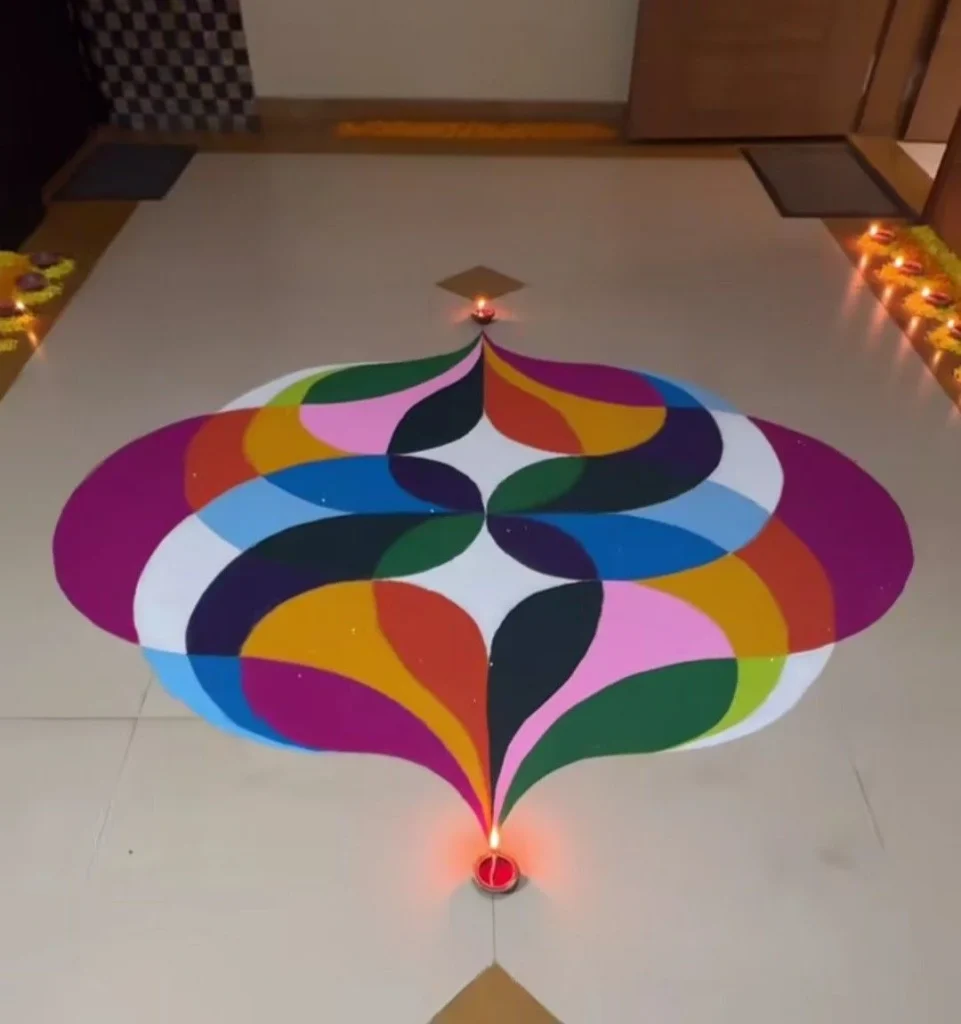
White Rangoli Design
Sometimes, absolute simplicity is the ultimate sophistication. A pure white design uses zero colored powders, relying entirely on the stark contrast between the white lines and a dark floor base (like red oxide or dark tiles).
The Appeal: This style is highly elegant and minimalist. It mimics the traditional Chowkpurana or morning Kolam, where the purity of the crisp white lines takes center stage without any color distractions.
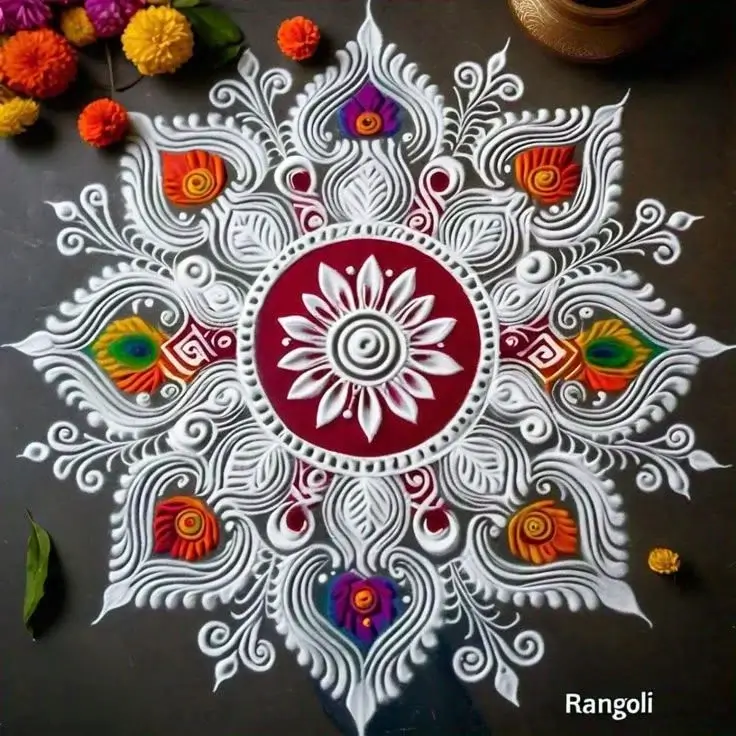
Theme & Figure Rangoli Designs
When you want your Rangoli to tell a story or show deep devotion, figure-based designs are the ultimate choice. Moving away from standard geometric patterns, this section focuses on drawing iconic deities, historical heroes, and majestic themes that carry deep spiritual and cultural meaning.
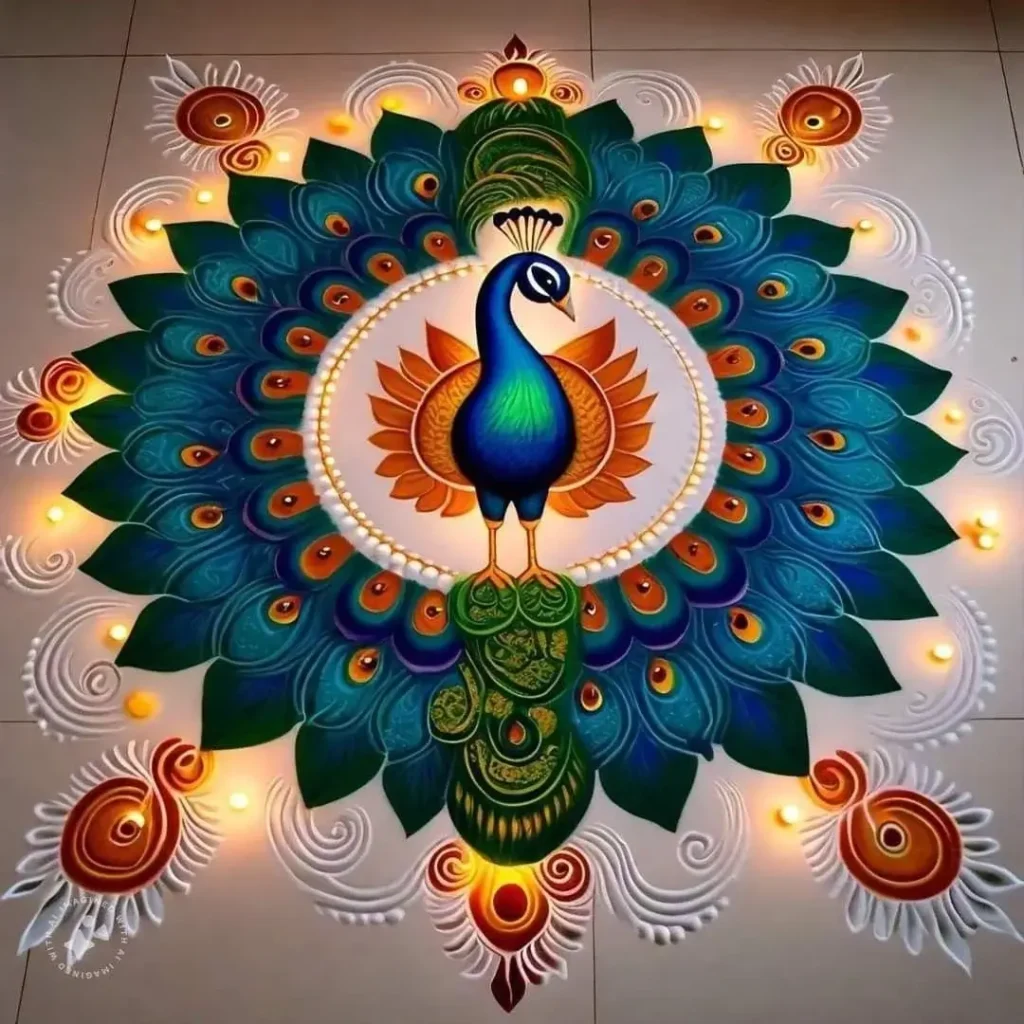
Peacock Rangoli
The peacock (Mayur) is India’s national bird and a timeless symbol of grace, beauty, and royalty. It is easily the most popular bird motif used in festive floor art.
Design Trick: You don’t have to draw the whole bird. Focus on a beautiful side profile of the peacock’s neck using royal blue and teal, and spend your time creating a massive, sprawling tail feather pattern filled with green, yellow, and blue circles.
Ganpati Rangoli
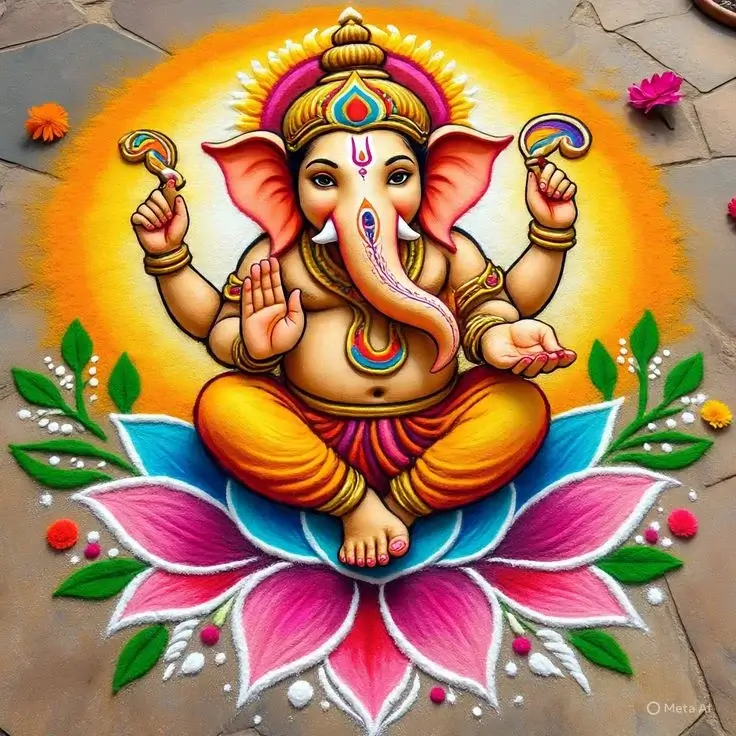
Lord Ganesha is the remover of obstacles (Vighnaharta), and his form is traditionally drawn before any auspicious new beginning or during Ganesh Chaturthi.
How to Style: Ganesha’s form is incredibly flexible. You can create a modern, minimalistic look using simple curved lines to outline his trunk, ears, and Modak, or go grand by placing his silhouette inside a bright orange sunburst background.
Krishna Rangoli
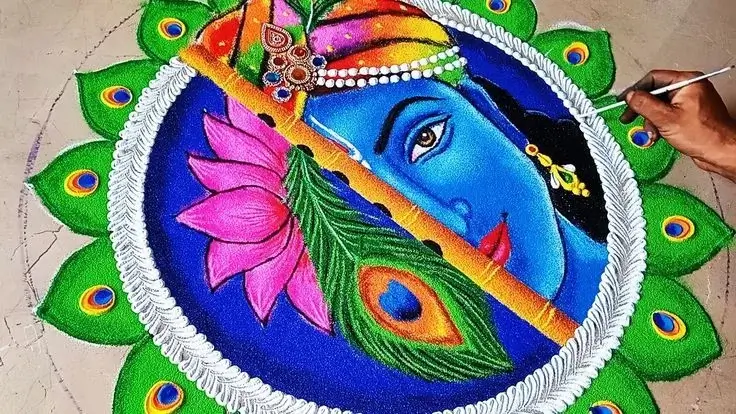
This design captures the divine, peaceful energy of Lord Krishna. It is highly popular during Janmashtami and festive occasions.
Key Elements: Focus on iconic symbols that instantly represent him. Draw a beautiful dark blue portrait silhouette holding a golden flute (Bansuri) with a highly detailed peacock feather tucked into his hair.
Little Krishna Rangoli
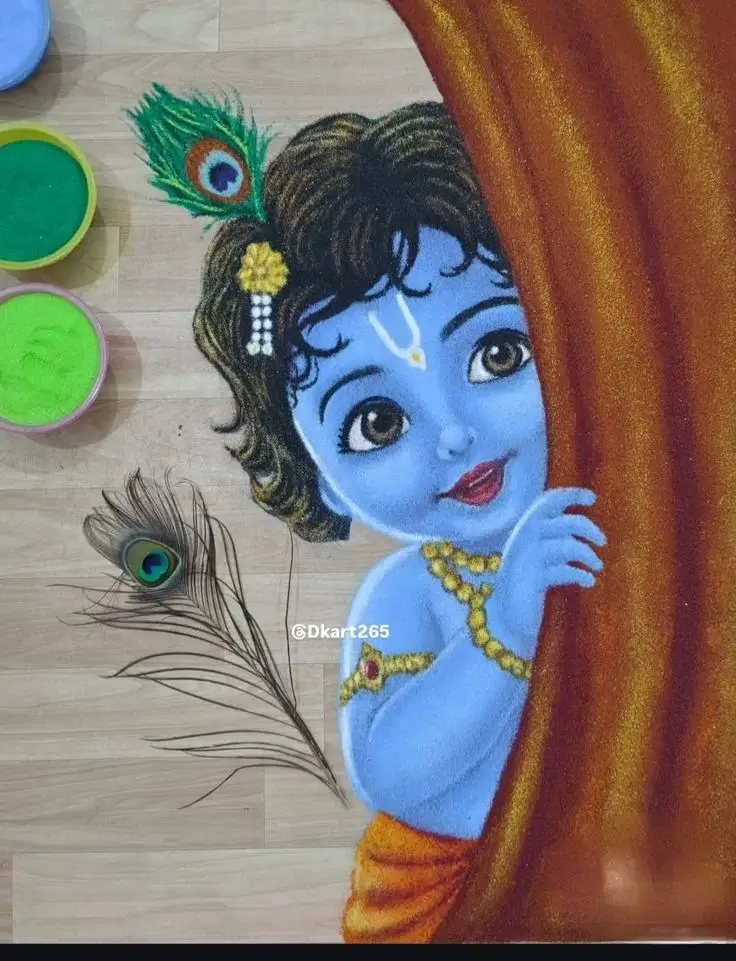
Unlike the mature depictions of Krishna, the Bal Krishna theme is all about innocence, playfulness, and sweet childhood stories.
Key Elements: Draw a cute, animated baby Krishna reaching inside a traditional earthen pot overflowing with white butter (Makhan). Use bright, soft colors to match the joyful, innocent vibe of the design.
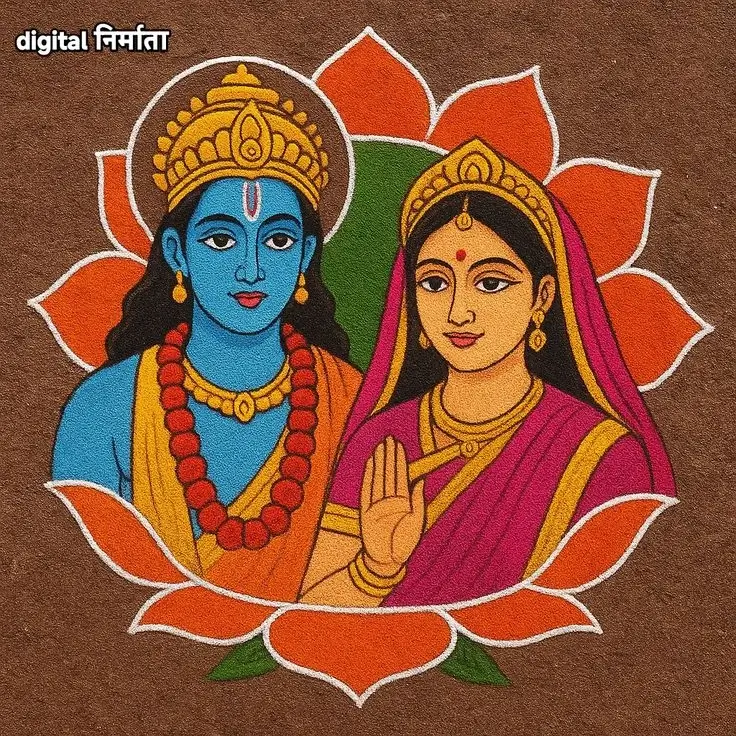
Ram Sita Rangoli
Representing the ultimate symbol of love, righteousness, and the ideal partnership (Maryada Purushottam), a Ram Sita design brings an aura of peace and devotion to your home.
Design Tip: Draw them side-by-side in profile view. Use soft shading for their facial features and adorn their traditional crowns (Mukut) and jewelry with fine white dot work to make them look regal.
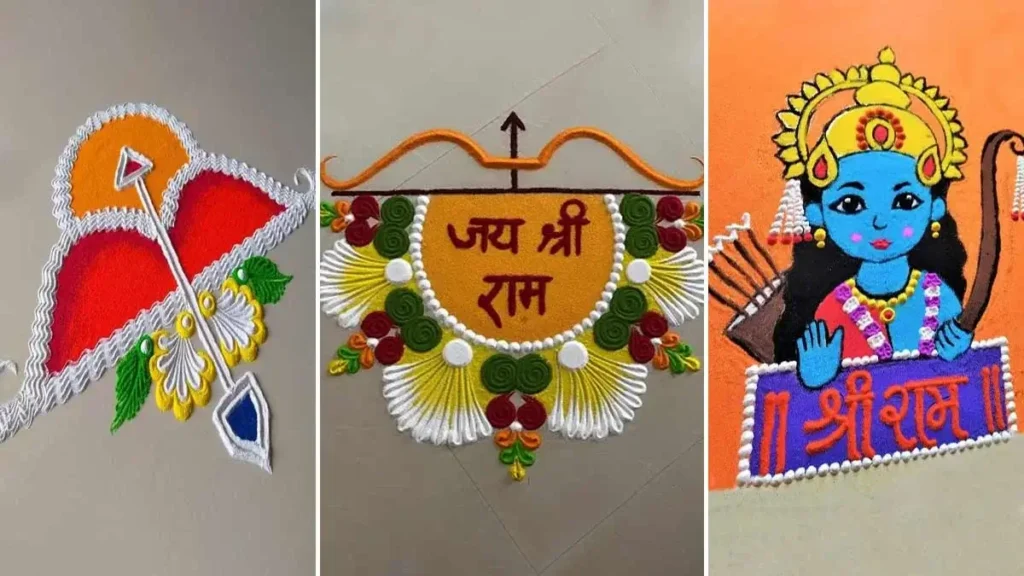
Jai Shree Ram Rangoli
This design focuses on powerful typography mixed with sacred symbols. It is perfect for auspicious occasions, temple celebrations, or welcoming festive energies.
How to Style: Write the words “Jai Shree Ram” boldly in the center using clean, structured fonts (Devanagari script works beautifully). Surround the text with a sharp bow and arrow (Dhanush) symbol and a flying saffron flag.
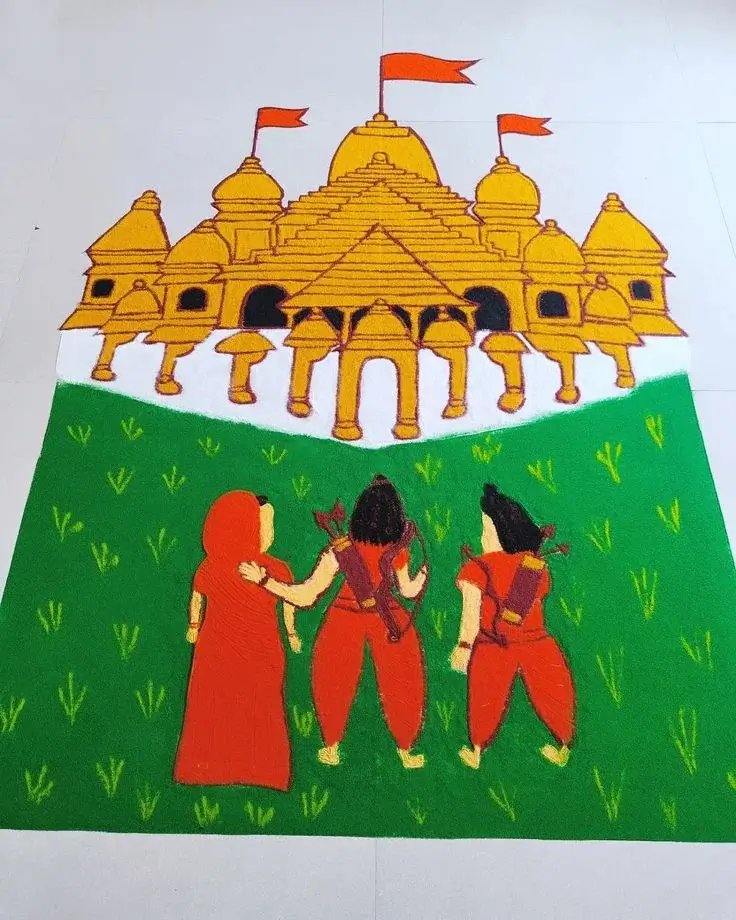
Ayodhya Ram Mandir Rangoli
Capturing the architectural grandeur of the historic temple in Ayodhya, this theme is an absolute showstopper for major national and religious celebrations.
The Setup: Use geometric grids to map out the temple’s signature layered domes, pillars, and central spire (Shikhara). Use warm sand tones, golds, and oranges to recreate the stone architecture, topped with a bright saffron flag waving at the peak.
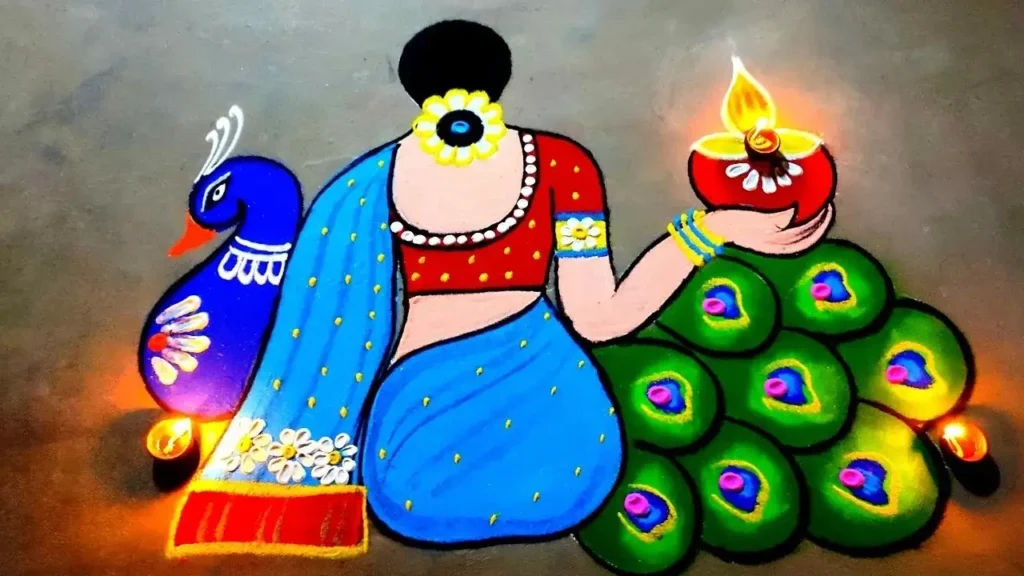
Traditional Girl Rangoli Design
Perfect for cultural functions, weddings, or festivals like Gauri Pujan, this design highlights traditional Indian attire and grace.
Key Elements: Draw a back-profile or side-profile of a woman wearing a traditional saree or lehenga. Focus on detailing her braided hair decorated with fresh flowers (Gajra) and add intricate jewelry patterns using a fine cone dispenser.
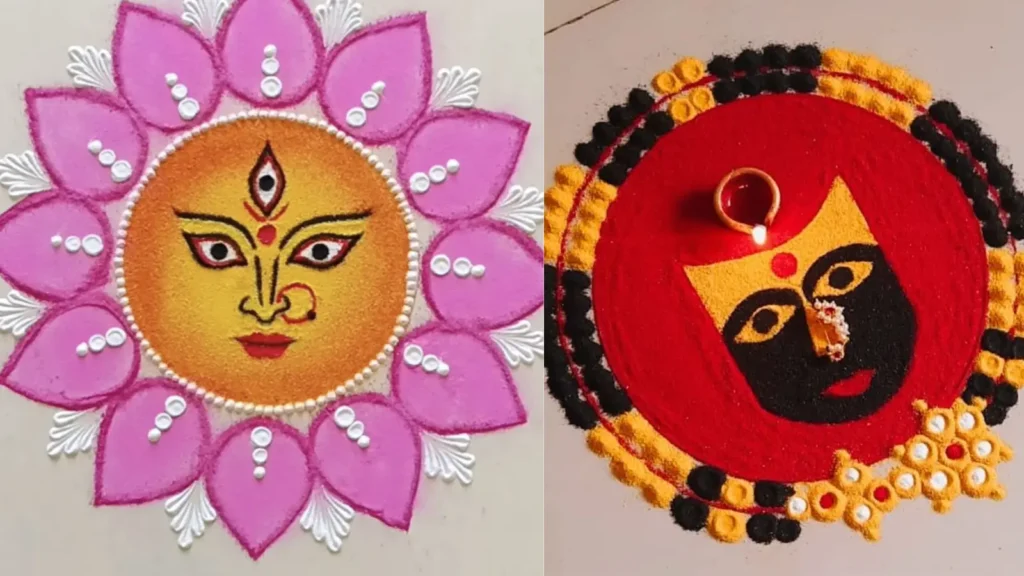
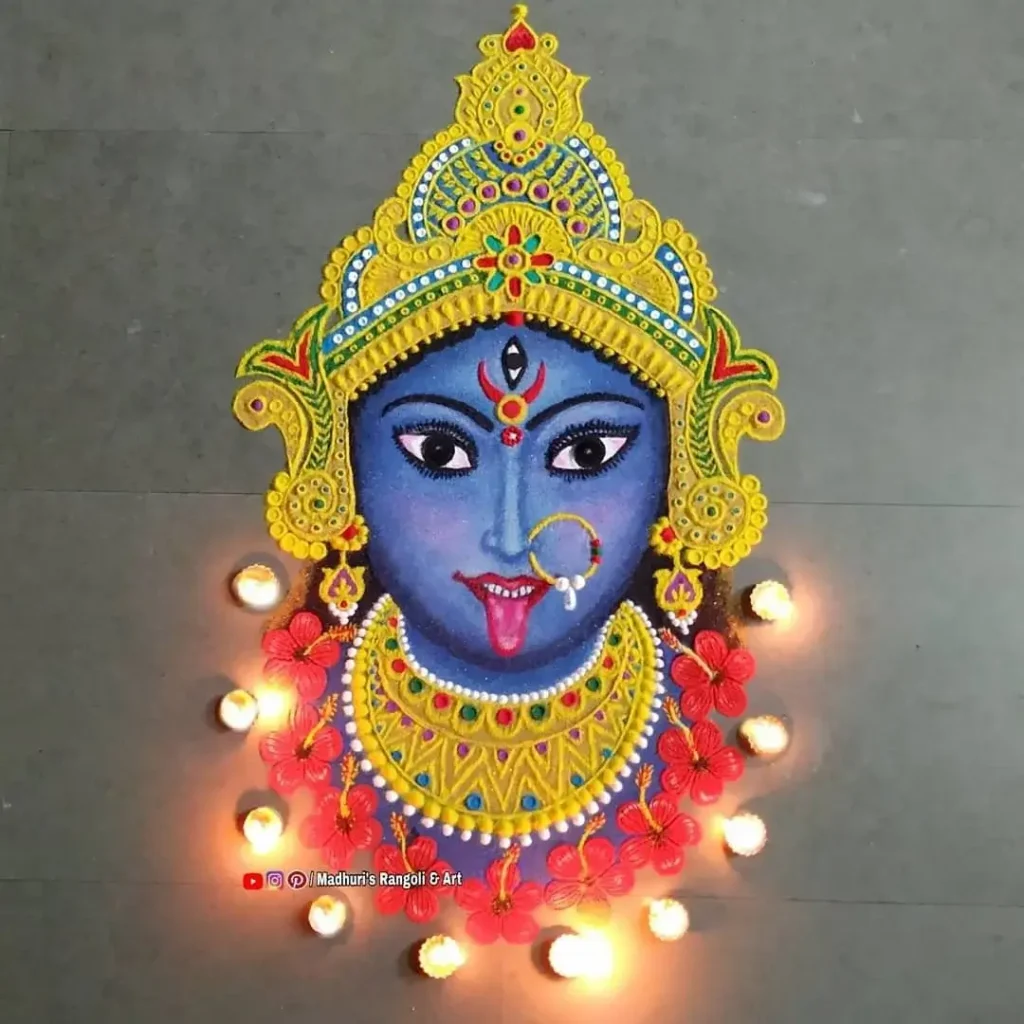
Kali Mata Rangoli Designs
Dedicated to the fierce and protective energy of Goddess Kali, this design is usually created during Kali Puja, Diwali eve, or Navratri.
Color Rule: This requires bold, intense colors. Use deep midnight blue or black for her skin tone, stark crimson red for her tongue, and frame the outer border with sharp, protective geometric triangles to signify power.
Chhatrapati Shivaji Maharaj Rangoli
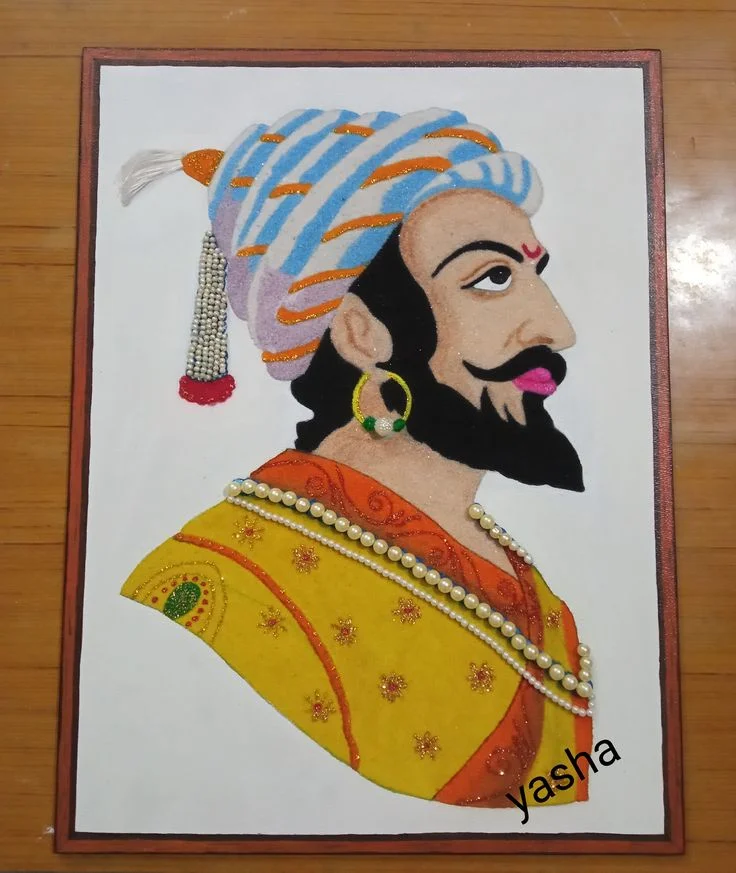
Celebrating the legendary Maratha warrior king, this historical theme is heavily featured across Maharashtra during Shiv Jayanti and state festivals.
The Strategy: This works best as a portrait or a silhouette. Draw Shivaji Maharaj’s iconic side-profile wearing his signature royal turban (Mavala pagadi) and beard. Use a stark contrast of a bright saffron (Bhagwa) background to make the black silhouette look incredibly powerful.
Festival-Wise Rangoli Designs
Every Indian festival has its own unique spiritual vibration, story, and customs. To make your celebrations authentic, your floor art should change to match the specific festival of the day.
Here is how you can customize your designs across the year to bring out the true spirit of each sacred occasion.
Navratri Rangoli
Navratri is a grand 9-night celebration dedicated to the nine distinct forms of Goddess Durga. This festival is all about high-energy setups, dance, and deep devotion.
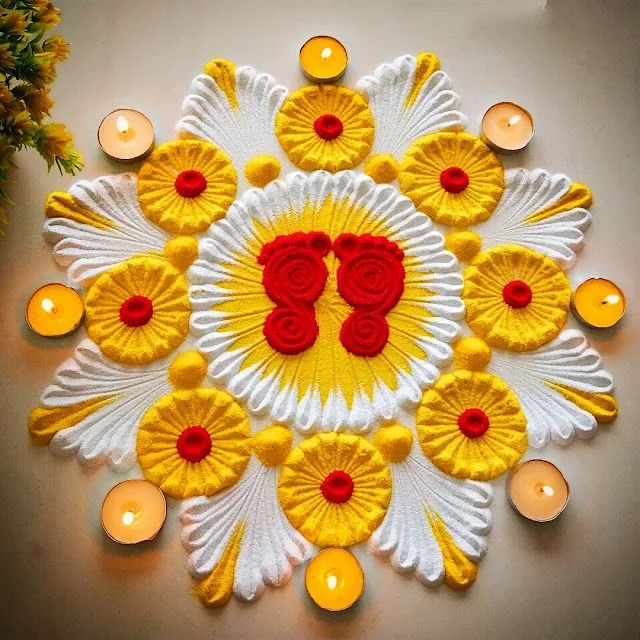
The Theme: You can either create a central footprint design of Goddess Durga entering your home, or draw a traditional pot containing sprouted grains and a coconut (Ghatasthapana/Kalash).
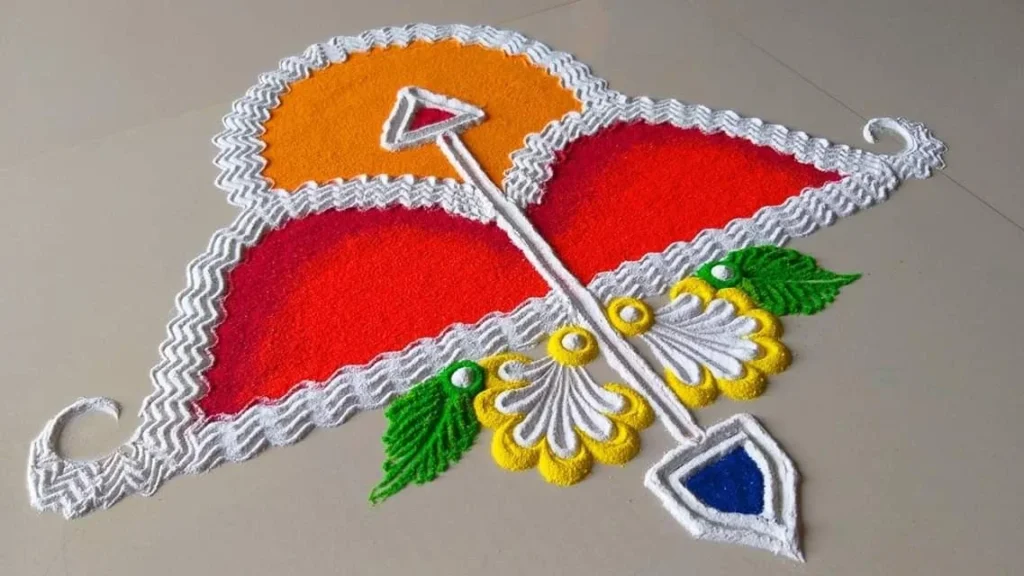
Easy Dussehra Theme Rangoli
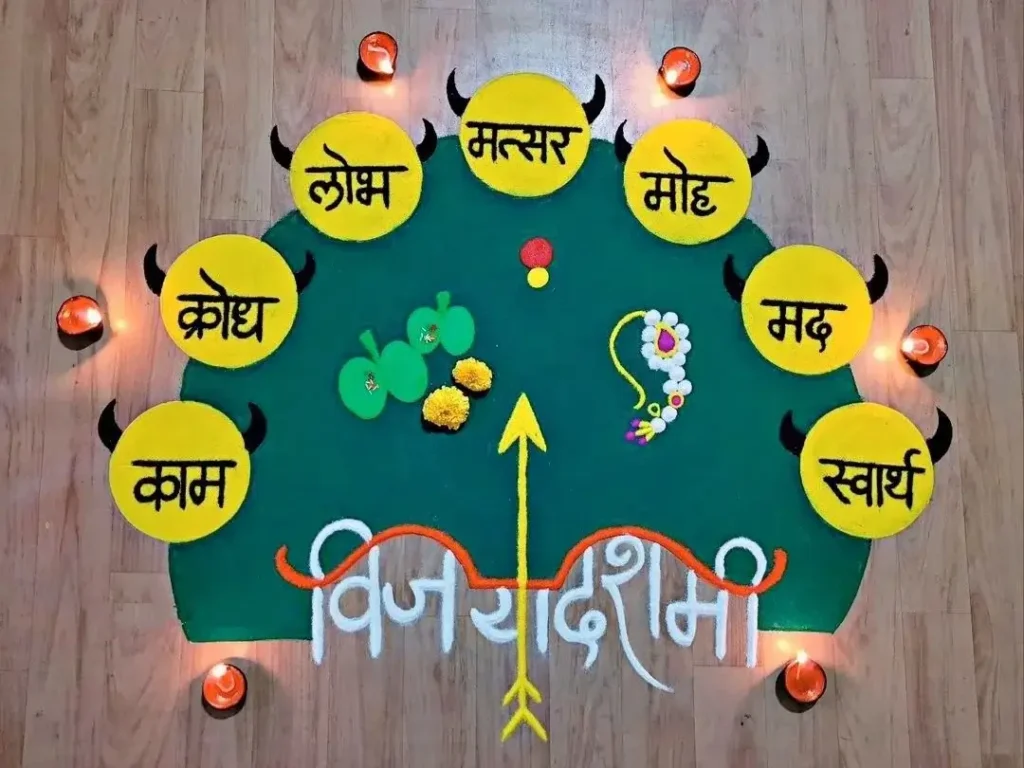
Dussehra celebrates the grand victory of good over evil, marking the day Lord Rama defeated the ten-headed demon king Ravana.
Key Elements: Keep it simple yet powerful. Draw a sharp, elegant bow and arrow (Dhanush) stretched out and aiming upward. Surround the weapon with a bright circular sunburst or marigold garland pattern to symbolize victory.
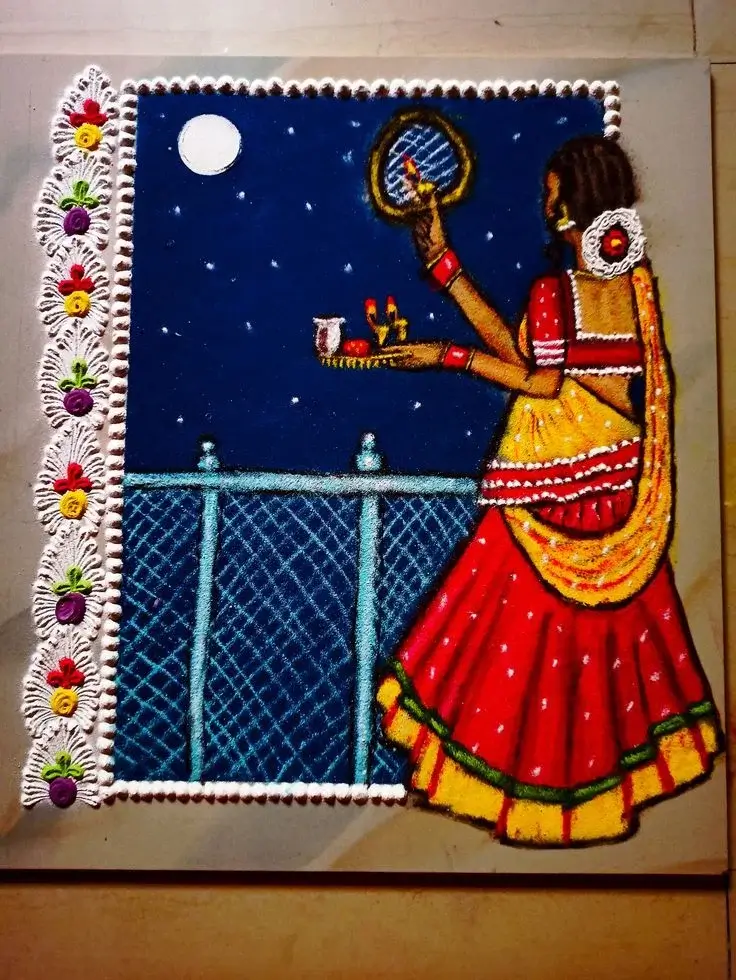
Karva Chauth Rangoli
This beautiful fast is kept by married women for the long life, health, and prosperity of their husbands. The imagery is highly romantic and traditional.
Key Elements: Center your design around a traditional sieve (Channi), a small earthen pot (Karva), and a beautiful crescent moon. Use rich bridal colors like deep red, crimson, and glittering gold powders.
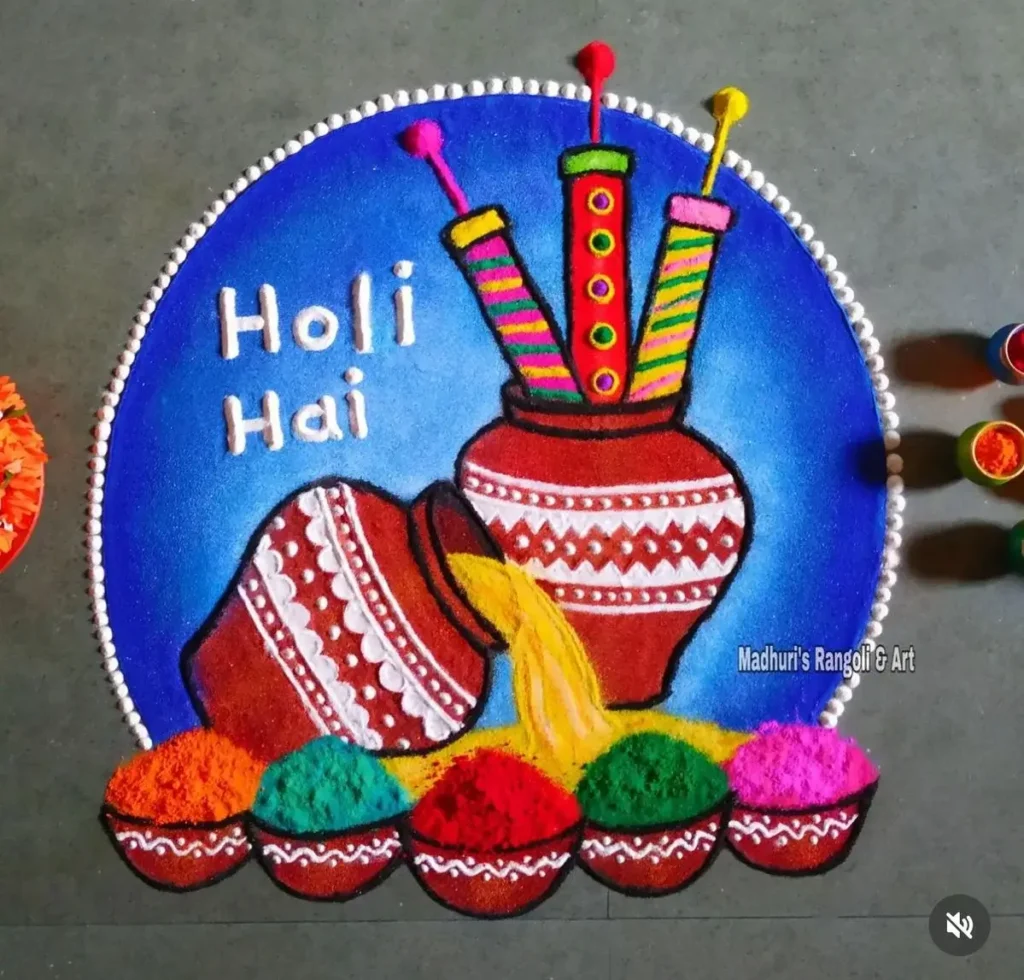
Holi Rangoli Design
Holi is the ultimate festival of colors, joy, and the arrival of spring. Your doorstep on this day should look like an absolute explosion of happiness.
Design Trick: Avoid strict geometric lines. Create a fun, abstract background using bright pink (Gulal), neon green, and sunshine yellow. Draw a pair of traditional water guns (Pichkari) or a small clay pot spilling vibrant colors right over the background.
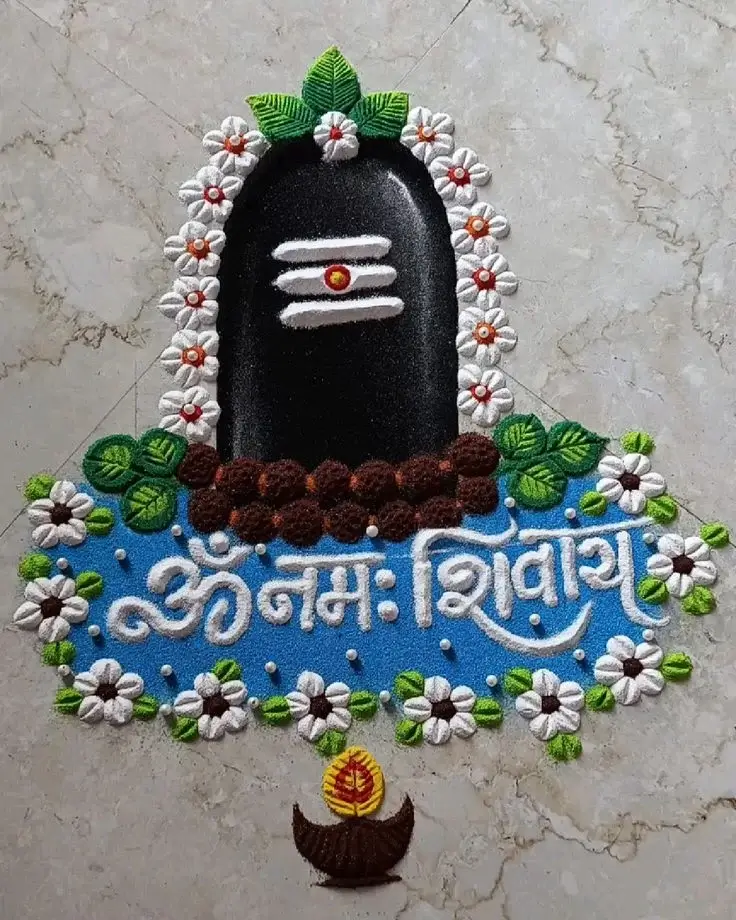
Mahashivratri Rangoli
Dedicated to the supreme meditative energy of Lord Shiva, a Mahashivratri design needs to feel incredibly calm, spiritual, and powerful.
Key Elements: Use a minimalist approach. Draw a sacred Shiva Lingam or a vertical Trident (Trishul) wrapped with a small drum (Damru). Use deep blues, whites, and ash-grey powders to create a serene, meditative vibe.
Ram Navami Rangoli
Celebrating the birth of Lord Rama, this spring festival brings pure, righteous, and royal energy to your household.
Key Elements: Draw a beautiful crown (Mukut) or a sleek outline of Lord Rama’s profile holding a bow. Incorporate a waving saffron flag (Bhagwa) to signify the establishment of peace and righteousness.
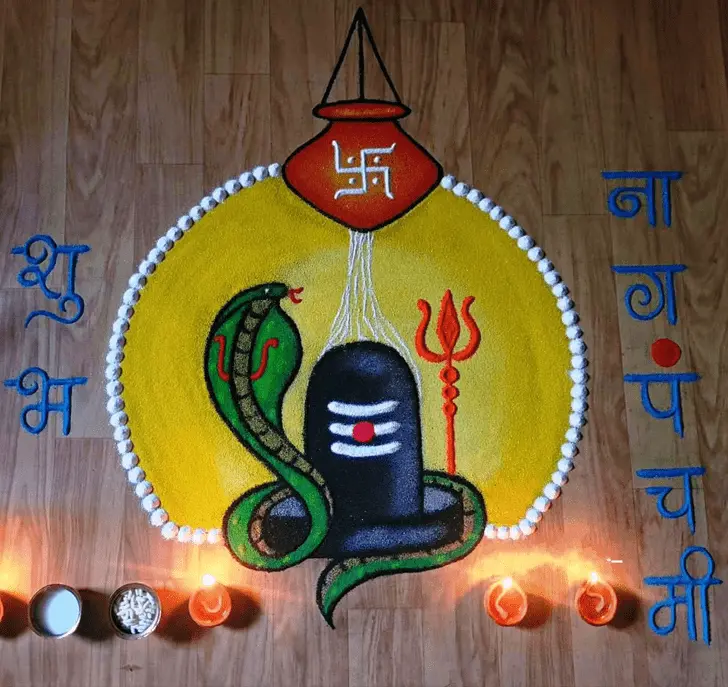
Nag Panchami Rangoli
A unique traditional festival where snakes are revered and worshipped as protectors of fields, nature, and cosmic balance.
The Setup: Draw a beautifully coiled snake pattern using smooth, continuous freehand lines. Traditionally, it is preferred to use clean white powder or natural yellow turmeric for this design to keep it pure and sacred.
Ekadashi / Gyaras Rangoli
A highly sacred day of fasting and intense spiritual devotion dedicated entirely to Lord Vishnu or Lord Krishna.
Key Elements: Incorporate holy symbols of Lord Vishnu. Draw a beautiful Conch shell (Shankh), a divine wheel (Chakra), or a simple footprints pattern leading to your home temple, framed by fresh green Basil leaves (Tulsi).
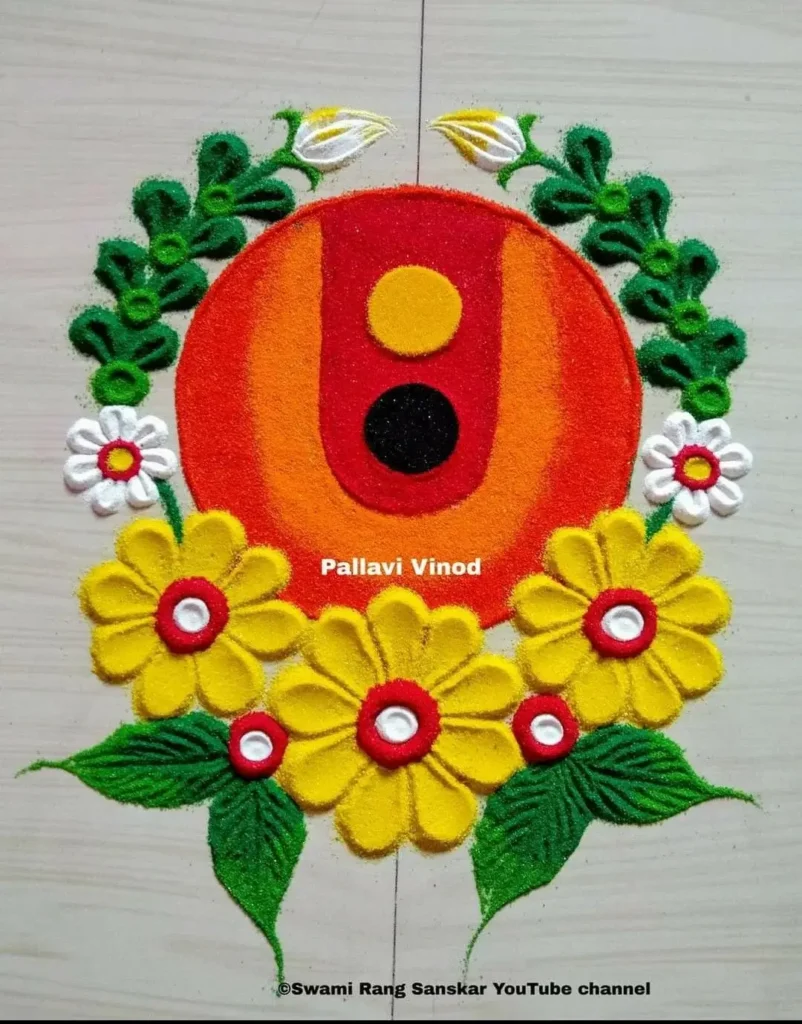
Hartalika Rangoli
Observed by women on the eve of Ganesh Chaturthi, this fast worships the divine union of Lord Shiva and Goddess Parvati.
The Arrangement: Draw two small, elegant geometric squares side-by-side, representing the divine couple. Fill them with bright green powders to symbolize nature, growth, and marital bliss.
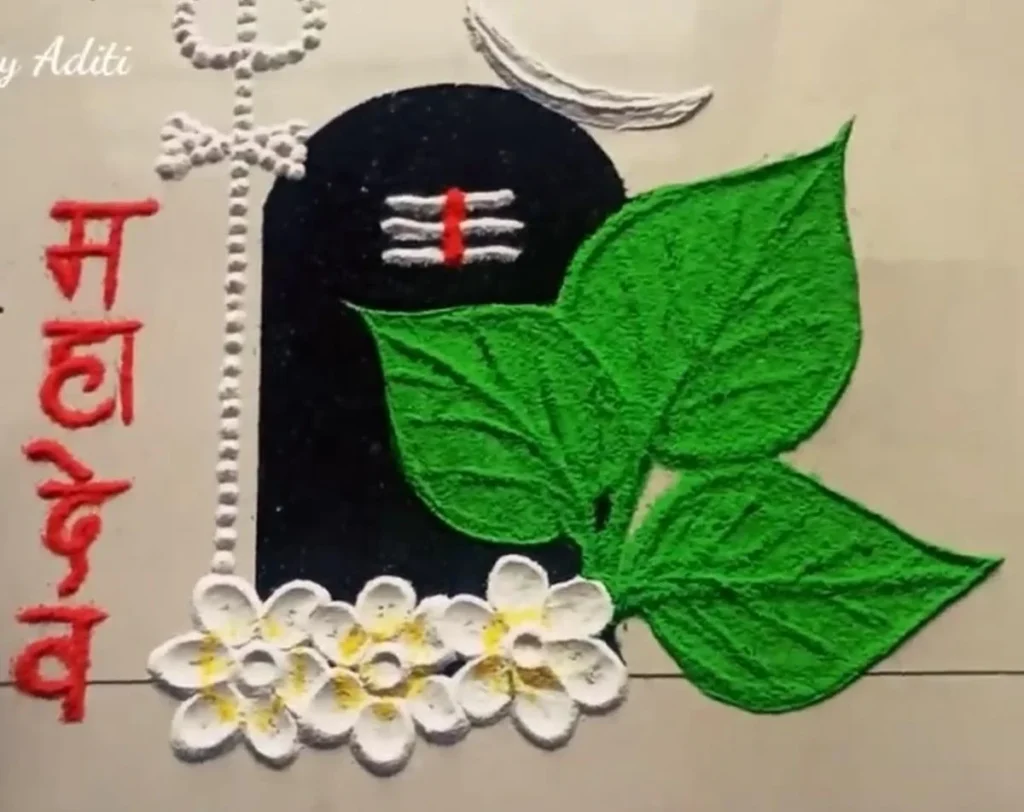
Gauri Pujan Rangoli
Mainly celebrated alongside the Ganesh festival, this day welcomes Goddess Gauri (Ganesha’s mother) into the household to bring prosperity and joy.
Key Elements: Draw a beautifully stylized traditional footprint pattern entering from your main door straight into your kitchen or living room. Surround the footprints with rich traditional jewelry patterns like bangles and necklaces using white powder lines.
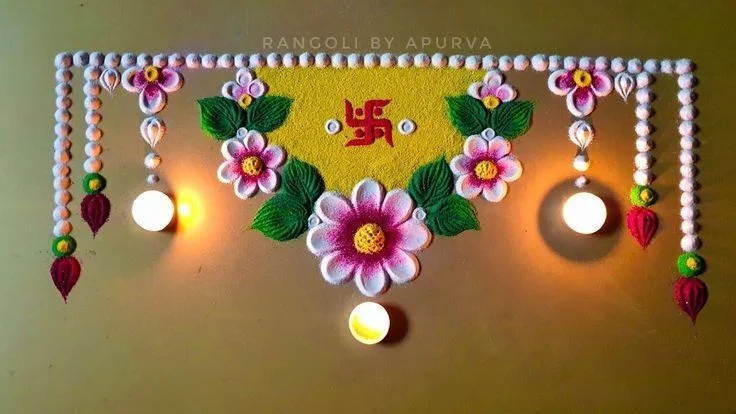
Regional & South Indian Rangoli
India’s beauty lies in its diversity. As you travel from the West to the South, the materials, techniques, and meanings behind floor art change completely. From the mathematical precision of Tamil Nadu’s loops to the vibrant harvest setups of Andhra Pradesh, this section brings you the finest regional styles from across the country.
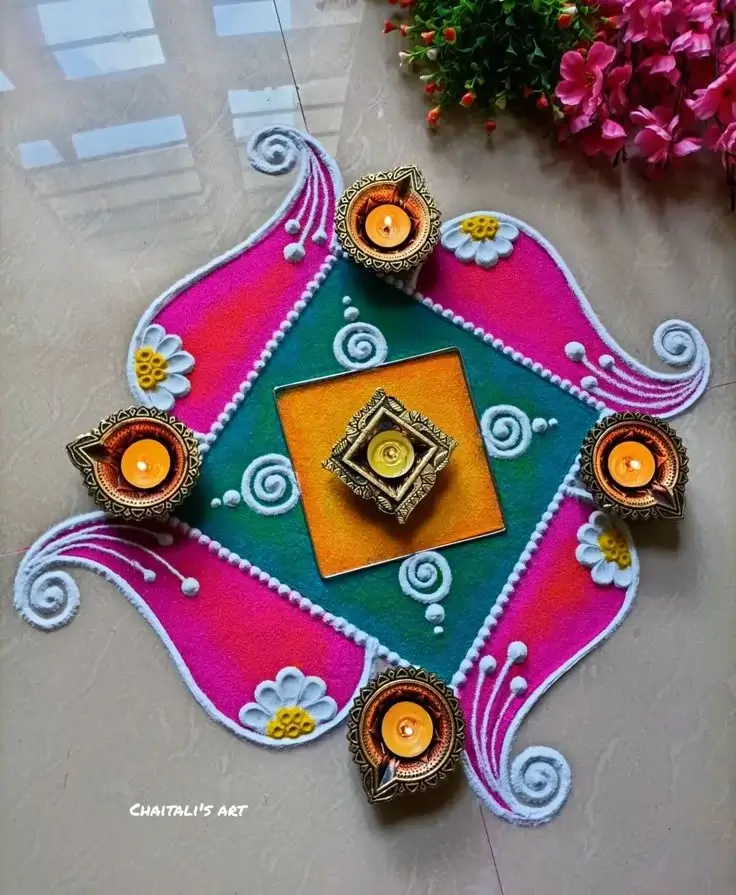
Rangoli Kolam
Hailing from Tamil Nadu, Kolam is a daily morning ritual. Unlike colorful festive patterns, a traditional Kolam relies heavily on geometric lines, symmetry, and mathematical loops called Sikku.
The Core Technique: It is traditionally drawn using dry rice flour on a freshly splashed wet floor. The symmetry is meant to bring mental focus and harmony to the household right at sunrise.
Rangoli Muggulu
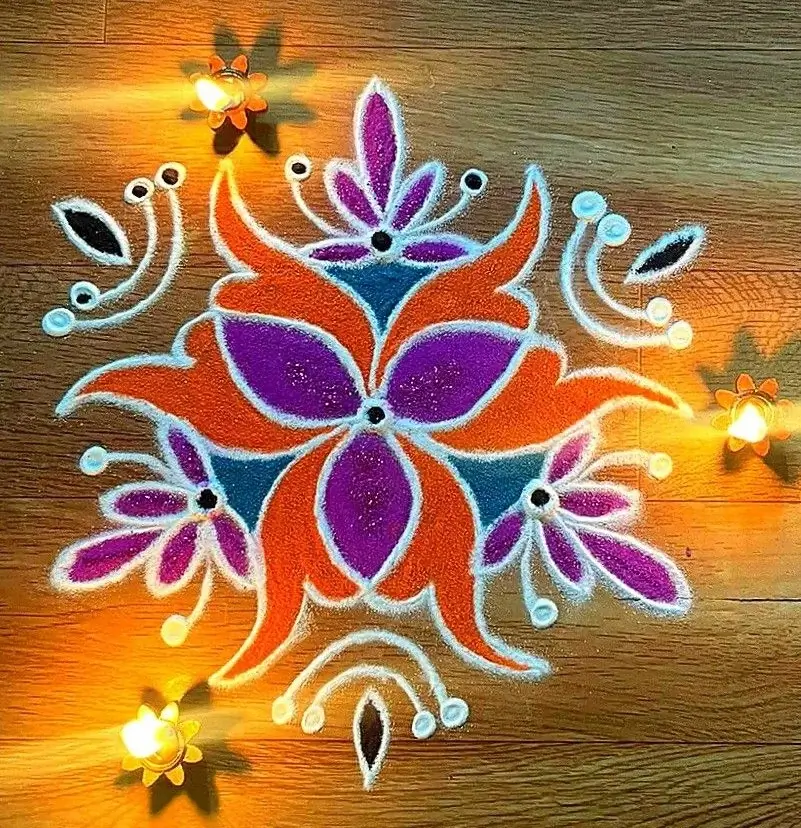
In Andhra Pradesh and Telangana, everyday floor art is called Muggulu. These designs are incredibly creative, often mixing sharp dot structures with beautiful freehand extensions.
Key Elements: A classic Muggulu features daily motifs like pearls, creepers, or flowers. During special months like Dhanurmasam, these patterns expand into massive street-wide artworks to invite auspicious vibes.
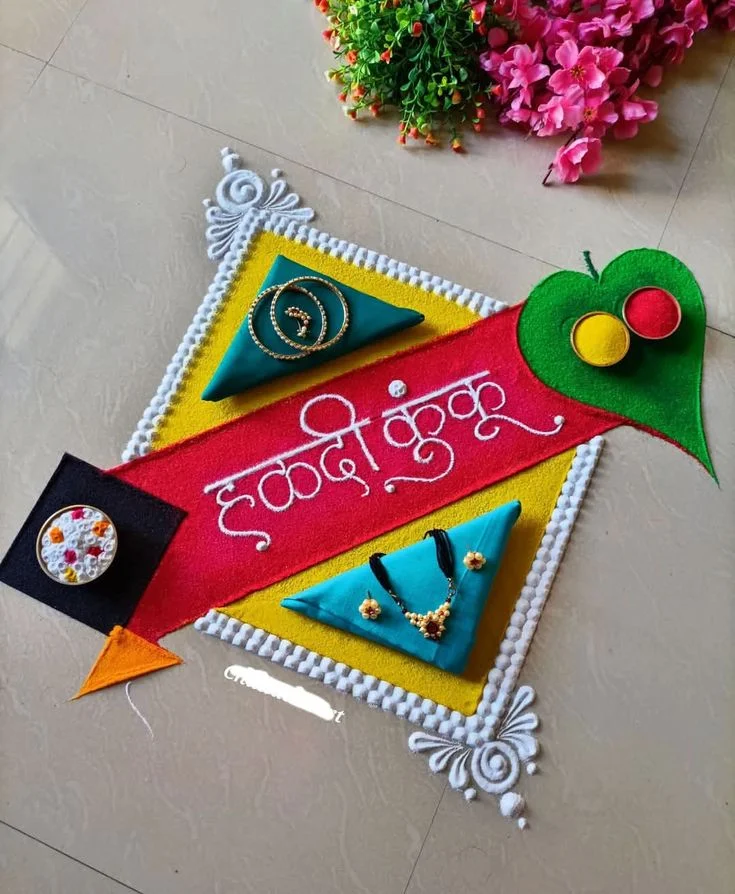
Makar Sankranti Rangoli
Makar Sankranti marks the transition of the sun into the Capricorn zodiac, celebrating winter harvest, warmth, and kites flying high in the blue sky.
Design Elements: Keep your design incredibly cheerful. Draw large colorful kites with long strings flying outward from a central sunburst motif. Use bright yellow, orange, and sky blue to match the energy of the day.
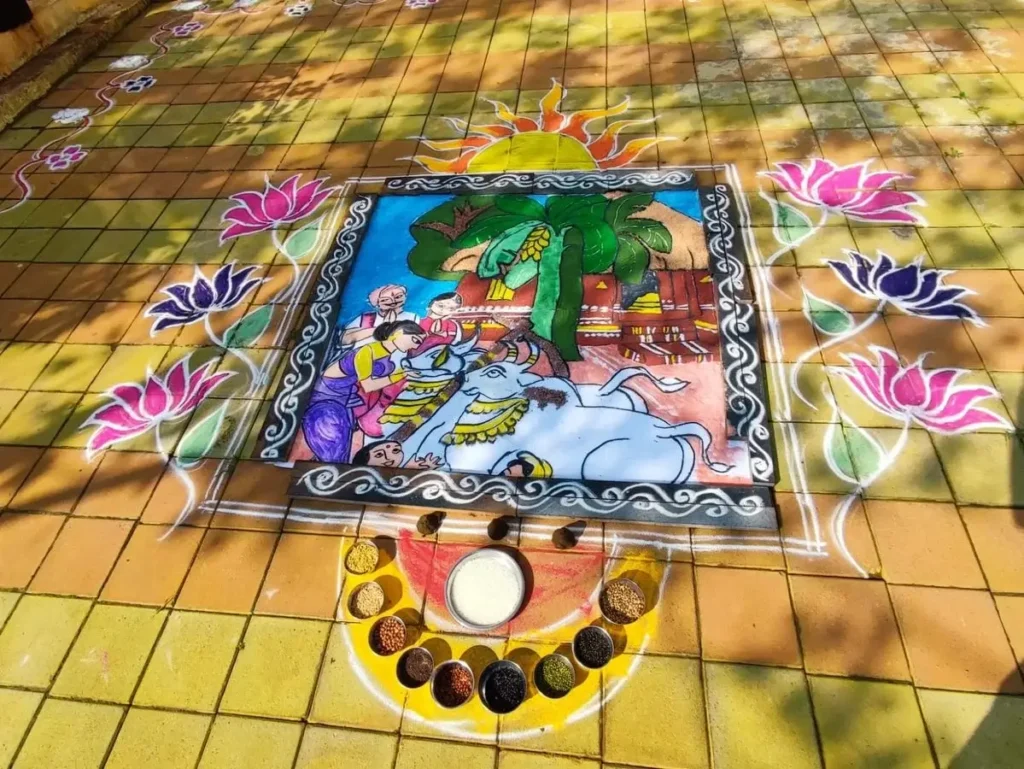
Special Rangoli for Pongal
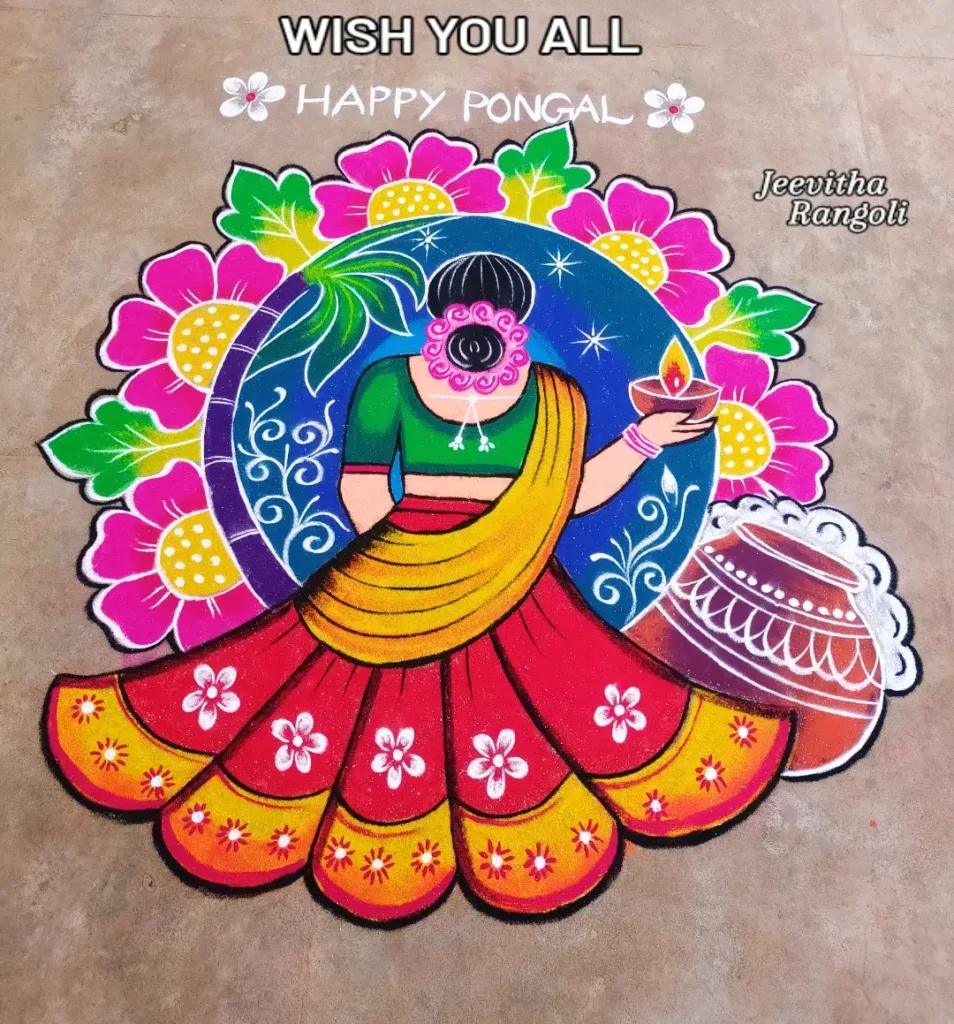
Pongal is Tamil Nadu’s grand four-day harvest festival. The artwork on this day is a grand celebration of nature, farmers, and farm animals.
Key Elements: Your design must feature a traditional clay pot (Pongal Paanai) overflowing with freshly boiled rice and milk. Draw tall sugarcane stalks on both sides of the pot to symbolize sweetness and a good harvest.
Ugadi Rangoli Designs
Ugadi marks the New Year for the people of Deccan India (Karnataka, Andhra Pradesh, Telangana). It is a celebration of fresh spring blossoms and new beginnings.
The Setup: Incorporate elements of the season. Use vibrant mango leaf borders (Toranam) and fresh neem flowers within your pattern. Use pastel greens and bright yellows to reflect the fresh, blossoming mood of the new year.
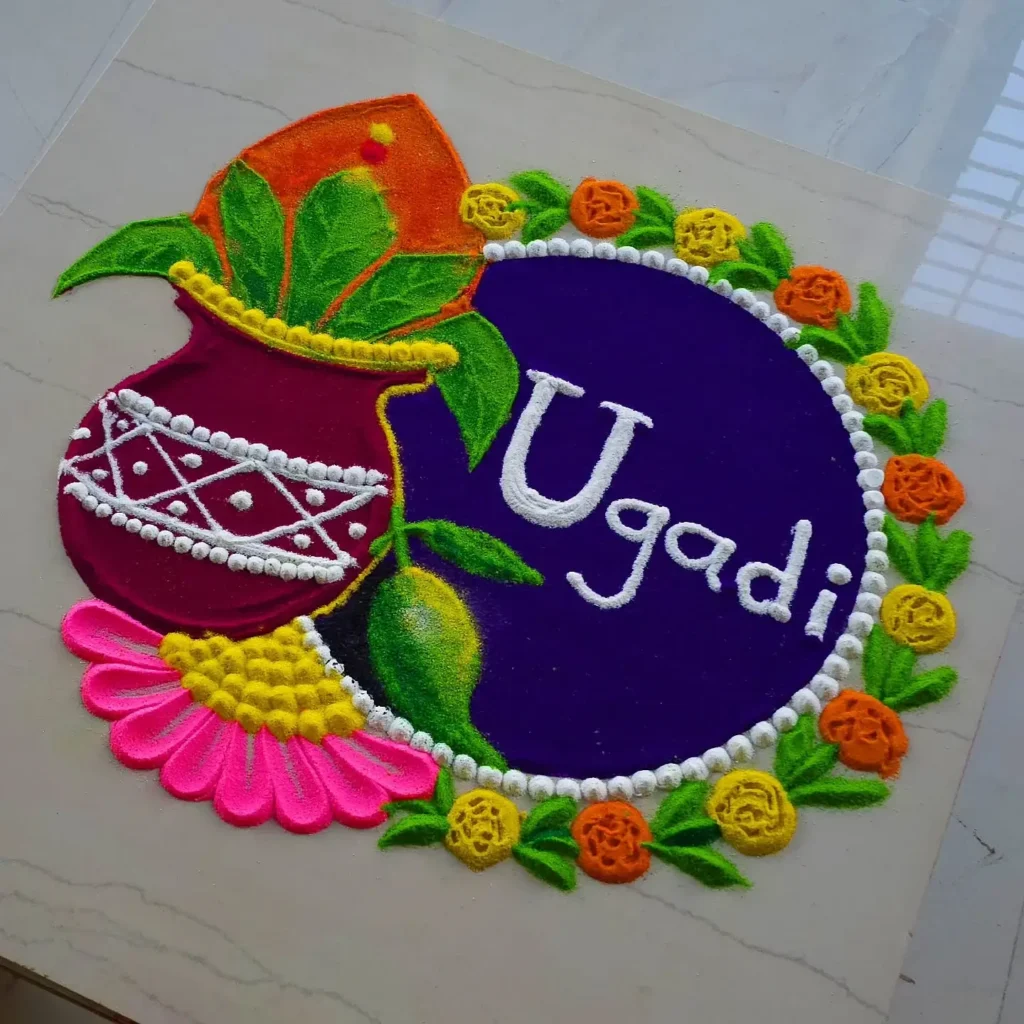
Haldi Kunku Rangoli
Haldi-Kunku is a beautiful social gathering hosted by married women during festivals like Makar Sankranti or Navratri, where turmeric and vermilion are shared as symbols of good luck.
Key Elements: Keep this design compact and elegant, right where your guests will sit. Draw two stylized small brass bowls, one filled with bright yellow turmeric (Haldi) and the other with deep red vermilion (Kunku), framed by white borders.
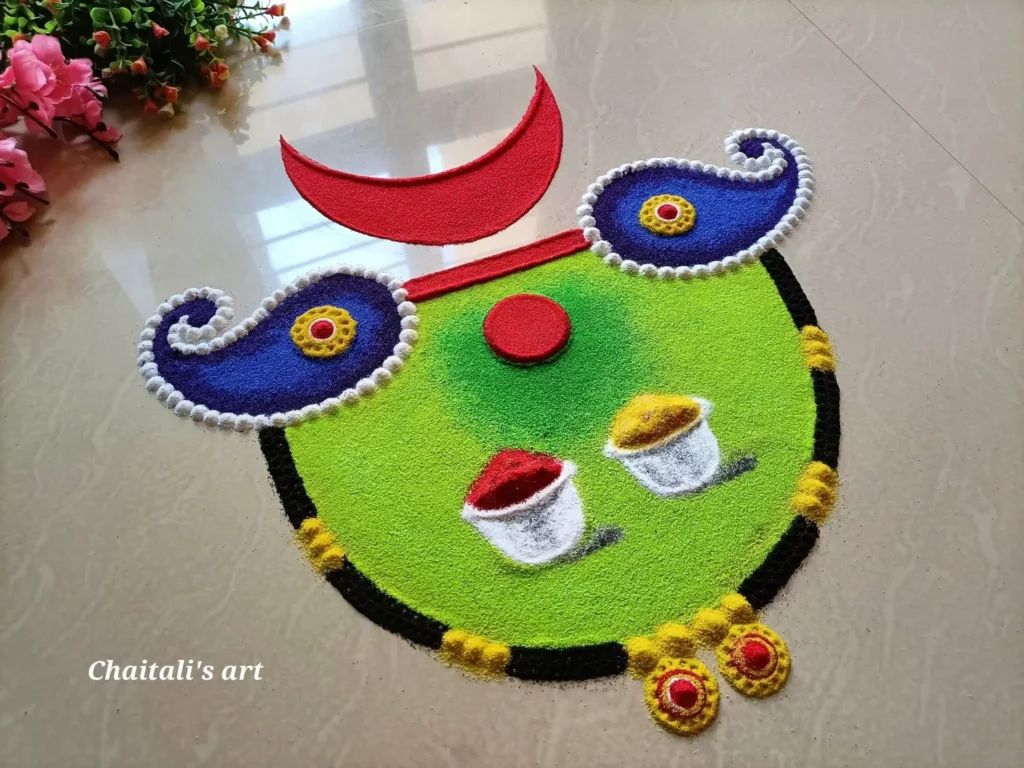
Kelvan Rangoli
Kelvan is a highly joyful event organized by close relatives to honor the upcoming bride or groom. The atmosphere is all about family bonding and celebration.
How to Style: Frame the specific area where the bride/groom will sit to eat (Pangat). Draw an elegant geometric border featuring a pair of wedding bangles, a traditional musical pipe (Shehnai), or a miniature wedding umbrella (Chhatri).
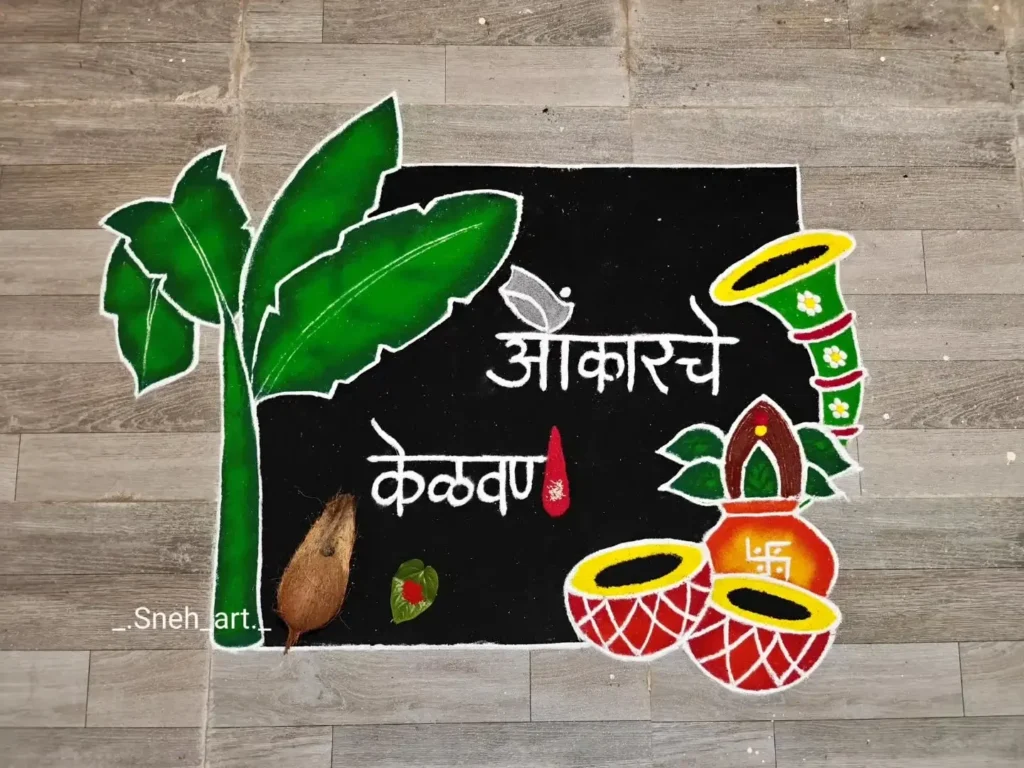
Marathi Tradition Rangoli
Maharashtrian cultural celebrations are deep-rooted in tradition, gratitude toward nature, and family joy. From welcoming the Marathi New Year to thanking our farm animals, the Rangoli designs used here are deeply symbolic and highly Auspicious.
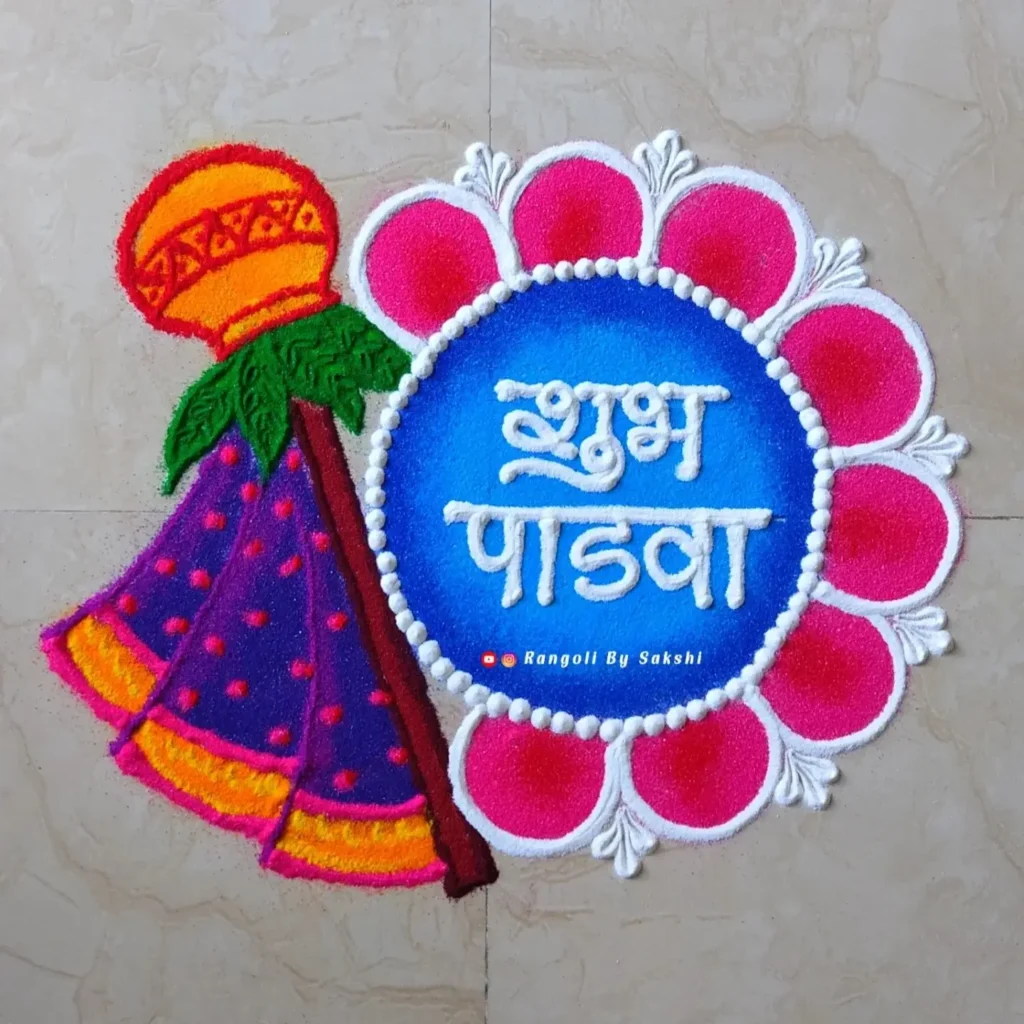
Gudi Padwa Rangoli
Gudi Padwa marks the Marathi New Year and the arrival of spring. It celebrates victory, prosperity, and fresh beginnings. Your doorstep this morning needs to look grand and festive.
Key Elements: Draw a beautiful, long Gudi flag topped with a silver or copper pot (Kalash), a neem leaf garland, and a bright green or saffron silk cloth. Surround it with a border of fresh marigold flowers.
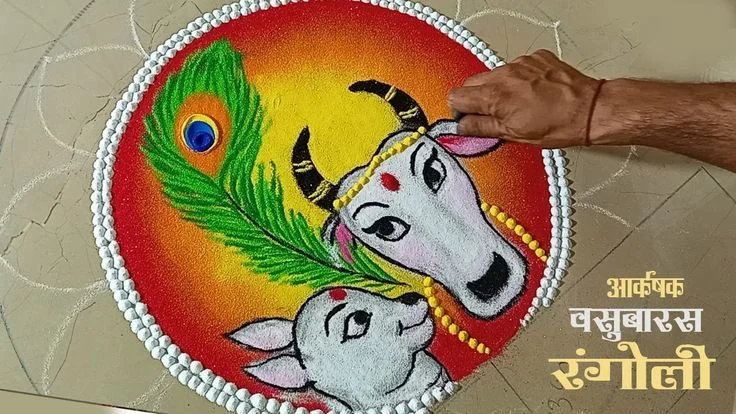
Vasubaras Rangoli
Vasubaras (Govatsa Dwadashi) marks the official first day of Diwali in Maharashtra. It is a beautiful day dedicated to worshipping cows and calves as symbols of motherly love and gratitude.
Key Elements: Draw a gentle, loving silhouette of a cow nursing her small calf. Use soft, warm colors like creamy whites, light browns, and greens to represent rural warmth and nature.
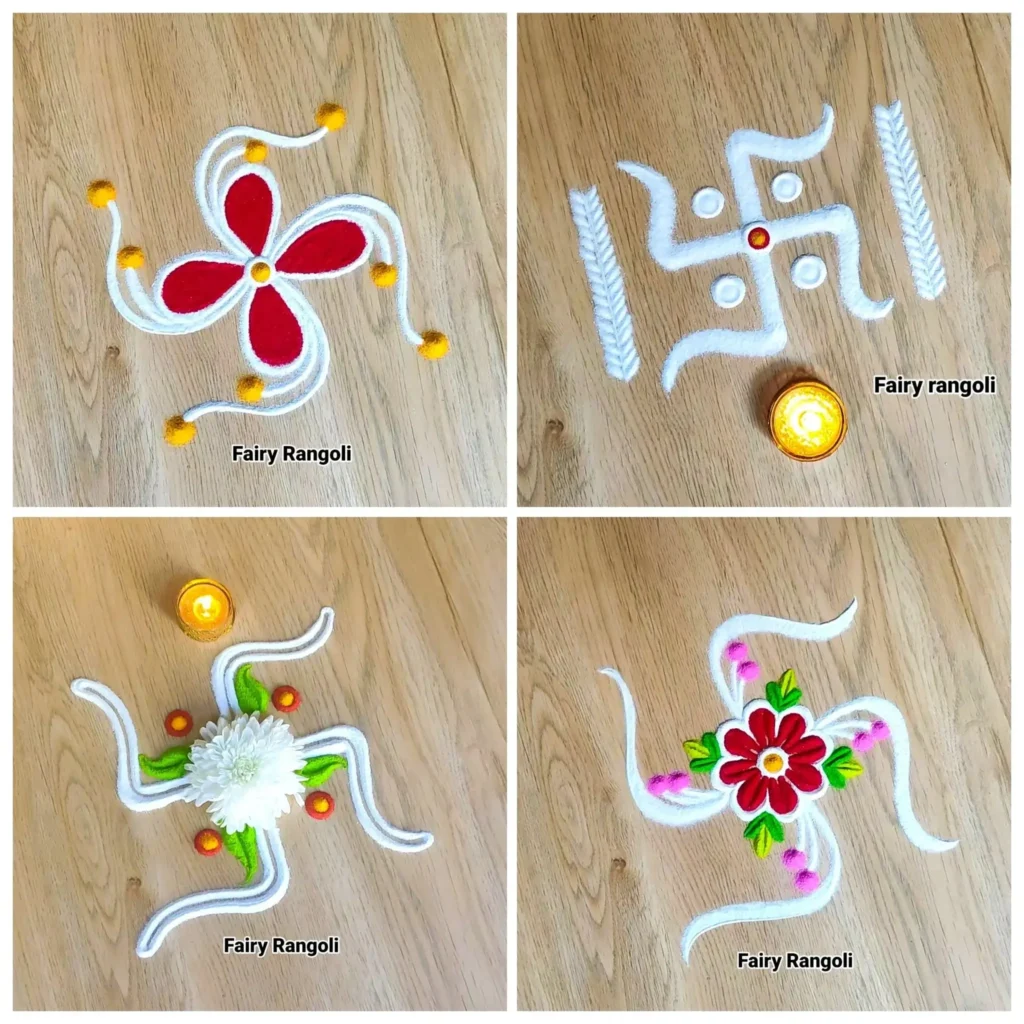
Swastik Rangoli
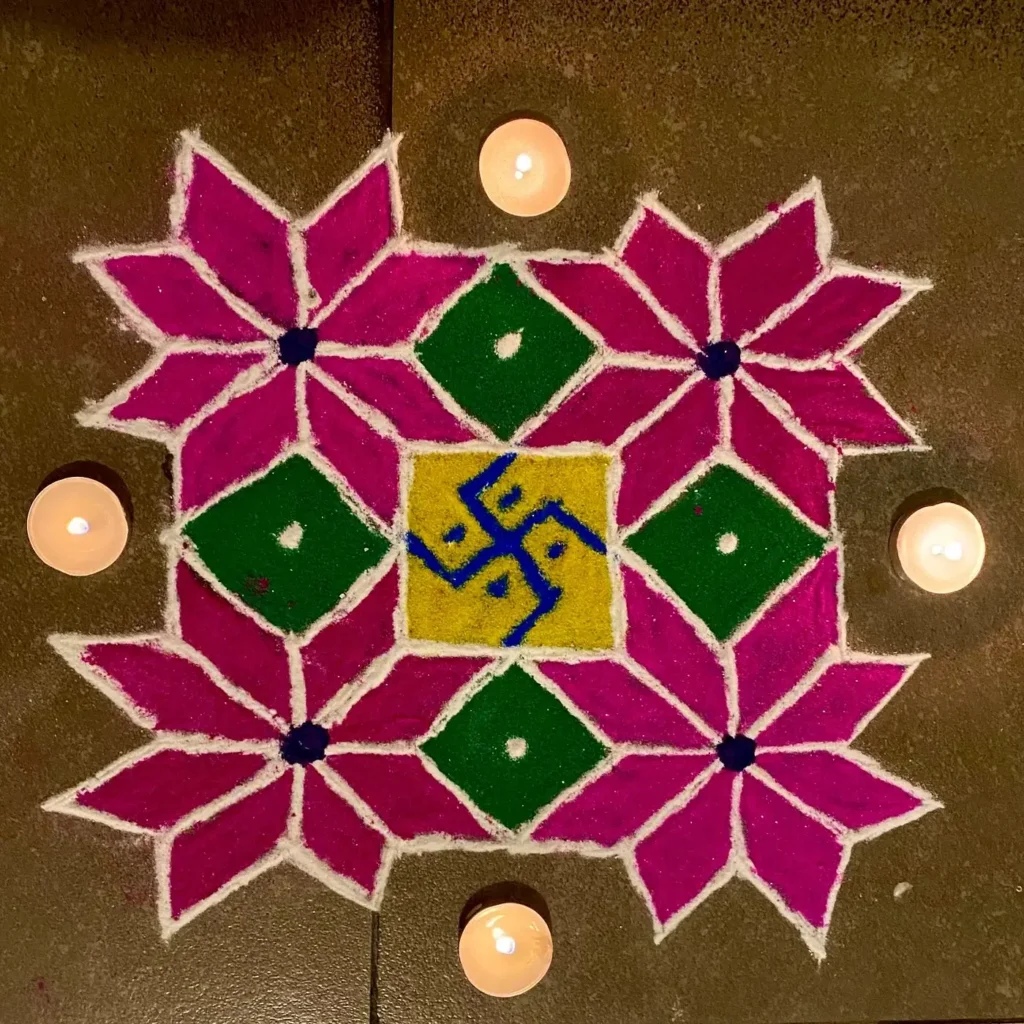
The Swastik is a powerful ancient symbol representing peace, the four directions, cosmic balance, and pure positive energy. It is a mandatory pattern for any puja or daily doorstep setup.
How to Style: Keep the lines incredibly sharp and symmetrical. Draw a bold Swastik in the center using bright vermilion red powder, and place a tiny dot in each of its four quadrants. Frame the outer edges with a simple white border or marigold petals.
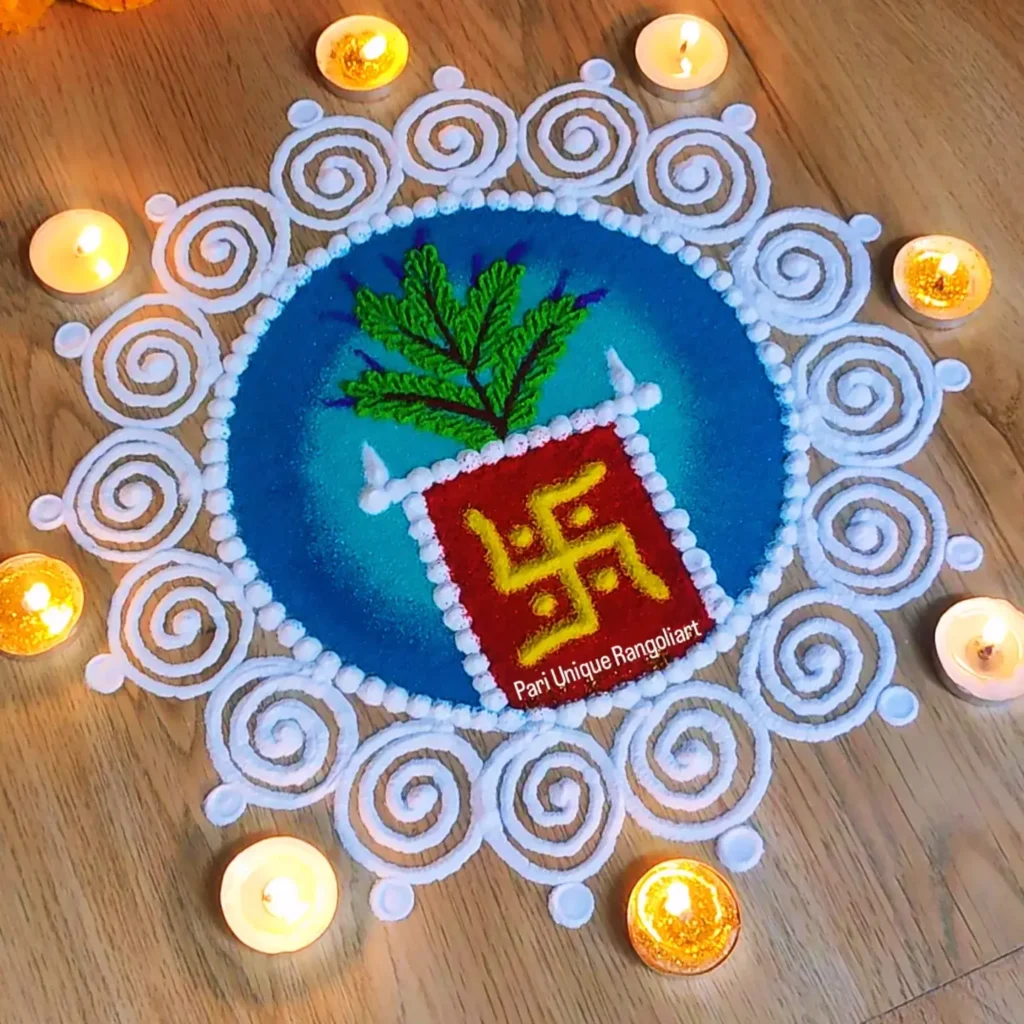
Tulsi Vivah Rangoli
Tulsi Vivah celebrates the ceremonial marriage of the holy Basil plant (Tulsi) to Lord Vishnu (in the form of a Shaligram stone or Krishna). It officially marks the beginning of the Hindu wedding season.
Key Elements: Draw a traditional decorated clay pot planter (Tulsi Vrindavan) with a vibrant green basil plant growing out of it. Adorn the planter with wedding symbols like a red bridal veil (Odhni), sugarcane stalks, and a holy Tilak.
Competition & Special Rangoli
When you enter a Rangoli competition, basic flower patterns won’t cut it. The judges look for flawless neatness, unique concepts, accurate proportions, and excellent shading techniques. This section covers advanced styles that are guaranteed to catch the judges’ eyes and help you secure a winning spot.
1st Prize Rangoli for Competition
Winning a first-prize title requires a balance of speed, precision, and an impactful message. Most winning designs avoid generic grids and focus heavily on realistic 3D portrait art or powerful social themes (like women’s empowerment, nature conservation, or cultural pride).
The Winning Secret: Always use finely sieved color powders to create ultra-smooth gradient transitions. Focus on crisp white detailing over the colored base. This makes your design pop from a distance, which instantly impresses the evaluation panel.
Floor Painting Rangoli Design
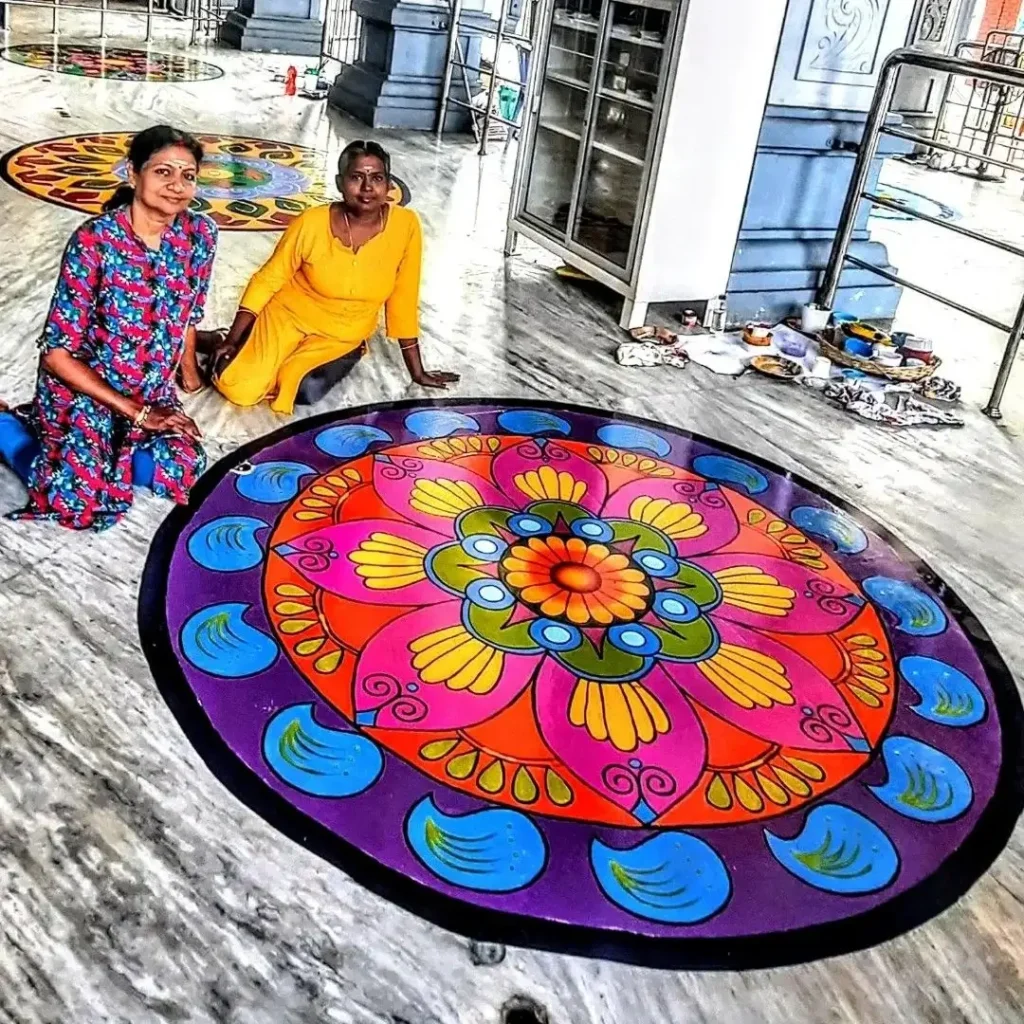
If you are tired of loose powders blowing away or getting ruined by foot traffic, floor painting is your ultimate solution. This style uses liquid paints instead of dry powder, creating a semi-permanent art piece that lasts for weeks or months.
Materials & Technique: Use acrylic paint or specialized floor enamel paints on a clean, dry surface. This technique is highly popular for corporate office lobbies, wedding venue corridors, and building society gateways because it stays vibrant and smudge-free.
Rangoli Drawing
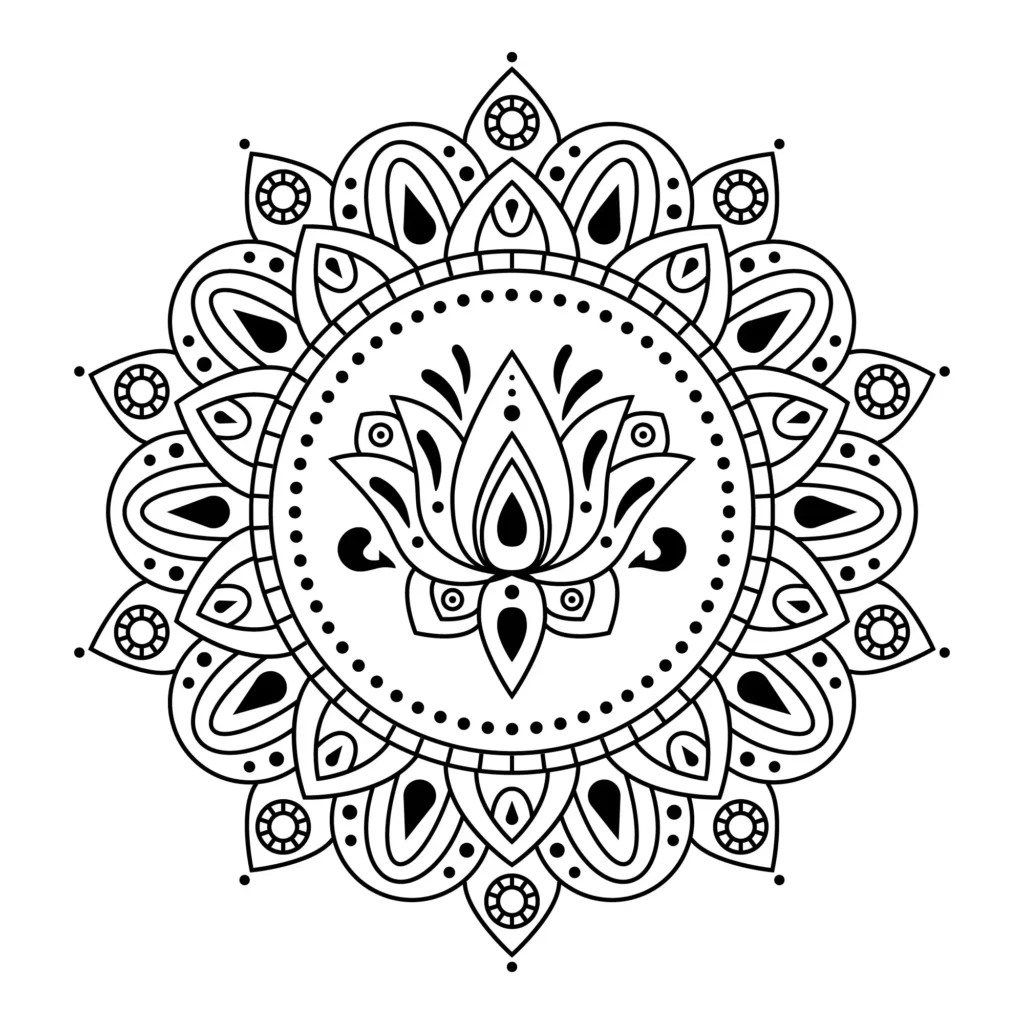
A classic Rangoli drawing focuses heavily on freehand artistic skill and line work over heavy color blocking. It relies on the flow of your hand to create beautiful, continuous patterns without breaks.
Design Elements: Think of sweeping peacock necks, flowing vine borders, and majestic paisleys (Kalka). Keep your color palette limited to 3 or 4 high-contrast shades so the actual line drawing remains the main highlight of the floor canvas.
Pencil Rangoli Drawing
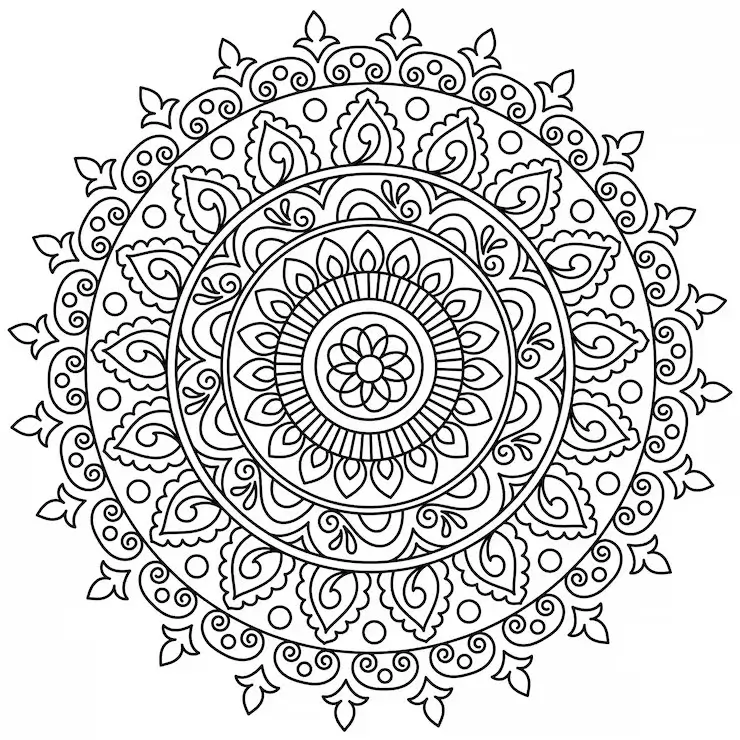
Perfect for absolute beginners, school competitions, or complex figure mock-ups. Before you drop a single grain of color powder on the floor, you sketch out the entire design using chalk or a light pencil to ensure flawless proportions.
The Strategy: Use a soft graphite pencil or white tailors’ chalk to map out facial symmetry, geometric circles, and outer borders. This acts as your safety net if a line goes wrong, you can easily wipe it away and correct it before locking it in with permanent color powders.
New Year & National Occasion Rangoli
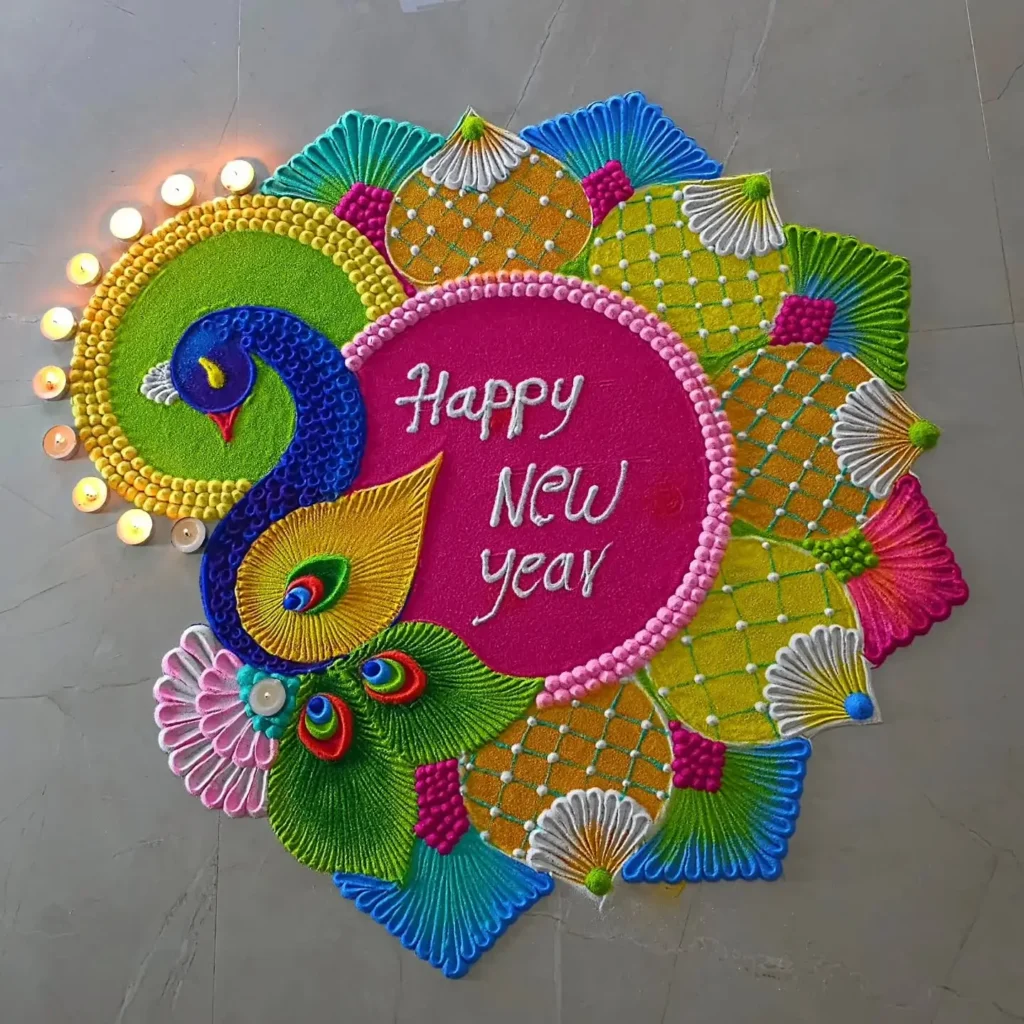
Rangoli isn’t just for traditional religious festivals. It is a beautiful way to celebrate global milestones and express national pride. Whether you are welcoming a fresh calendar year or celebrating India’s iconic national holidays, these contemporary designs bring a modern, proud vibe to your floor space.
Creative New Year Rangoli
Welcoming a brand new year calls for a design that is full of optimism, modern styling, and bright future vibes.
The Design Idea: Write the numbers of the upcoming year boldly in the center using a clean, modern font. Surround the typography with fun festive elements like popping party poppers, sparkling fireworks patterns, or a classic countdown clock striking midnight.
Cartoon Rangoli for New Year
If you want to bring an absolute smile to the faces of kids and neighbors, a cartoon-themed design is a fantastic, playful choice.
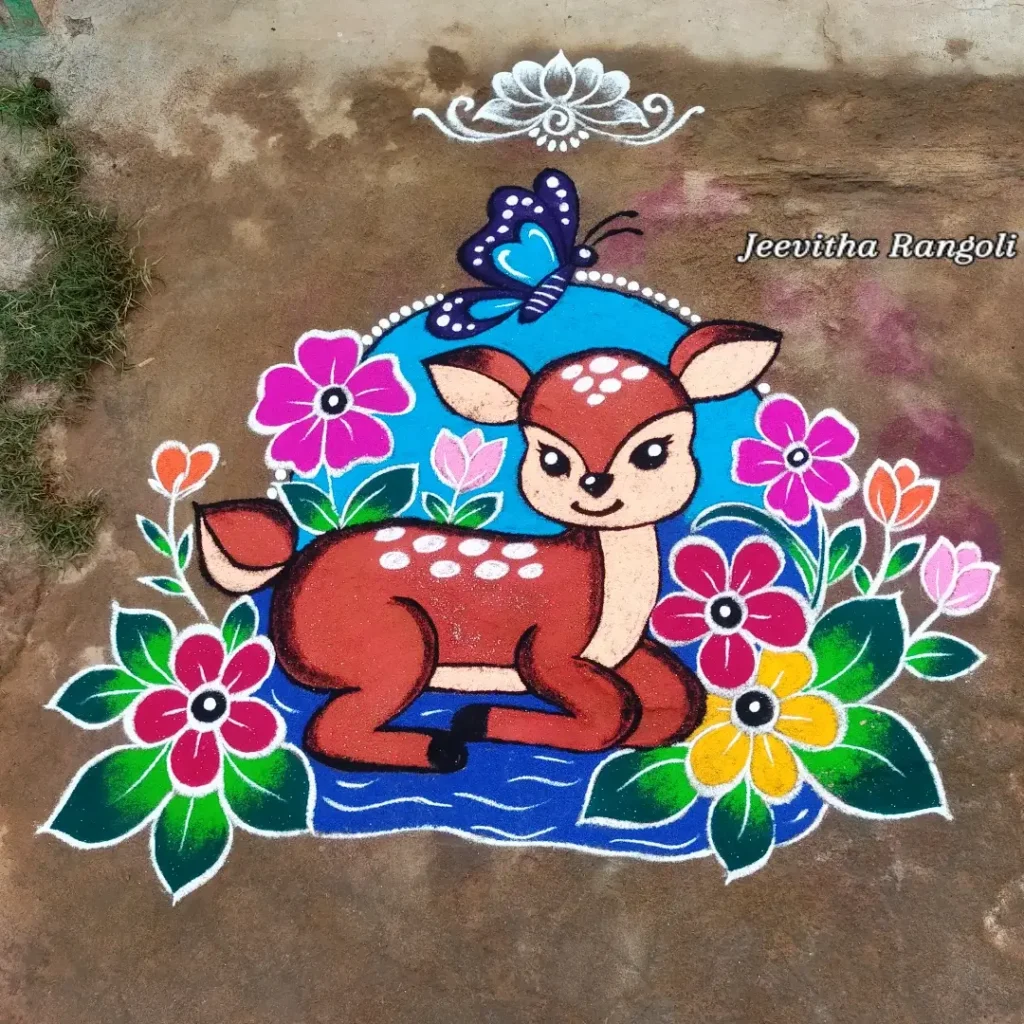
How to Style: Draw popular, beloved characters like Mickey Mouse, Chhota Bheem, or Doraemon wearing cute party hats and holding a “Happy New Year” banner. Use flat, vibrant comic-book colors with thick, clean black outlines to make the characters look highly animated.
Independence Day Rangoli
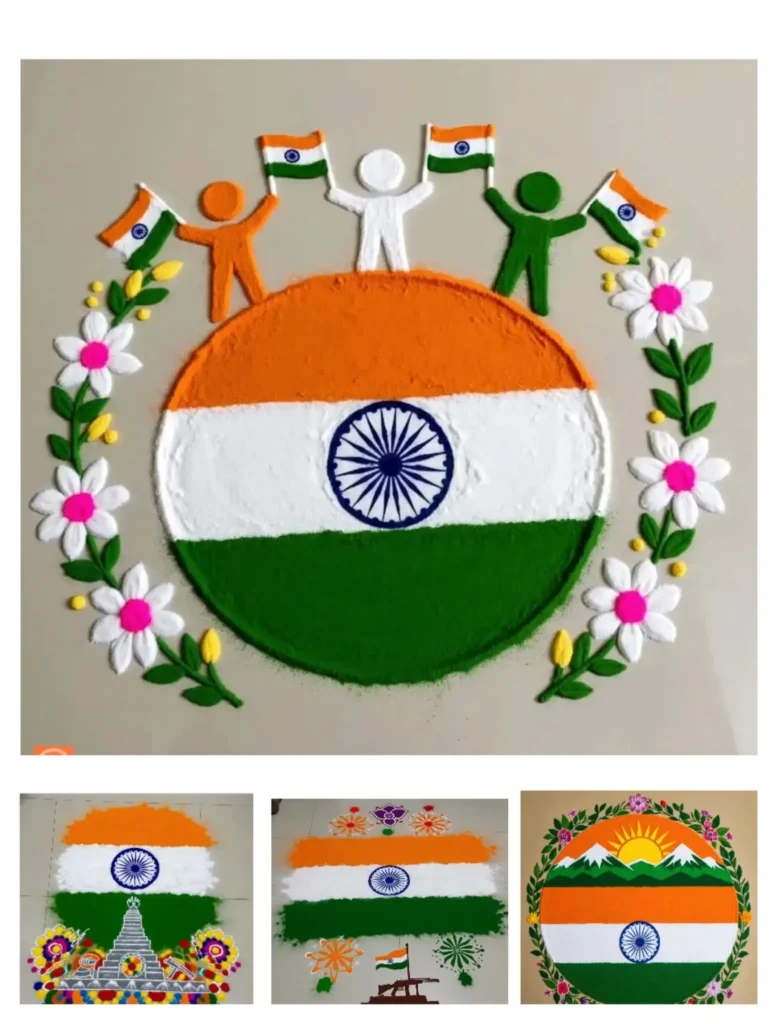
Celebrated on the 15th of August, this national day calls for an art piece that oozes patriotism, unity, and respect for our freedom fighters.
Key Elements: Center your artwork around the Indian Tri-color. You can draw a majestic silhouette of the India Gate or a flying white dove breaking free from chains, beautifully draped in saffron, white, and green waves with the Ashoka Chakra in the center.
Unique Republic Day Rangoli
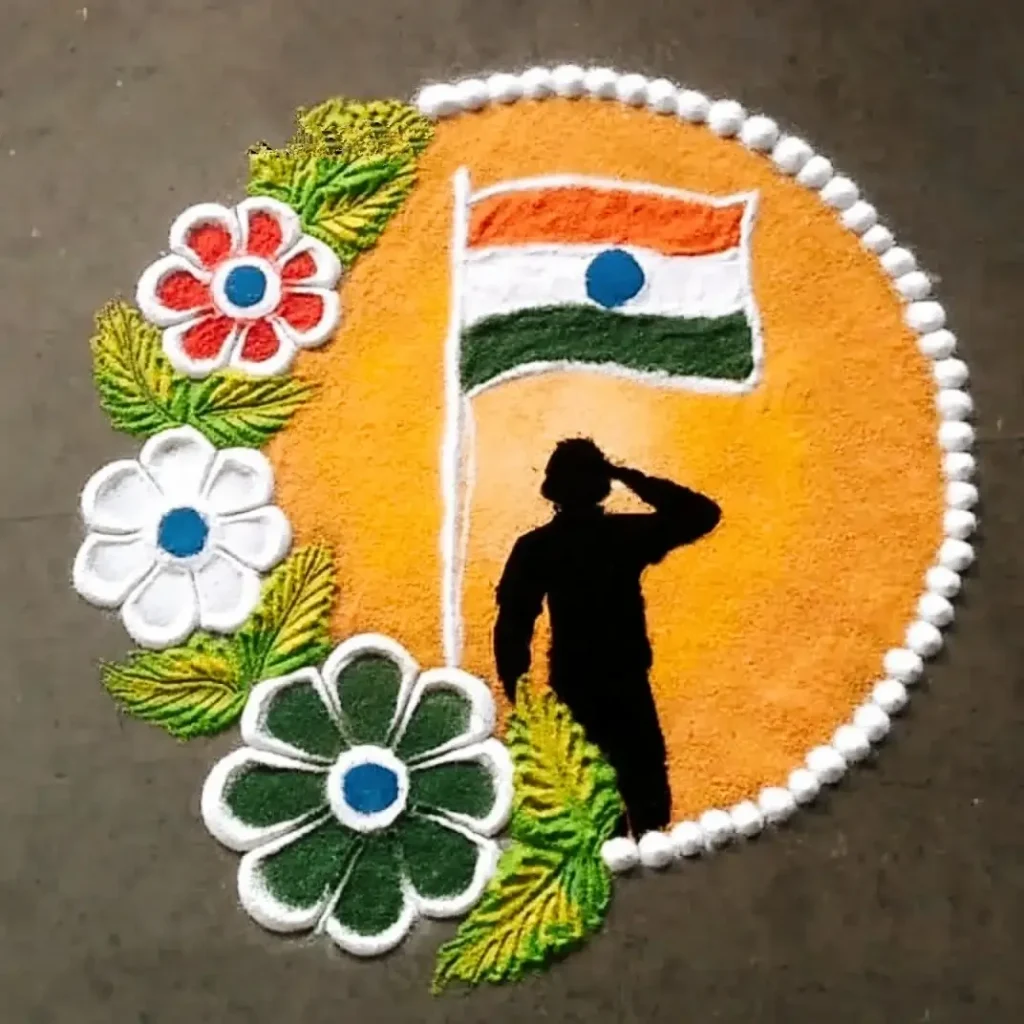
Marking the day India’s constitution came into effect (26th January), a Republic Day design looks best when it highlights our national strength, unity in diversity, and iconic heritage.
The Vision: Move away from standard flag drawings. Create a unique design mapping out the majestic Parliament building or a beautiful geometric mandala utilizing the 24 spokes of the Ashoka Chakra. Use a crisp white backdrop to make the tricolor shades stand out sharply.
Tips, Tricks & Techniques
Making a gorgeous Rangoli is half the battle; ensuring it looks neat, handles easily, and lasts throughout the day is the other half. Here is a breakdown of the best materials, expert hacks, and simple mistakes you need to avoid to make your floor art look like a masterpiece.
Best Materials for Making Rangoli
Using the right materials makes a massive difference in how your final design looks. If your powder is too coarse, it won’t flow smoothly; if it is too fine, it will blow away with the wind.
The Best Options:
- Base White Powder: Use premium sieved quartz powder or marble dust for sharp, bright outlines.
- Color Powders: Look for “fine-grained” sand colors. They roll off your fingers much easier than local chalk powders.
- Natural Alternatives: If you prefer eco-friendly materials, use turmeric (Haldi), vermilion (Kunku), rice flour, or dried flower petal dust.
- Household Tools: Keep a set of bangles, kitchen forks, toothpicks, and plastic bottle caps handy to create easy shapes and textures.
Pro Tips for Beginners
If you are new to this art and feel intimidated by the complex patterns you see online, use these three simple rules to build your confidence:
- Start with a Blueprint: Always draw your basic layout with a light piece of tailor’s chalk or white whiteboard chalk first. If you make a mistake, you can easily wipe it away with a damp cloth before applying color.
- The Funnel Trick: If you find it hard to release color smoothly from your thumb and index finger, use a small plastic funnel or an empty sauce squeeze bottle. It gives you absolute control over the flow of the powder.
- Work Inside-Out: Always start filling colors from the center of the design and move toward the outer borders. This prevents your sleeves or hands from accidentally smudging parts you have already finished.
How to Make Your Rangoli Last Longer
Outdoor designs are highly vulnerable to unexpected gusts of wind, running kids, or stray pets. Here is how you can protect your hard work:
- The Hairspray Hack: Once your dry powder Rangoli is completely finished, hold a can of strong-hold hairspray about 12 inches away and gently spray a fine mist over the art. It locks the powder grains together and keeps them from blowing away.
- Liquid Border Base: Use a mix of liquid chalk paste (Geru or white chalk paint) to create the main structural borders. Even if the loose inner colors get slightly disturbed, the overall design structure stays perfectly intact.
- The Acrylic Shortcut: If you want a design to last for the entire 5 days of Diwali without touching it up, skip the powder entirely and use acrylic paints or temporary floor stickers.
Common Rangoli Mistakes and How to Avoid Them
Avoid these frequent missteps to ensure a clean, professional finish:
- Mistake 1: Not cleaning the floor properly. If the floor has dust or moisture, your powder will clump up and look patchy.
- Fix: Sweep, mop, and let the floor dry completely before starting.
- Mistake 2: Making lines too thick. Chunky white borders ruin the delicacy of a design.
- Fix: Keep your finger pinch tight, or use a fine cone dispenser for sleek, clean outlines.
- Mistake 3: Placing diyas too close to dry powder. The heat and leaking oil can burn the colors or cause ugly stains.
- Fix: Always leave a 2-inch gap between your design border and the base of your lit oil lamps.
Conclusion
At the end of the day, Rangoli is much more than just throwing some colored powder on the floor. It is a beautiful celebration of our culture, a daily way to spread positive vibes, and the perfect excuse to gather your family and let your creativity run wild. From a simple 5-minute dot design on a busy morning to a grand 3D masterpiece for a major festival, every single pattern you make carries a piece of joy and tradition.
You don’t need to be a professional artist to start. Grab your materials, use the simple hacks we discussed, and just let your hands guide you. Remember, the beauty of a Rangoli lies in the love and positive energy you put into creating it!
FAQs
Why do we make Rangoli at the entrance of our homes?
In Indian culture, the main entrance is considered the gateway for energy, guests, and deities. Creating a Rangoli acts as a spiritual invitation to Goddess Lakshmi (the deity of wealth and prosperity) to enter the home. Scientifically, traditional symmetrical designs also help create a positive visual environment that lifts the mood of anyone entering the house.
Which material is best for making Rangoli borders?
Fine-grained quartz powder or white marble dust is best for creating sharp, visible borders. For an eco-friendly daily option, fine rice flour is highly recommended as it flows smoothly and serves a traditional purpose by feeding small birds and insects.
How can I draw a perfect circle if I don’t have a compass?
You can easily make a perfect circle using simple household items. Tie a piece of thread to a chalk stick, hold the free end of the thread firmly in the center of your workspace, and rotate the chalk outward in a full loop. For smaller circles, tracing around a bangle or a kitchen plate works beautifully.
Can we use liquid colors instead of dry powder for Rangoli?
Yes, absolutely. Liquid Rangoli styles traditionally known as Alpana in Bengal use a smooth paste made from soaked rice and water. For modern setups where you want the design to last for weeks without smudging, acrylic paints or fabric colors are excellent alternatives.
What is the difference between Rangoli and Kolam?
While both are traditional forms of floor art, Rangoli (popular in North and West India) is highly colorful, free-flowing, and often features floral or deity motifs. Kolam (traditional to South India) is made daily using dry white rice powder, focusing strictly on mathematical grids, dots, and geometric loops without heavy color filling.
How do I stop my Rangoli from blowing away with the wind?
The easiest trick is the hairspray hack. Once your dry powder design is completely finished, spray a very fine mist of strong-hold hairspray from a distance of about 12 inches. This settles and bonds the powder grains to the floor, preventing them from shifting in mild drafts.
Check more designs:
