80 Easy Arabic Mehndi Designs for Every Occasion (2026)
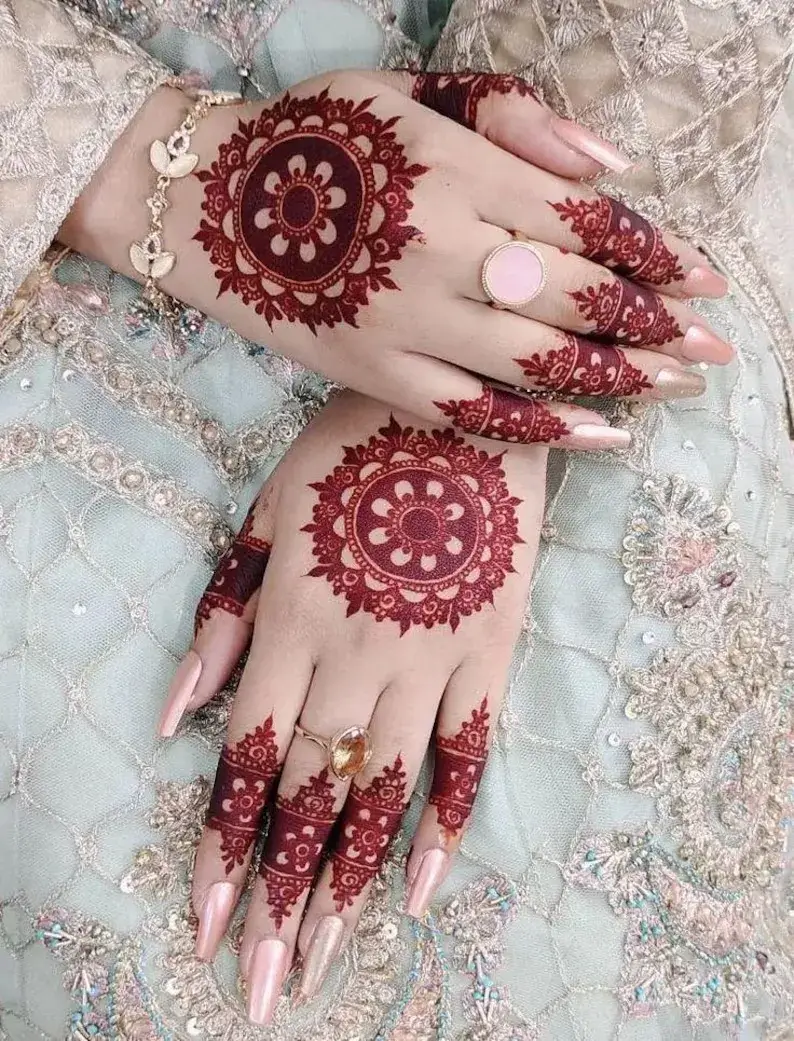
Arabic mehndi is a henna style built on bold outlines, flowing floral vines, and plenty of bare skin. Many designs follow a diagonal trail from the wrist to one finger. It looks striking, yet it usually takes less time to apply than dense Indian bridal mehndi.
This guide has 80 Arabic mehndi designs, sorted by hand placement and occasion, from quick finger accents to full bridal hands. Each one comes with a short note on where it works best. Save the ones you like and show them to your artist. If you plan to draw one yourself, start with the beginner set.
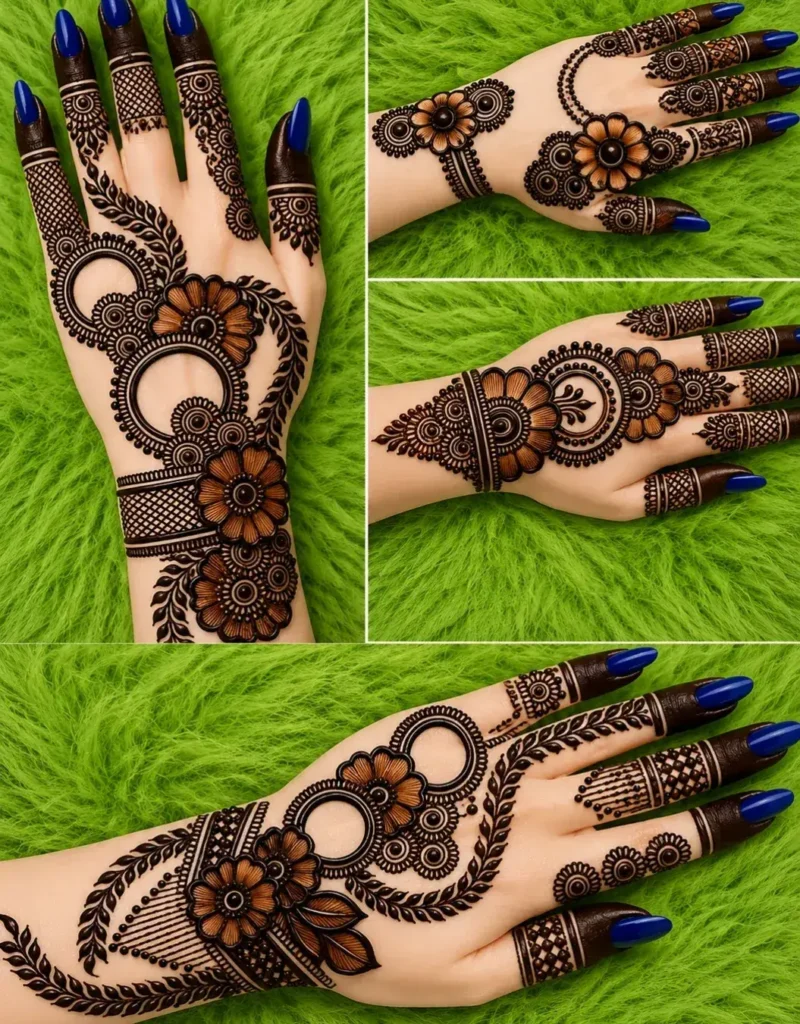
Most importantly: This guide ensures your safety by helping you identify and avoid harmful “black henna.” The U.S. Food and Drug Administration (FDA) strongly warns against black henna temporary tattoos because they illegally contain p-phenylenediamine (PPD). As documented in PubMed (National Institutes of Health), PPD is a potent chemical sensitizer that can trigger severe allergic contact dermatitis, painful blistering, and lifelong chemical sensitivities or permanent scarring.
Editor’s Note: Simplemehandidesigns.com shares beautiful mehndi inspiration for weddings, festivals, celebrations, and everyday occasions. We feature designs sourced from real mehndi artists and provide credit or a source link whenever available. We do not use AI-generated mehndi images or rely on anonymous, unverifiable sources. Our team reviews the artist or original source before featuring a design. Some links may be affiliate links, at no extra cost to you.
What makes an Arabic mehndi design different
- Bold outline. Thick, dark lines shape each flower and leaf, so the pattern reads clearly from a distance.
- Open skin. Artists leave bare skin around the motifs on purpose. The empty space makes the dark lines stand out.
- Diagonal bel. A bel (also spelled bail) is a vine that crosses the hand at an angle. It often runs from the wrist to the index or middle finger.
- Florals and paisley. Roses, leaves, and lotus flower motifs appear often, along with teardrop paisley, sometimes called ambi (mango) in Hindi and Urdu.
- Shading. Some artists add light strokes or dots inside petals for depth. Others keep every petal open.
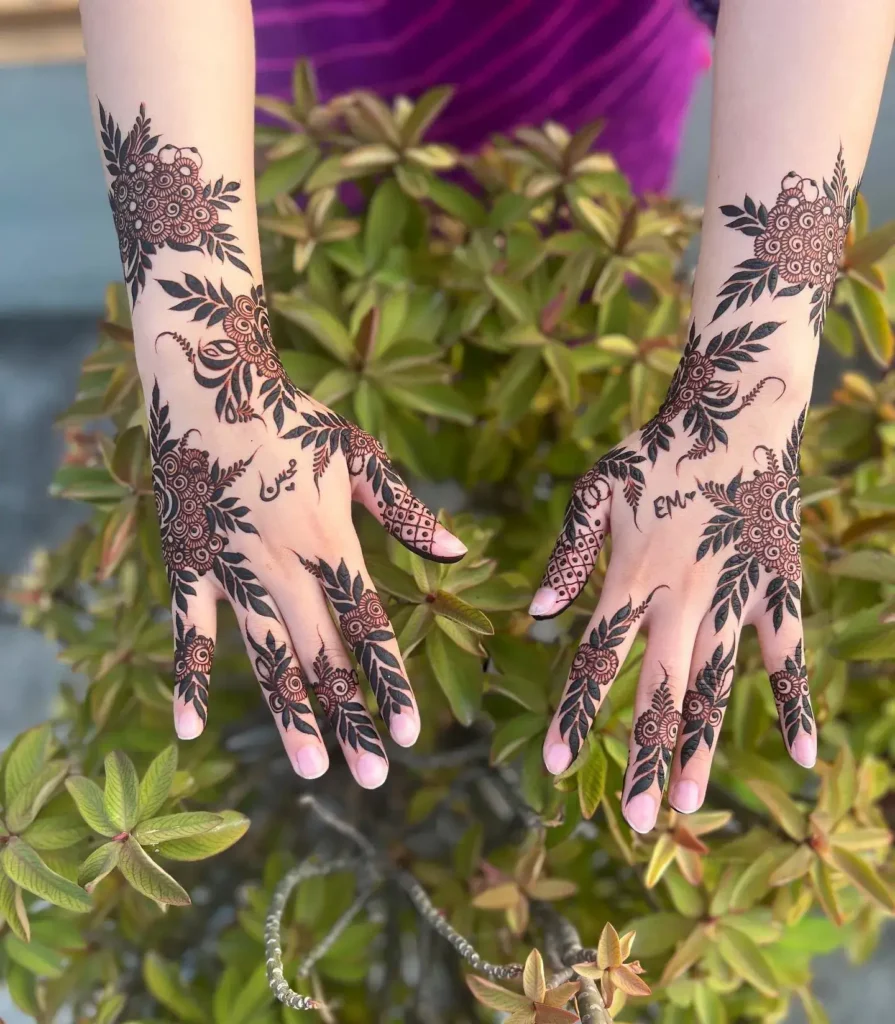
Simple and Easy Arabic Mehndi Designs for Beginners
These ten designs need only a basic cone and a steady hand. Each one uses thick outlines and plenty of open skin, so small wobbles don’t show. New to cones? Start with design 1, or read how to draw an Arabic design at home first.
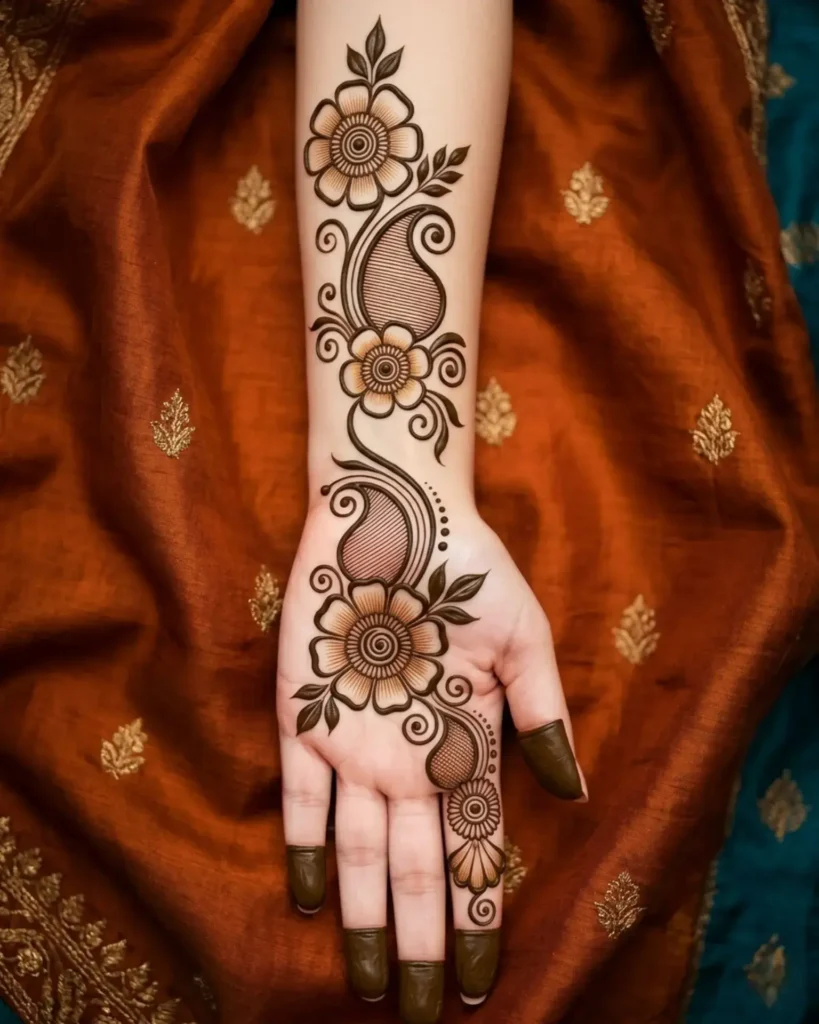
1. Single Diagonal Vine From the Index Finger
One vine crosses the hand from the wrist to the index fingertip. Draw the stem in one smooth pull, then add leaves in pairs along it. Rest your wrist on the table for a steadier line.
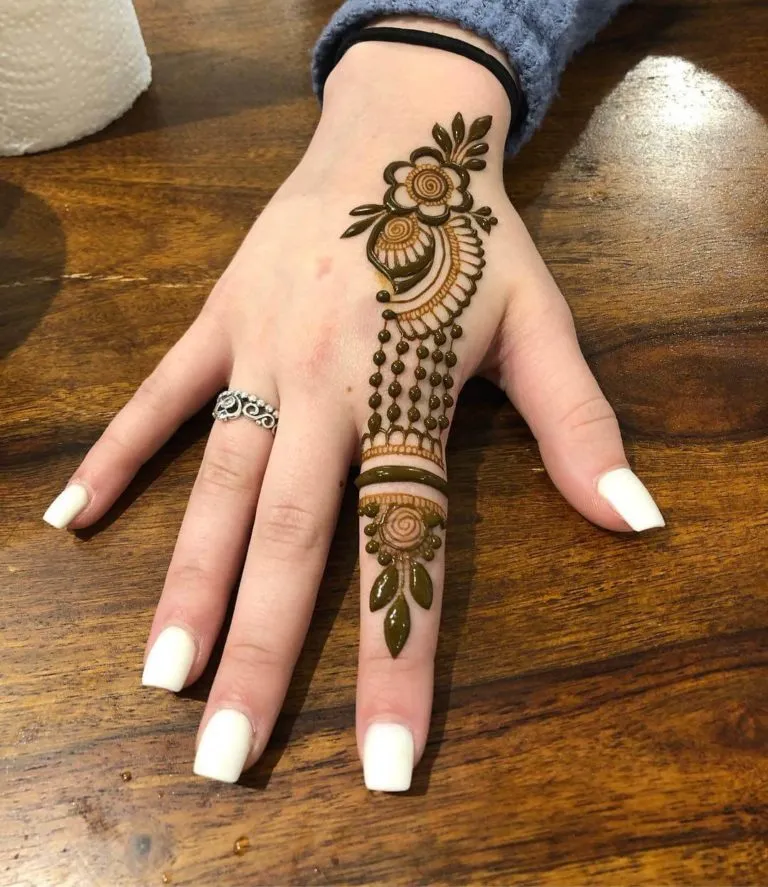
2. Three-Flower Trail With Leaves
Three flowers of different sizes sit along a curved stem, with a leaf pair between each. Draw the largest flower at the wrist first. That order helps you space the smaller flowers evenly.
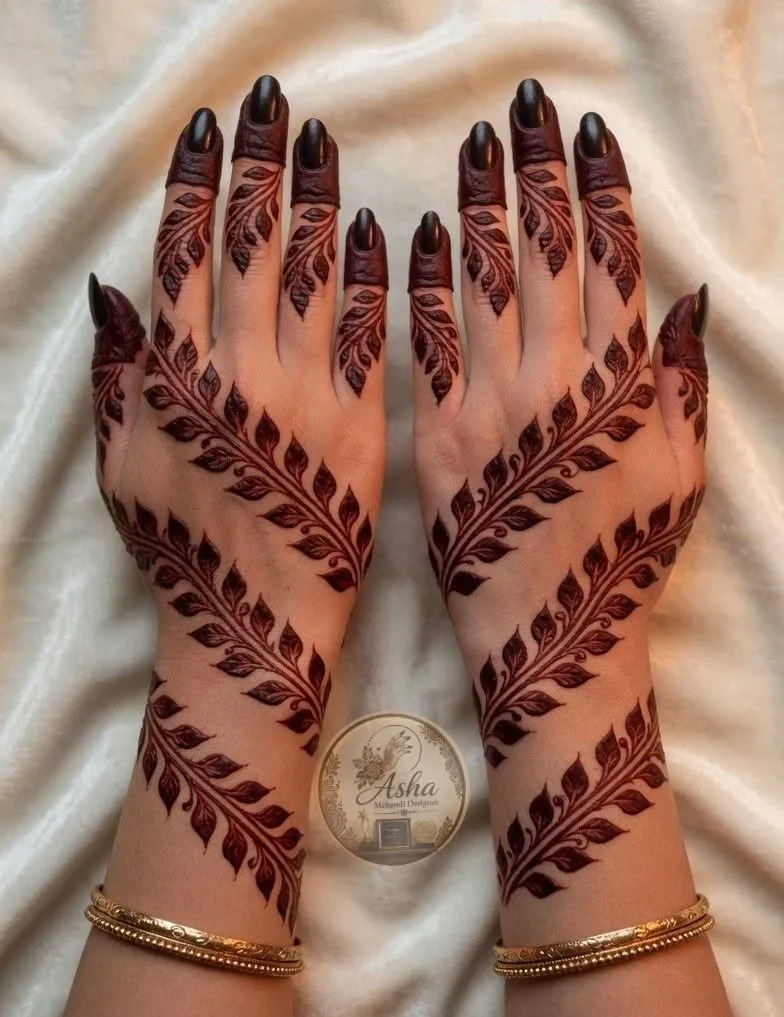
3. Paisley and Dot Pattern for the Palm
A large paisley fills the centre of the palm, ringed by rows of dots. Dots forgive small mistakes, because a slightly uneven dot still looks intentional. Press gently and lift the cone straight up to avoid tails.
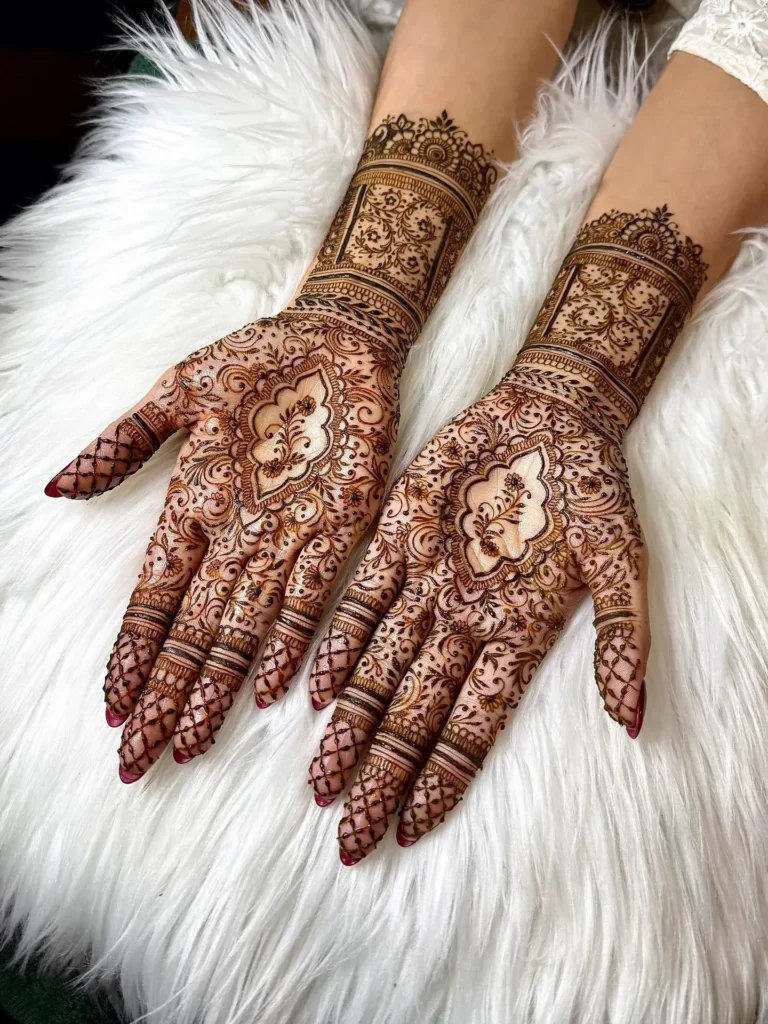
4. Thick-Outline Leaf Design
Bold leaf shapes with empty centres carry this design. Leaving the insides bare saves time and shows off the Arabic style. Draw each outline in a single stroke, and join the lines neatly at the stem.
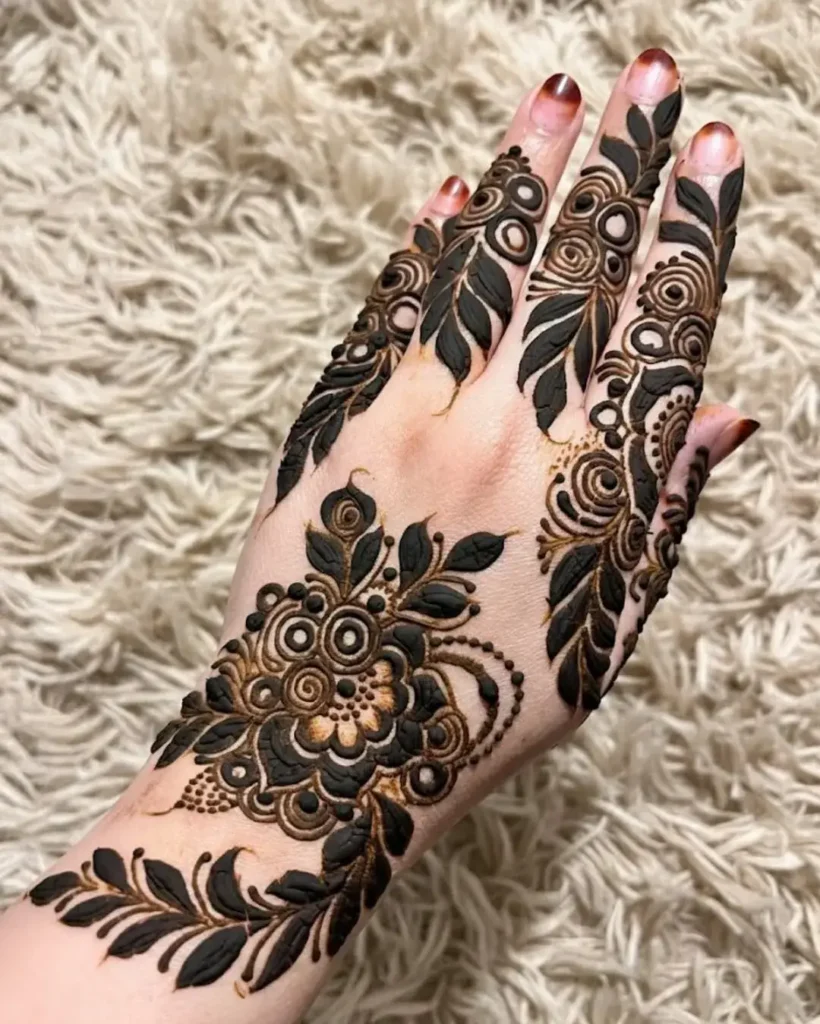
5. Half-Circle Design at the Wrist
A half circle of petals and dots wraps the wrist like a cuff. The curve gives you a natural guide. Practise the shape on paper first, then space the border dots evenly.
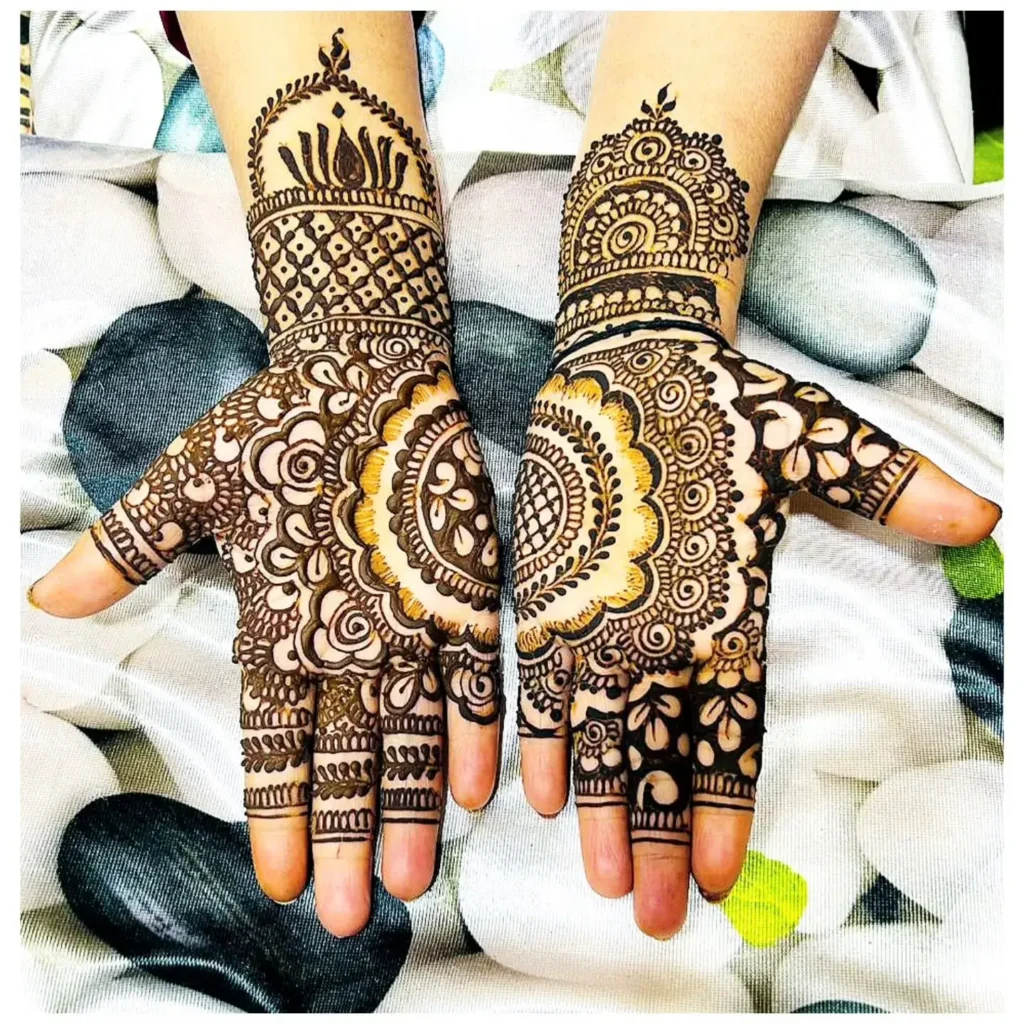
6. Two-Finger Floral Trail
A floral vine climbs the index and middle fingers and meets near the knuckles. Finish one finger completely, then copy its flowers onto the other. Keep both stems the same thickness so the pair looks balanced.
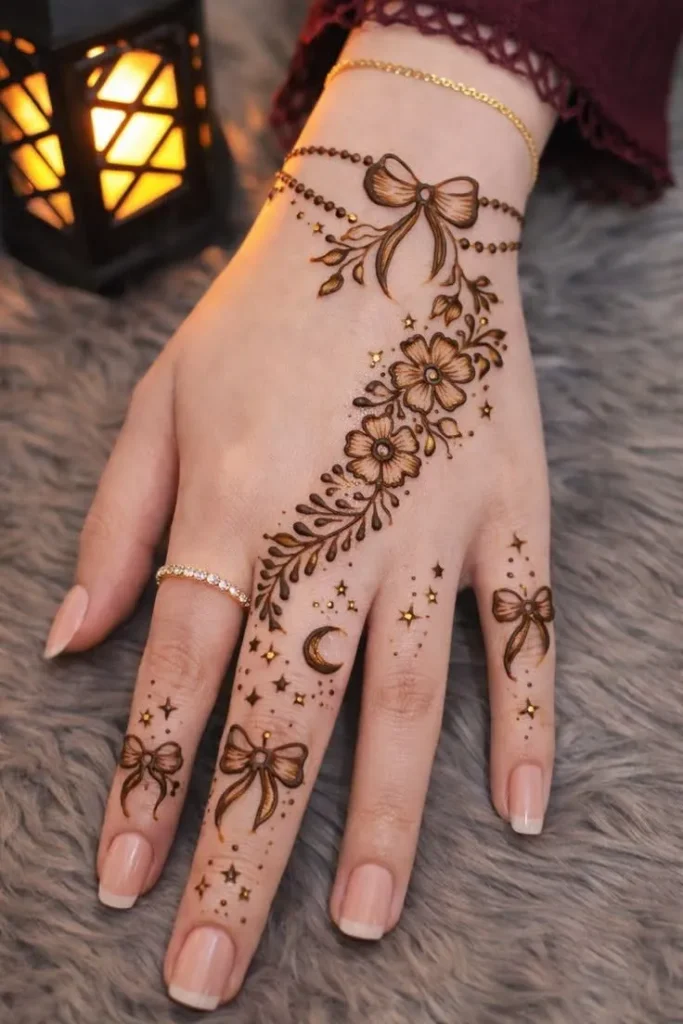
7. Simple Bel With Open Space
A slim bel crosses the hand with generous bare skin on both sides. The space is the feature here, so resist filling it. Add one small paisley at the end to balance the trail.
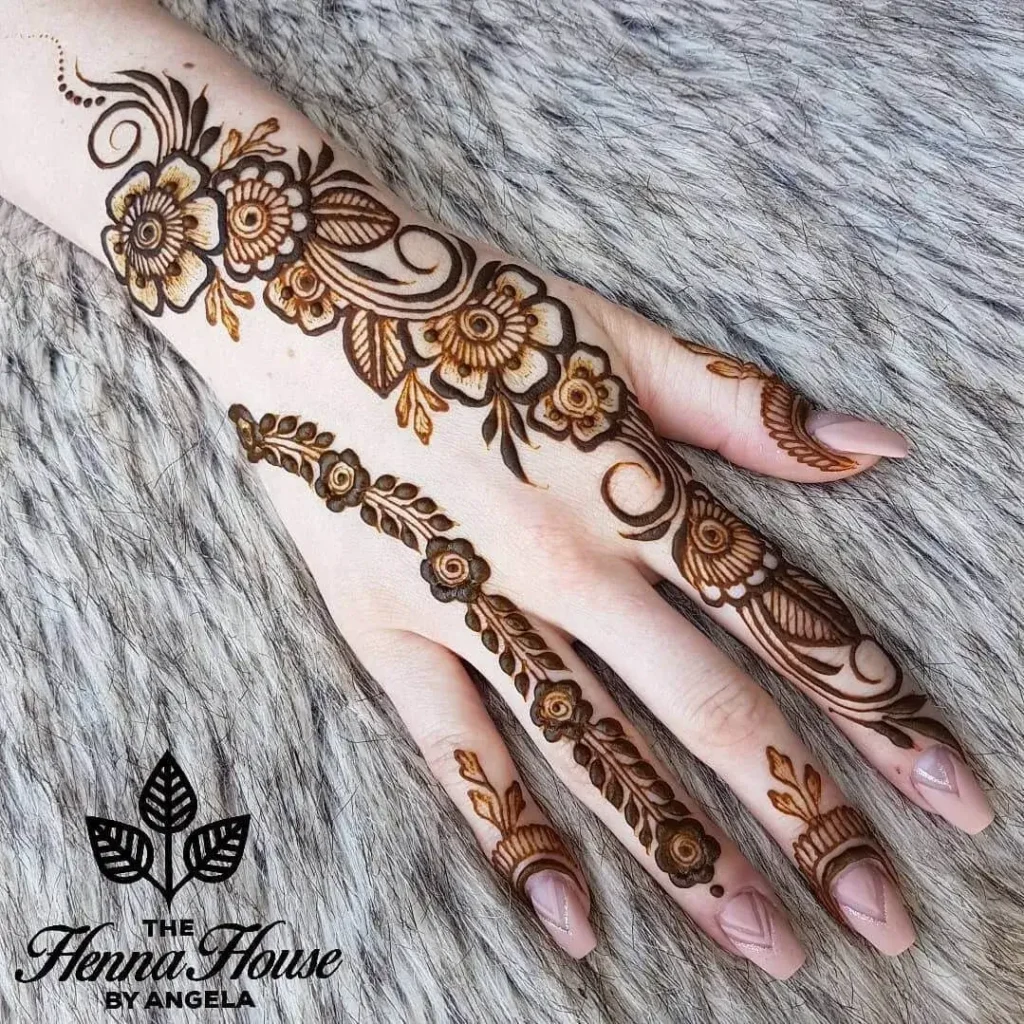
8. Basic Rose and Leaf Design
One rose made of curved petals sits among a few leaves. Start with a tiny spiral in the middle and wrap each petal around it. Practise the rose on paper a few times before you draw it on skin.
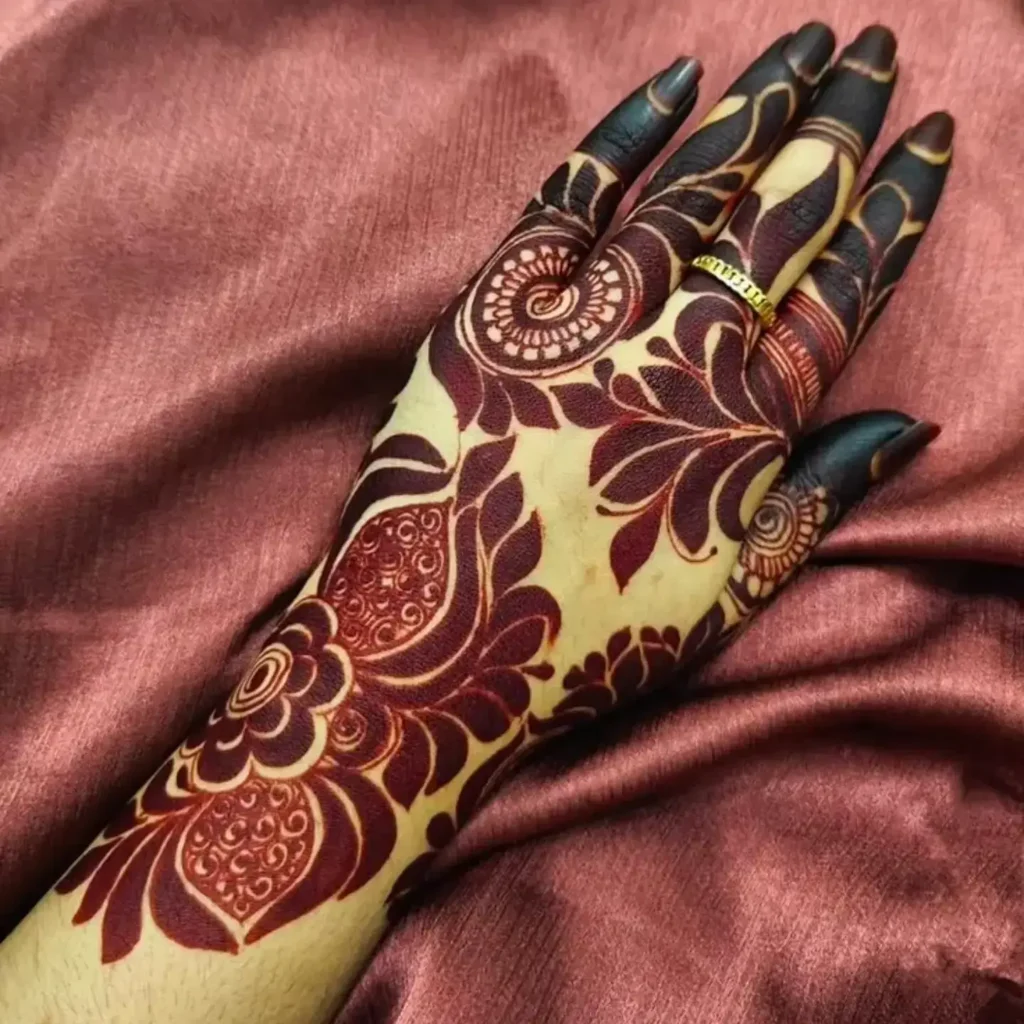
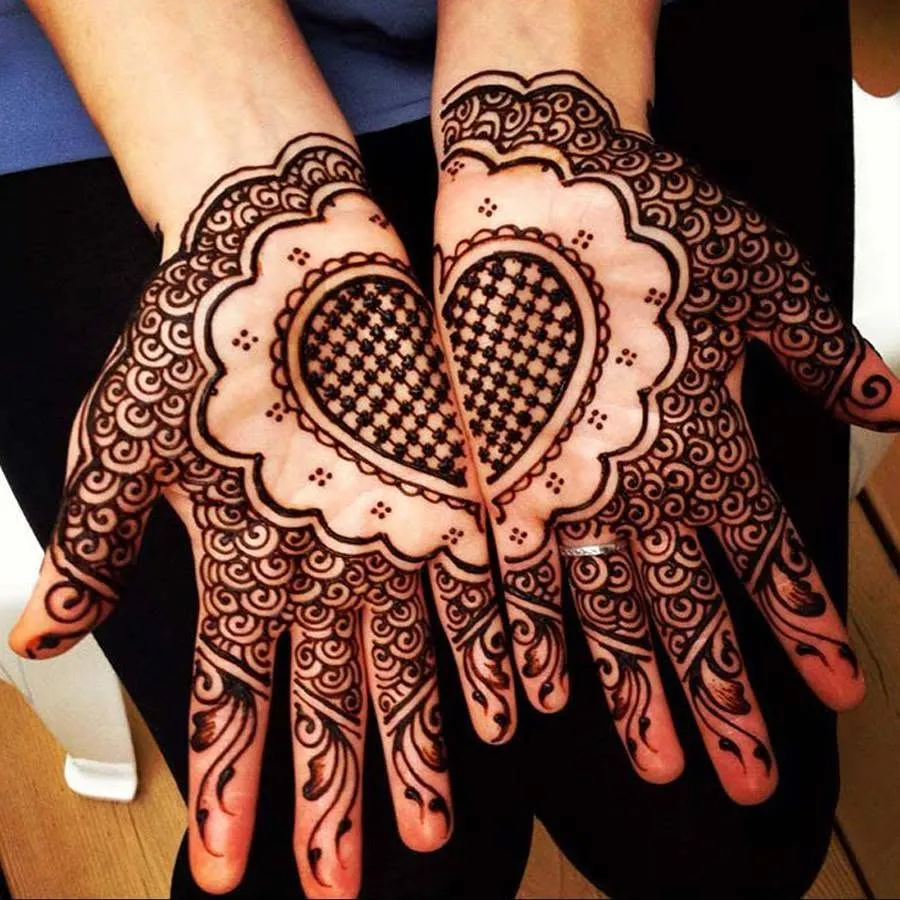
9. Half-Heart Design That Joins Across Both Hands
Each hand carries half a heart made of vines and small flowers. The two halves form a full heart when the hands meet. Ask a friend to check the curve of the second half against the first.
10. Quick Matching Set for Both Hands
The same trail appears on both hands, mirrored so the vines lean toward each other. Complete the first hand, then repeat the same steps in reverse on the second. Sticking to one pattern keeps the whole set fast.
Small and Minimal Arabic Mehndi Designs
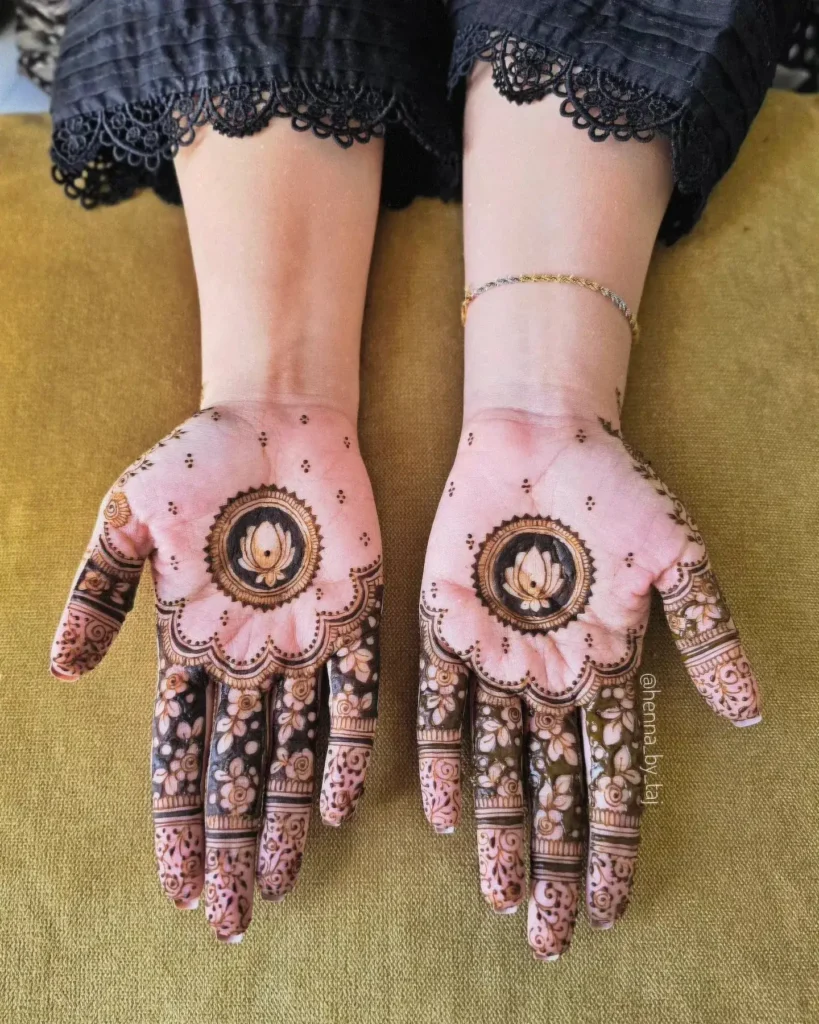
Not every design needs to cover the whole hand. This set works for anyone who wants a quick, light look, or a design that survives a busy week without smudging or fading unevenly. For more everyday ideas, explore our wider collection of simple mehndi designs.
11. Single Finger Vine
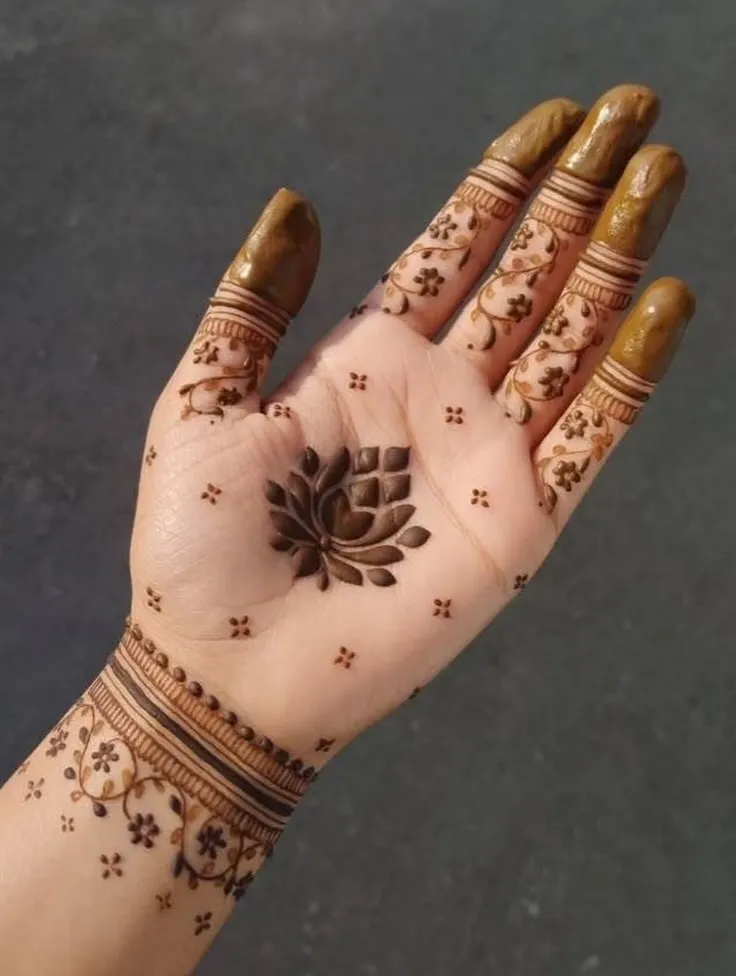
A thin vine runs up one finger, with two or three small leaves branching off. It suits someone getting mehndi for the first time, or anyone who wants a design that dries in minutes. Keep the leaves small so the finger doesn’t look crowded.
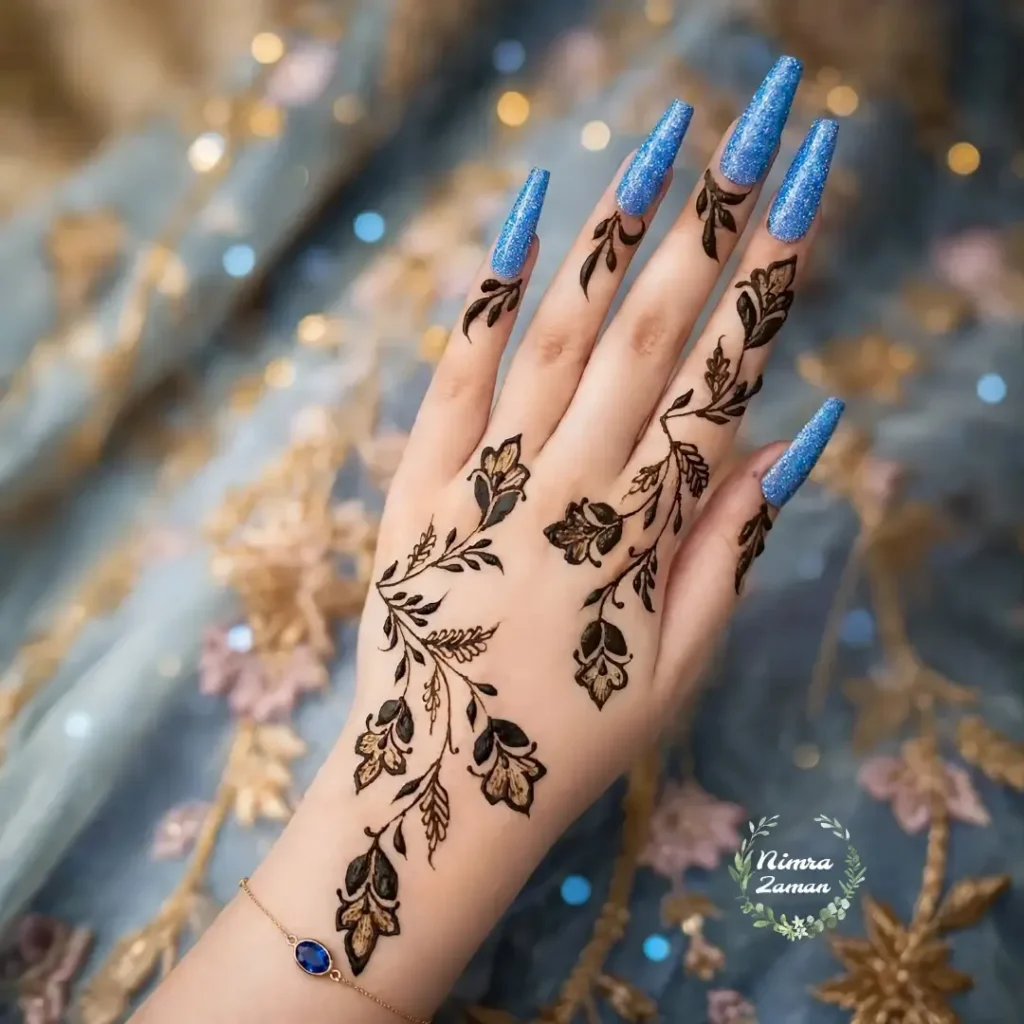
12. Thumb Flower Accent
One small flower sits at the base of the thumb, with a short stem trailing toward the wrist. This is one of the fastest designs to apply, and it barely limits hand movement afterward. Good for students, office wear, or a first henna experience.
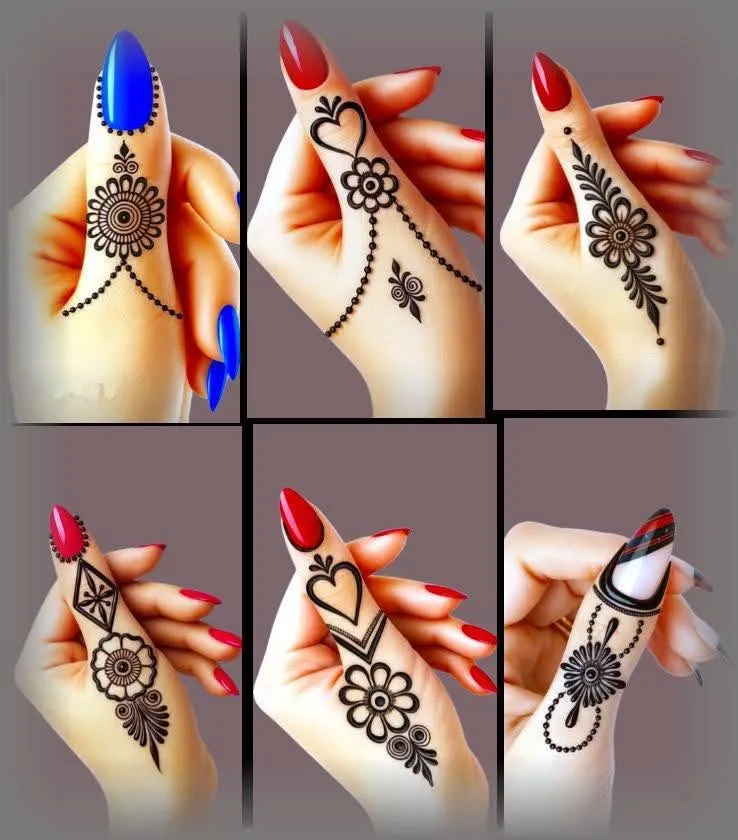
13. Wrist Cuff With Small Blooms
A narrow band of tiny flowers wraps the wrist, leaving the rest of the hand bare. It reads as jewellery rather than a traditional mehndi pattern. Keep the flowers an even size so the band looks continuous, not patchy.
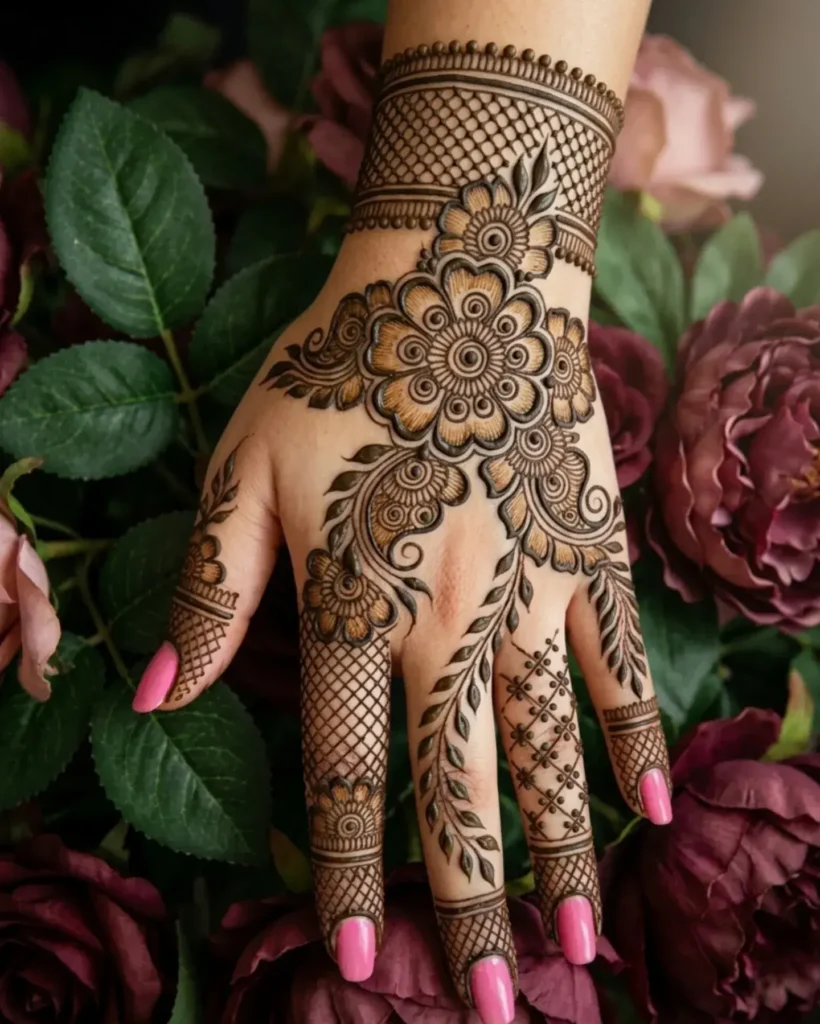
14. Palm Corner Floral
A small floral cluster sits in one corner of the palm, usually near the base of the thumb. The rest of the palm stays open. This placement works well for anyone who uses their hands a lot during the day, since most of the palm stays free of paste.
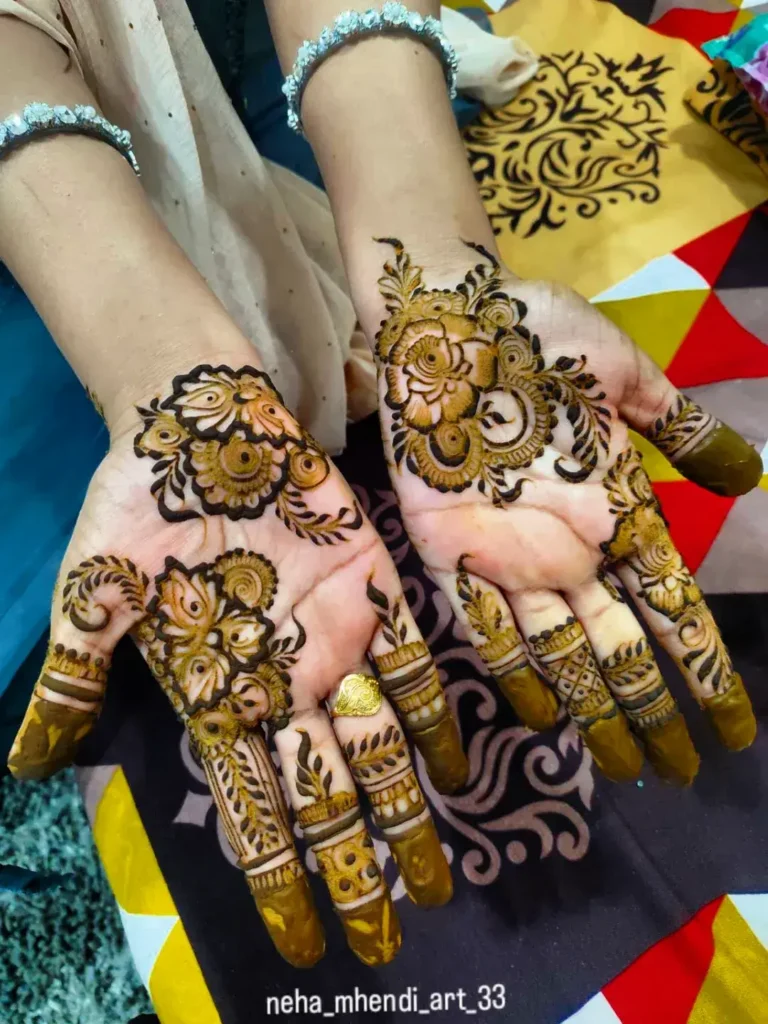
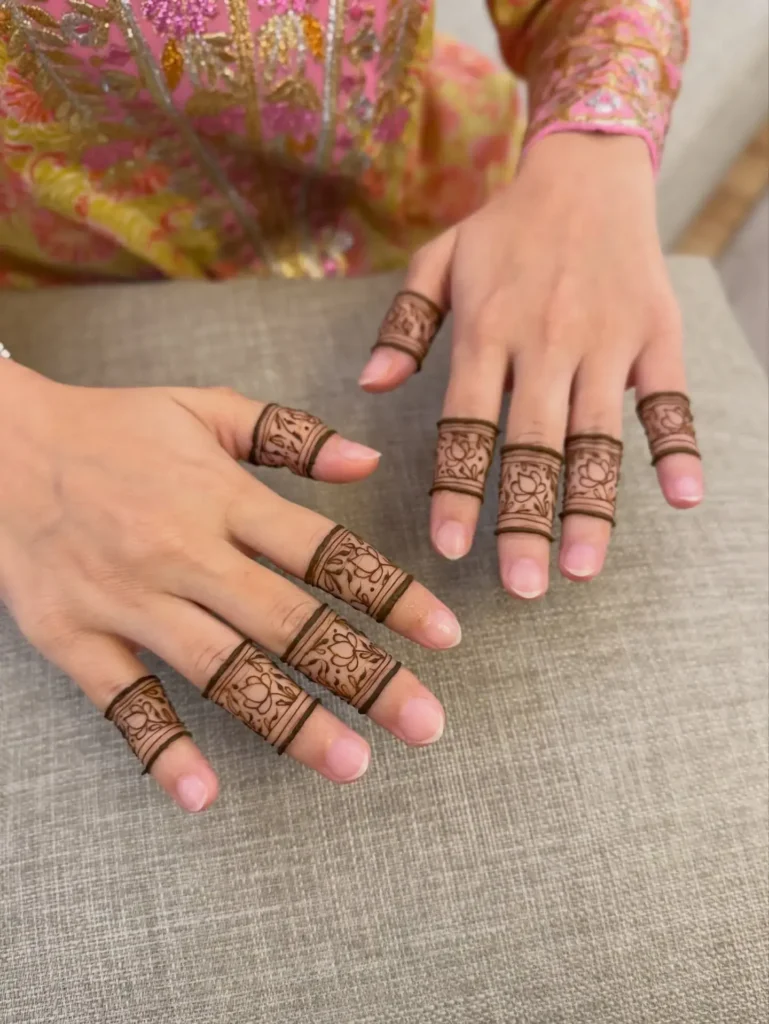
15. Minimal Finger Bands
Thin bands circle each finger just below the knuckle, like rings. No vine connects them, so each finger stands on its own. This is a fast design for a group, since the same simple band repeats across every finger.
16. Vine Line Along the Edge of the Hand
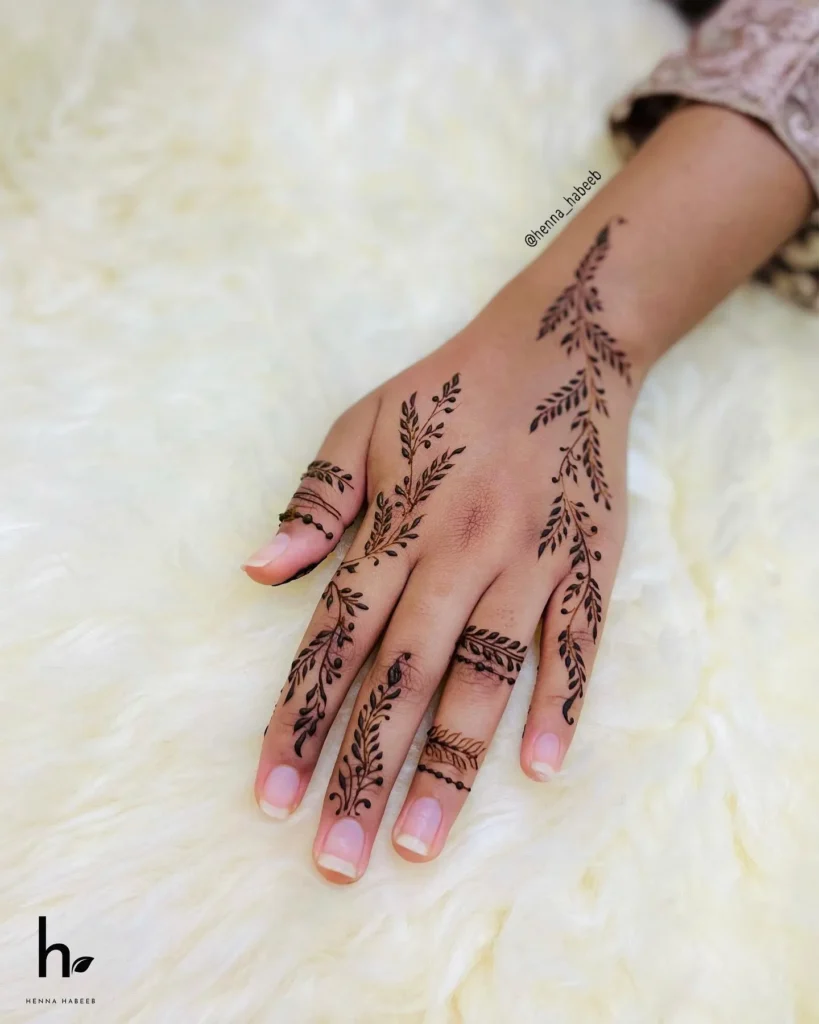
A single thin line follows the outer edge of the hand, from the wrist down to the little finger. Small leaves or dots break up the line at intervals. It’s one of the most minimal designs here, and it barely touches the palm or back of the hand.
Front Hand Arabic Mehndi Designs
The palm has thicker skin than the back of the hand, so front hand designs usually leave the deepest stain. These eight designs use that strength, treating the palm as an open canvas rather than filling every inch. For more palm-focused inspiration, see our guide to front hand mehndi designs.
17. Diagonal Floral Bel for the Right Hand
A bel rises from the base of the palm toward the index finger, carrying flowers and leaves along the way. Open space on either side is what makes it read as Arabic rather than Indian.
18. Mirror Bel for the Left Hand
The same trail as design 17, flipped for the left hand. Keeps both palms visually balanced when shown together, as in bridal photos.
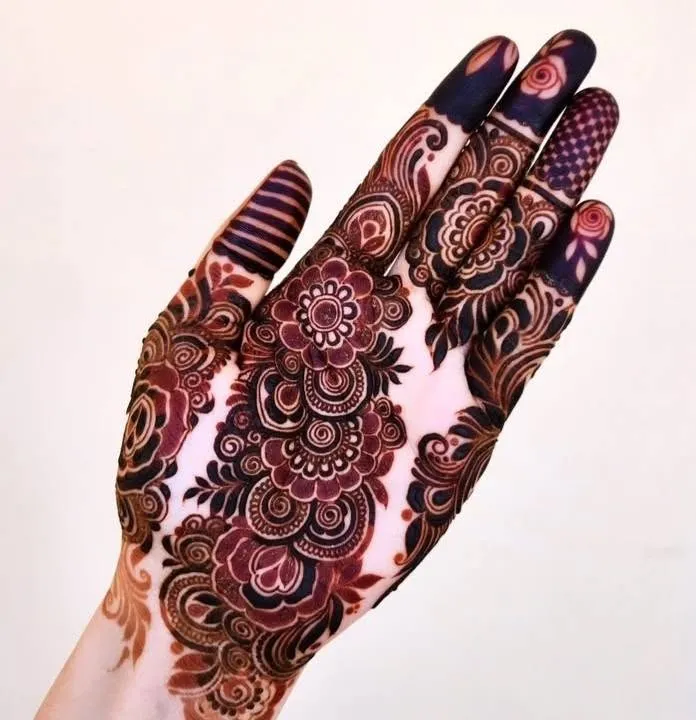
19. Round Palm Centerpiece With Petals
A circular flower cluster anchors the middle of the palm, petals radiating outward like a medallion. Suits anyone who wants one strong focal point rather than a trail across the hand.
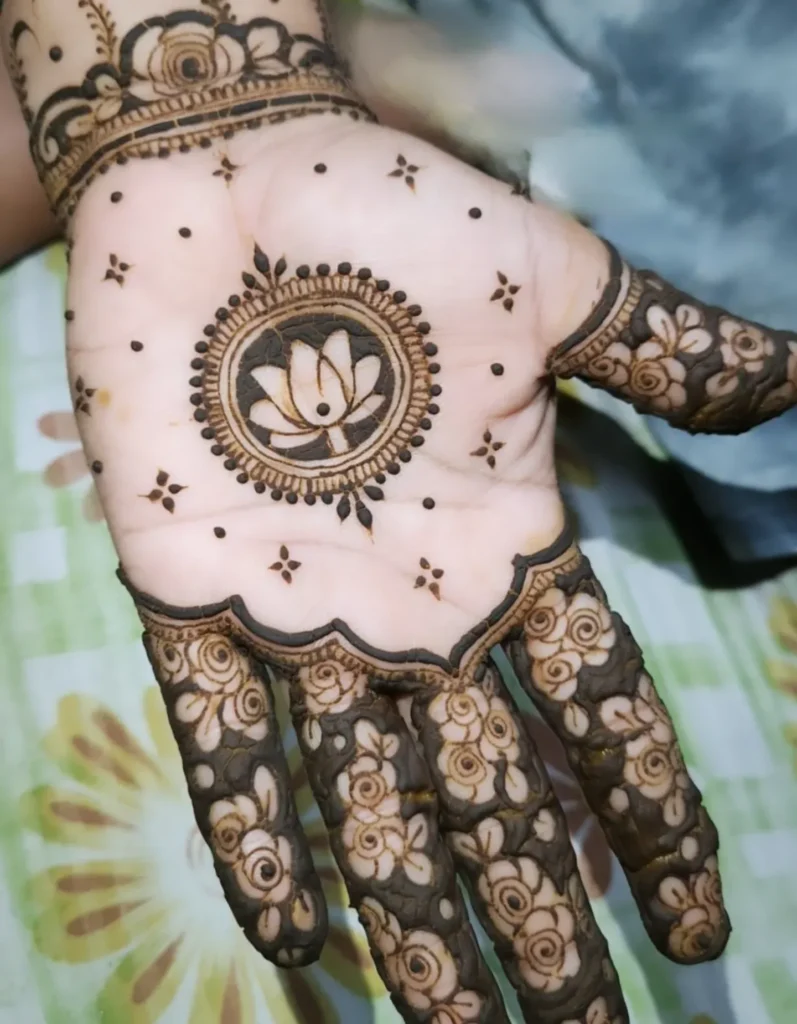
20. Half-Hand Design From Wrist to Middle Finger
Henna covers only the lower half of the palm, continuing as a single line to the middle finger. A middle ground between a small accent and full coverage.
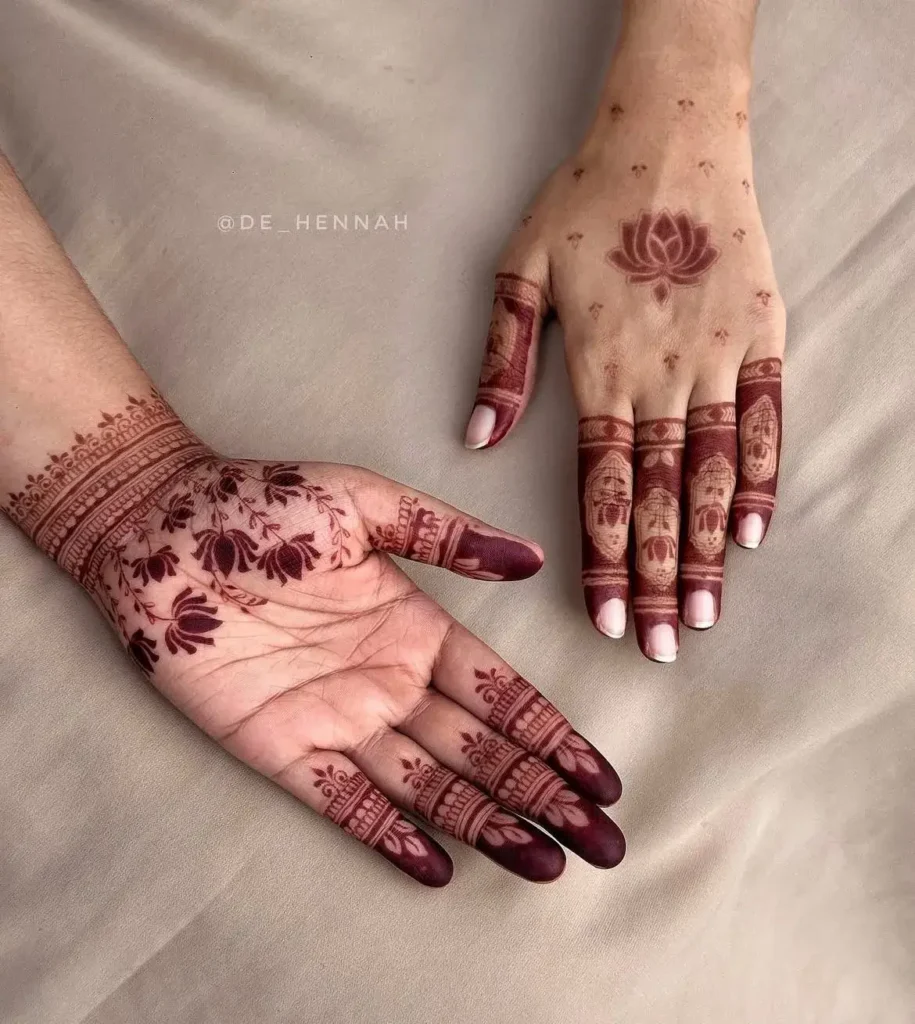
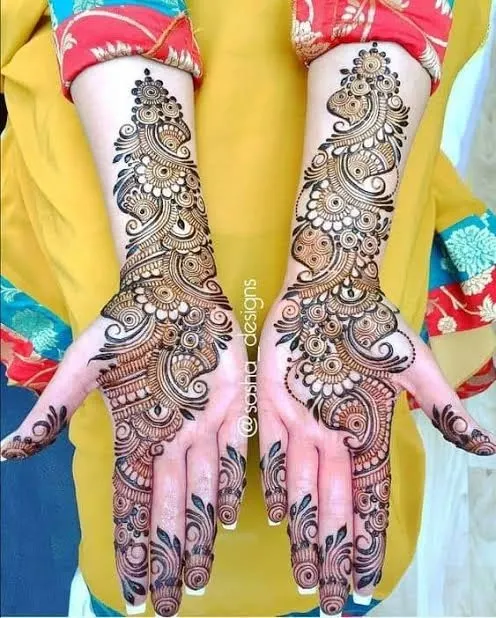
21. Royal Front Hand With Bold Paisleys
Large paisleys, thick outlines, and dense floral clusters fill more of the palm than the minimal styles above. Suits bridal or heavy festive wear while keeping some open space between paisleys. Want a grander look? Browse these royal front hand mehndi designs.
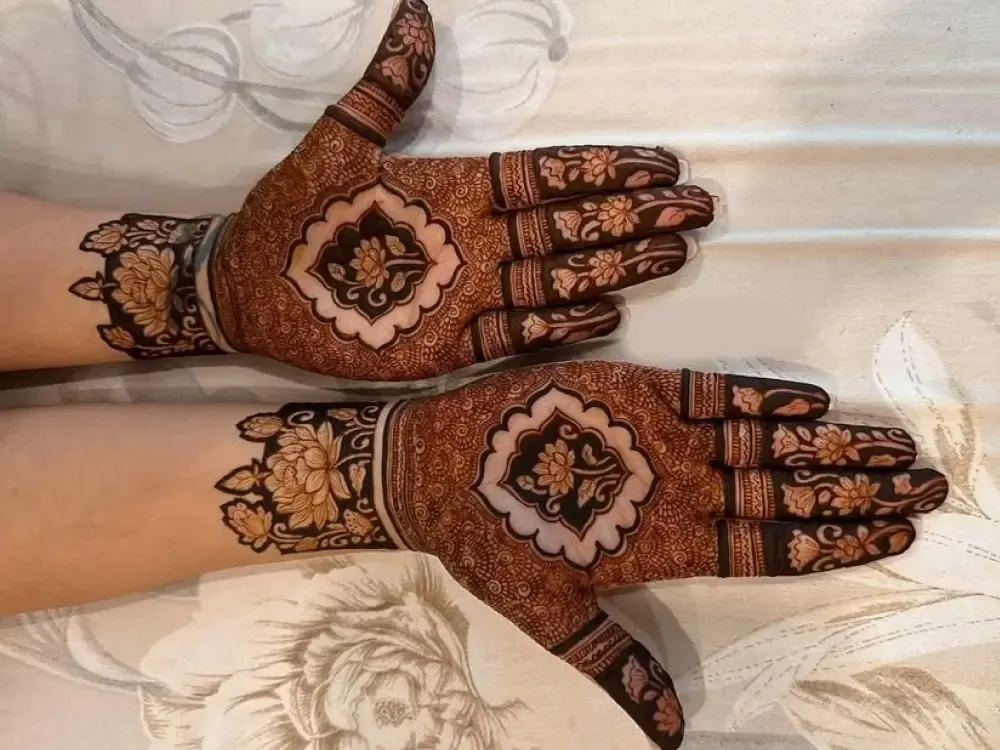
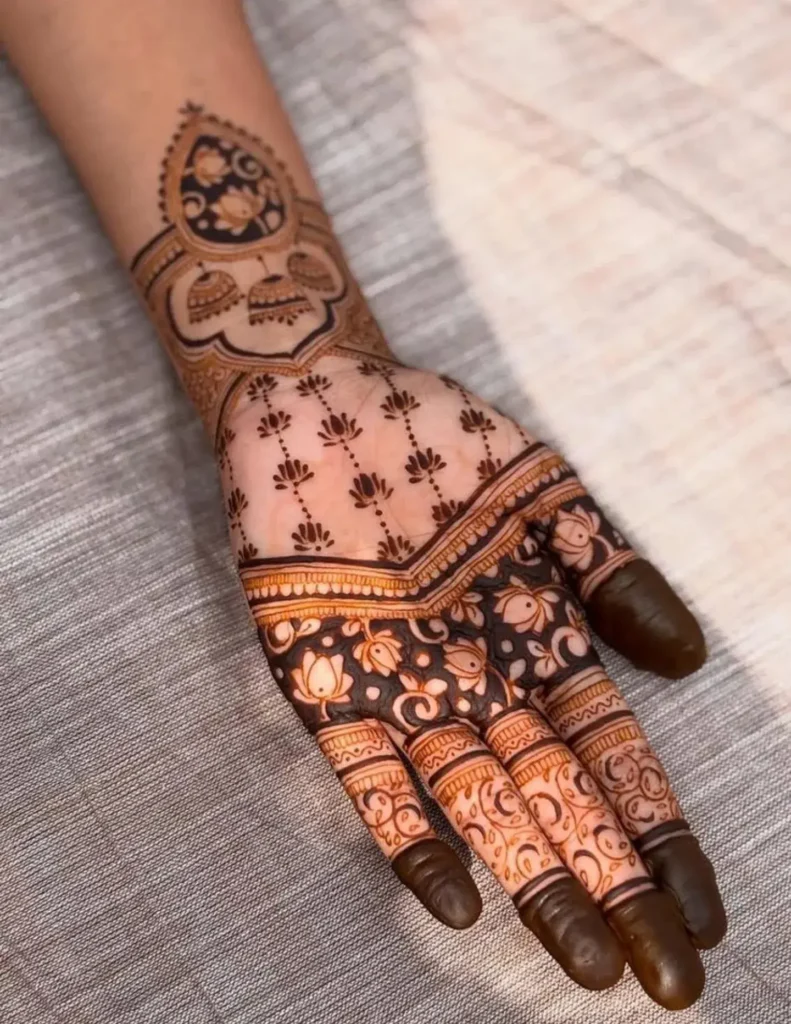
22. Lace Cuff With an Open Palm
A wide, detailed band circles the wrist like a lace cuff, while the palm stays almost bare. The contrast between the dense cuff and open palm is the main appeal.
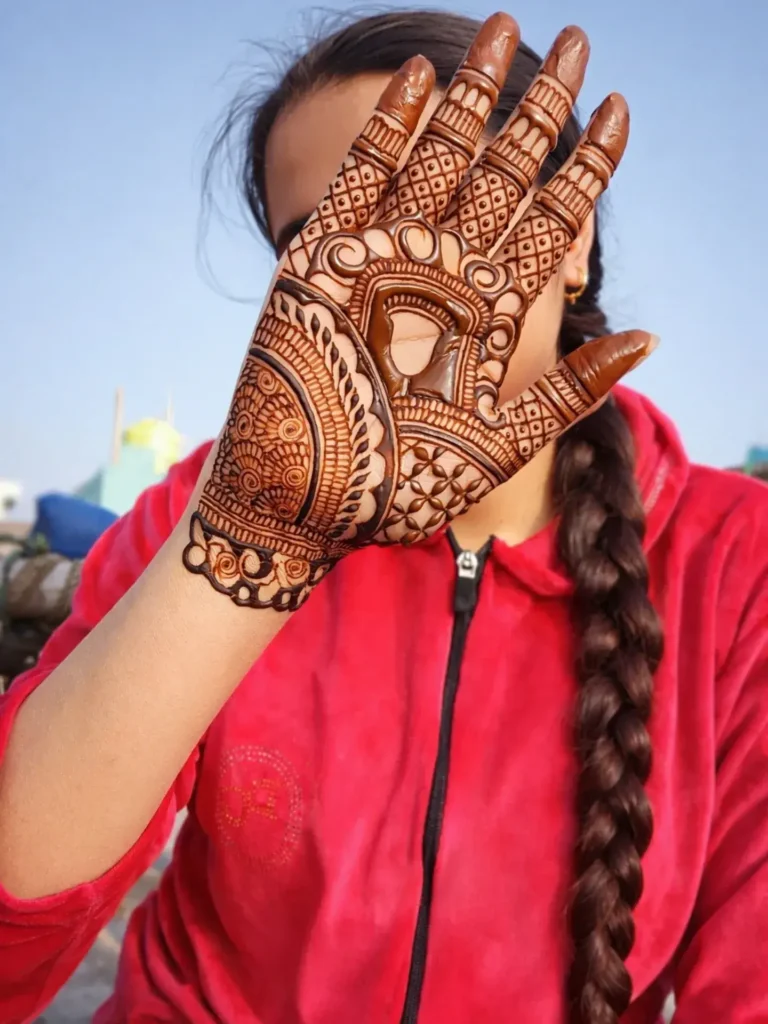
23. Symmetrical Floral Design for Both Palms
Identical floral patterns appear on both palms, facing each other rather than mirrored. Suits engagement or sangeet photos where both hands are held together.
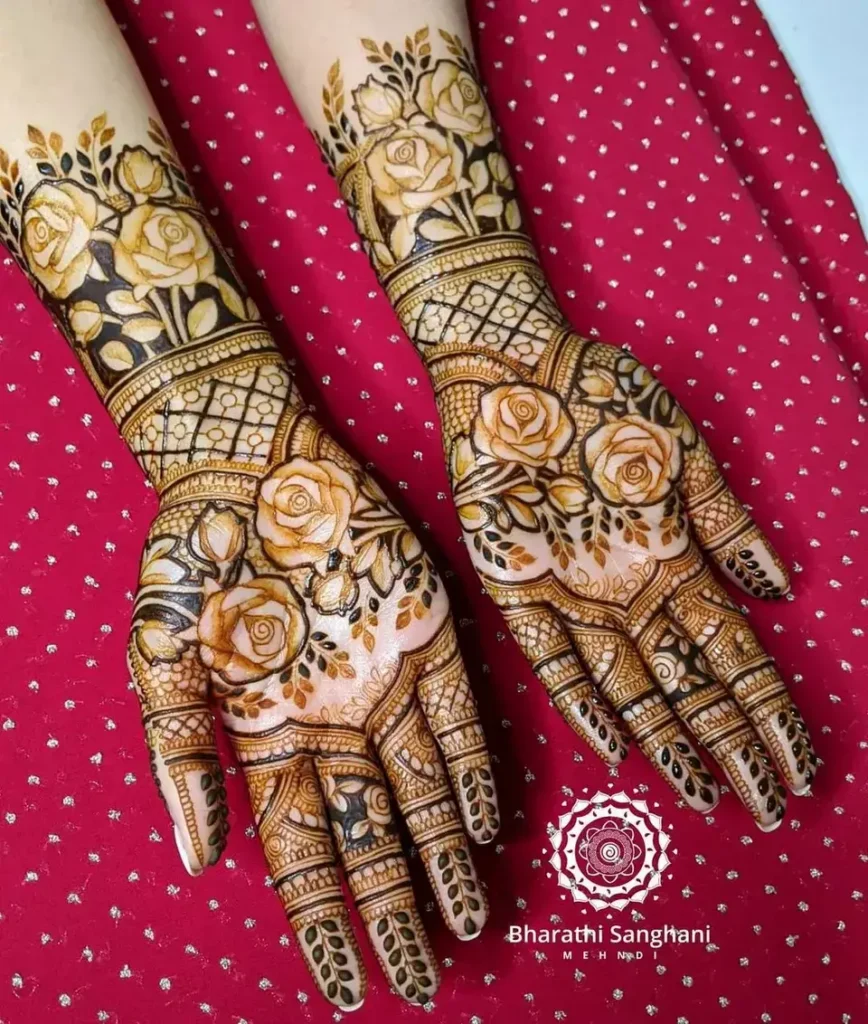
24. Front Hand Design With Fingertip Details
The main palm design stays simple, but each fingertip gets a small added detail, such as dots or a tiny petal. Adds visual interest without much extra time.
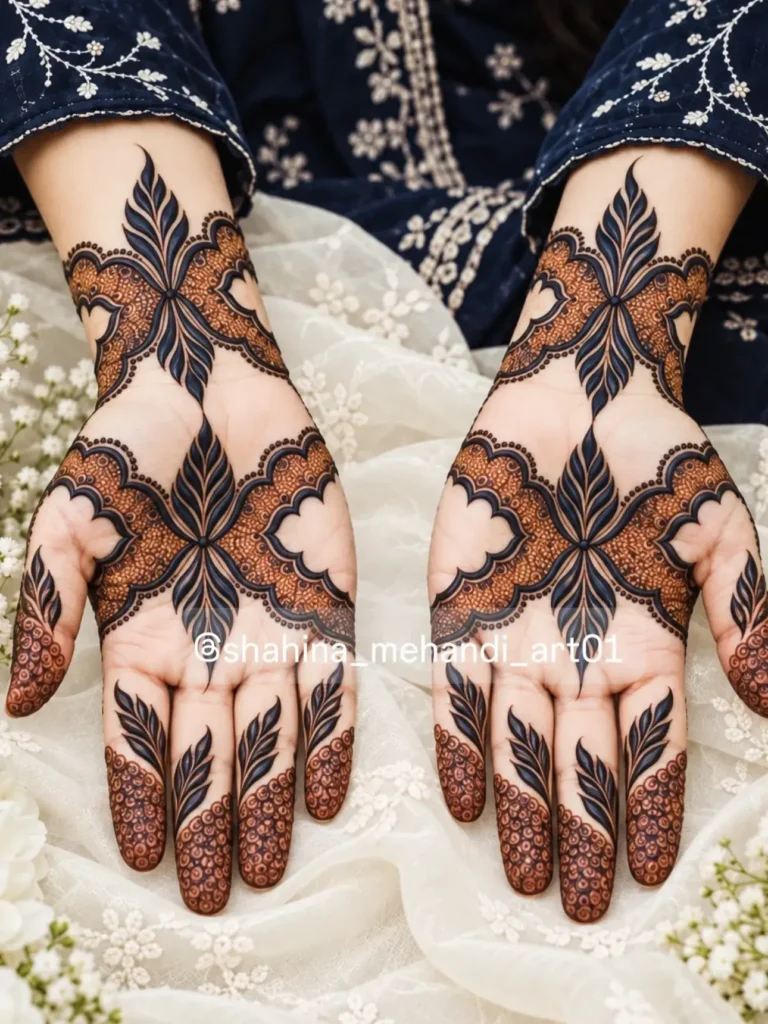
Back Hand Arabic Mehndi Designs
The back of the hand has thinner skin than the palm, so these designs lean on bold outlines and clear shapes rather than deep shading. This placement offers the widest range of styles in this guide. If you want even more options beyond the Arabic style, see our collection of stylish back hand mehndi designs.
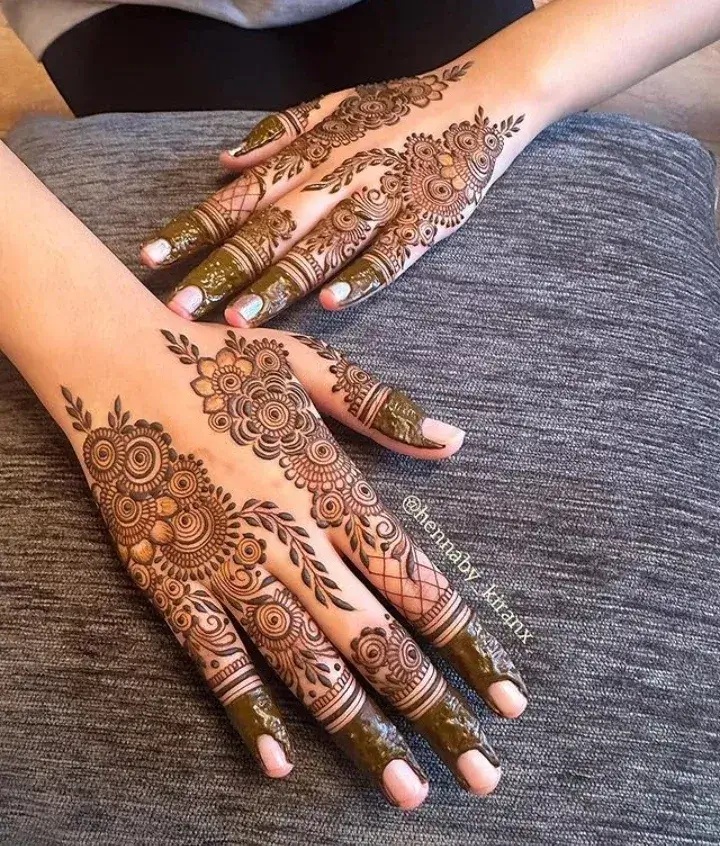
25. Floral Trail Toward the Middle Finger
A vine starts near the wrist and travels diagonally across the hand, ending at the middle finger. The diagonal line is part of why this layout stays popular, since it elongates the look of the hand.
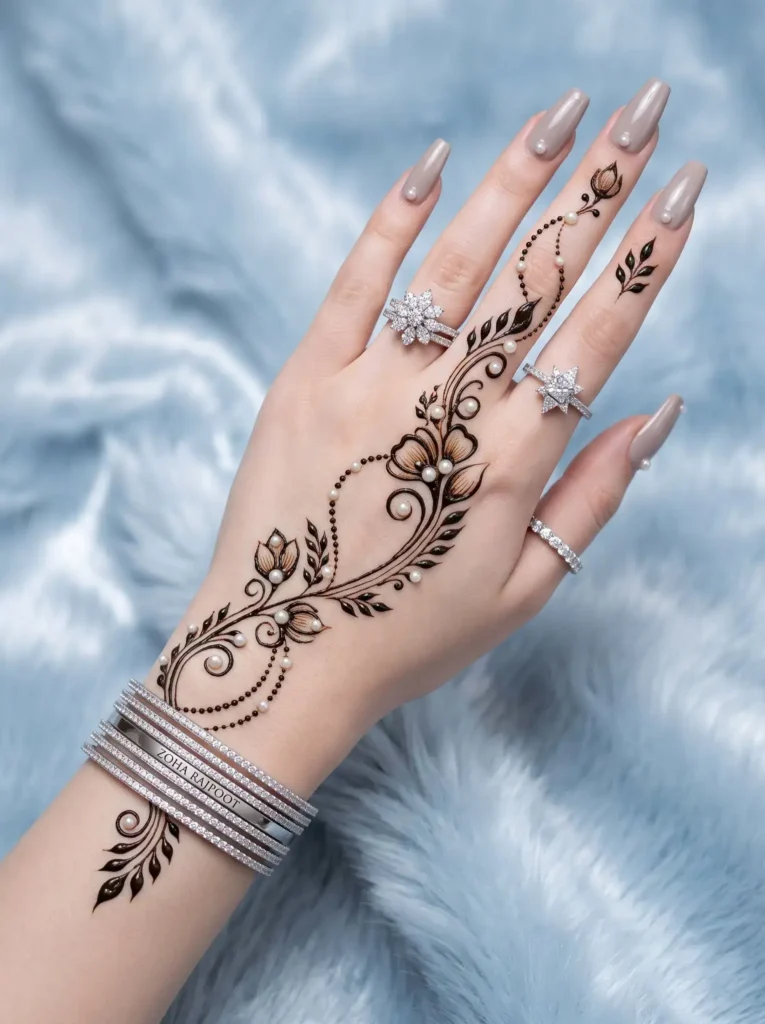
26. Haath Phool With Finger Rings
A floral medallion sits on the back of the hand, linked by thin chains to a ring design on each finger. Copies the look of traditional metal hand jewellery, suited to bridal and engagement looks.
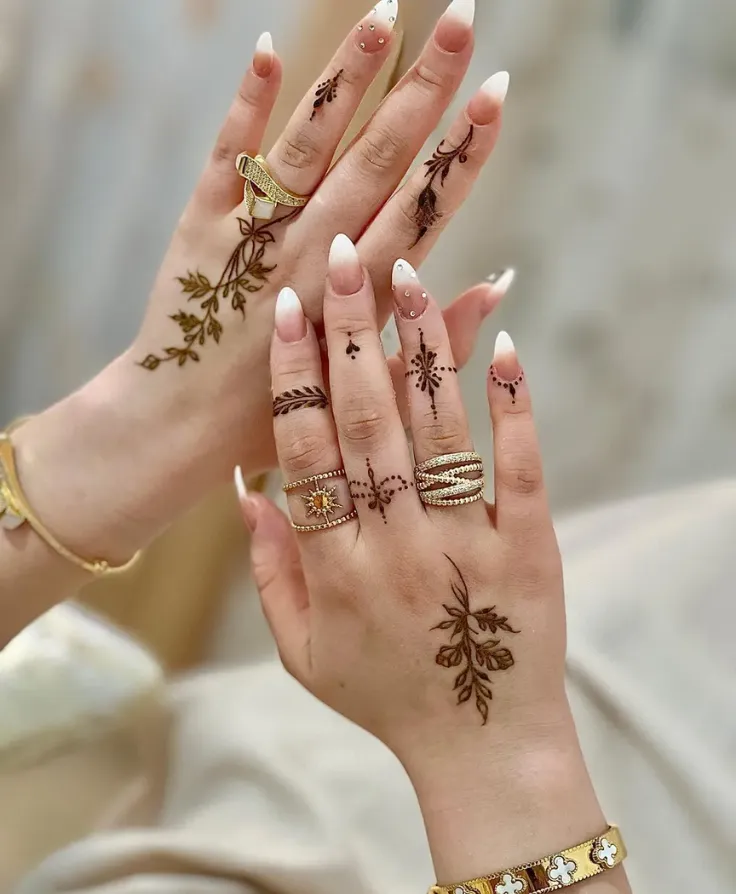
27. Jaal (Lattice) Design With Bold Flowers
A net-like lattice fills the space between large flowers. The lattice adds texture without full shading, though the fine work makes this one of the slower designs to apply.
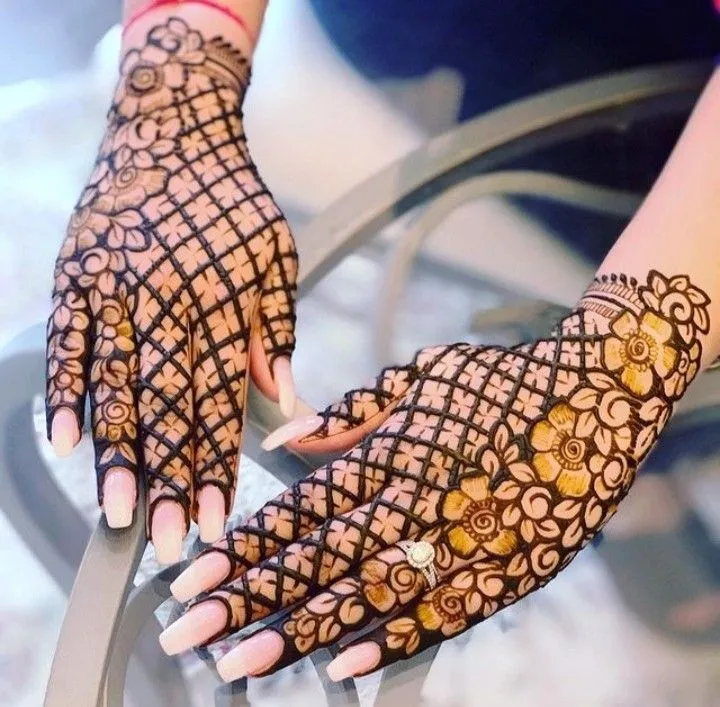
28. Bracelet Band With Hanging Motifs
A band circles the wrist like a bracelet, with small hanging shapes dropping onto the back of the hand. The rest of the hand stays open, keeping the bracelet as the main feature.
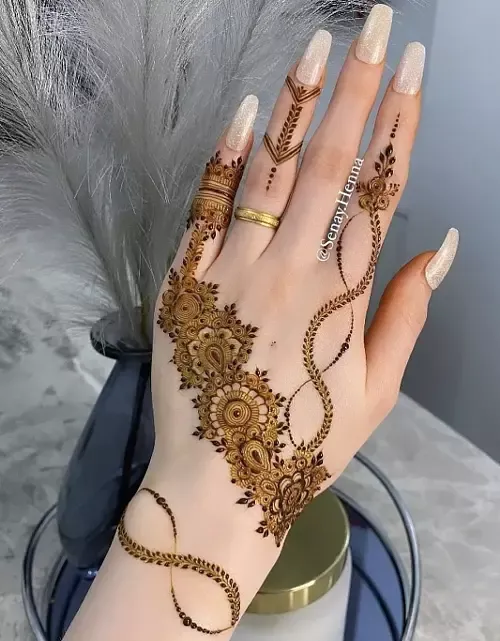
29. Peacock Feather Back Hand
A single peacock feather, or a small cluster, sits near the wrist or spreads toward the fingers. A common motif across Indian and Pakistani mehndi, kept bold enough to read clearly from a distance.
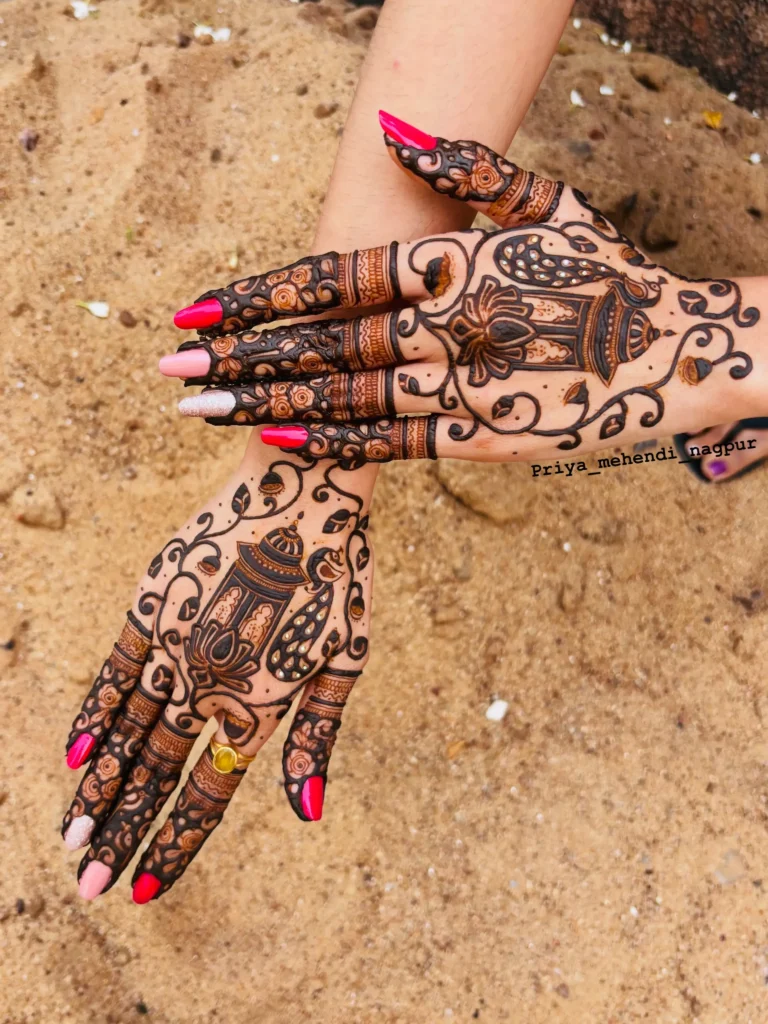
30. Minimal Back Hand With Negative Space
A slim floral or geometric line crosses the hand, surrounded by wide bare skin. One of the most minimal options here, reflecting the shift toward lighter, back-hand-focused designs in 2026.
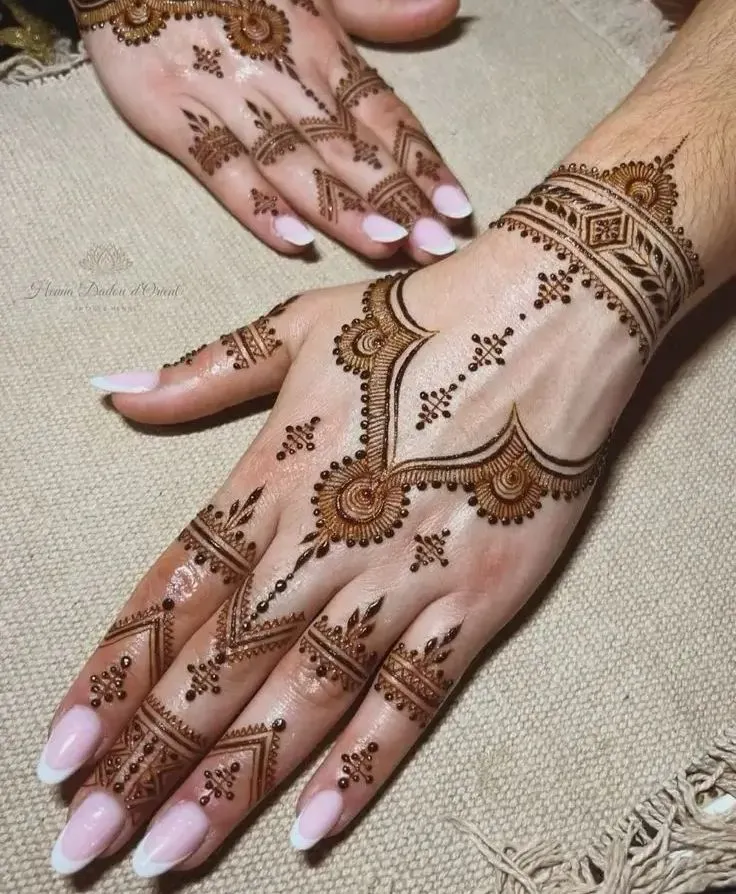
31. Lace Glove Style
Dense patterns cover the wrist and edges of the hand, while the centre stays lighter or open. From a distance, it gives the impression of a sheer lace glove.
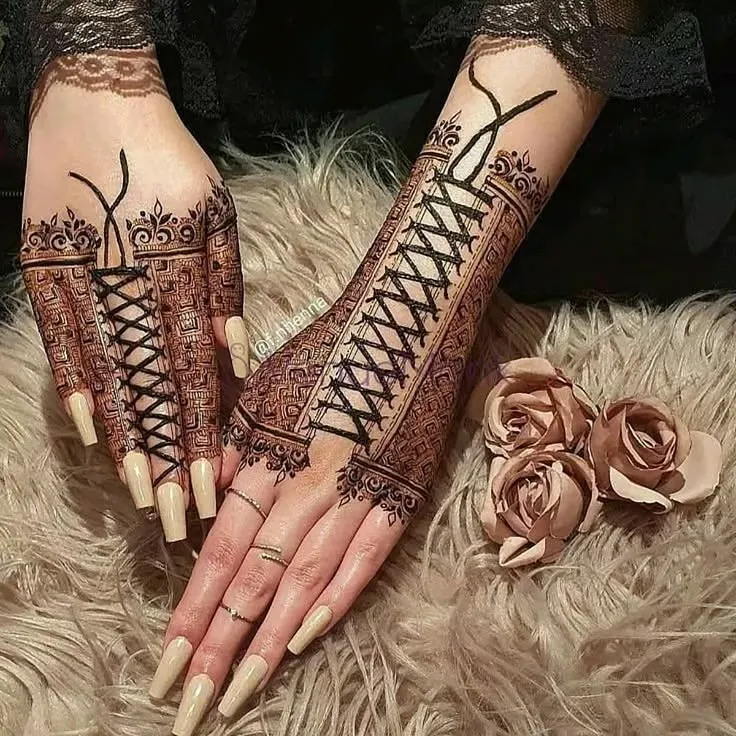
32. Rose and Paisley Back Hand
Roses and paisleys alternate across the hand, connected by short curved stems. One of the most common pairings in Arabic mehndi, since rounded roses balance pointed paisleys.
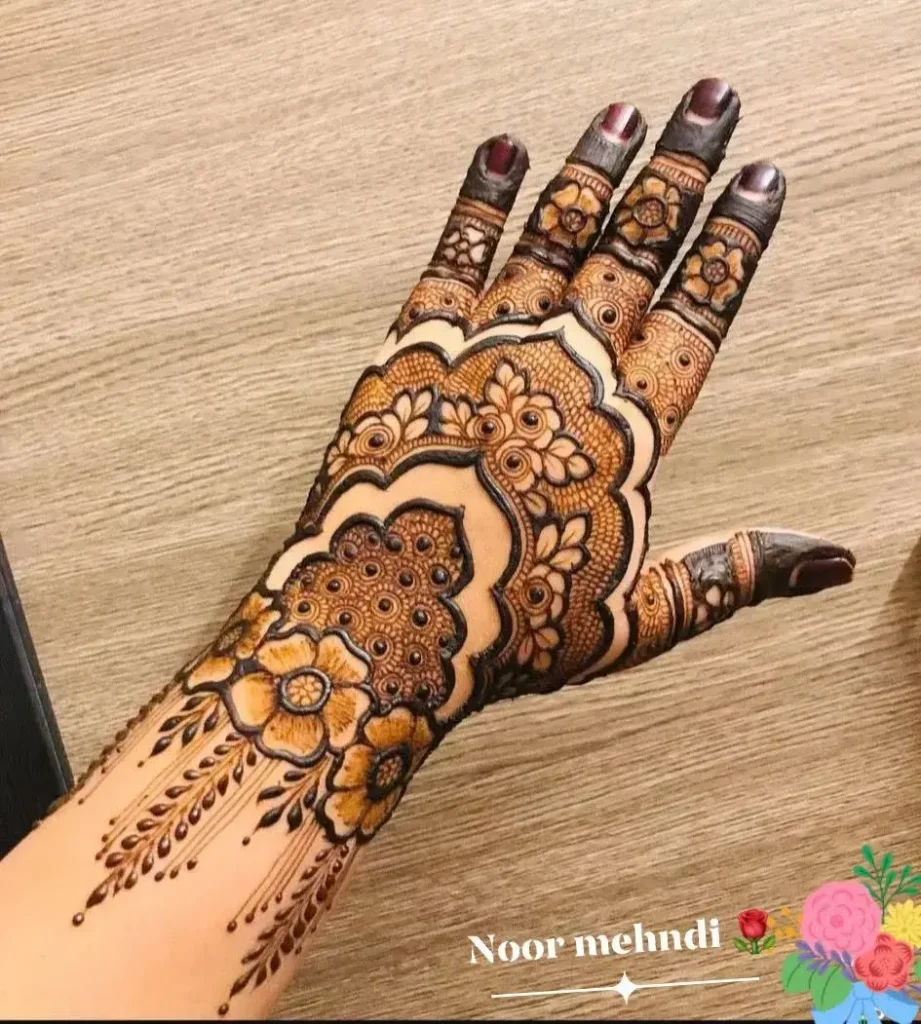
33. Checkered Pattern With Floral Highlights
A grid of small squares covers part of the hand, with a flower placed inside some squares and others left empty. Gives a more structured look than the free-flowing bel styles.
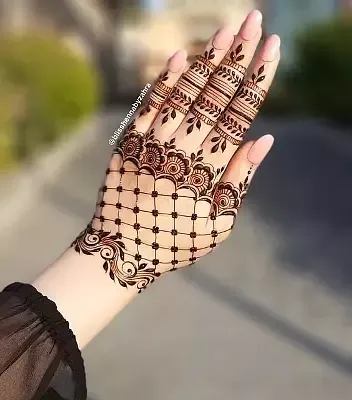
34. Necklace Style Curve Over the Knuckles
A curved band crosses the knuckles like a necklace, with small drop motifs hanging toward the fingers. Draws the eye to the knuckle line rather than the wrist or palm.
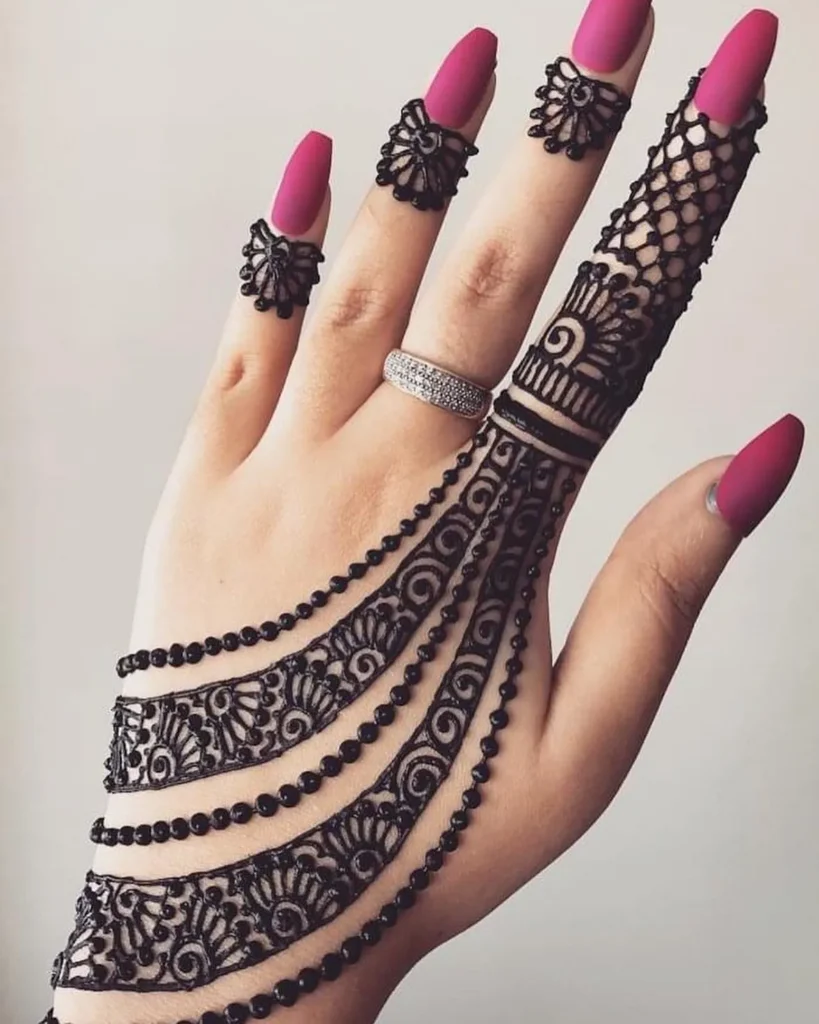
Full Hand Arabic Mehndi Designs
Full hand coverage takes the longest to apply, so these six designs use open space and bold outlines to keep the sitting time reasonable. None fill the skin edge to edge the way dense Indian bridal work does.
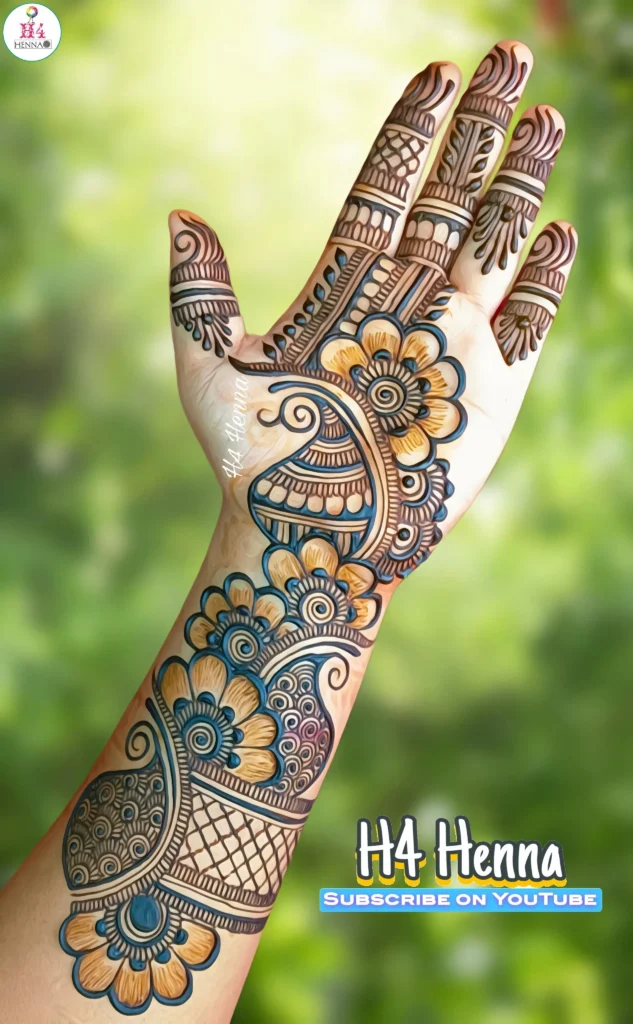
35. Full Hand Floral Bel With Breathing Space
A wide bel runs from the wrist to the fingertips, carrying large flowers and leaves. Bare skin on both sides keeps it from feeling crowded, the clearest example of Arabic-style full coverage.
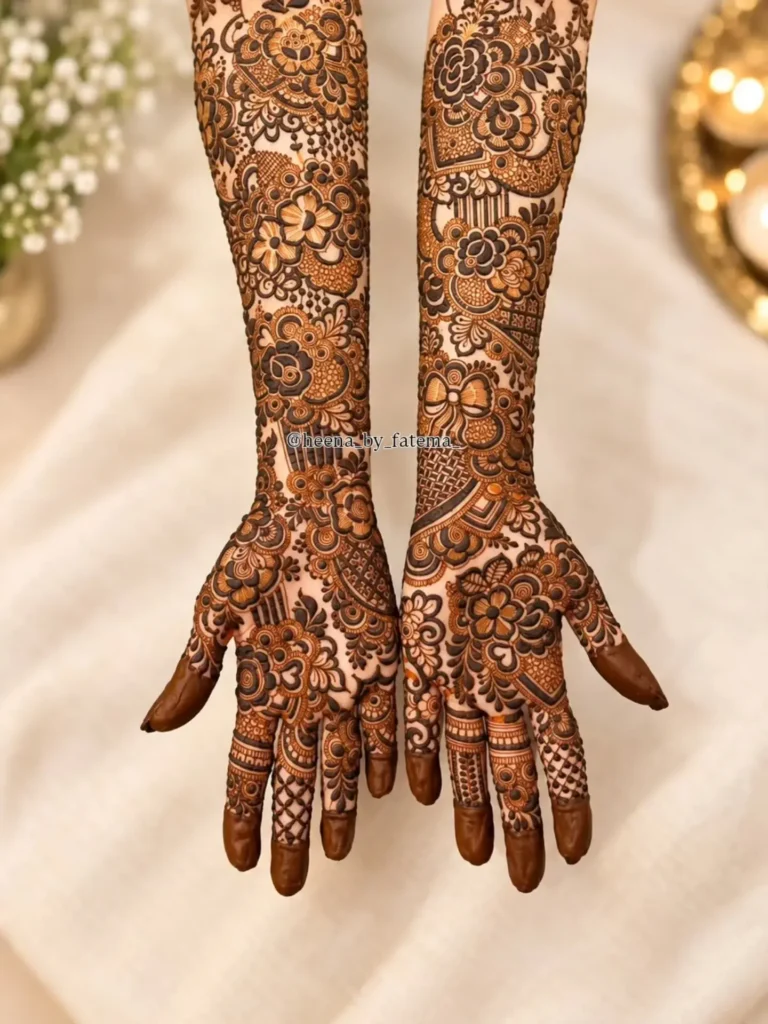
36. Full Hand Paisley and Vine Design
Paisleys of different sizes connect along a central vine across the hand. The repeated shape gives this design a more structured rhythm than a pure floral bel.
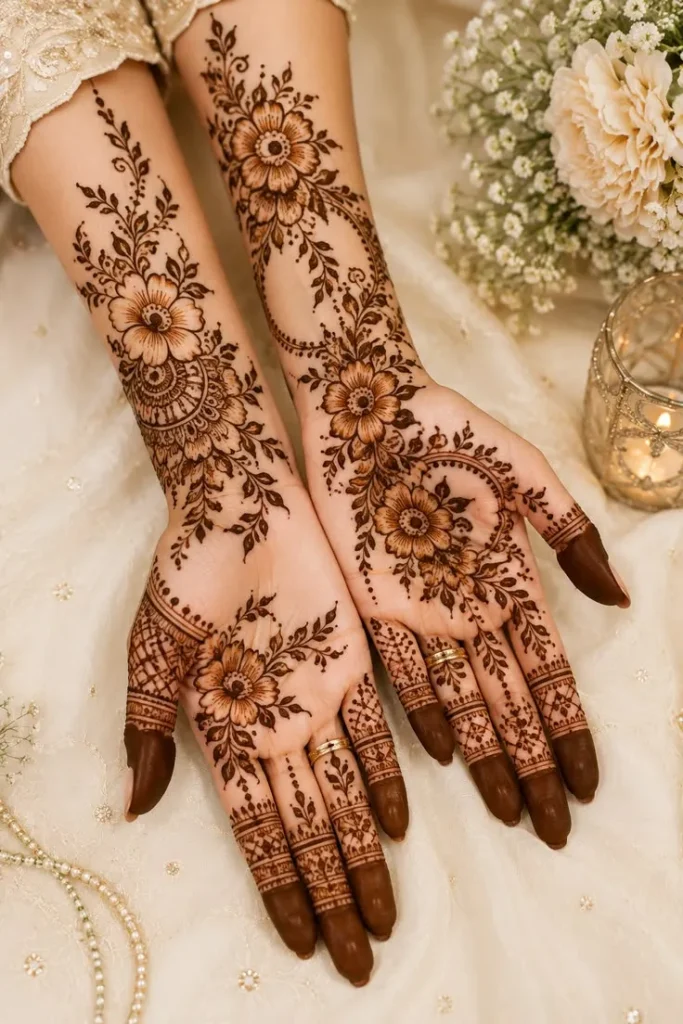
37. Full Hand With a Forearm Trail
The design extends past the wrist and continues up the forearm as a narrower vine. Suits occasions where the forearm stays visible, such as bridal or engagement wear.
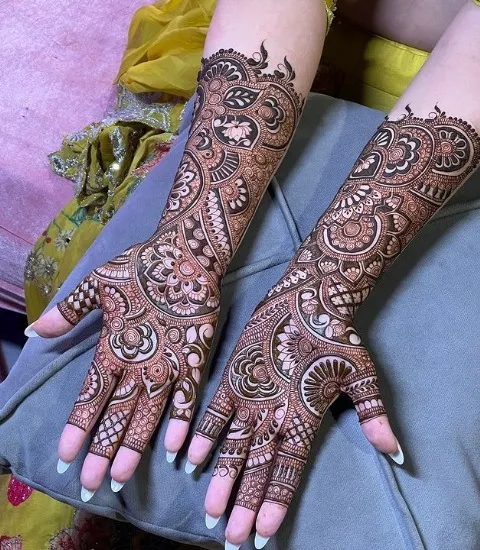
38. Symmetrical Full Hand Design
Both sides of the hand mirror each other around a central line, usually down the middle finger. Easier to plan in advance, since one half can be copied onto the other.
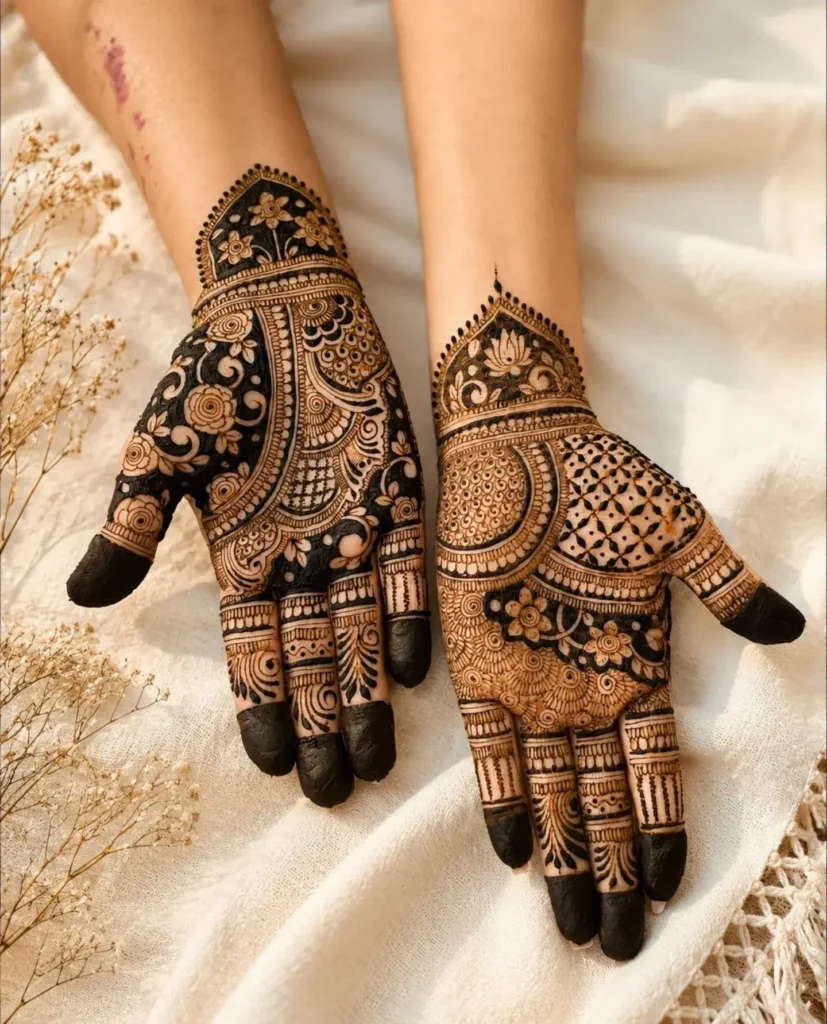
39. Full Hand With Jaal Fillings
Large motifs are outlined first, then filled with a fine net-like jaal between them. Adds texture and coverage without solid fills, keeping the design lighter on the skin.
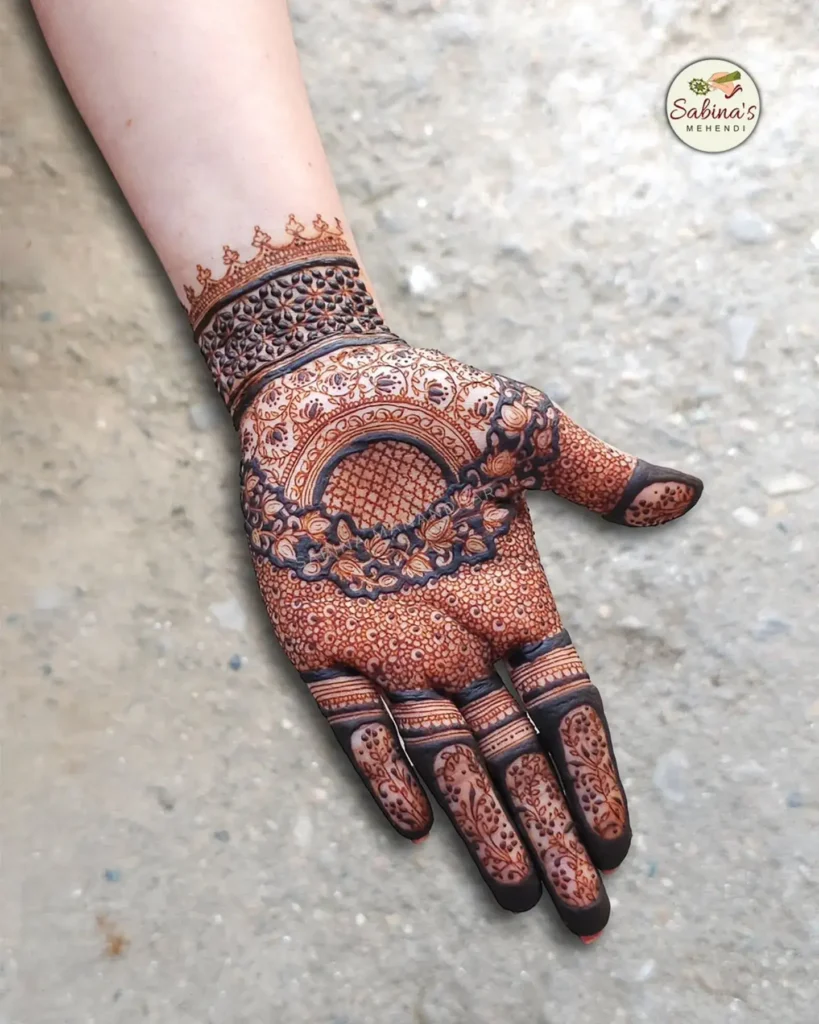
40. Full Hand With Shaded Flowers
Flowers get light interior shading with thin strokes or dots, rather than bare outlines. Gives a softer, more layered look once the design darkens.
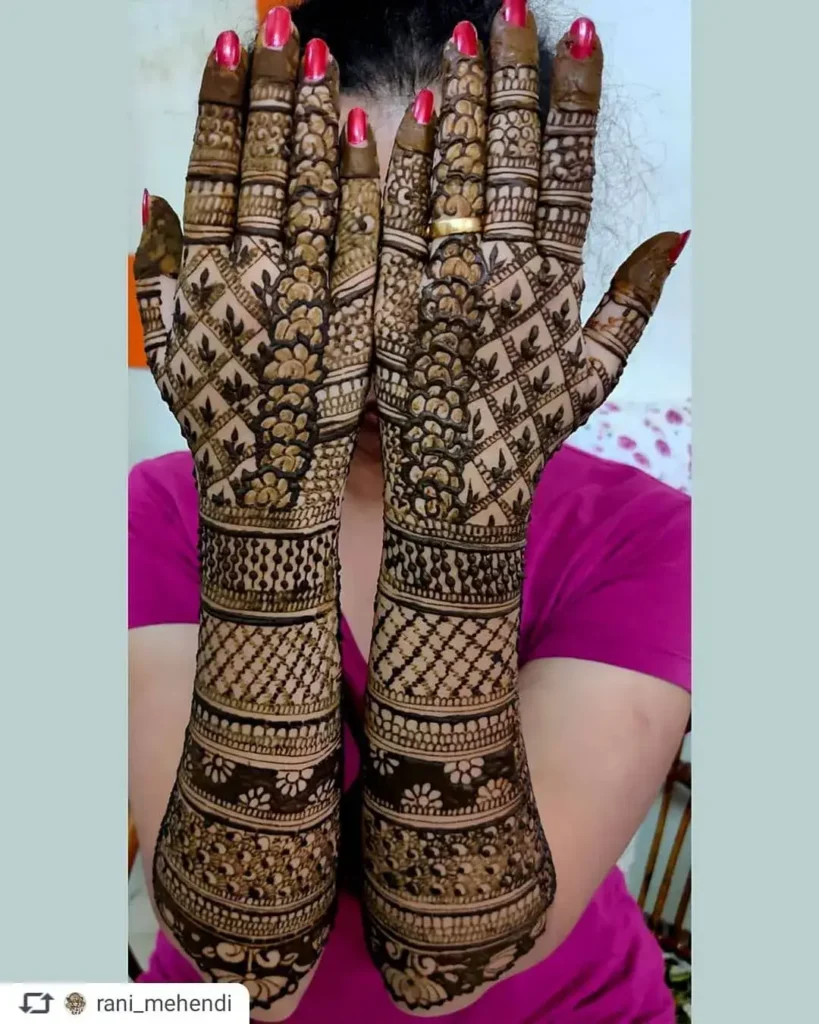
Arabic Finger Mehndi Designs
Finger-focused designs leave the palm and back of the hand mostly bare, letting each finger act as its own small canvas. One of the more visible 2026 trends, since it pairs well with rings and nail art.
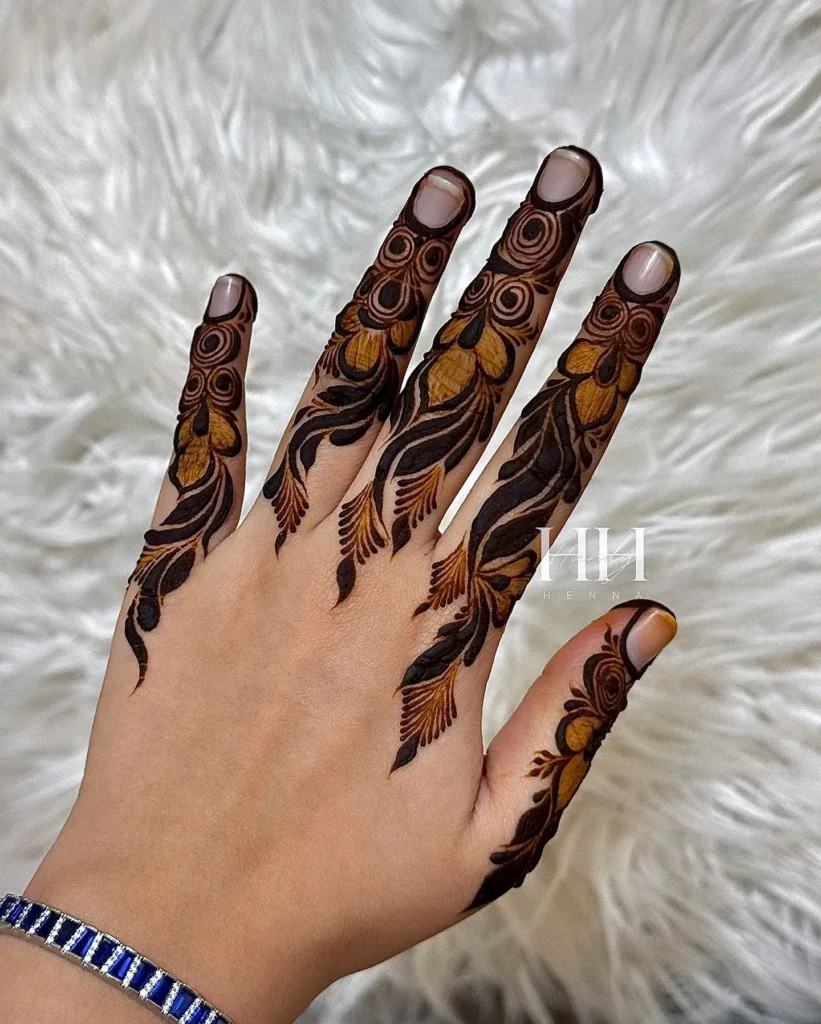
41. Full-Length Finger Wrap
A pattern covers one or more fingers from base to tip, usually a repeating motif like small flowers or bands. Pairs well with a plain palm on the same hand for contrast.
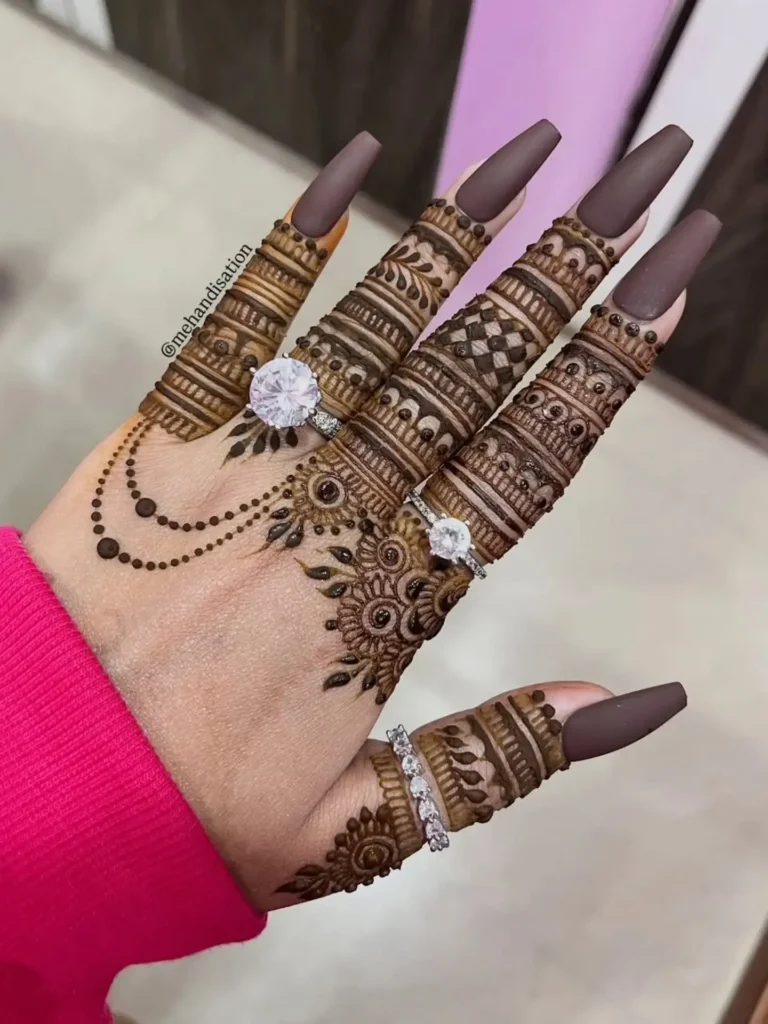
42. Knuckle Band With Tiny Flowers
A thin band of small flowers wraps each finger just below the knuckle, like a ring. The bands stay separate rather than connecting to each other.
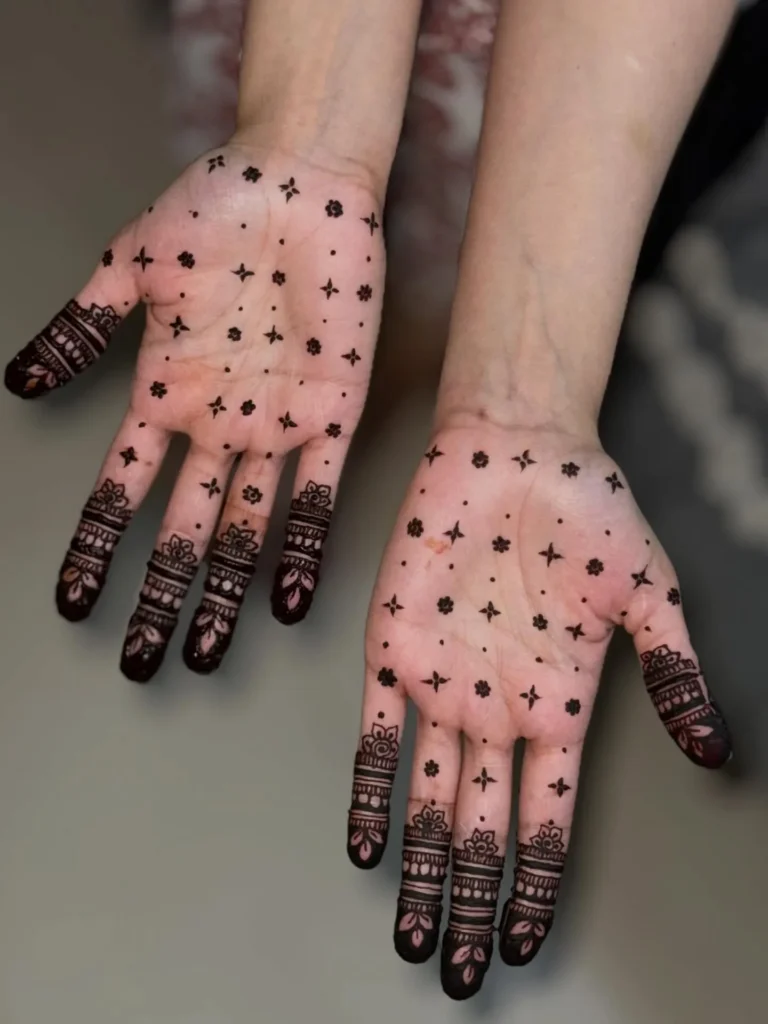
43. Fingertip Cap Design
Henna covers just the tip of each finger, like a cap, with a simple pattern such as dots or a small flower. Suits anyone wanting a hint of henna without a larger commitment.
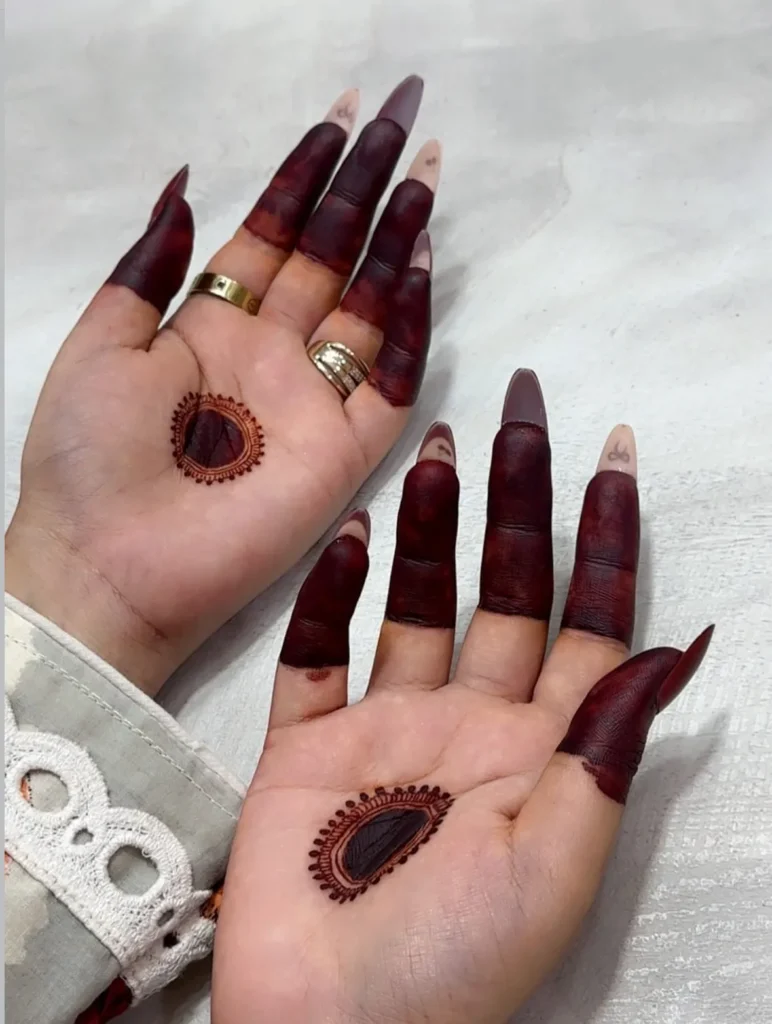
44. Thumb Vine and Leaf Design
A vine climbs the thumb, with small leaves branching off on either side. Works as an accent alongside a plain hand or a minimal palm design.
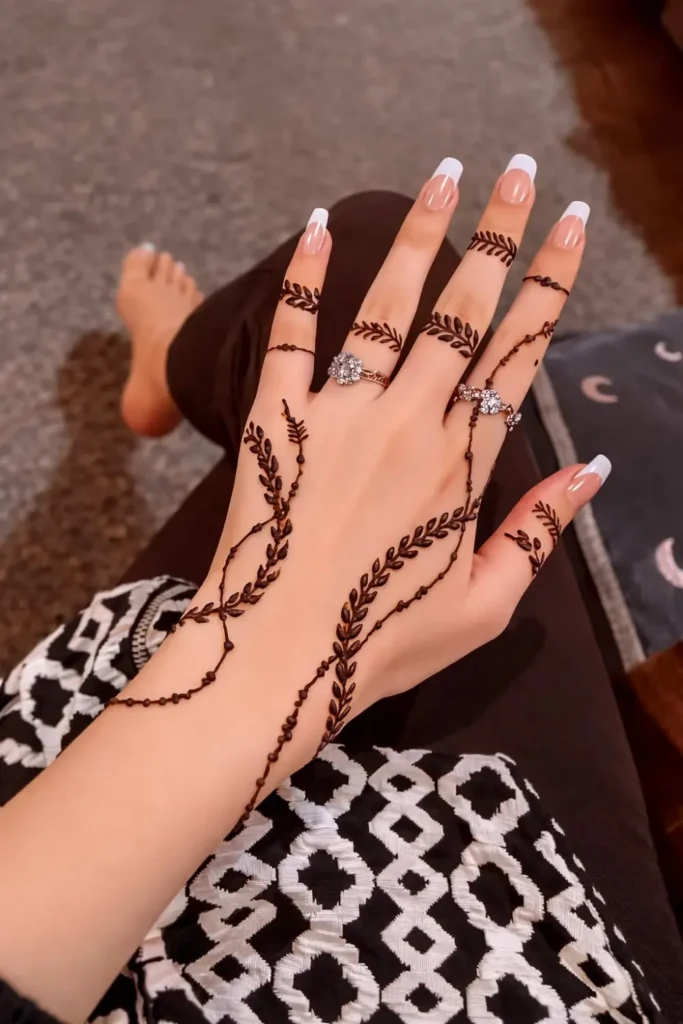
45. Ring Style Finger Chains
Thin lines connect a ring-shaped motif on each finger to a point near the knuckle, giving the impression of finger jewellery. Suits engagement and bridal looks meant for close-up photos.
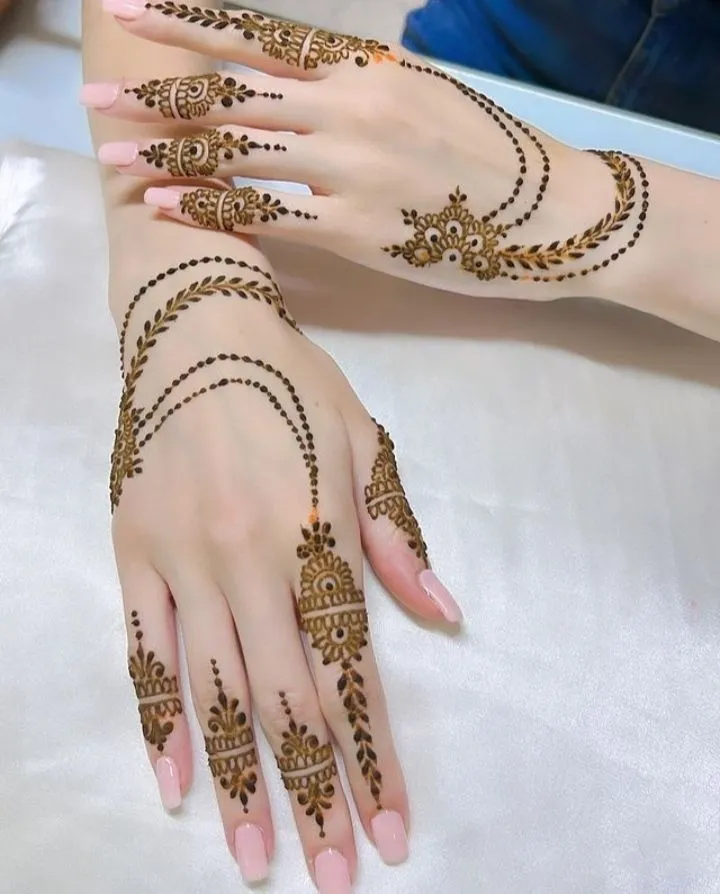
Arabic Bel Mehndi Designs
The bel, also spelled bail, is the vine-like trail that defines the Arabic style. It shows up across nearly every section in this guide, so these five designs put the bel itself at the centre.
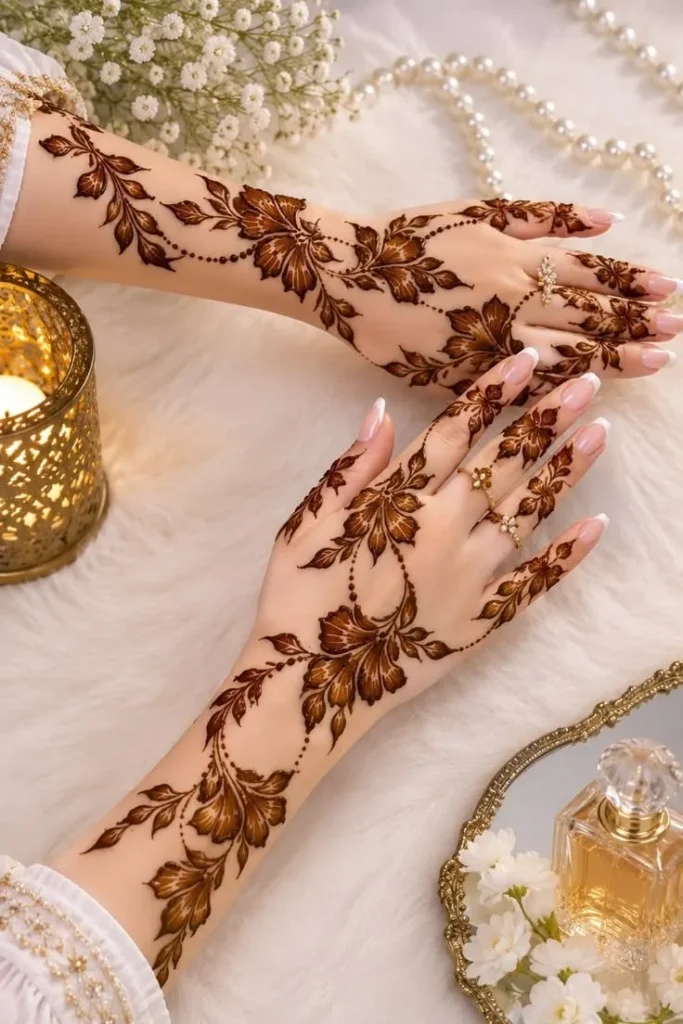
46. Classic Diagonal Bel
A single vine crosses the hand at an angle, carrying evenly spaced flowers and leaves. The simplest form of the bel, with no extra motifs layered on top.
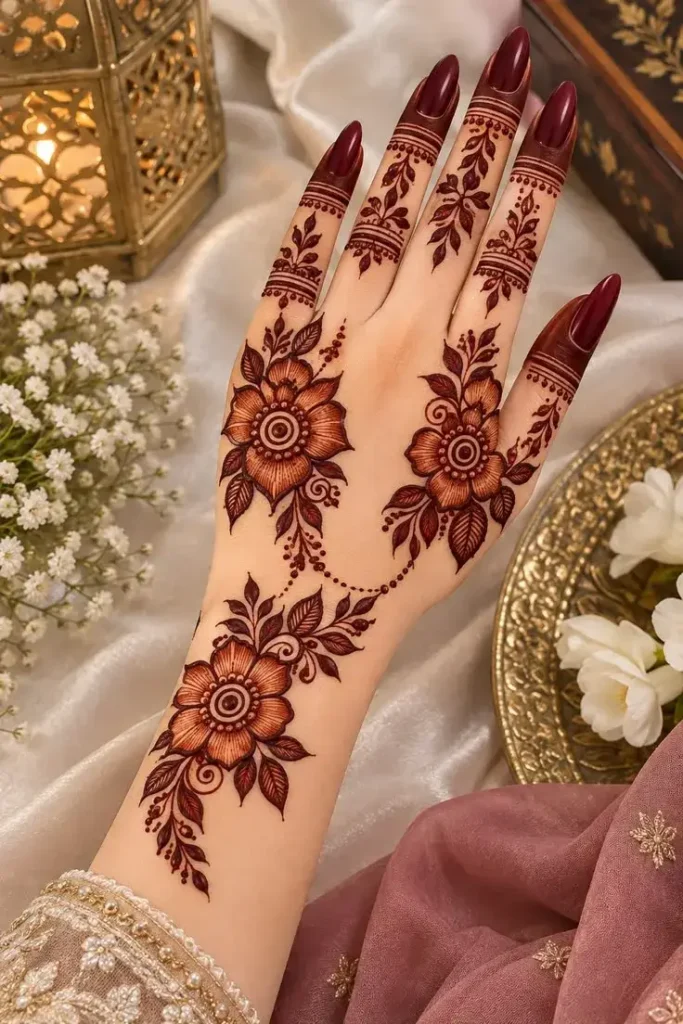
47. Bel With Chain Details
A thin chain of dots or small links runs alongside the main vine for part of its length. Adds a jewellery-like detail without changing the vine’s basic path.
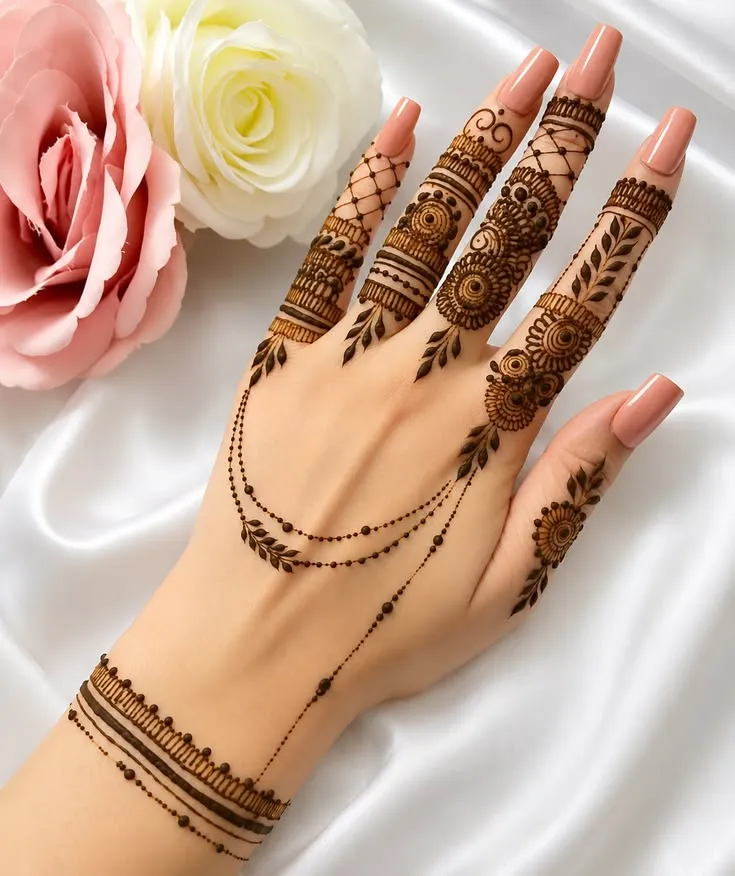
48. Double Bel Across the Hand
Two vines cross the hand at slightly different angles, sometimes overlapping near the centre. Adds coverage and movement compared to a single bel.
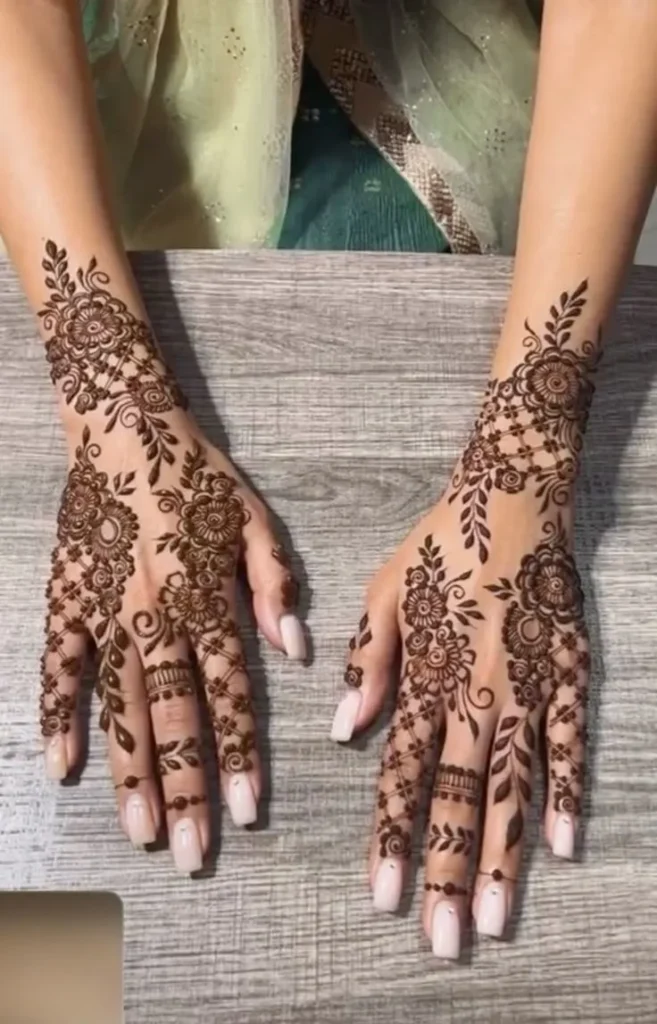
49. Bel That Ends in a Paisley
The vine builds up in size as it crosses the hand, finishing in a large paisley near the fingertip. Gives the design a clear beginning and end.
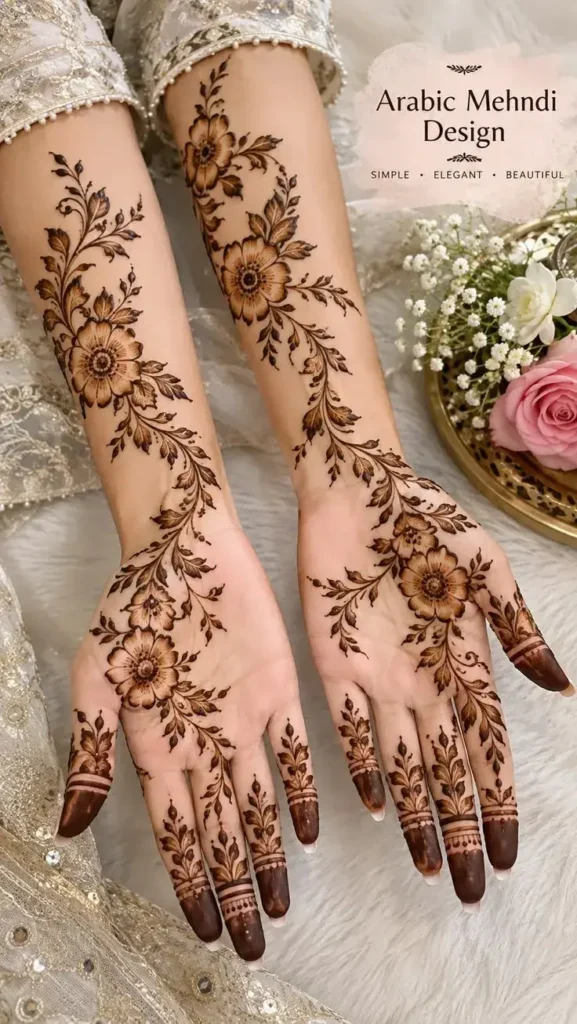
50. Floral Bel With Netted Fill
The vine stays open along most of its length, but one or two larger flowers are filled with a fine net pattern instead of left bare. Mixes the light, open bel look with a small amount of denser detail.
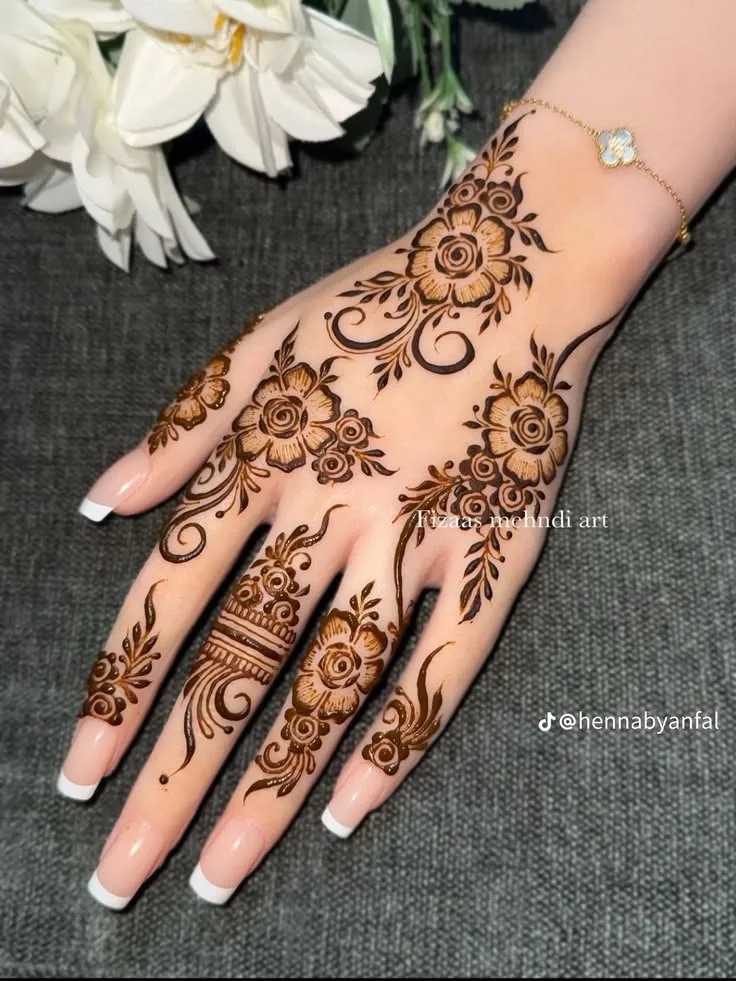
Bridal Arabic Mehndi Designs
Bridal mehndi needs to survive the wedding photos and the days after, so this set ranges from full coverage to lighter options for brides short on time.
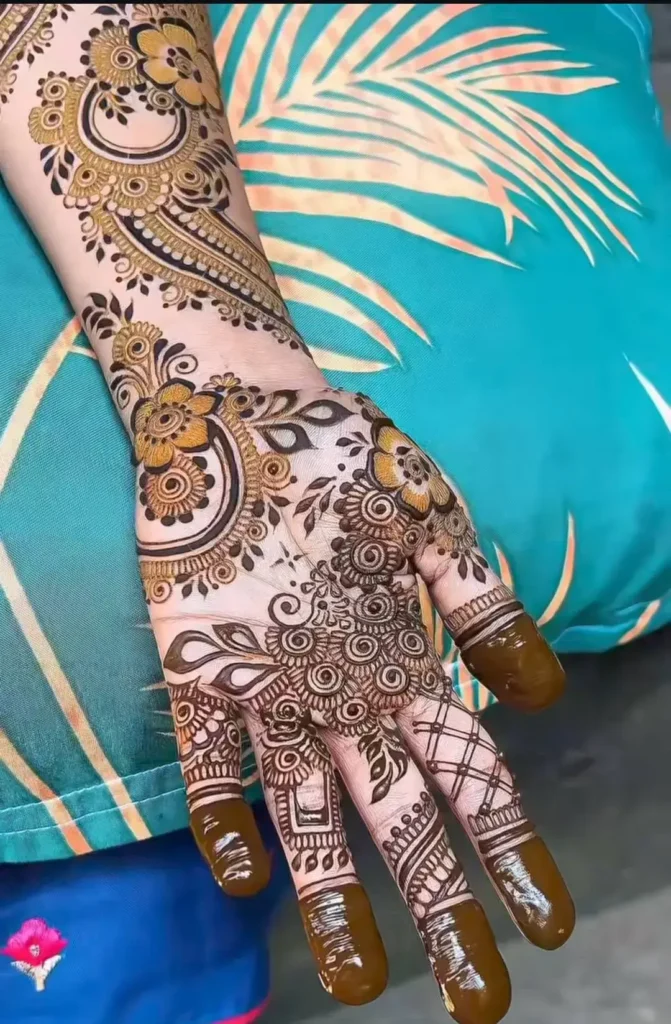
51. Indo-Arabic Bridal Full Hand
Bold Arabic outlines form the structure, then fine Indian details like mandalas or lattice fill some of the larger motifs. A common choice for brides who want Arabic’s visual impact with fuller coverage.
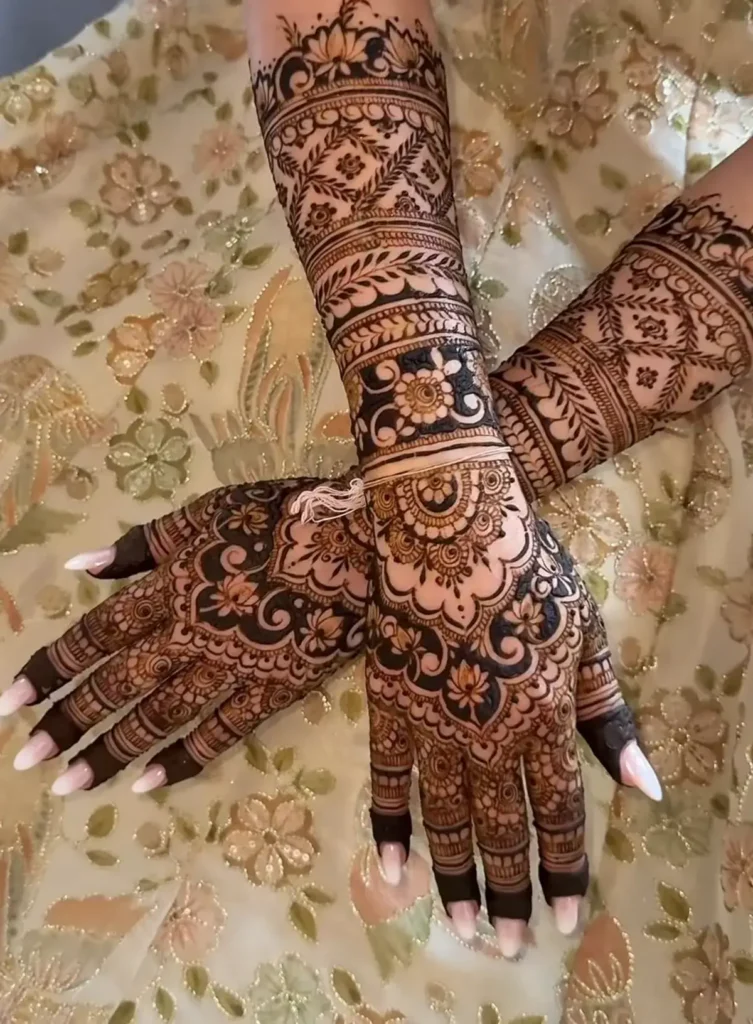
52. Bold Arabic Outline With Fine Indian Filling
Thick, simple outlines shape each motif, packed inside with fine detail instead of left open. Layered up close, clean and bold from a distance.
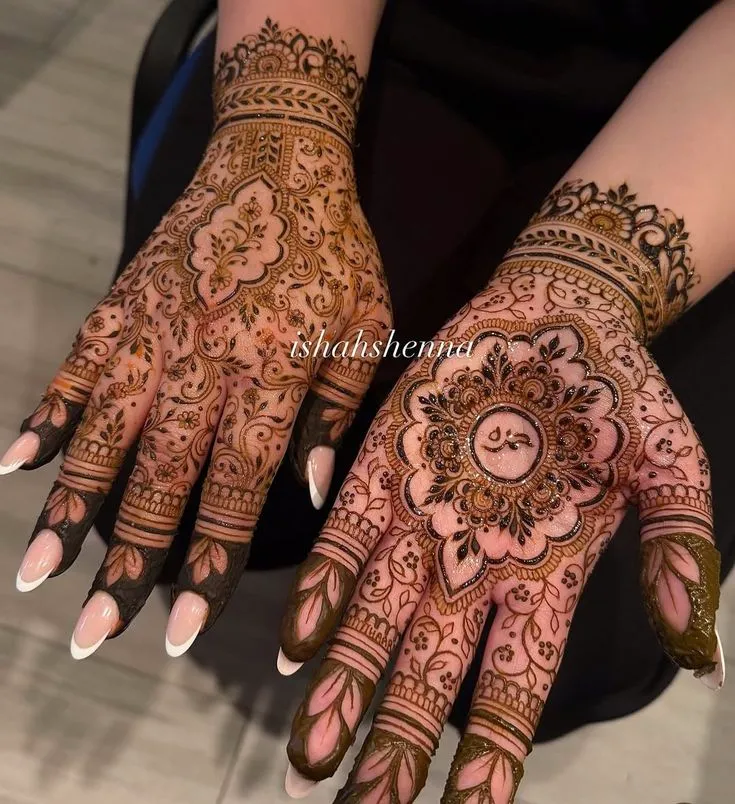
53. Engagement Design With Space for the Ring
The design leaves a clear band on the ring finger for the engagement ring. Mention this to your artist in advance if you’ll wear the ring during or right after the ceremony.
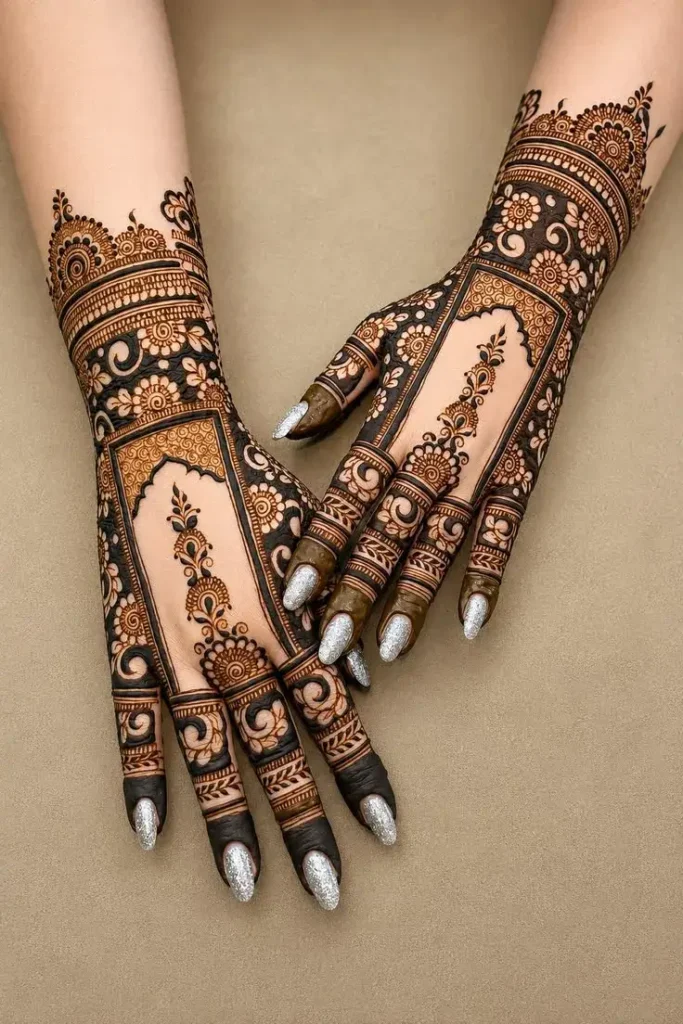
54. Bridal Back Hand With Jewellery Chains
Fine chains link a central back-hand motif to finger rings and a wristband, copying layered hand jewellery. Suits brides who want the back of the hand as the main focus in close-up photos.
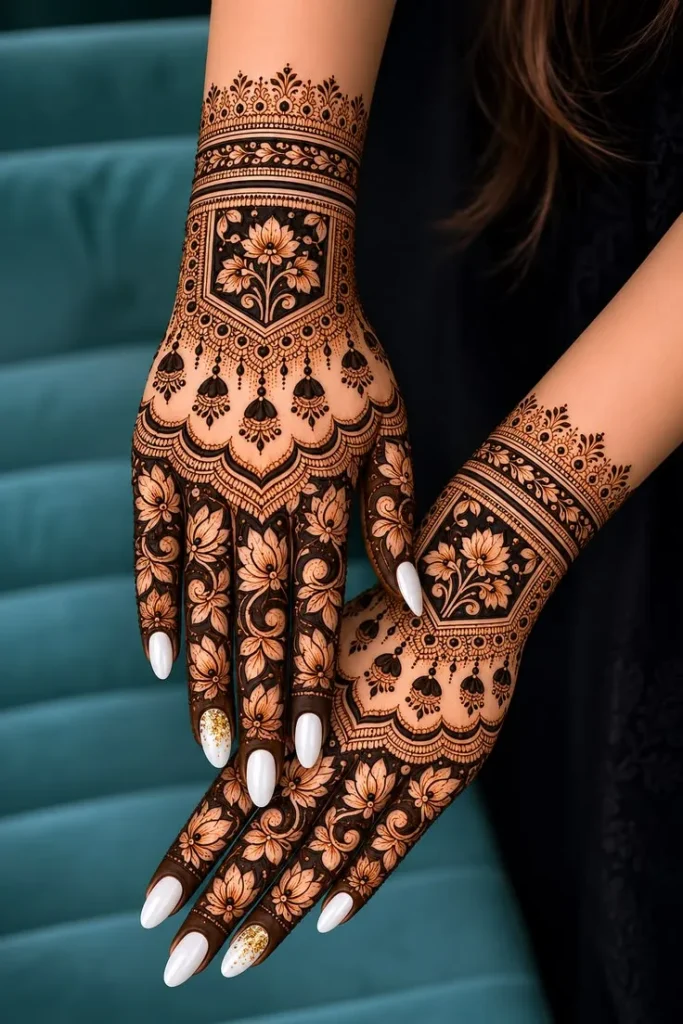
55. Design With Wedding Date or Initials
Initials, a wedding date, or a short phrase is hidden inside a flower, paisley, or along the palm. A playful detail some couples add, often left for a partner to find later.
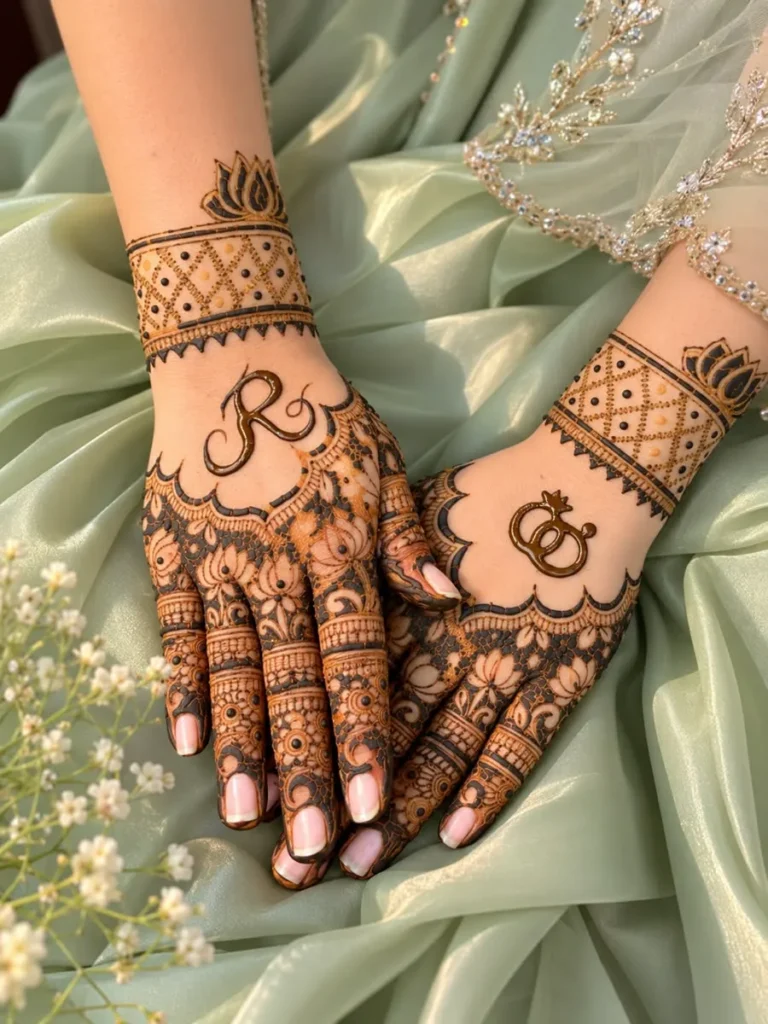
56. Light Bridal Design for Short Ceremonies
A bel or partial hand pattern replaces full coverage, keeping the bridal feel with less time in the chair. Suits a tighter pre-ceremony schedule.
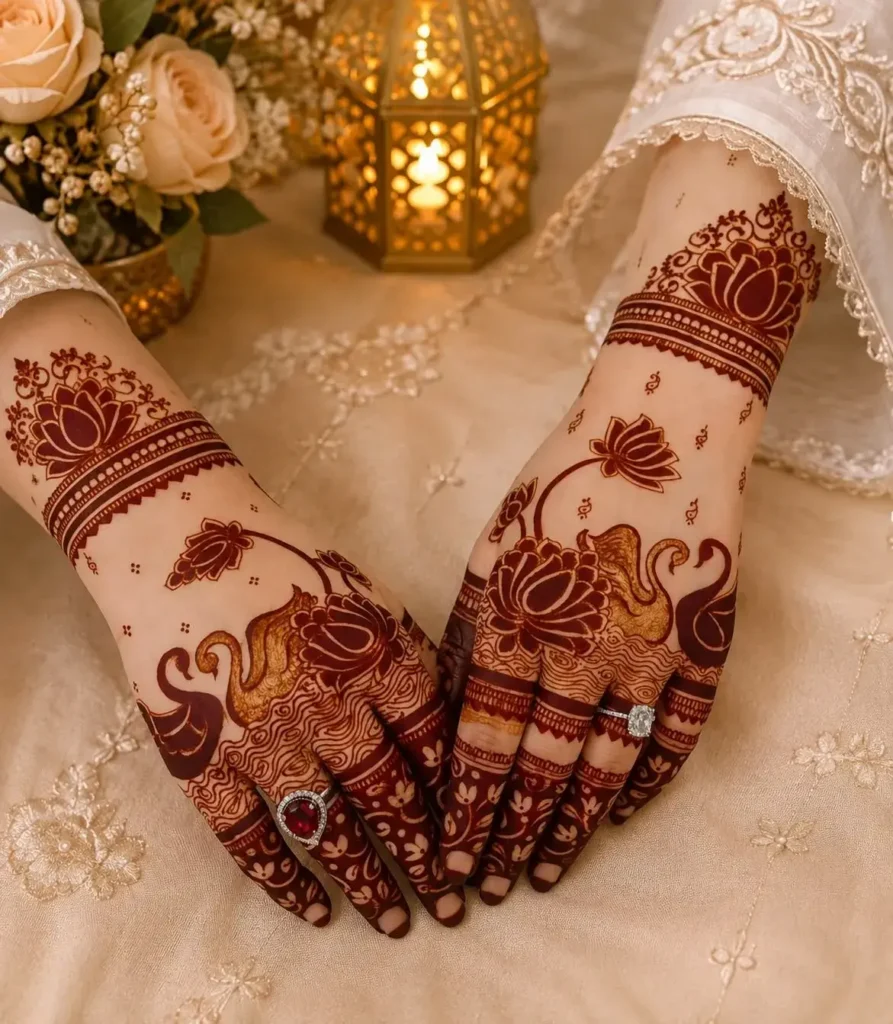
57. Bridesmaid and Guest Design
A simpler version of the bridal look, usually on one hand or a smaller area. Built to complement the bride’s design, not compete with it.
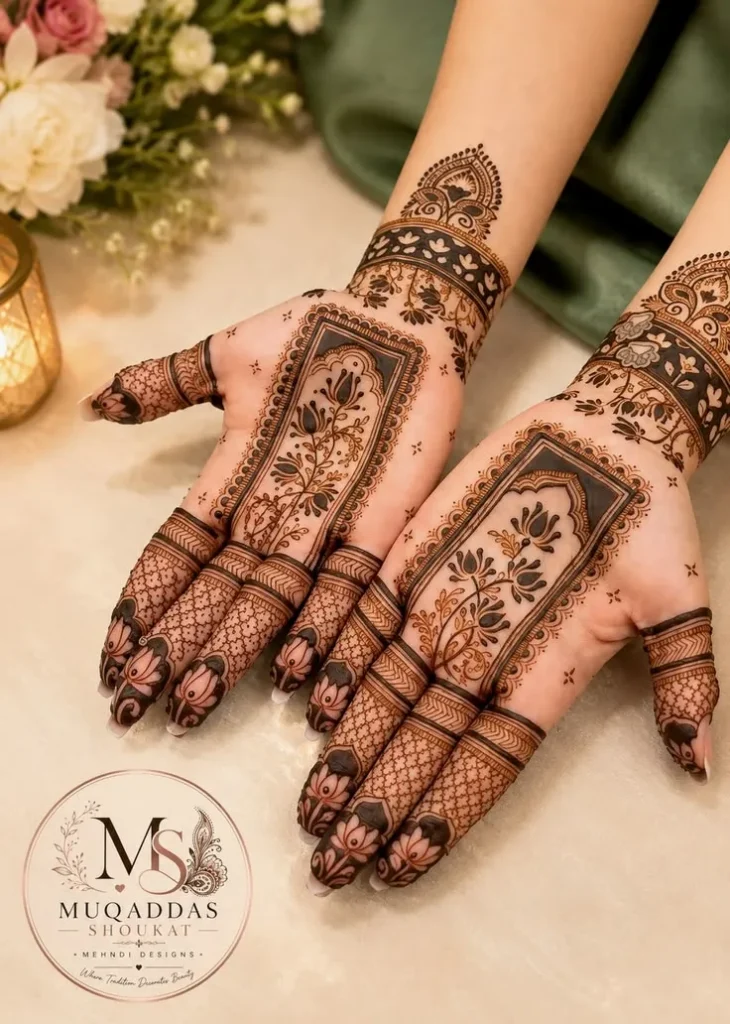
58. Nikah Design With Crescent and Floral Motifs
A crescent moon sits among the usual florals and paisleys, specific to nikah ceremonies. Usually a small accent near the centre of the palm or back of the hand, not the main motif.
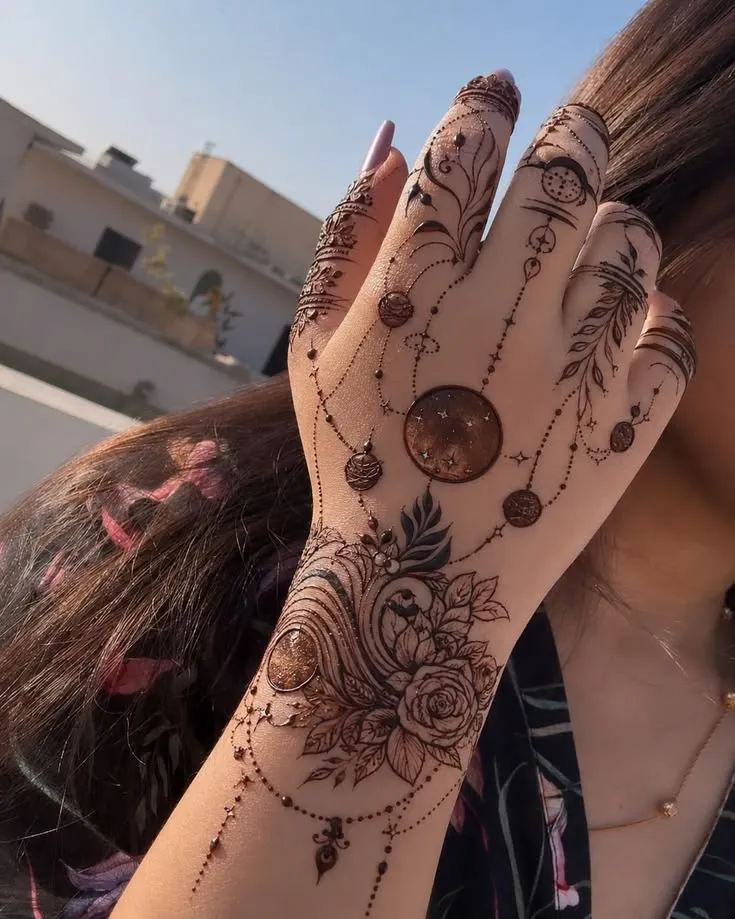
Eid and Festival Arabic Mehndi Designs
Festival mehndi needs to work fast, since most people apply it the night before or the same day. These five designs match specific occasions without demanding a long sitting.
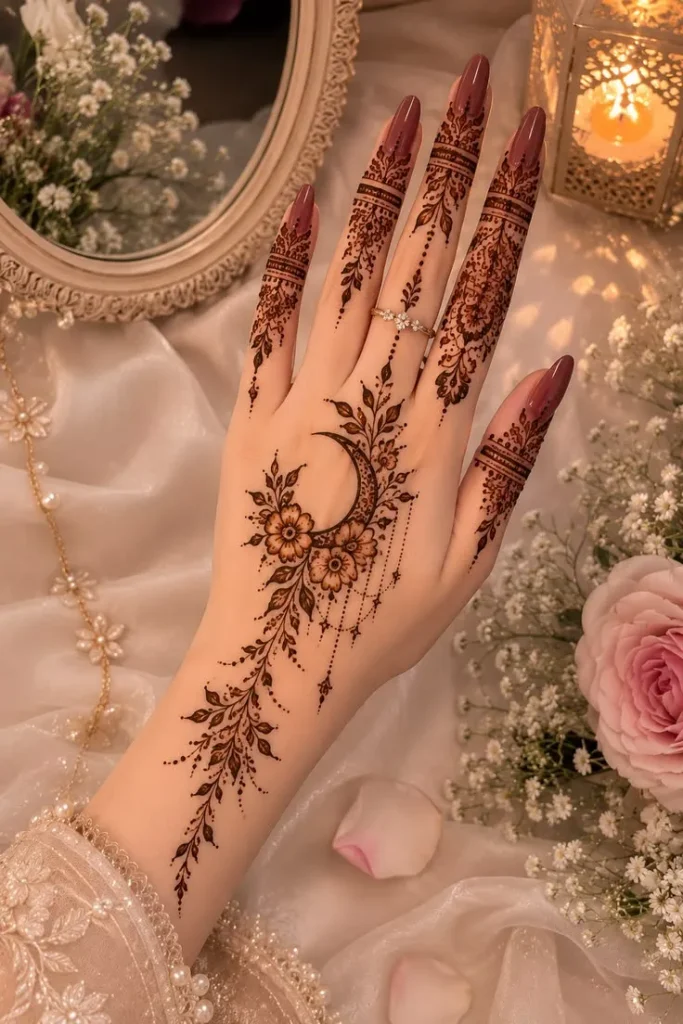
59. Eid Crescent and Floral Design
A crescent moon anchors the design, surrounded by open florals and light shading. Quick enough for last-minute application, so it works well for Chand Raat.
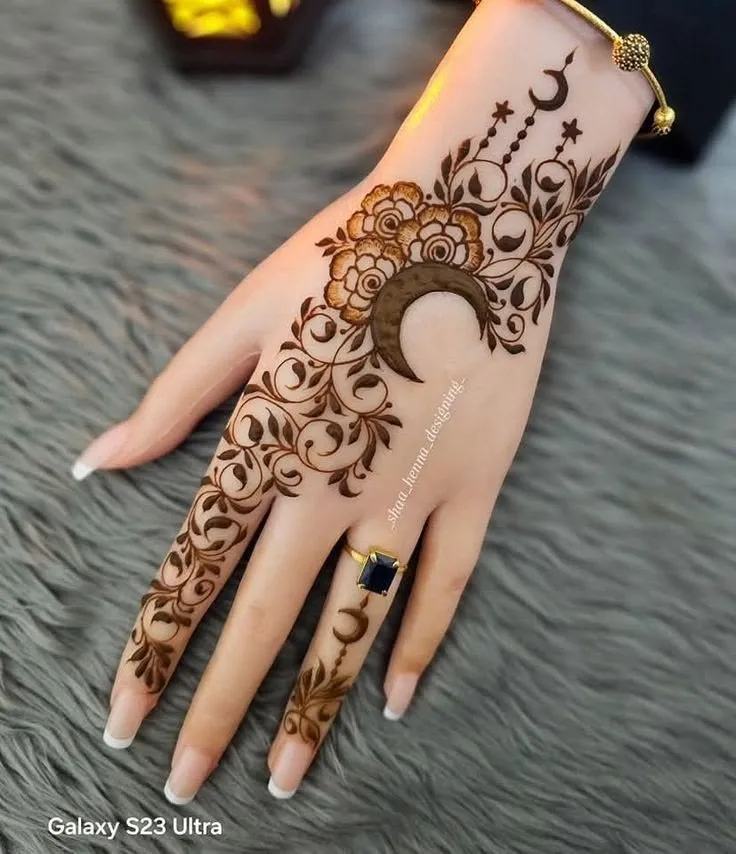
60. Chand Raat Quick Design
A compact bel or finger design built for the night before Eid, when time is short, and hands are often still busy with prep. Small, fast, and still festive.
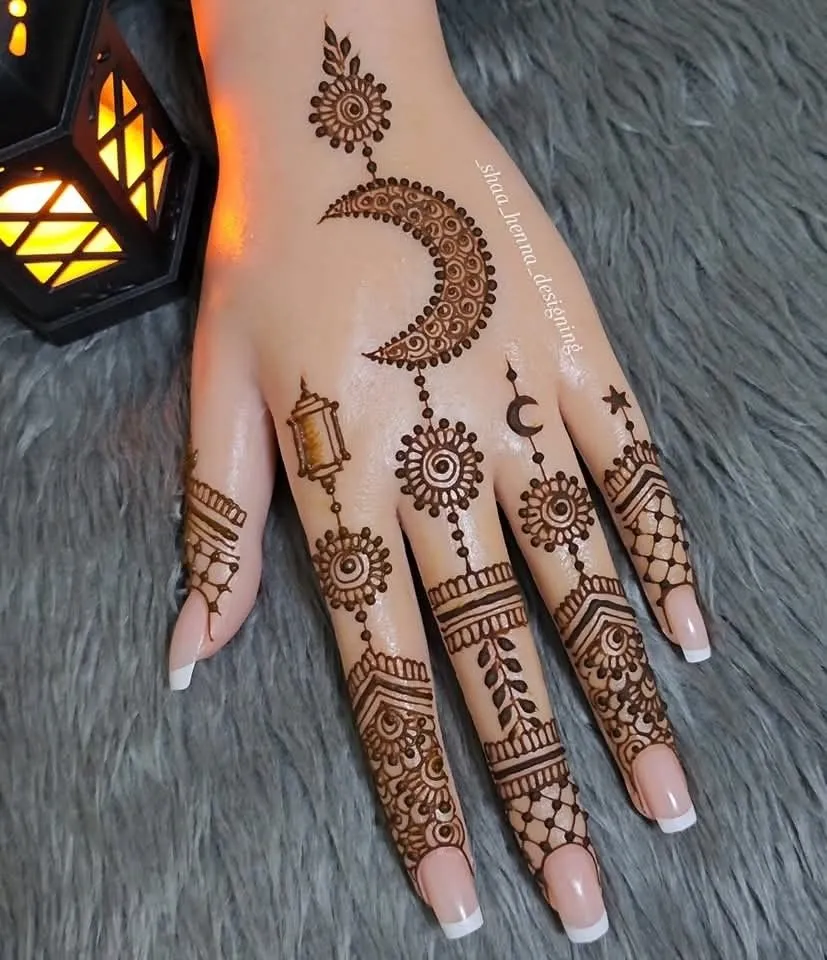
61. Karwa Chauth Design With a Simple Arabic Trail
A single floral trail replaces the dense coverage typical of Karwa Chauth mehndi. Suits anyone who wants the occasion’s tradition without a long application time.
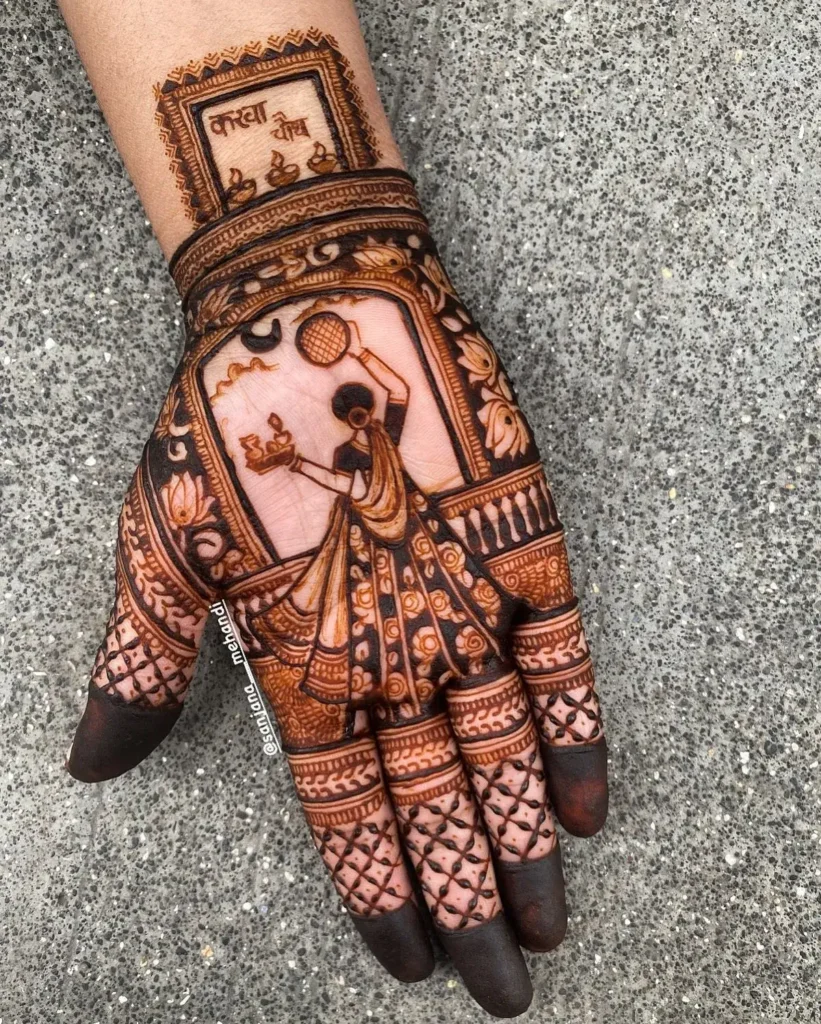
62. Diwali Diya and Floral Design
A small diya (oil lamp) motif sits among florals, marking the design as Diwali-specific rather than a generic festive pattern. Works well as an accent on the back of the hand.
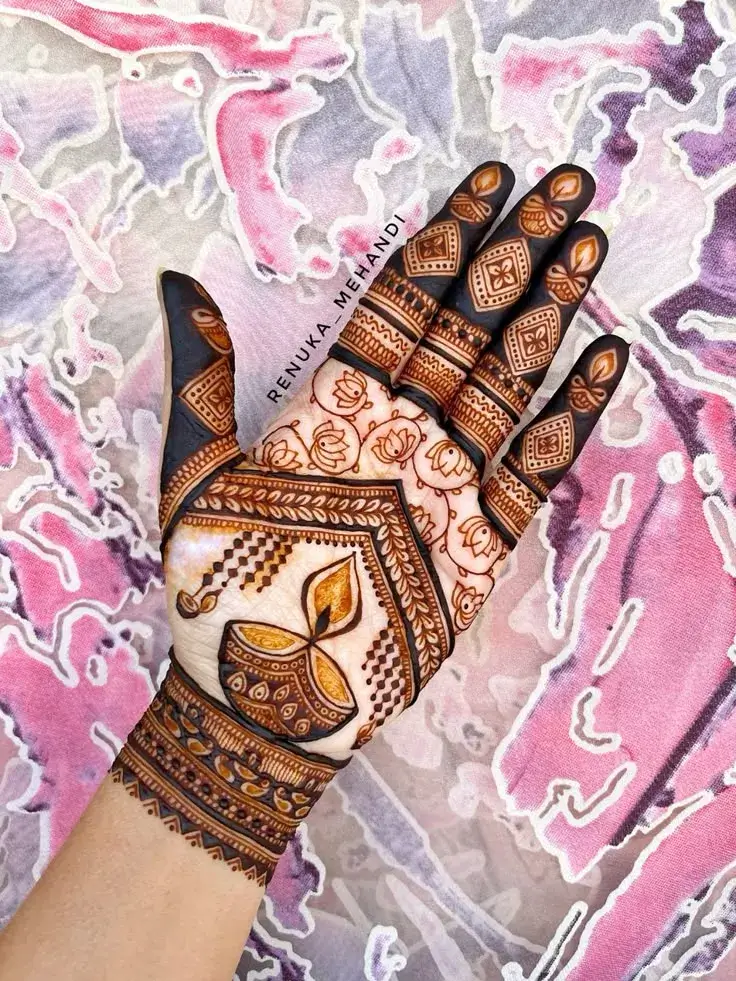
63. Family Gathering Design for Any Festival
A flexible floral or bel design with no occasion-specific motif, suited to smaller festive get-togethers rather than a major event. Easy to repeat across several people quickly.
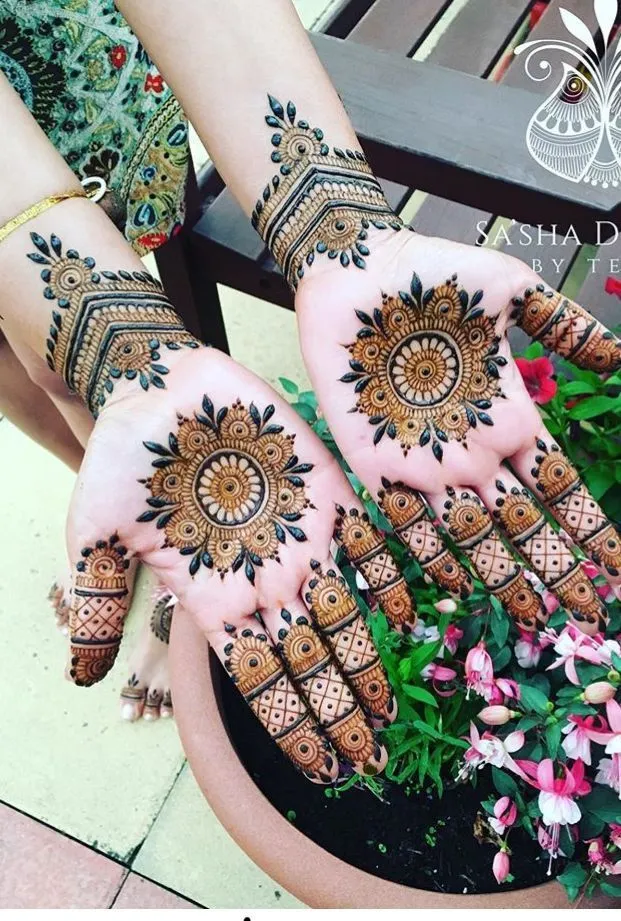
Latest Arabic Mehndi Designs for 2026
These five designs reflect what’s trending this year rather than the classic Arabic layouts covered earlier. Newer, and worth trying if you want something different from the traditional bel or paisley look.
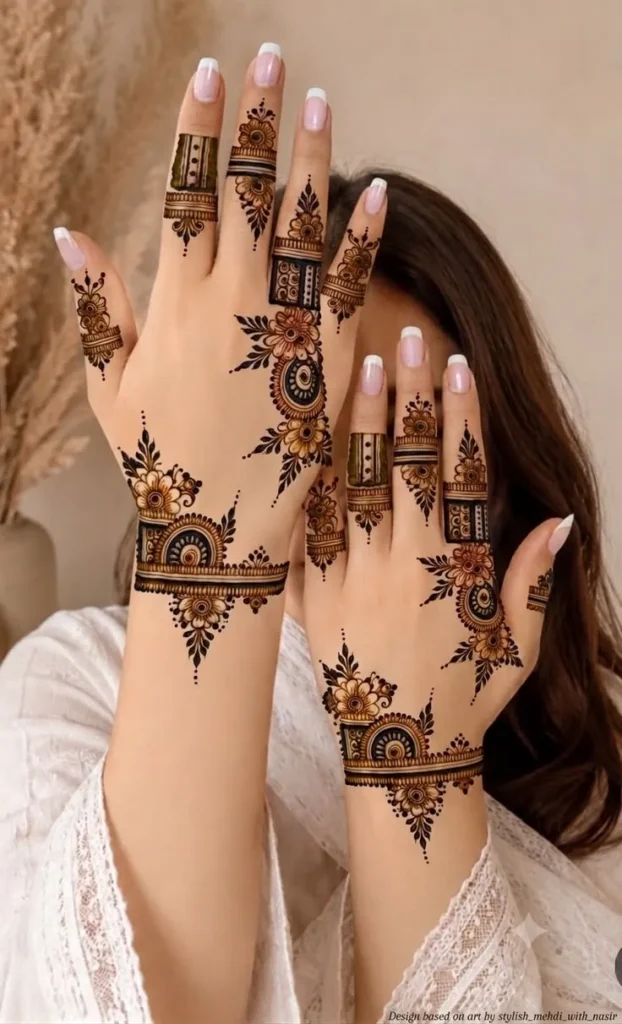
64. Stain Style Design With Filled Shapes
Solid shapes replace outlined motifs, giving a bold, block-colour look rather than fine linework. Reads more like a temporary tattoo than traditional henna, and suits anyone who wants a graphic, modern finish.
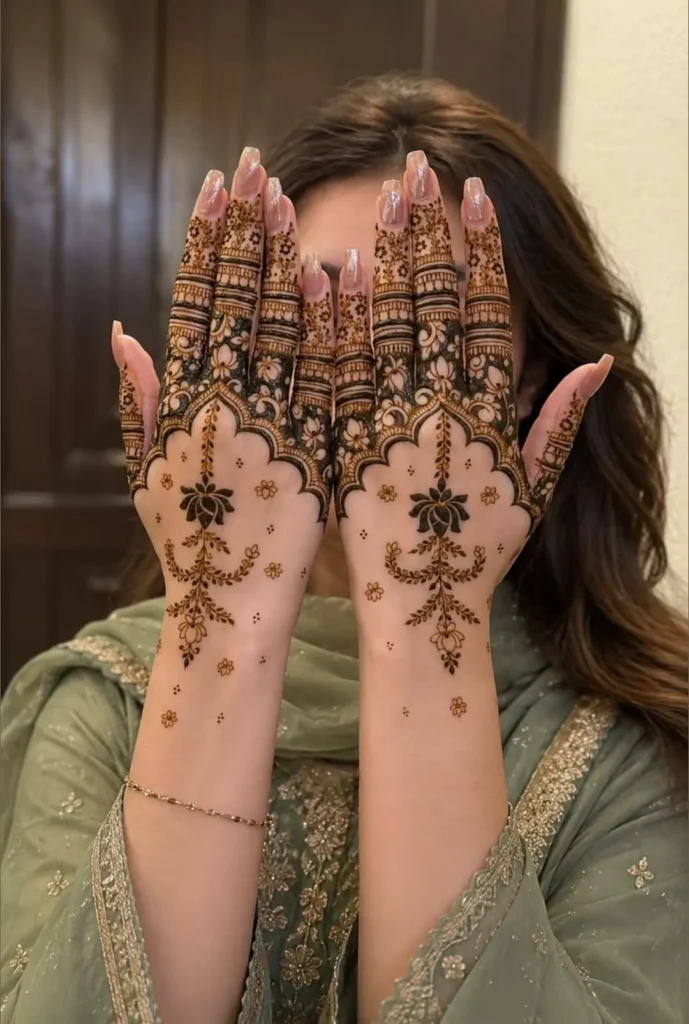
65. Finger Rings With Bow Accents
Ring-style bands circle each finger, with a small bow motif added at one point on each band. A playful update to the classic finger ring design covered earlier in this guide.
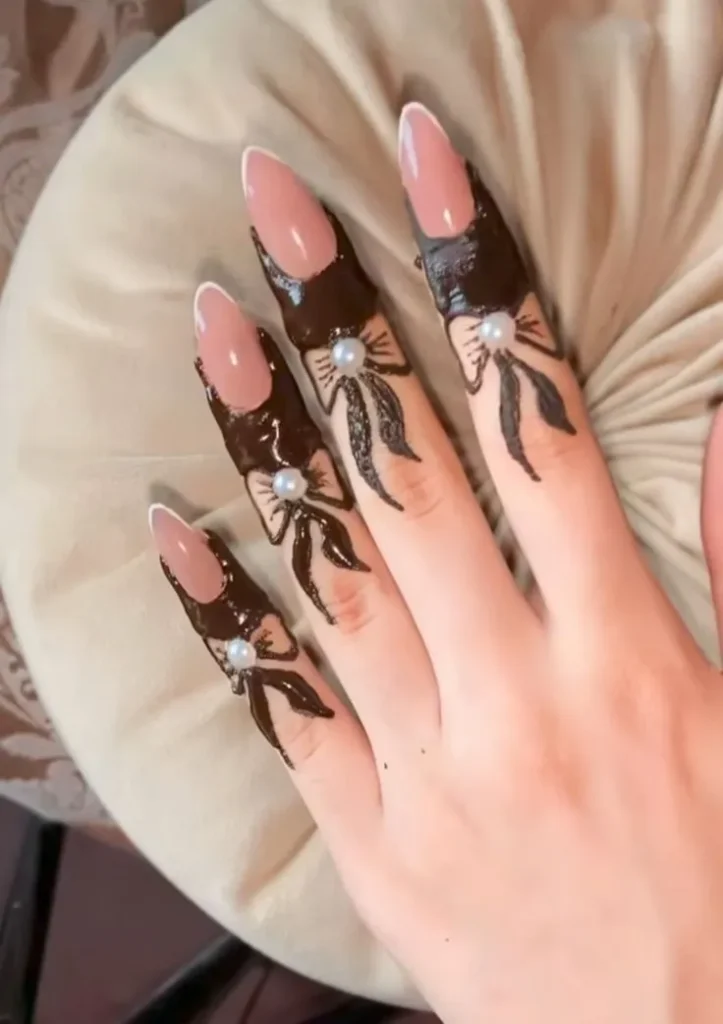
66. Tulip and Water Lily Motifs
Pointed tulip shapes and rounded water lilies replace the more traditional rose and paisley. Both motifs entered Arabic mehndi through European and Mediterranean influence, giving the design a slightly different silhouette from classic florals.
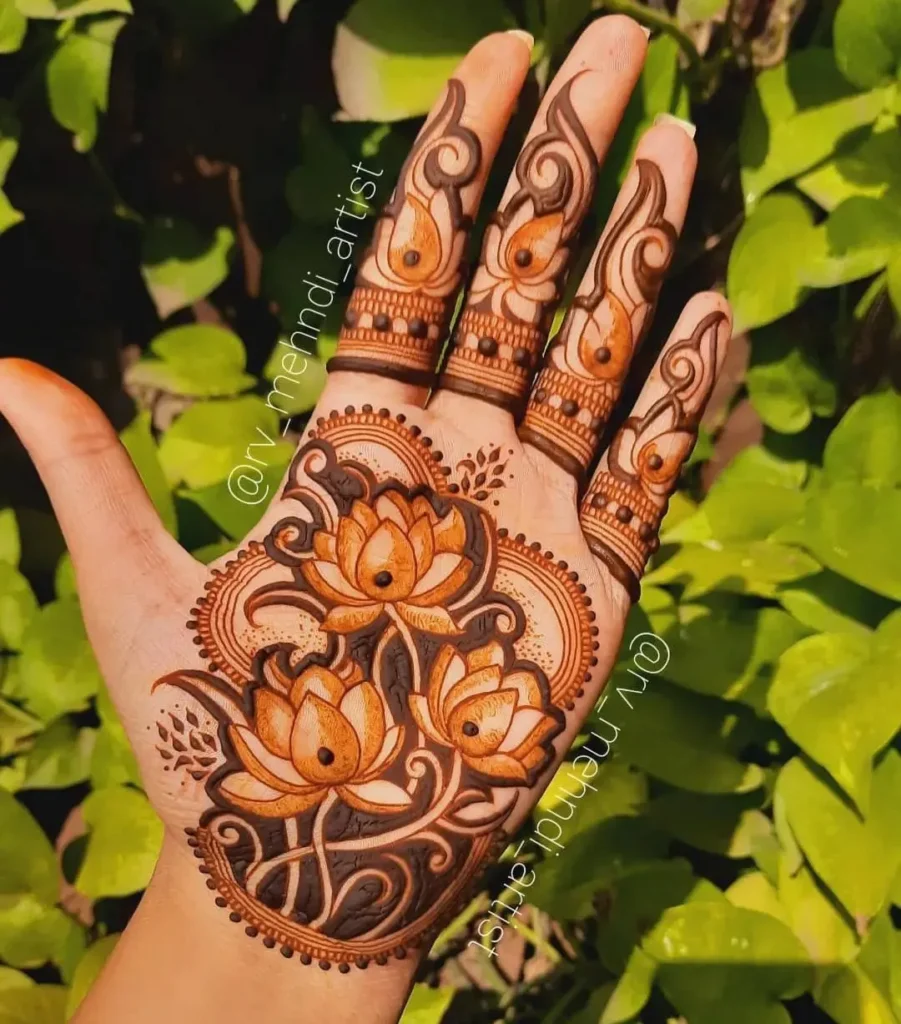
67. Reverse Fill Design (Background Filled, Motif Left Bare)
The background around a motif is filled solid, while the motif itself stays bare skin. This flips the usual approach, where the outline is dark and the background is open, and gives a striking negative-space effect once the paste is removed.
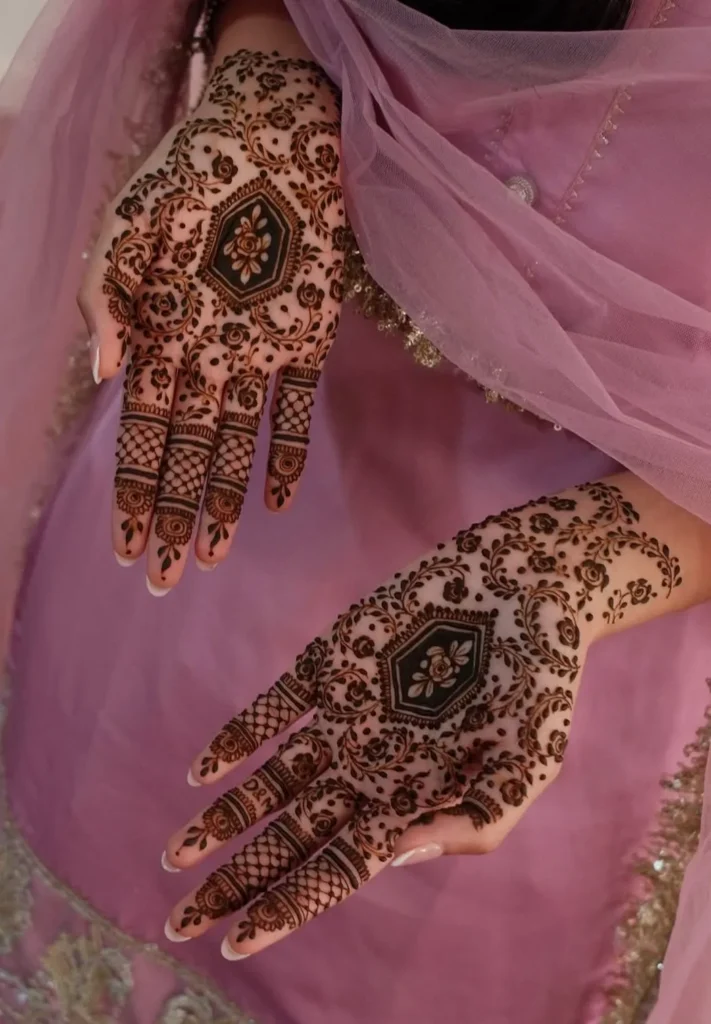
68. Glitter and Stone Accent Design
Small stones or glitter are added over the finished henna, usually along the outline or at the centre of a flower. A decorative add-on rather than a full design style, best suited to short events like parties where the henna won’t need to survive daily wear.
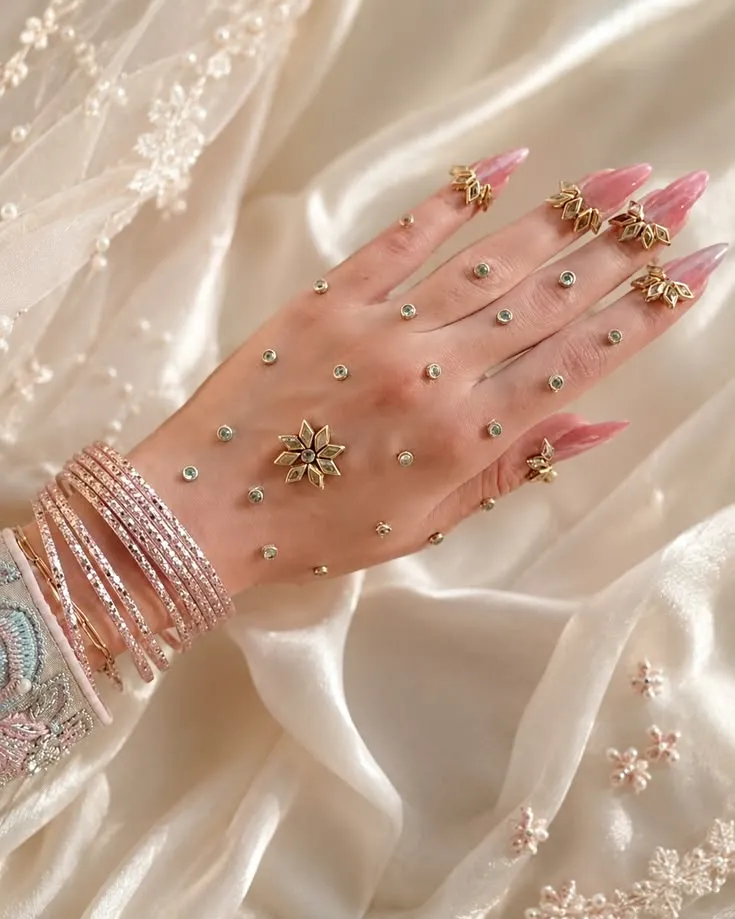
Stylish, Unique and Bold Arabic Designs
These five designs push past the basic bel and floral trail, using heavier lines, mixed motifs, or unusual layouts. Good picks for anyone who wants their mehndi to stand out rather than blend into the usual patterns.
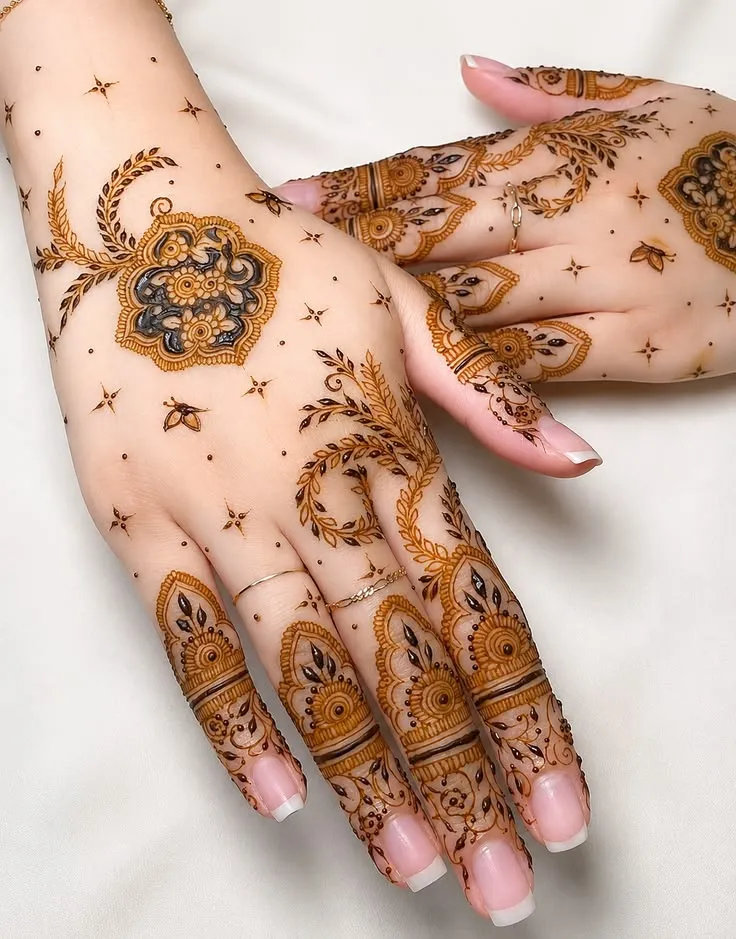
69. Bold Thick-Line Floral
Extra-thick outlines shape oversized flowers and leaves, with little to no interior detail. The line weight itself is the design, and it holds up well in photos taken from a distance.
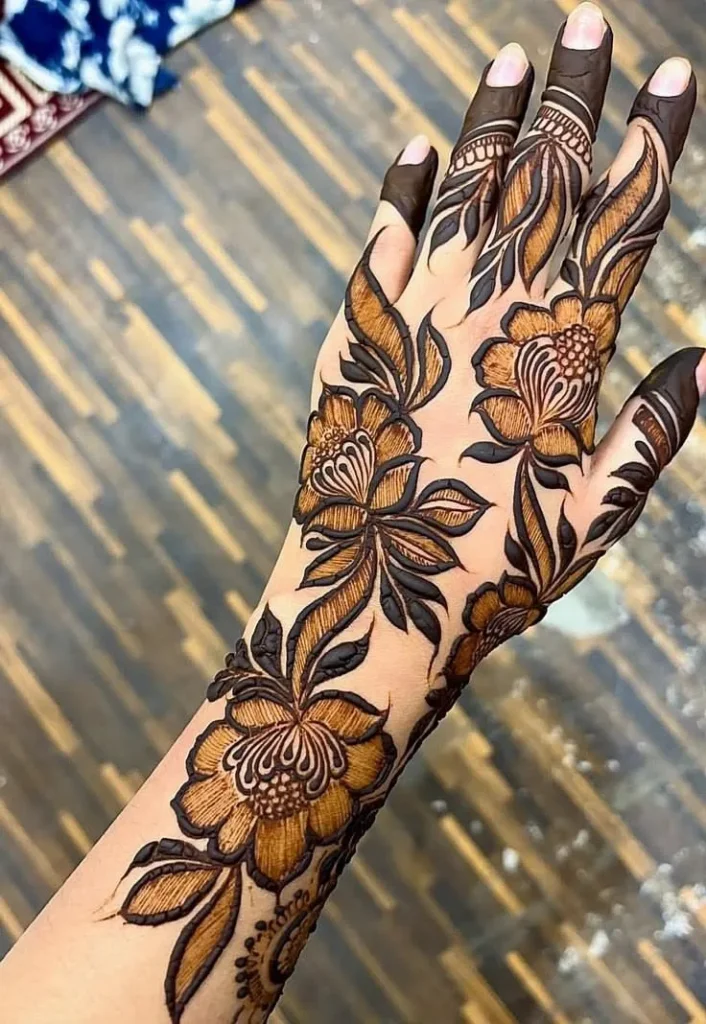
70. Mandala and Vine Mix
A circular mandala sits at one point on the hand, connected to a flowing Arabic vine rather than the dense, repetitive patterns mandalas usually appear in. Combines a structured centre with the looser movement of a bel.
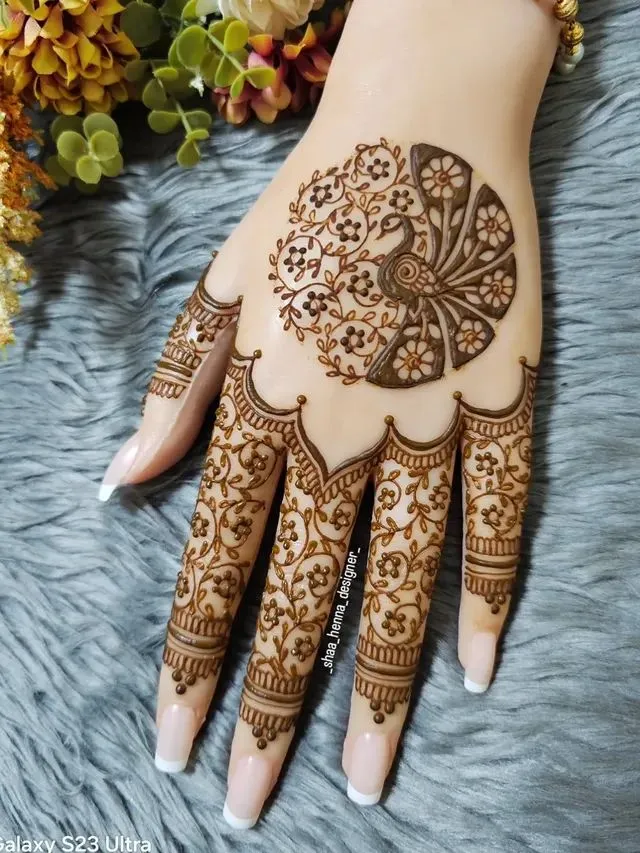
71. Window-Inspired (Jharokha) Design
A motif shaped like an arched window or screen, drawing on jharokha architecture, sits as a centrepiece with florals around it. A less common choice that gives the design an architectural feel instead of a purely botanical one.
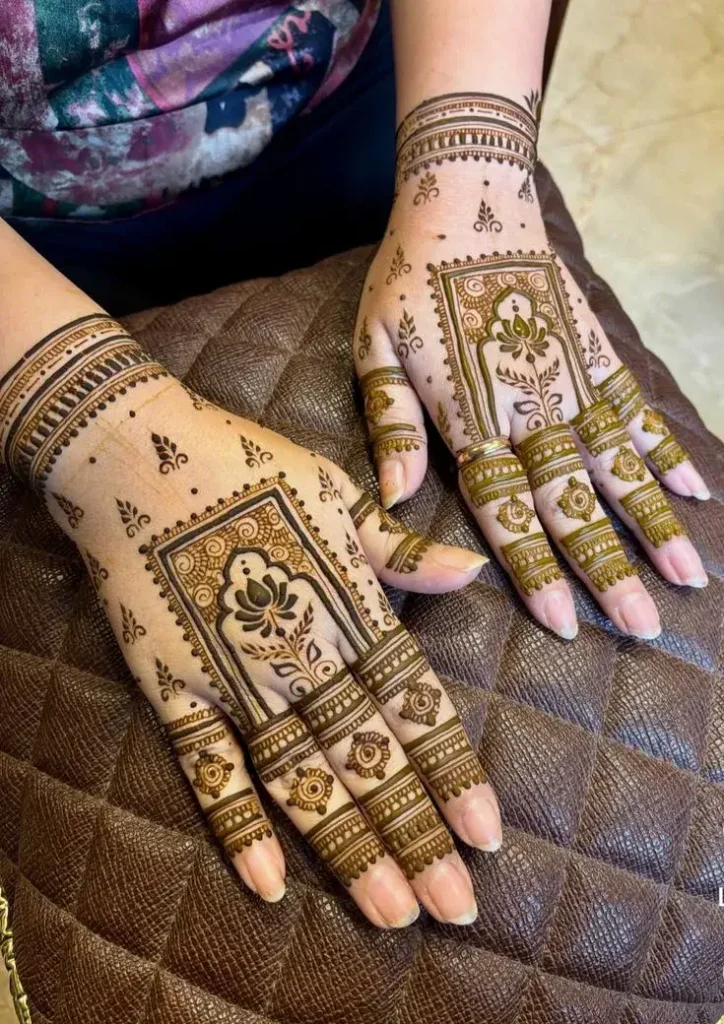
72. Shaded 3D-Look Floral
Flowers are shaded with fine strokes or cross-hatching to suggest depth and curvature, rather than left as flat outlines. Gives a raised, sculpted appearance once the paste is removed and the stain sets.
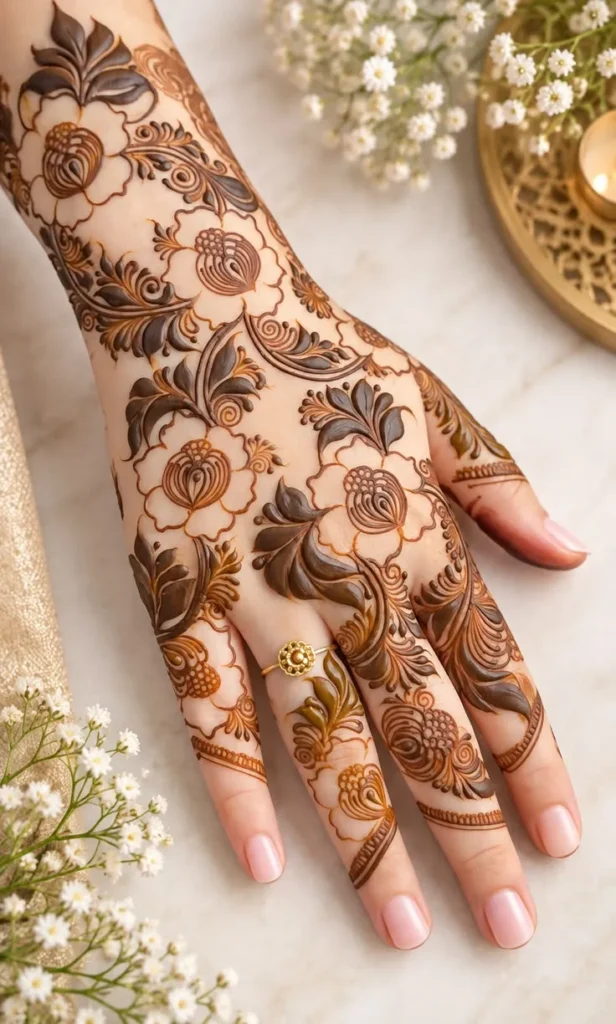
73. Dots, Circles and Criss-Cross Pattern
Geometric elements, dots, circles, and crossed lines replace florals as the main motif. A departure from the botanical focus of most designs in this guide, suited to anyone who prefers structure over florals.
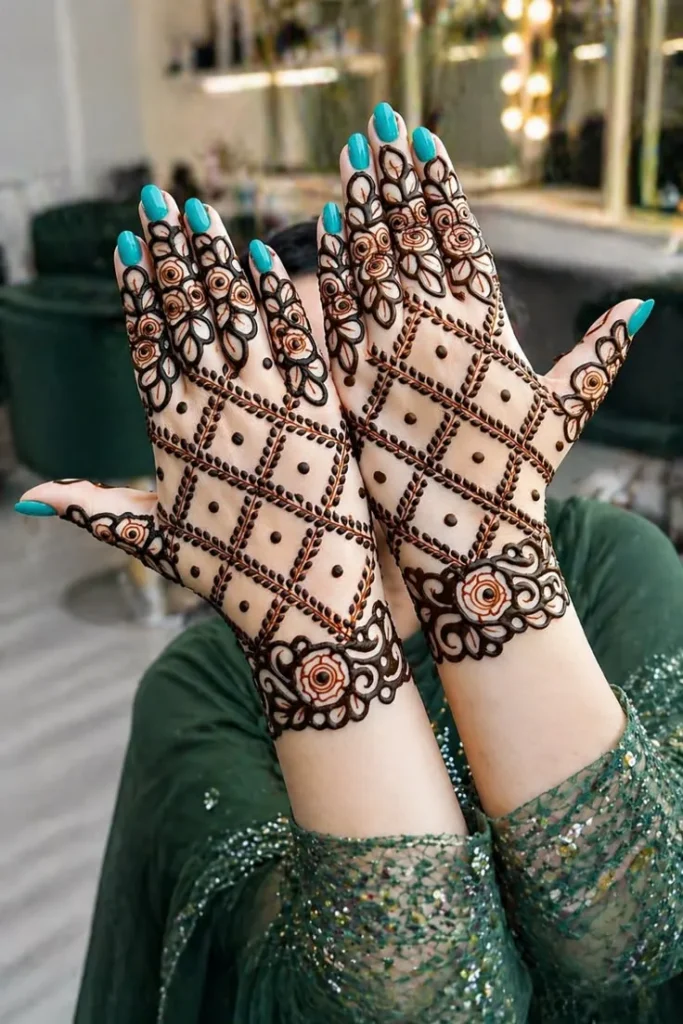
Round and Square Arabic Designs
A small set built around clean geometric shapes rather than flowing vines. Useful when you want a design with a defined edge instead of an open trail.
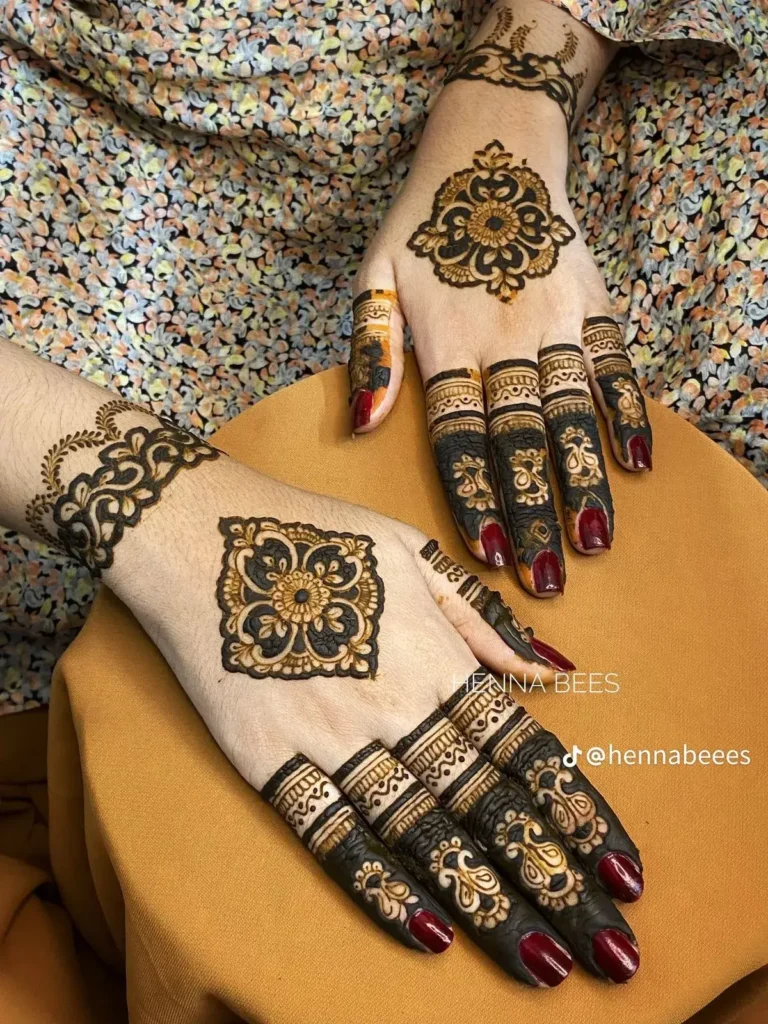
74. Round Palm Medallion
A circular motif fills the centre of the palm, with petals or paisleys arranged evenly around its edge. The round shape gives the design a clear boundary, unlike the open-ended bel styles covered earlier.
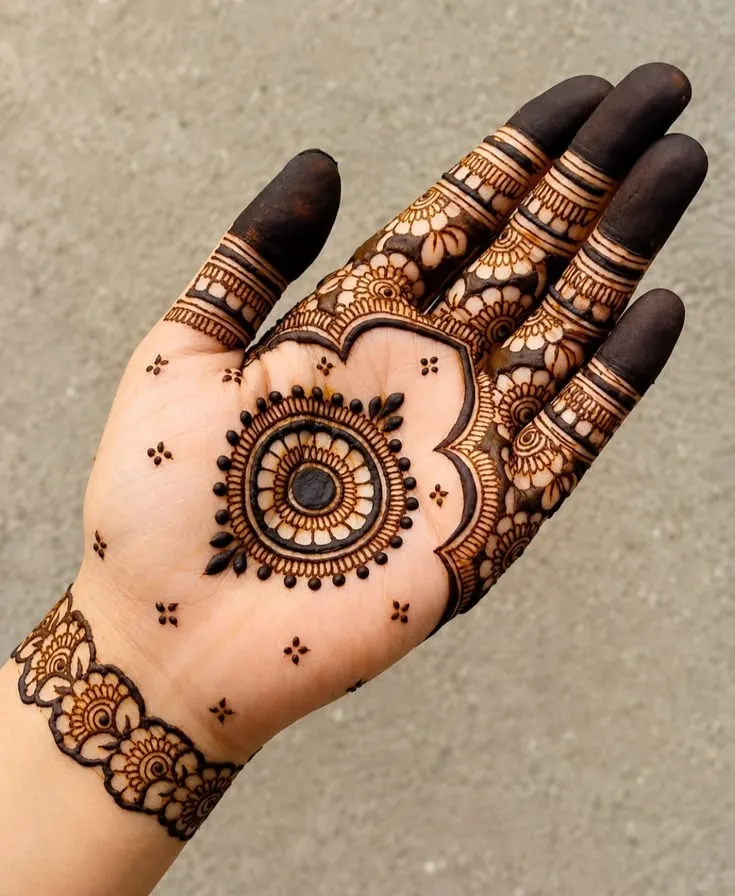
75. Square Back Hand Frame
A square outline sits on the back of the hand, filled with a smaller floral or geometric pattern inside. The straight edges make this one of the more structured designs in the guide, closer to a frame than a trail.
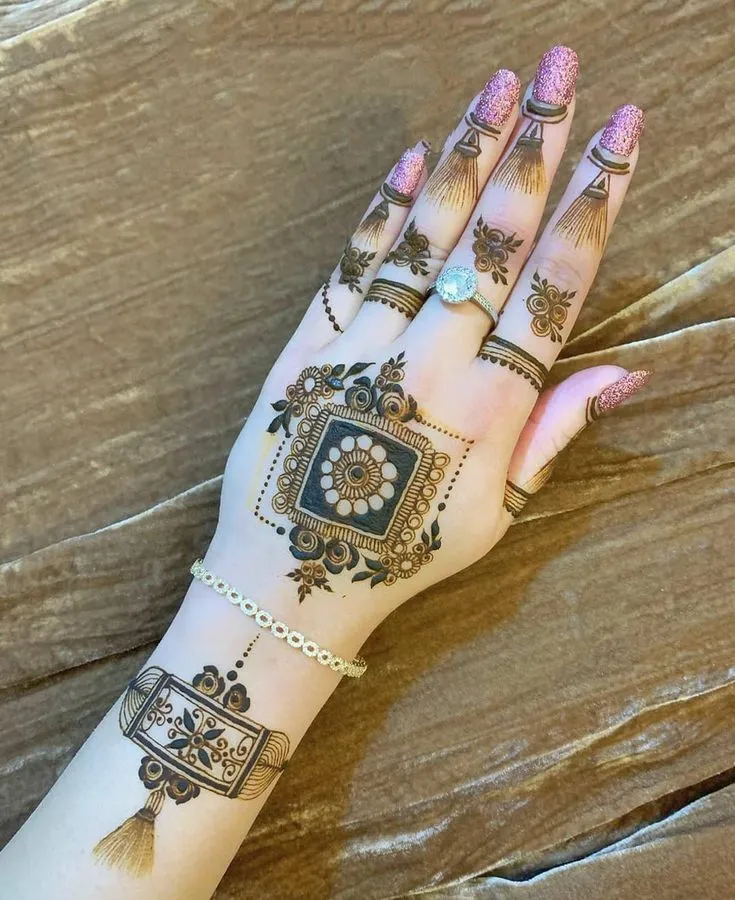
76. Half-Round Wrist Design
A half-circle wraps the wrist, similar to design 5 but with denser detail inside the curve. Works as a bridge between the minimal wrist cuffs earlier in this guide and the fuller bracelet-style designs.
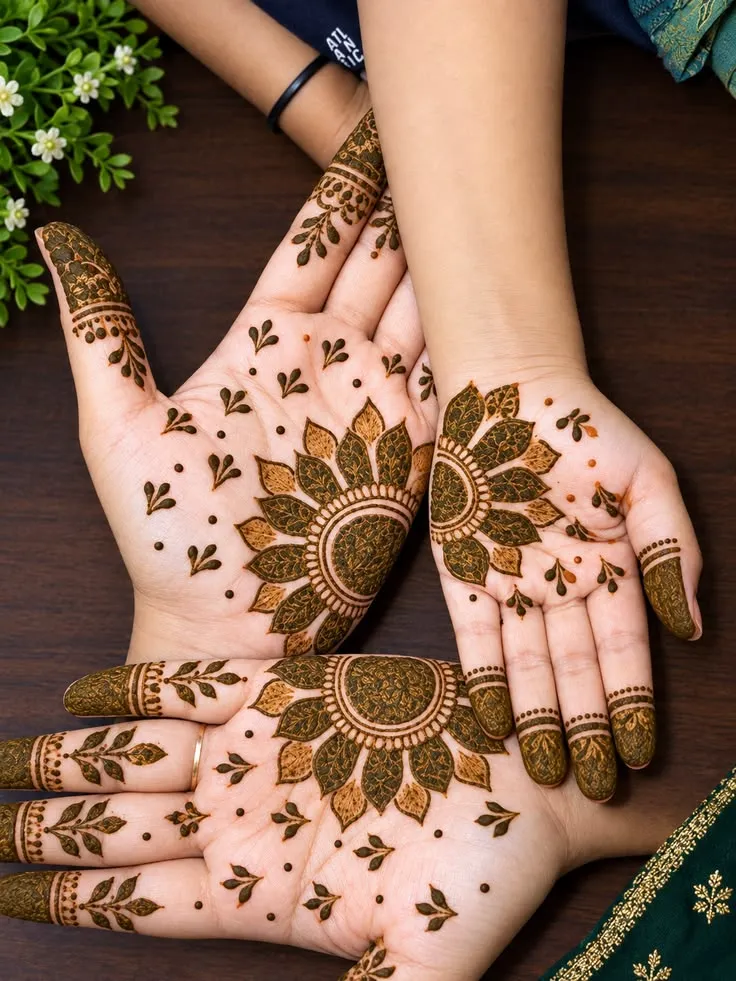
Feet and Ankle Arabic Mehndi Designs
This is the last of the 80 designs. Foot placement follows the same open, bold approach as the hand designs, but along the side and top of the foot rather than the palm.
For more ideas beyond the ankle, see these Arabic mehndi designs for the legs and feet.
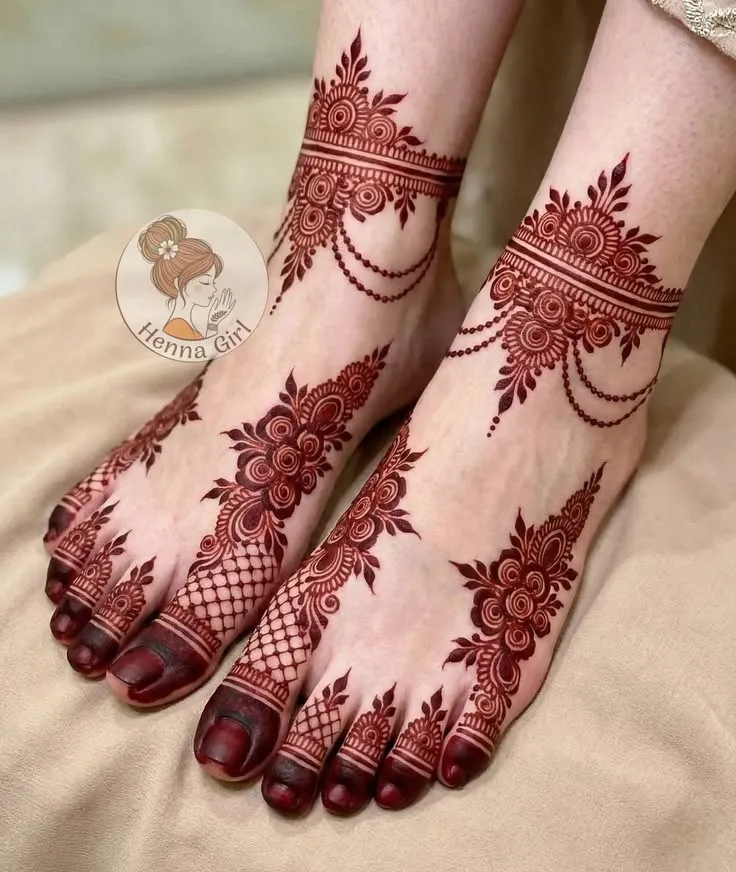
77. Side Trail From Ankle to Little Toe
A vine runs along the outer edge of the foot, from the ankle down to the little toe. Placing it on the side rather than the centre of the foot helps the design avoid fast wear from shoes.
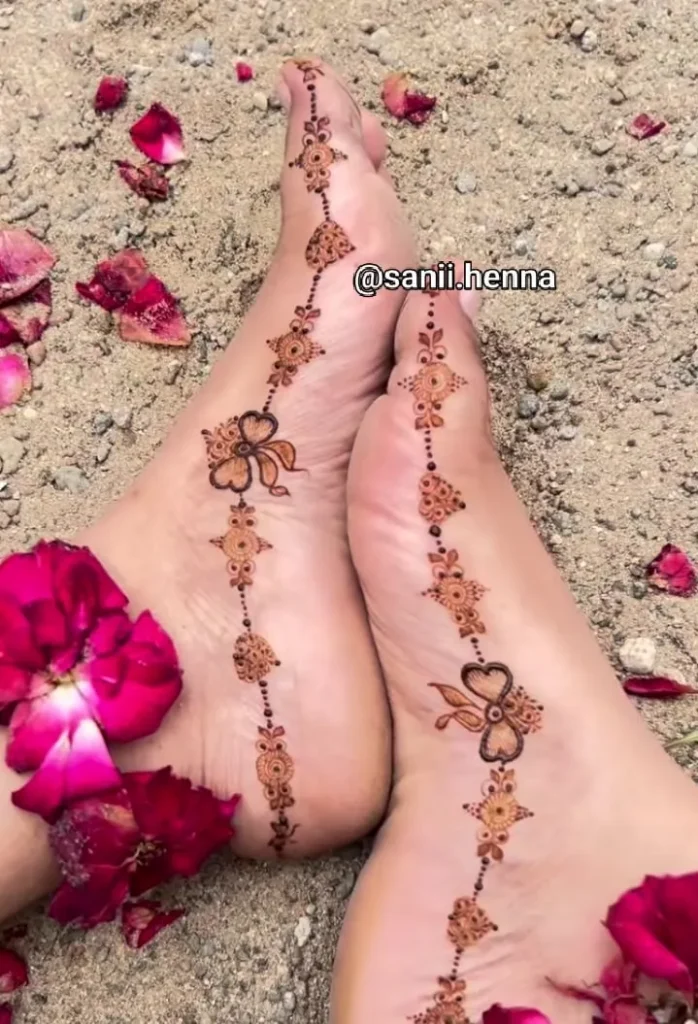
78. Anklet Style Band
A band circles the ankle like jewellery, with small hanging motifs dropping toward the top of the foot. Mirrors the bracelet-style designs from the hand sections, adapted for the ankle.
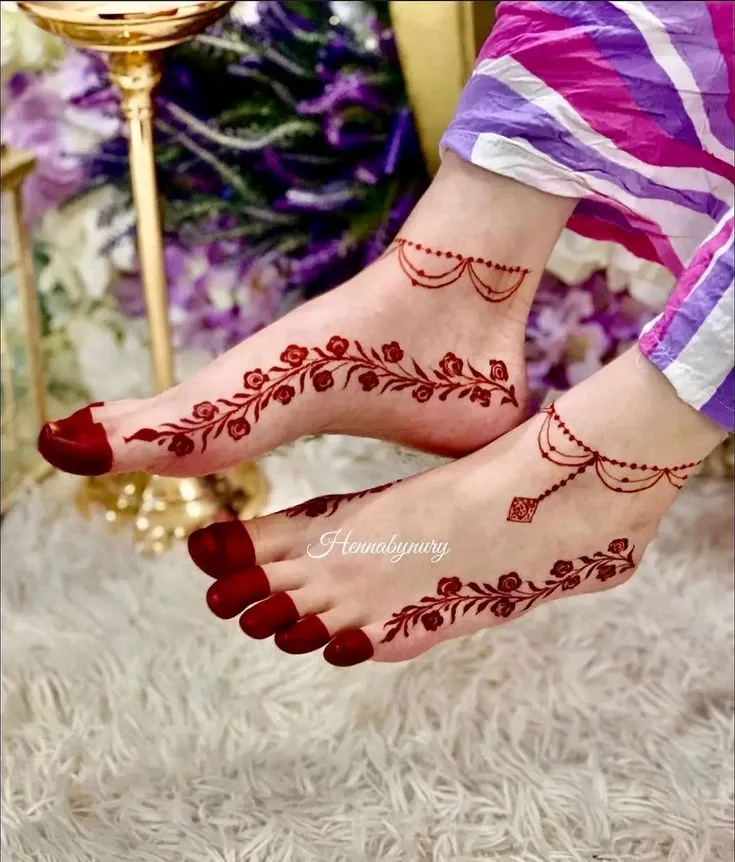
79. Toe Ring and Rose Details
Small ring-style bands wrap each toe, paired with a rose motif near the big toe or across the top of the foot. A lighter option than full foot coverage.
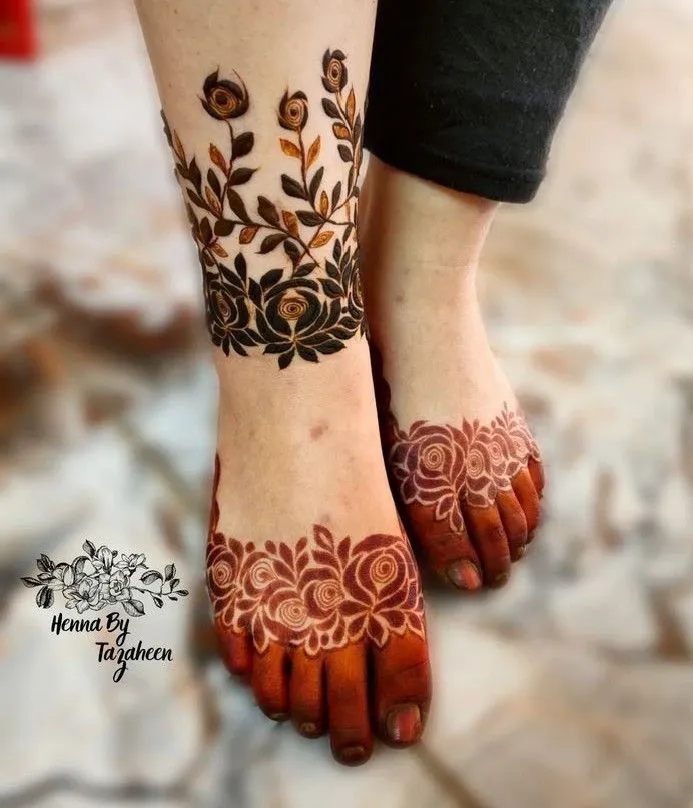
80. Full Foot Floral Design
Florals and leaves cover most of the top of the foot, usually connecting to an ankle band or trail. The most detailed option in this section, closer in coverage to a full hand design than the lighter foot styles above it.
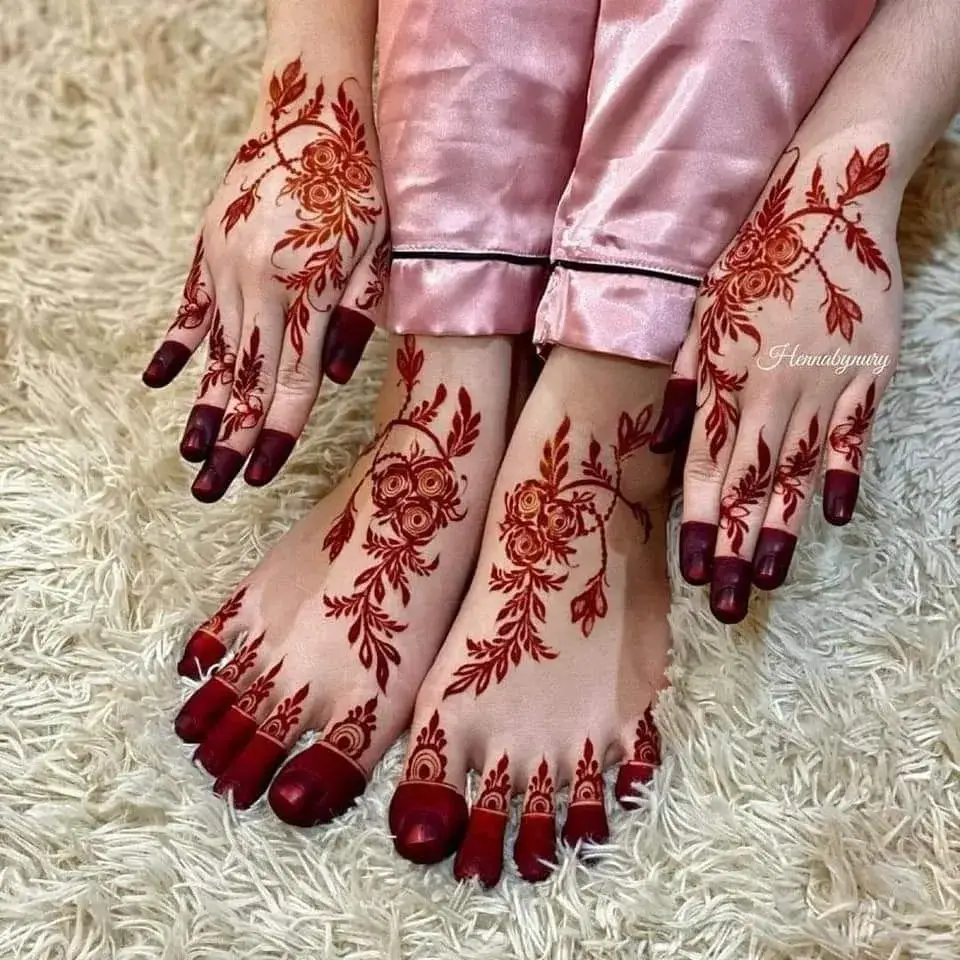
Arabic, Indian and Pakistani Mehndi: What Is the Difference?
The three styles share the same base, henna paste, but differ in coverage, motifs, and where they’re worn on the hand. Khaleeji and Moroccan henna are close relatives worth knowing too, especially if you’re choosing between a Gulf-style look and a South Asian one.
| Style | Coverage | Typical motifs | Placement focus | Best known for |
| Arabic | Low to moderate, wide open skin | Bold florals, paisley, diagonal bel | Palm and back of hand | Speed and a clean, graphic look |
| Indian | Dense, near-total coverage | Fine detail, bride and groom figures, kalash (pot), mandalas | Extends through wrists and up the arms | Intricacy and traditional symbolism |
| Pakistani | Moderate to very high | Arabic-style bold outlines filled with Indian-style detail, 3D shading | Hands, often into the forearm | Bridal work, popularised by salons like Kashee’s |
| Khaleeji (Gulf) | Low, dispersed placements | Large sculptural florals, curved lines, geometric borders | Hand and foot edges | Quick-drying, casual and Eid wear |
| Moroccan | Moderate, structured | Geometric shapes, chevrons, diamonds, parallel lines, rarely florals | Hands and feet | Tribal and protective symbolism rather than florals |
Where Indo-Arabic fits: it isn’t a separate origin, but a fusion. It uses Arabic’s bold outlines and open trails as the frame, then fills the larger motifs with Indian-style detail. Most bridal designs sold as “Arabic” in India and Pakistan today are actually this hybrid.
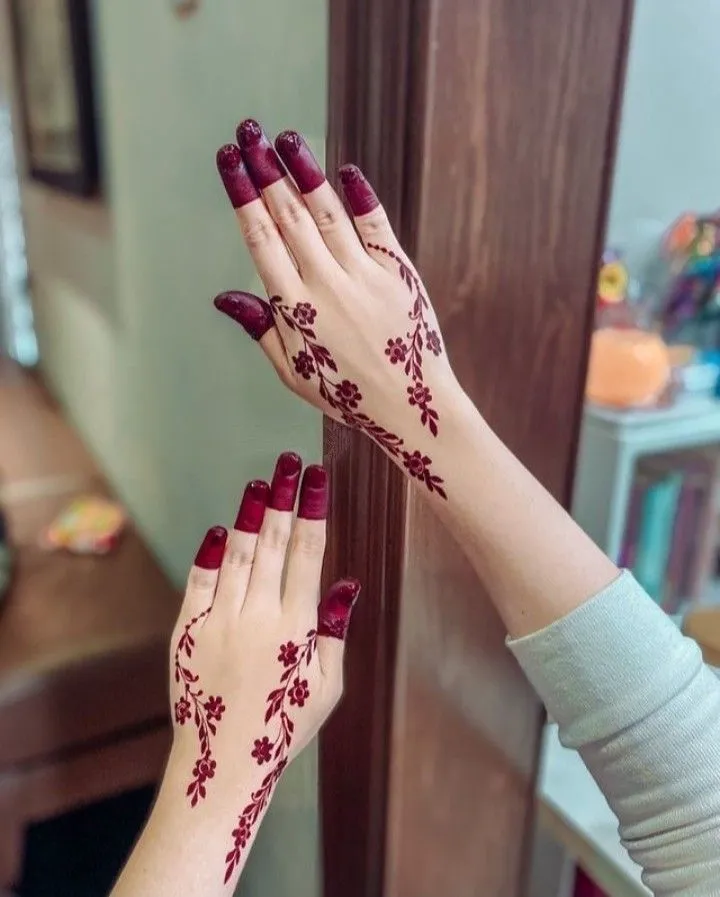
Where henna comes from: Henna’s use goes back further than any single style claims. It likely originates from North Africa and the Middle East, including ancient Egypt and the Arabian Peninsula, though the exact rituals and meanings tied to it in antiquity aren’t fully documented. One of the oldest written references, a fragmentary tablet from Ugarit, dates to the late 13th century BCE and appears to describe henna as a medical remedy rather than body art. Later, in classical Persian poetry from roughly 900 to 1200 CE, hennaed hands are described as a mark of beauty, including for brides.
The bold, minimal look now sold as “Arabic mehndi” is a modern styling choice, not an ancient design tradition. It took shape more recently, spread partly through Gulf salons and social media, and later became popular across South Asia as an alternative to dense traditional Indian bridal work.
How to Choose the Right Design
With 80 options above, narrowing down comes down to three things: the occasion, how much time you have, and whether you’re drawing it yourself or booking an artist.
Choose by Occasion
| Occasion | Good fit | Why |
| Everyday wear, casual outing | Simple and easy designs, small and minimal designs | Fast to apply, doesn’t limit hand movement much |
| Eid, Chand Raat | Crescent and floral designs, finger designs | Matches the occasion’s motifs, quick before celebrations |
| Karwa Chauth, Diwali | Simple Arabic trail, festival designs | Traditional enough without a long sitting |
| Engagement | Ring-space designs, symmetrical palm designs | Photographed close up, needs to look neat both hands together |
| Wedding, nikah | Bridal designs, Indo-Arabic full hand | Built to last through the ceremony and days after |
| Guest or bridesmaid | Bridesmaid and guest designs | Complements the bride without competing |
How to Show a Design to Your Mehndi Artist
Save the image, not just the name of the style. “Arabic” alone covers a wide range, so a photo avoids confusion. Mention your hand size and whether you want the design to extend past the wrist, since artists often adjust scale on the spot. If a specific detail matters, such as space for a ring or a hidden date, say so before they start, not partway through.
How to Draw an Arabic Design at Home
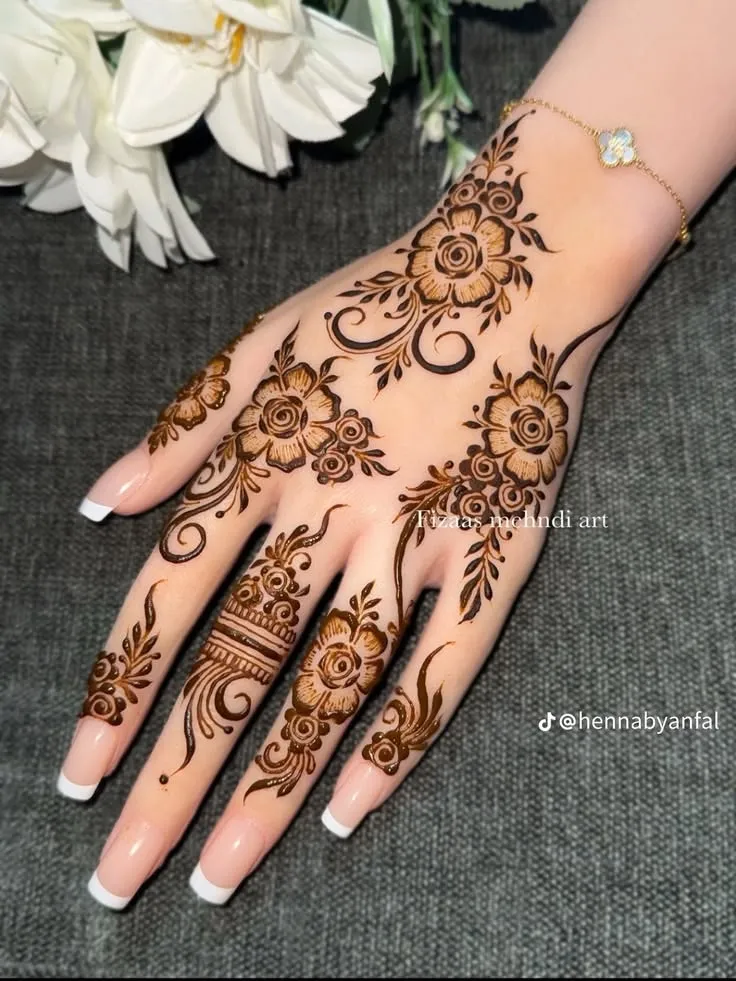
You don’t need much to start: a henna cone, a steady surface for your wrist, and one of the beginner designs from this guide. Here’s the short version. For photos of each step and common mistakes to avoid, see our full Arabic mehndi tutorial.
- Rest your wrist on a table or your knee. A steady base matters more than a steady hand.
- Draw the main line first. Most Arabic designs start with one stem or bel, drawn in a single smooth pull rather than short strokes.
- Add the largest motif next. Start with the biggest flower or paisley on the main line, then work outward from it.
- Fill in smaller details last. Leaves, dots and smaller flowers go in after the main shapes are placed, so you can adjust spacing around them.
- Leave space on purpose. Don’t fill every gap. Open skin is part of the Arabic look, not a mistake to cover up.
- Let it dry before you move your hand. Wet paste smudges easily, so keep the design still for the first few minutes.
Practising a design on paper before drawing it on skin helps you get the spacing right, especially for anything with a rose or a paisley.
How to Get a Dark Stain and Make It Last
A fresh Arabic mehndi design starts bright orange and deepens over the next few days. How dark it gets, and how long it lasts, depends mostly on aftercare in the first 24 hours.
Stain Timeline
| Time after removing the paste | What to expect |
| 0 to 2 hours | Bright orange, looks almost neon |
| 12 to 24 hours | Deepens to a reddish or copper brown |
| 48 hours | Reaches its darkest shade, usually a deep brown |
| 1 to 3 weeks | Gradually fades as skin naturally sheds |
Stains come out darkest on the palms and soles, since the skin is thickest there. A back-of-hand or finger design usually fades a shade or two lighter and a bit faster.
Do
- Leave the paste on as long as you can, ideally 6 to 8 hours or overnight, for a deeper stain.
- Seal the paste with a lemon and sugar mix once it starts to dry, to keep it stuck to the skin longer.
- Keep the area warm. Warmth helps the stain develop.
- Coat the design with a balm, coconut oil, or shea butter before your first shower to protect it from water.
Don’t
- Don’t wash the area for at least 12 to 24 hours after scraping off the paste.
- Don’t scrub or exfoliate the design while it’s still developing.
- Don’t pick at dried paste before it’s ready to come off on its own.
- Don’t expect a black stain from natural henna. A stain that turns black or very dark within hours, instead of days, is a warning sign, not a sign of quality.
Conclusion: Pick Your Design in Three Questions
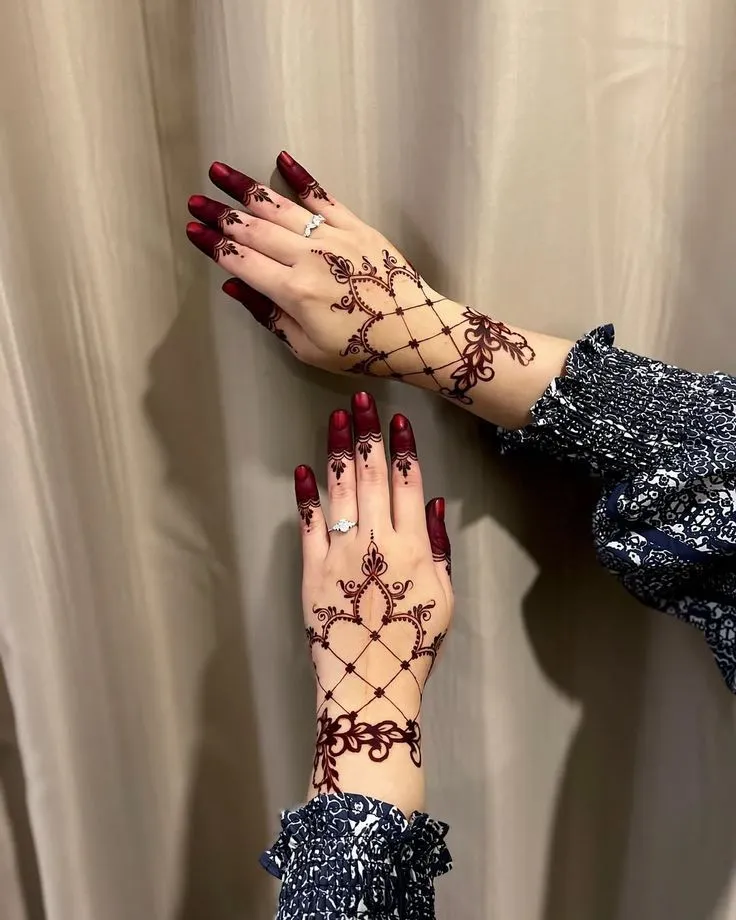
With 80 designs to choose from, three questions narrow it down fast.
What’s the occasion? Everyday wear and small get-togethers suit the simple, minimal, and finger designs. Weddings, engagements, and nikah call for the bridal set. Eid, Karwa Chauth, and Diwali each have their own designs built for a quick turnaround.
How much time do you have? Under 15 minutes points to a small accent or single finger design. An hour or more opens up full hand and heavy bridal work.
Are you drawing it yourself, or booking an artist? Start with the beginner set if you’re picking up a cone for the first time. Save a reference photo either way, since showing an artist exactly what you want works better than describing it.
Frequently Asked Questions
Is Arabic mehndi only for weddings?
No. It’s common at weddings and engagements, but also at Eid, Karwa Chauth, Diwali, and casual get-togethers. The simple and minimal designs in this guide are built for everyday wear, not just events.
How do I hide a name in a mehndi design?
Small letters or initials are usually tucked inside a flower, along a paisley’s curve, or worked into the palm’s open space. Tell your artist in advance so they can plan the placement rather than fitting it in as an afterthought.
Can men wear Arabic mehndi?
Yes. Groom designs typically use simpler placement, such as one finger, a wrist band, or a small palm accent, rather than full hand coverage. Ask your artist for groom-specific reference designs if this applies to you.
How much does an Arabic mehndi design cost?
For a simple Arabic design, expect to pay roughly ₹150 to ₹600 per hand in India, depending on the artist and the amount of coverage. Salons and home-service bookings usually charge a flat starting rate, often around ₹600 for a basic design. Three things move the price the most:
Size and coverage: a single finger accent costs far less than a full hand with a forearm trail.
Detail level: jaal fillings, shading, and Indo-Arabic fusion take longer, so they cost more than an open bel.
Where you book: a home-service artist or salon charges more than a local market stall.
Arabic designs are quicker to apply than dense bridal work, so they usually cost less. Bridal packages are priced separately, so ask for a quote based on the exact design you want.
Does Arabic mehndi suit all hand sizes and skin tones?
Yes. The style’s open space and bold outlines work on any hand size, and the stain shows clearly across skin tones, since it’s the henna’s natural reddish-brown colour rather than a dye matched to skin. Design scale, not skin tone, is what an artist usually adjusts.
Can I wear Arabic mehndi if I’m not South Asian or Arab?
Many people outside these communities wear mehndi at weddings, festivals, or simply because they like the look. Some view this as sharing a tradition, while others feel it should stay tied to its cultural and religious context. If you’re a guest at a wedding or cultural event, asking the host or artist is a respectful way to navigate it.
Which design is best for a first-time bride?
For a first bridal mehndi, an Indo-Arabic full hand design (design 51) balances visual impact with manageable sitting time. If your schedule is tight, the light bridal design (design 56) gives a bridal look without a long application.
