50+ Lotus Flower Mehndi Design for Every Occasion & Style [2026]

Lotus Mehndi Design

There are hundreds of motifs in the world of mehndi — roses, paisleys, peacocks, mandalas, geometric patterns — but none of them carry the same quiet, powerful elegance that a lotus does. The moment a lotus appears in a mehndi design, something shifts. The entire composition feels more intentional, more meaningful, and more beautiful.

That is not a coincidence. The lotus has earned its place in mehendi art over centuries — not just because it looks stunning, but because of what it represents and how effortlessly it adapts to every style, every occasion, and every hand.

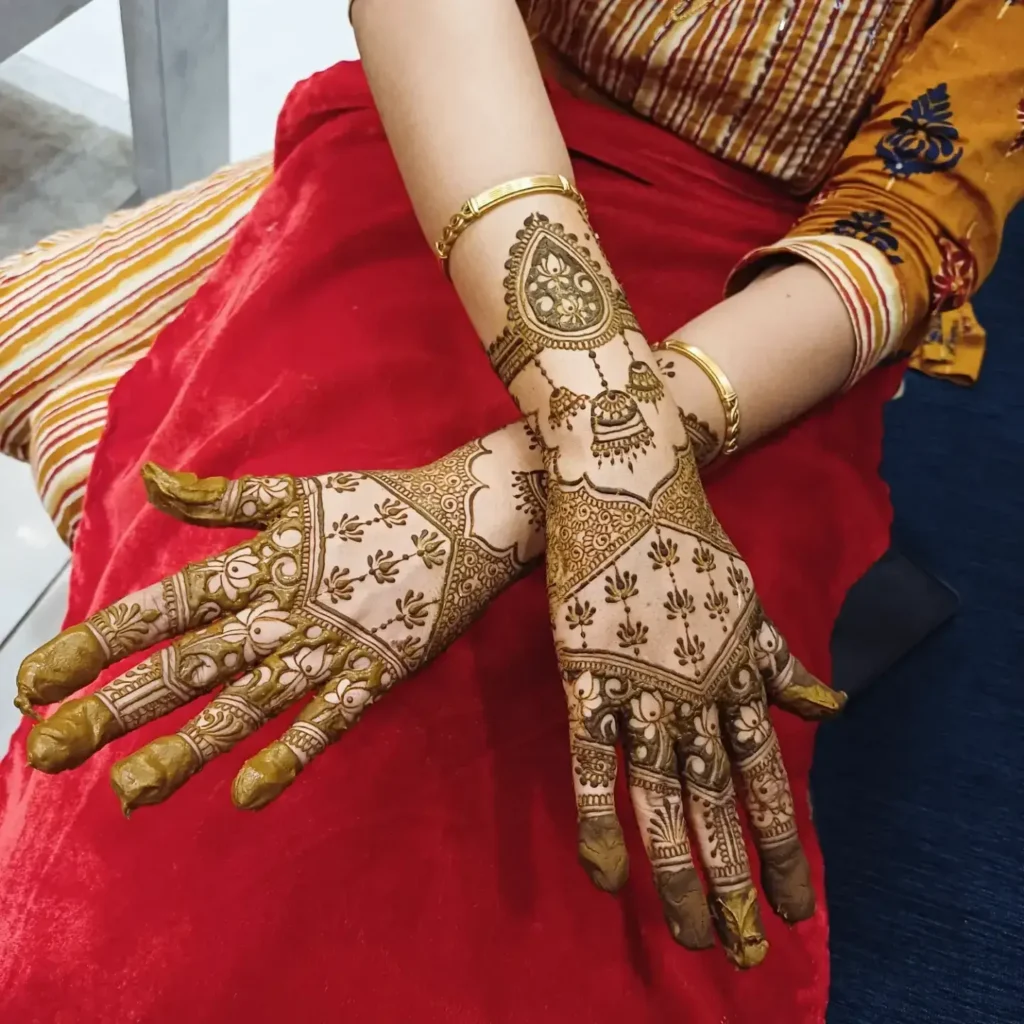
Whether you are a bride looking for a centerpiece motif that carries deep cultural meaning, a girl who wants something beautiful for Eid, or someone who simply appreciates mehndi as an art form, lotus mehndi designs have something extraordinary to offer you.

This blog is a complete, in-depth guide to lotus mehndi designs. We cover everything — from the cultural and spiritual significance of the lotus flower in mehndi tradition, to 28 different design styles categorized by placement, occasion, and artistic style. We also include a practical guide on how to draw lotus mehandi at home, outfit coordination tips, and answers to the most commonly asked questions. By the time you finish reading, you will not just know what lotus mehndi looks like — you will understand why it is the most timeless motif in mehndi art.

lotus flower simple mehndi design

Lotus Flower — Cultural & Spiritual Significance in Mehndi

Before we explore the designs themselves, it is worth understanding why the lotus holds such a special and sacred place in mehndi tradition. Because in South Asian and Eastern cultures, mehndi is never just decoration — it is symbolism applied to skin. And the lotus carries more symbolism per petal than almost any other flower in existence.

Lotus in Hindu Culture — Purity, Prosperity, and New Beginnings

In Hindu culture, the lotus is one of the most sacred and deeply revered symbols. It is the flower of Goddess Lakshmi — the deity of wealth, prosperity, and grace — who is almost always depicted seated or standing on a blooming lotus. It is also associated with Lord Vishnu, Lord Brahma, and Goddess Saraswati, making it one of the most universally auspicious symbols across the entire Hindu pantheon.

The deeper symbolism of the lotus in Hindu philosophy is even more profound. The lotus grows in muddy, murky water — yet it rises above the surface completely untouched, blooming in perfect, immaculate beauty. This is the central metaphor: purity that exists despite surrounding impurity. Beauty that rises above difficulty. Grace that is not diminished by circumstance.

For brides, this symbolism is particularly powerful. A new marriage is a new beginning — and the lotus, as the universal symbol of new beginnings, purity, and divine blessing, becomes the most natural and meaningful motif a bride can choose to adorn her hands with on her wedding day.

Lotus Mehndi Design in Hindu Culture

Lotus in Buddhist Culture — Enlightenment and Inner Peace

In Buddhist tradition, the lotus holds an equally profound significance. The Padma — the Sanskrit word for lotus — is one of the most important symbols in Buddhist iconography. Gautama Buddha is frequently depicted seated on a lotus throne, representing his spiritual enlightenment and his transcendence above the suffering and attachment of the material world.

In Buddhist philosophy, the lotus represents the journey of the soul — beginning in the darkness and mud of ignorance, growing through the water of experience and learning, and finally blooming above the surface in the full light of enlightenment and wisdom. The different colors of the lotus carry different meanings in Buddhism — the white lotus represents purity and mental clarity, the pink lotus is the supreme lotus of the historical Buddha, the red lotus represents love and compassion, and the blue lotus symbolizes wisdom and knowledge.

When a woman chooses a lotus mehendi design, she is — consciously or not — connecting herself to this ancient tradition of seeking beauty, meaning, and inner growth. That connection is felt even by those who cannot articulate it, which is why lotus mehndi always feels different from other designs. It feels deeper.

Lotus Mehndi Design in Buddhist Culture

Why Lotus is the Most Auspicious Motif in Mehndi

Across both Hindu and Buddhist traditions — and extending into Jain, Sikh, and general South Asian cultural consciousness — the lotus is universally recognized as auspicious. It appears in temples, in religious art, in architecture, in poetry, and in the daily vocabulary of blessing and prayer. When it enters mehndi, it brings all of that accumulated cultural weight with it.

Unlike roses, which are purely aesthetic, or geometric patterns, which are purely structural, the lotus operates on multiple levels simultaneously. It is visually beautiful. It is culturally meaningful. It is spiritually significant. And it is personally empowering. No other mehandi motif achieves all four of these things at once, which is exactly why mehndi artists across India, Pakistan, Bangladesh, and beyond have incorporated the lotus into their art for generations.

Lotus Motif Mehndi Design

Why Brides Specifically Choose Lotus Mehndi

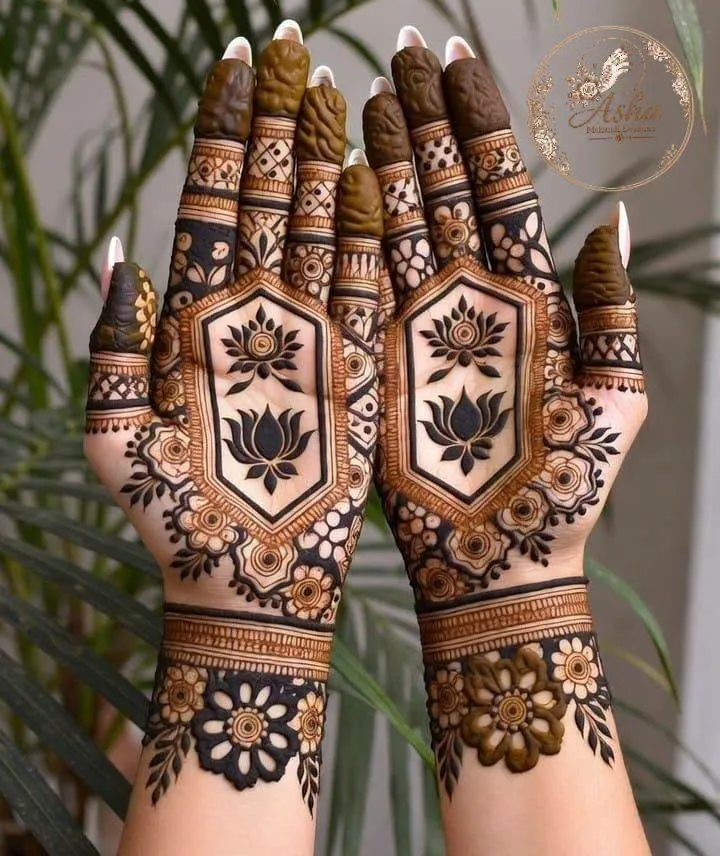
For brides, the choice of lotus mehndi is rarely accidental. It is almost always intentional — a conscious decision to adorn their hands with a symbol that speaks to the magnitude of the moment they are stepping into.

A wedding is simultaneously an ending and a beginning. It is leaving one chapter of life and entering another. It is a moment of transformation — and the lotus, as the universal symbol of transformation, new beginnings, and rising into something more beautiful than what came before, mirrors that emotional reality perfectly.

Beyond symbolism, the lotus is also simply one of the most beautiful and versatile mehendi motifs available. It can be the centerpiece of a heavy bridal design or the quiet focal point of a minimalist look. It can stand alone as a single powerful statement or be woven into a complex, layered composition. For a bride who wants her mehndi to be both beautiful and meaningful, the lotus is always the right answer.

Brides Specifically Lotus Mehndi Design

What Makes Lotus Mehndi Design Unique?

Understanding the cultural significance of the lotus explains why it matters. But understanding what makes it artistically unique explains why it works — in every style, for every occasion, on every hand.

Lotus vs Other Floral Motifs

Mehandi is full of flowers. Roses, jasmine, marigolds, and abstract florals appear across every style of mehndi from Arabic to Indian to Pakistani. So what makes the lotus different from every other flower in the mehndi artist’s vocabulary?

The answer lies in the lotus’s structural geometry. Unlike roses — which have irregular, overlapping petals that create a soft, organic look — the lotus has a naturally symmetrical, layered petal structure that gives it an almost architectural quality. The petals radiate outward from a central point in perfectly balanced rows, creating a design that is simultaneously organic and geometric. This means the lotus naturally fits into both flowing, organic mehendi compositions and structured, geometric ones — a versatility that no other flower possesses to the same degree.

Additionally, the lotus has a strong visual identity from any distance. A small rose motif in mehndi can easily get lost in a complex design. A lotus — even at a small scale — immediately announces itself. Its distinctive layered petal structure is recognizable at a glance, which means it always holds its own as a design element regardless of how complex the surrounding composition is.

Lotus vs Floral Motifs Mehndi Design

The Symbolism Advantage

Every mehandi motif carries some meaning — peacocks represent grace and beauty, paisleys represent fertility and good luck, mandalas represent wholeness and the universe. But the lotus carries a depth and breadth of symbolism that none of these other motifs can match.

When a woman wears lotus mehndi, she is not just wearing a pretty flower. She is wearing purity, resilience, spiritual growth, new beginnings, divine blessing, and inner peace — all at once. That emotional and spiritual weight gives lotus mehndi a resonance and a personal significance that purely decorative motifs simply cannot achieve.

This symbolism advantage also has a practical benefit — it gives brides and mehndi enthusiasts a story to tell about their design. When someone asks about your mehendi, and you can say not just “it is a lotus” but “the lotus represents new beginnings and I chose it for my wedding because I am starting a new chapter” — that connection between the design and the person wearing it is what elevates mehndi from decoration to personal art.

Lotus Mehndi Design Symbolism

Versatility — Fits Every Style

One of the most remarkable qualities of the lotus as a mehandi motif is its extraordinary versatility. It adapts to every mehndi style with equal grace and effectiveness.

In Arabic mehndi, the lotus becomes a bold, dramatic centerpiece — drawn with thick, confident strokes and surrounded by flowing vines and generous negative space. In Indian mehndi, it transforms into an intricate, fine-detailed work of art — filled with micro patterns, shading, and layered complexity. In Pakistani mehndi, it combines with geometric precision and cultural motifs to create something deeply traditional yet visually striking. In minimalist modern mehndi, a single clean lotus on the palm or wrist becomes a statement of quiet elegance that speaks louder than an entire hand covered in patterns.

No other mehndi motif adapts this seamlessly across this many different styles. The peacock belongs primarily to the Indian tradition. Geometric patterns belong primarily to Moroccan and Arabic traditions. But the lotus belongs to all of them — and looks at home in every single one.

Lotus Mehndi Design Versatility

Timeless Yet Always Trendy

Mehendi trends come and go. Certain styles peak and fade, certain motifs have their moment and then disappear from fashion. The lotus has never had this problem — because it exists simultaneously in two different dimensions of desirability.

On one hand, it is timeless — rooted in centuries of cultural tradition, religious significance, and artistic practice. It was beautiful a thousand years ago, and it will be beautiful a thousand years from now. On the other hand, it is perpetually trendy — consistently appearing in the most-liked mehndi posts on Instagram, in the most-searched designs on Pinterest, and in the portfolios of the most celebrated mehndi artists working today.

This dual nature — ancient enough to be timeless, fresh enough to be perpetually relevant — is what keeps the lotus at the top of every mehndi trend list year after year without ever feeling stale or overdone. It is the rare motif that transcends trend entirely and becomes simply, permanently beautiful.

Trendy Lotus Mehndi Design

28 Types of Lotus Mehndi Designs

The lotus is not a one-dimensional motif. It is not something you place in one spot, in one way, for one occasion. Across years of working with mehandi art and studying how the lotus behaves in different compositions, placements, and styles, it becomes clear that the lotus is one of the most adaptable and multifaceted motifs in the entire mehndi vocabulary.

Here is a complete breakdown of every major lotus mehndi design style — organized by placement, style, cultural tradition, occasion, motif combination, and current trends.

A. Lotus Mehndi Design By Hand Placement

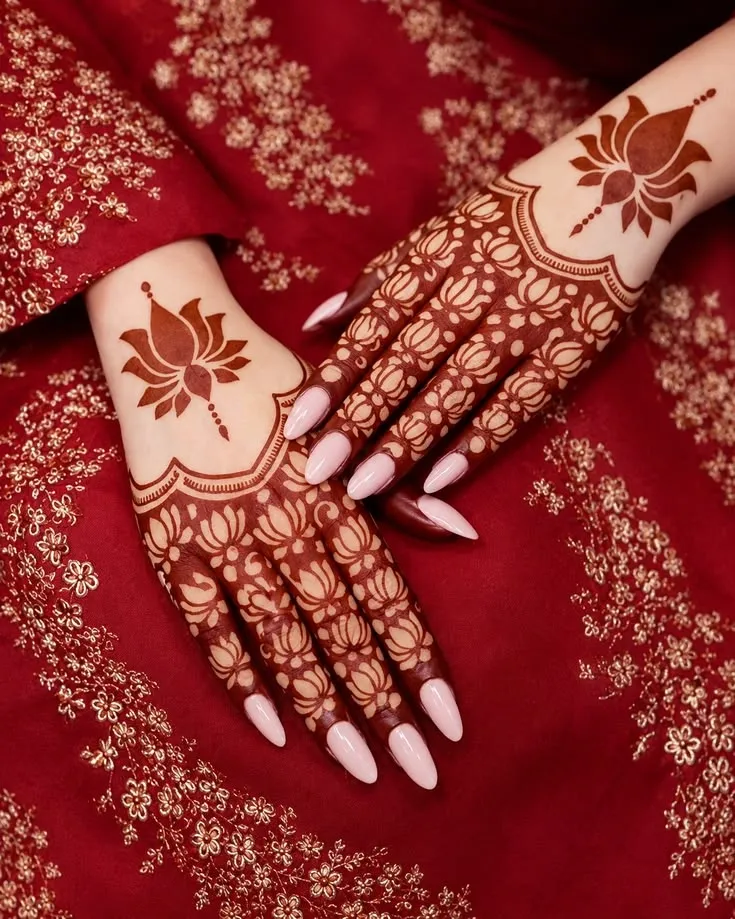
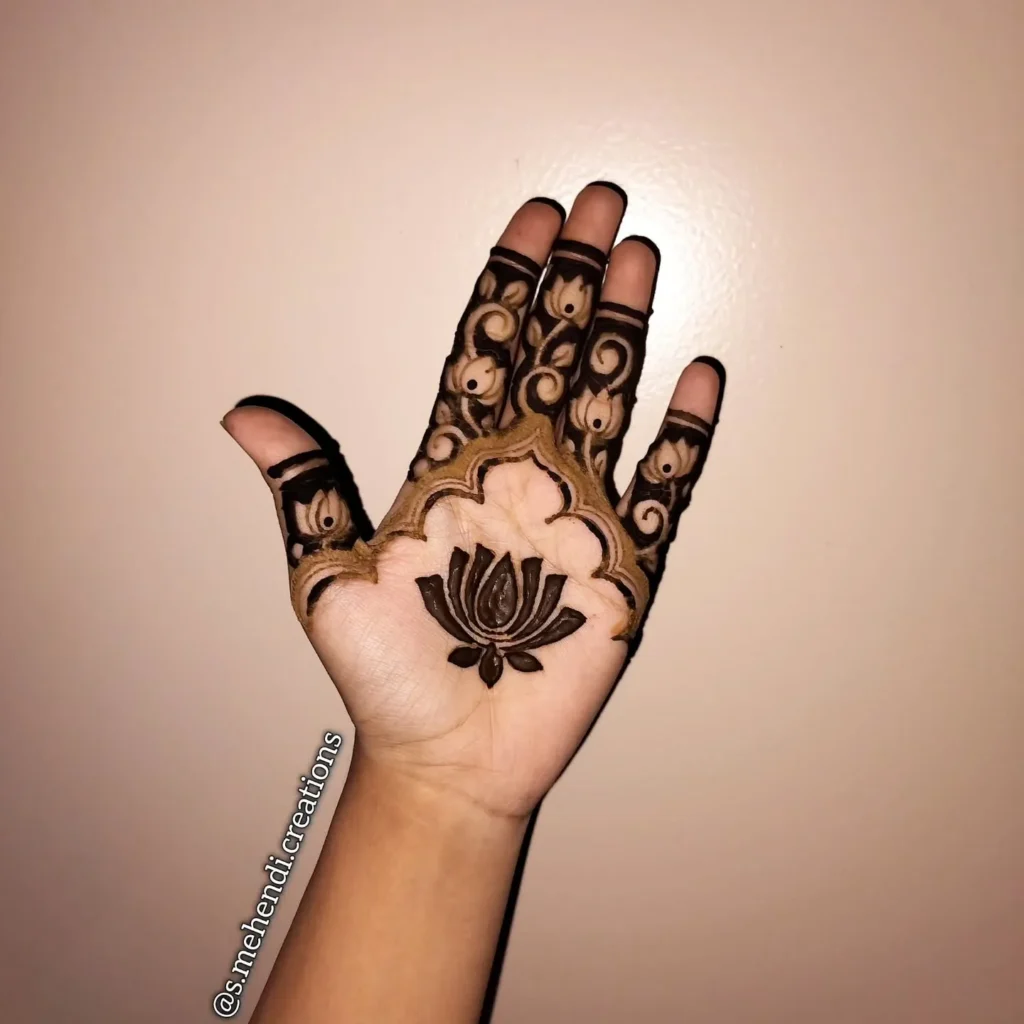
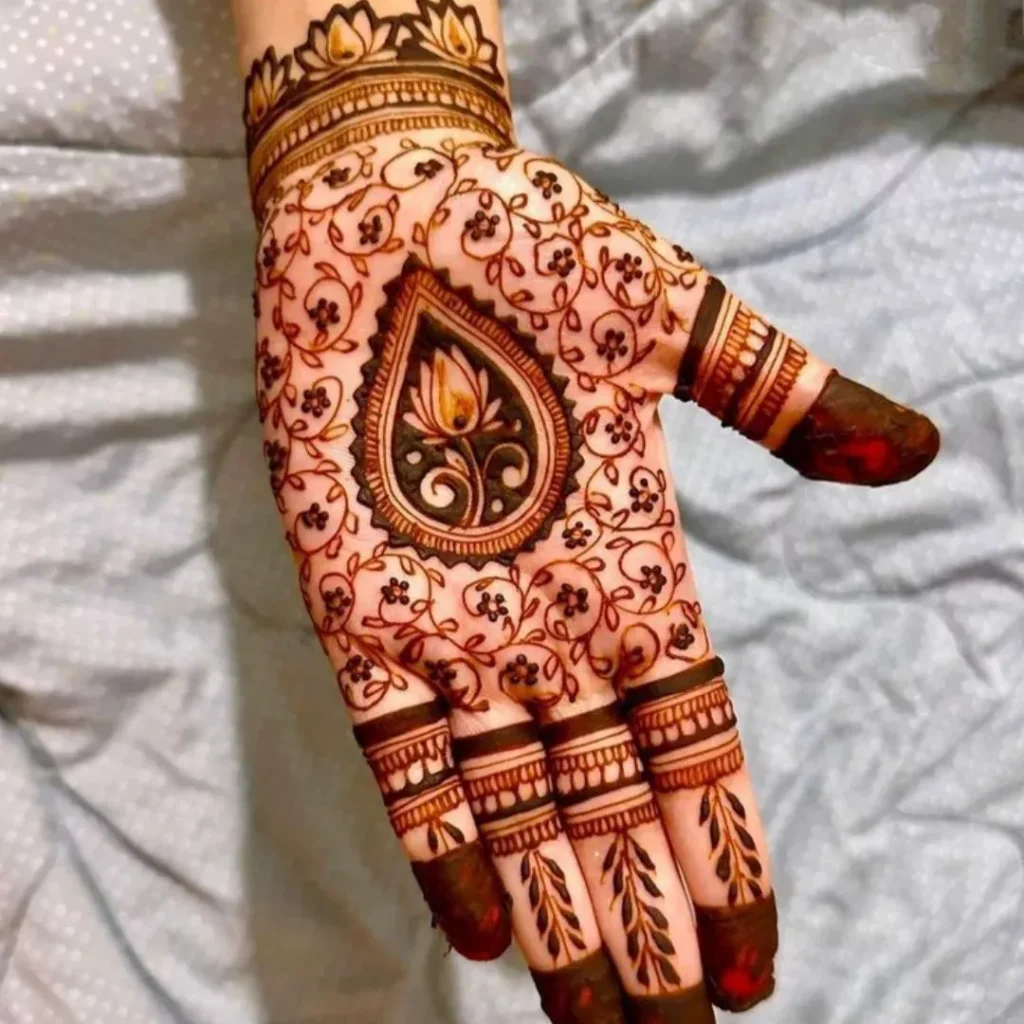
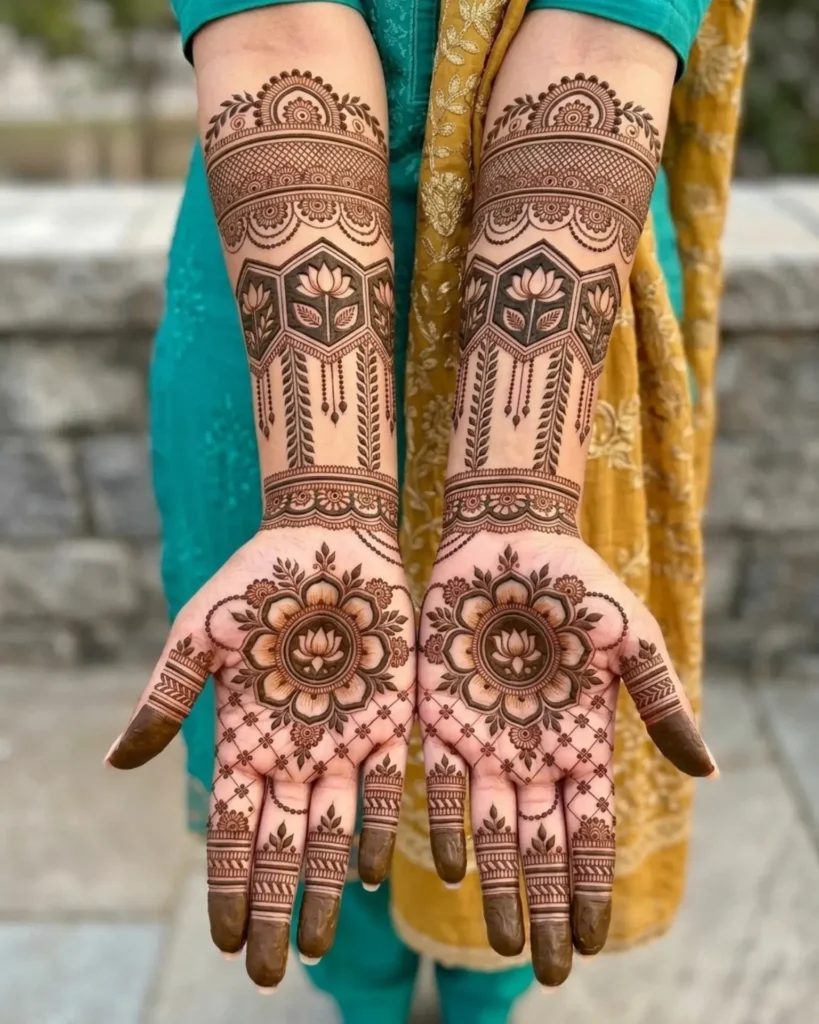
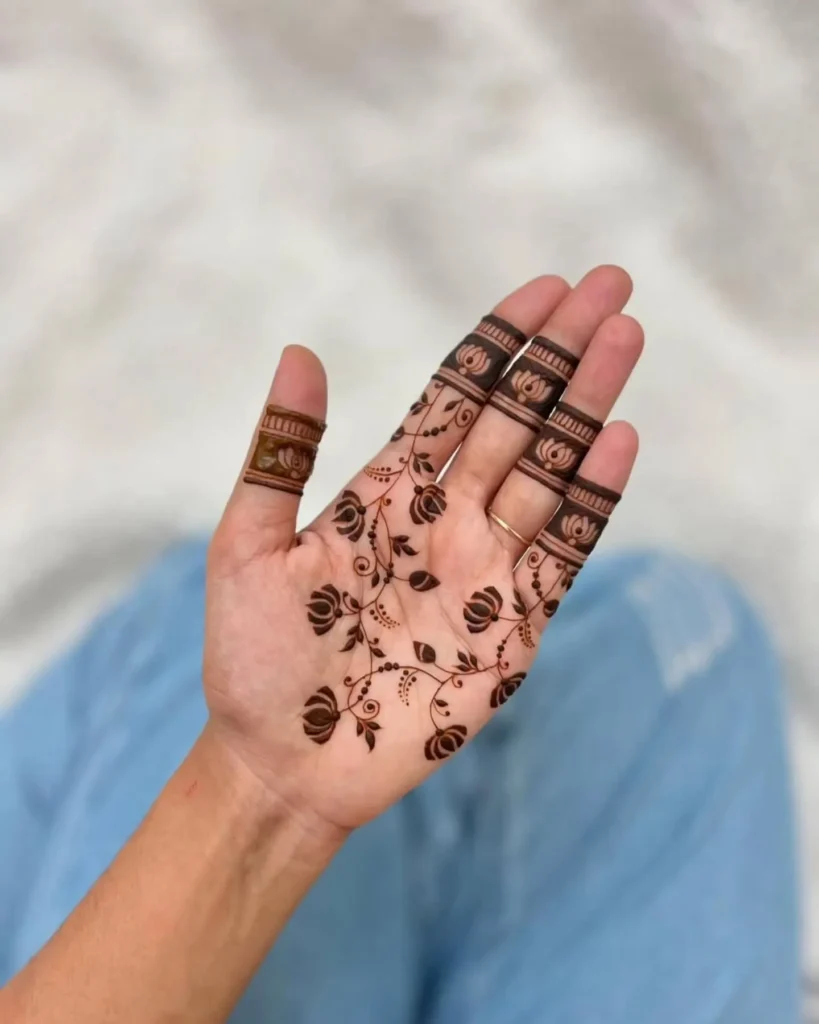
1. Lotus Mehndi Design Front Hand

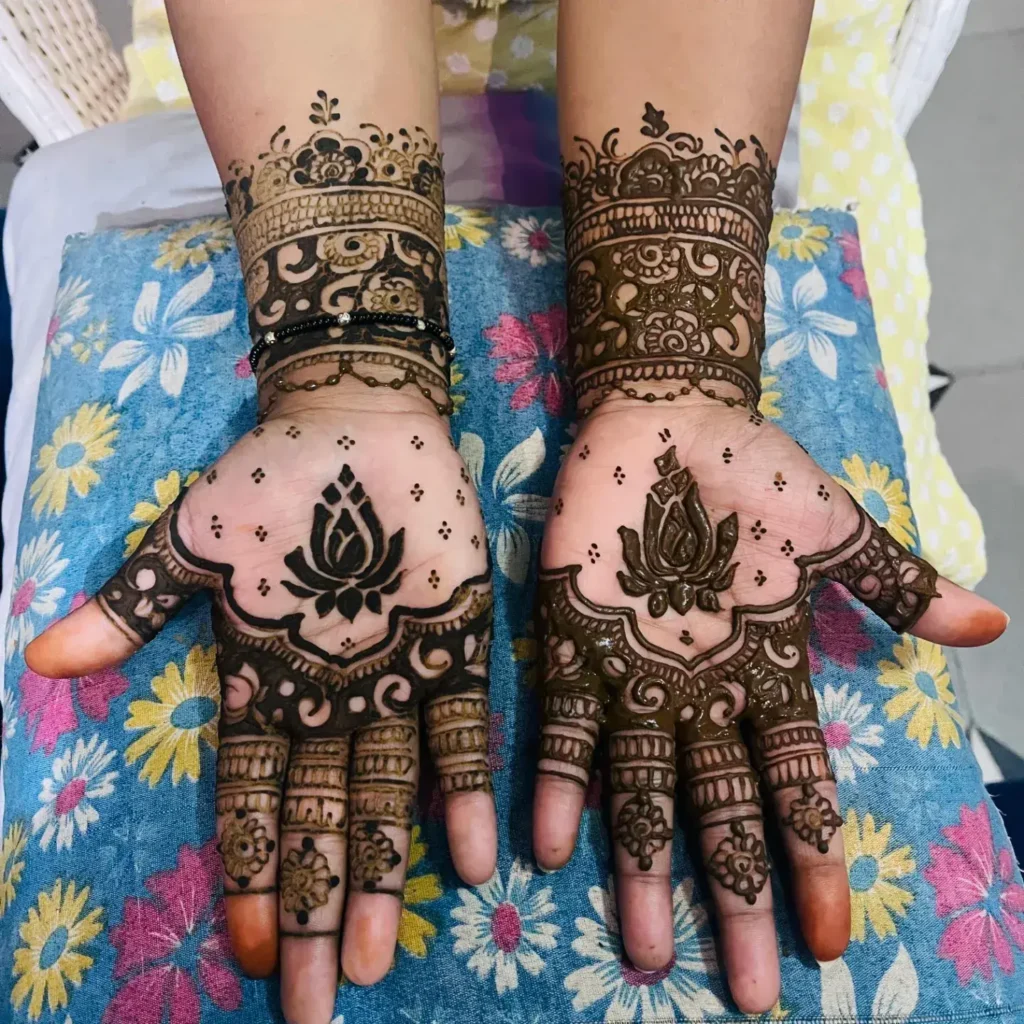
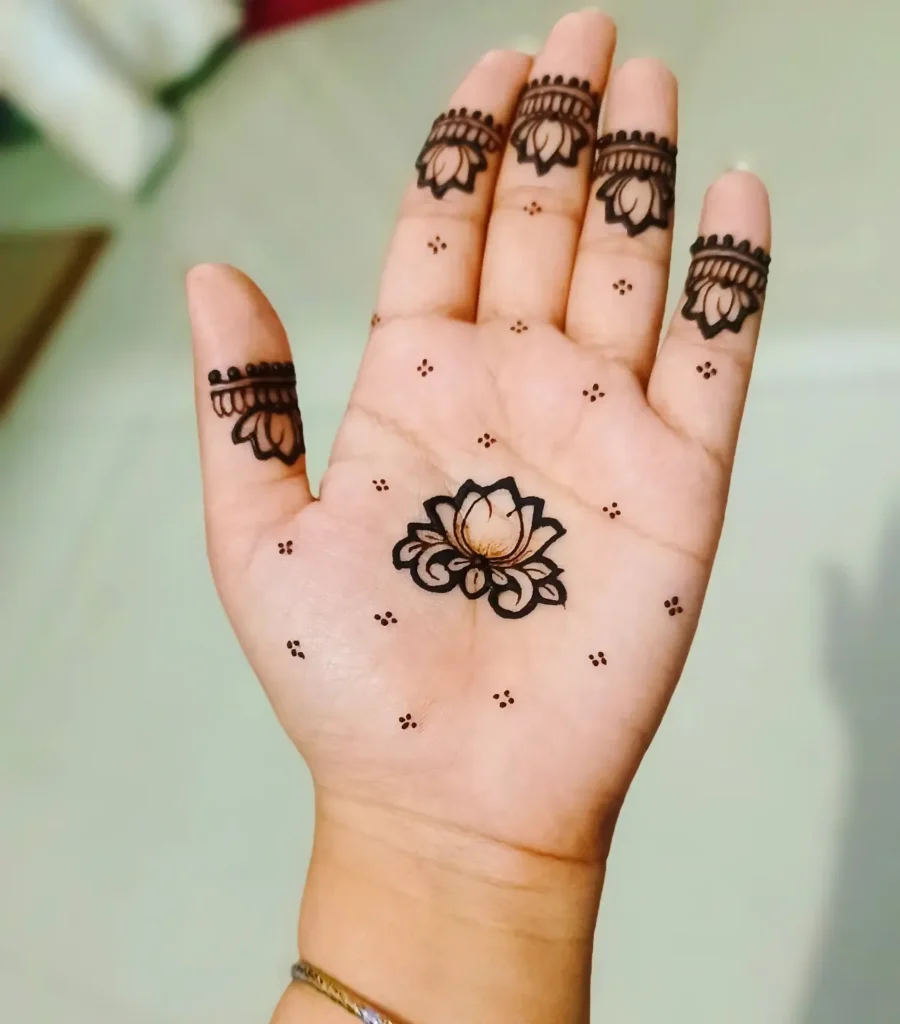
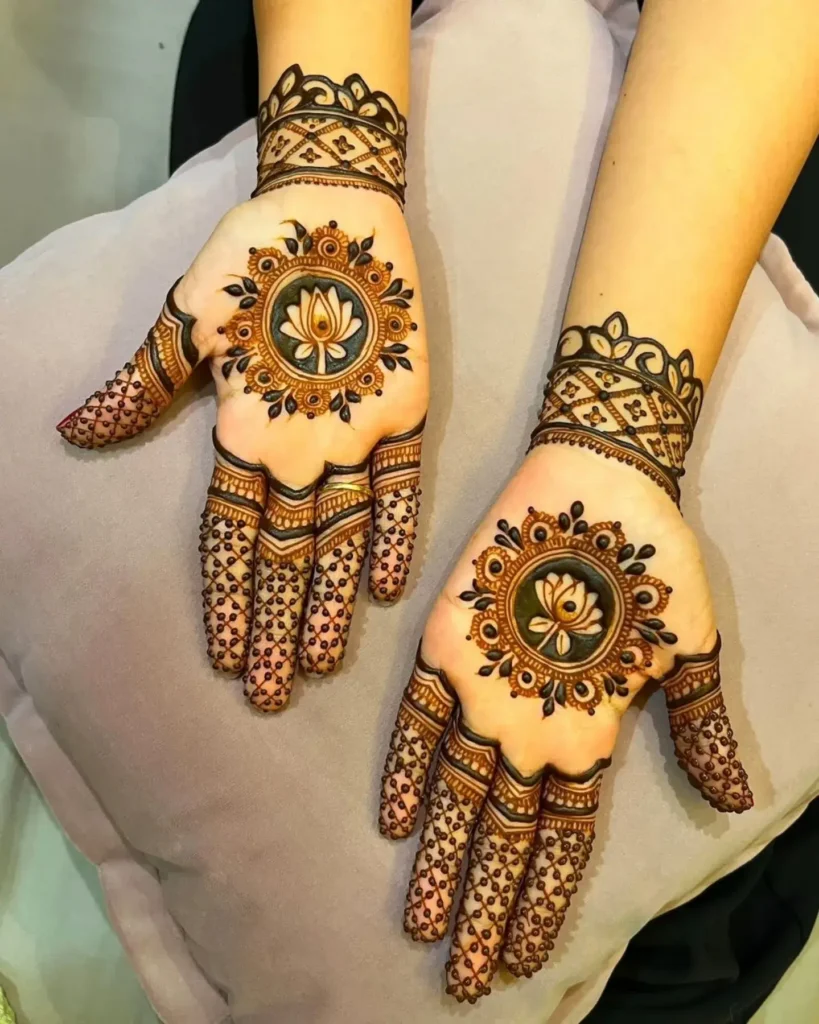
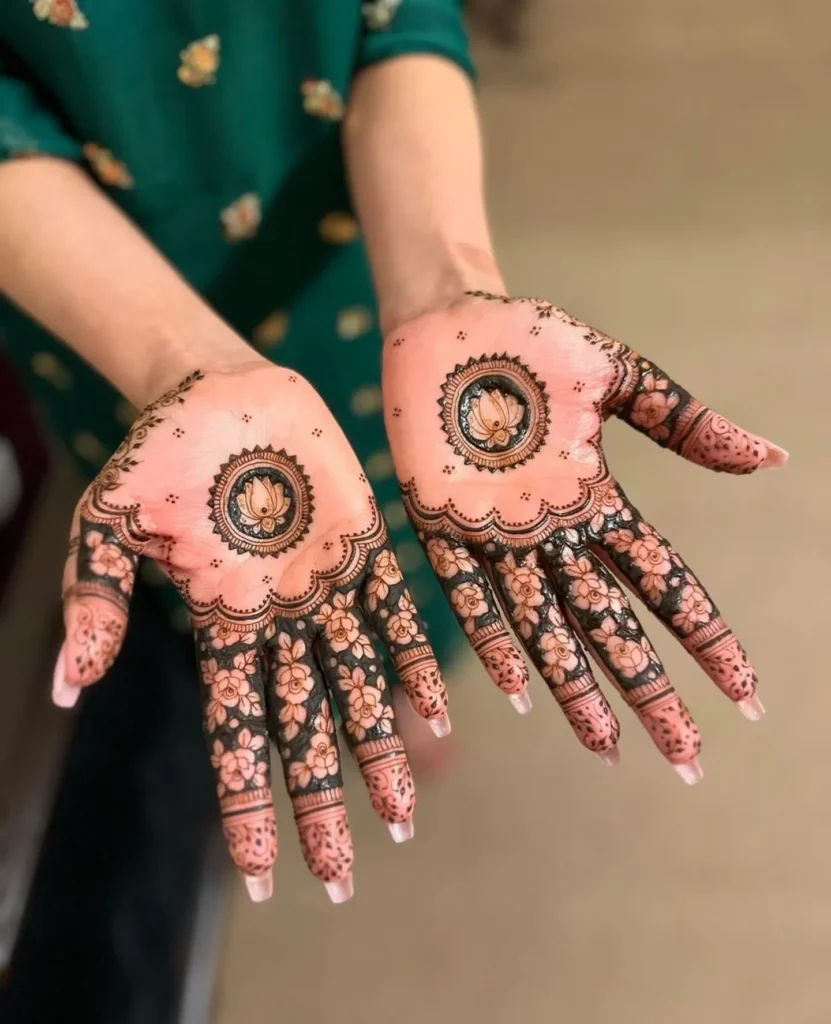
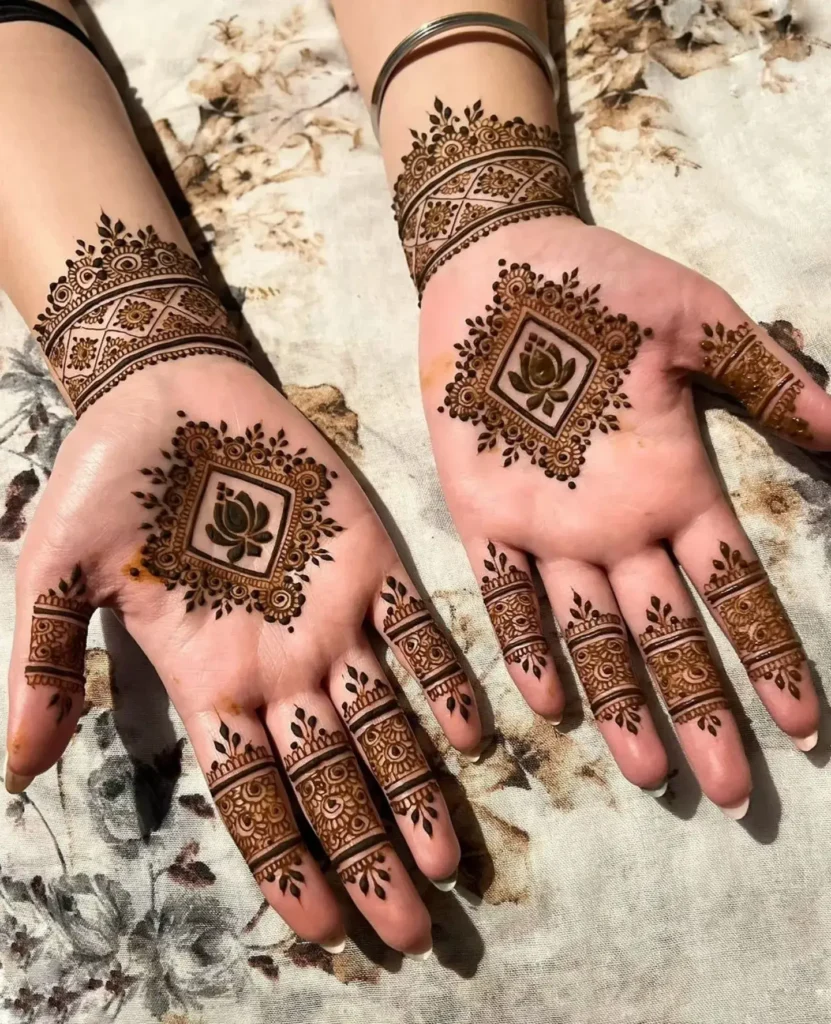
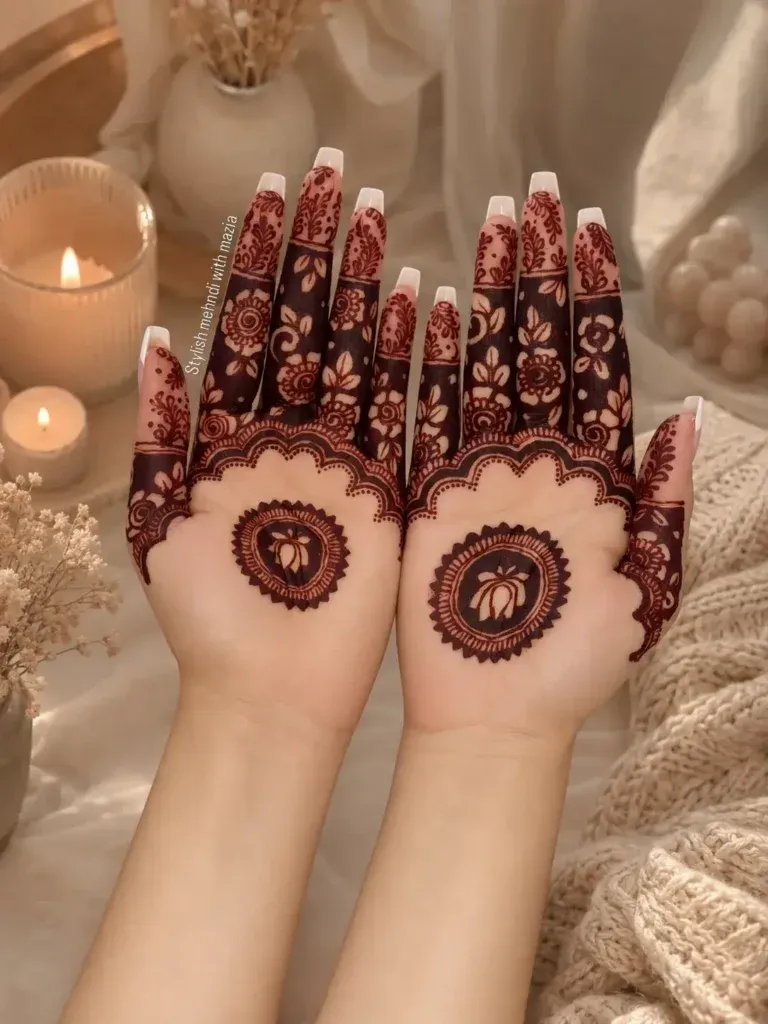
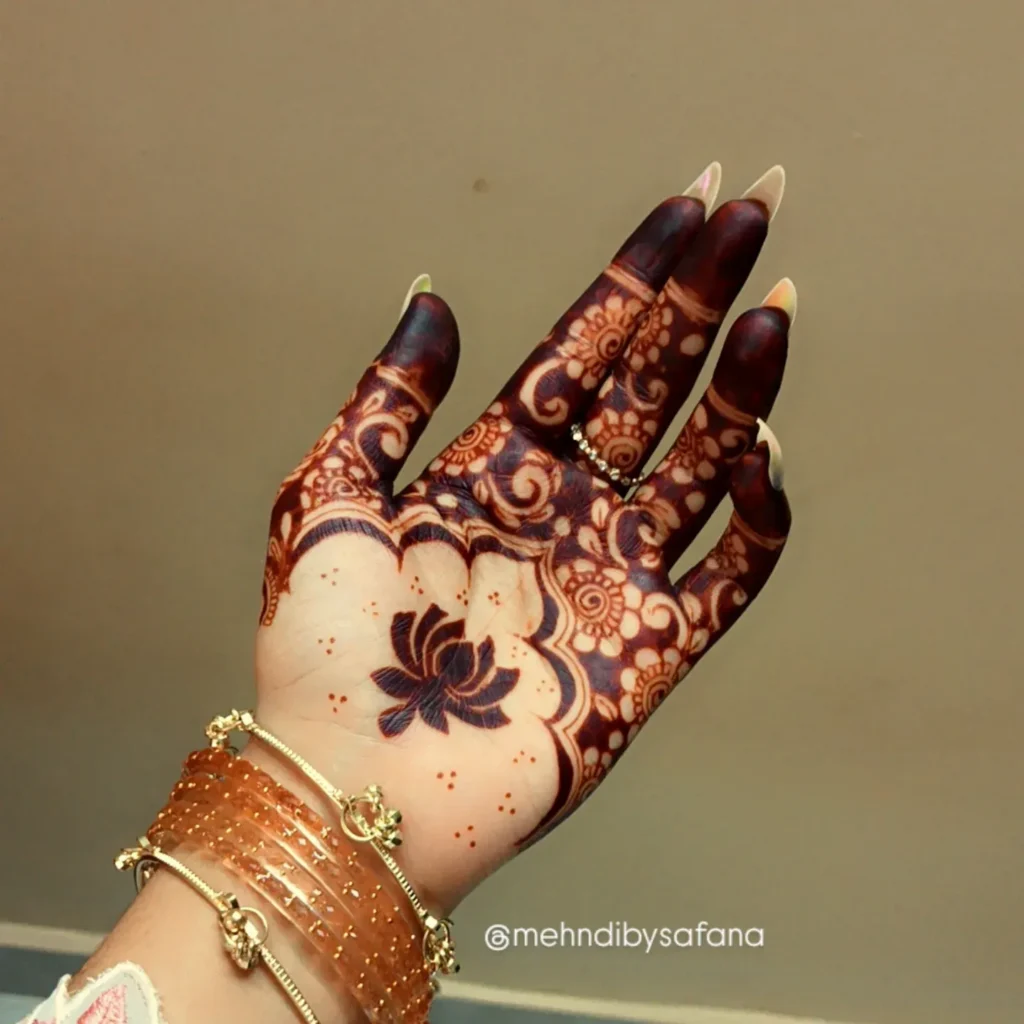
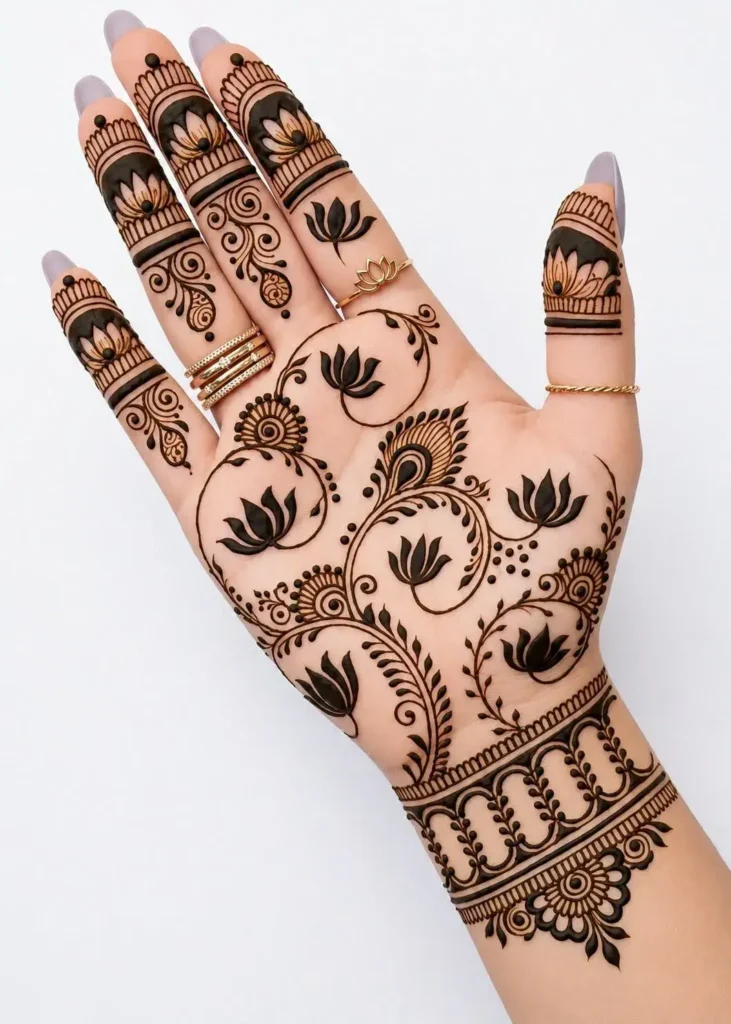
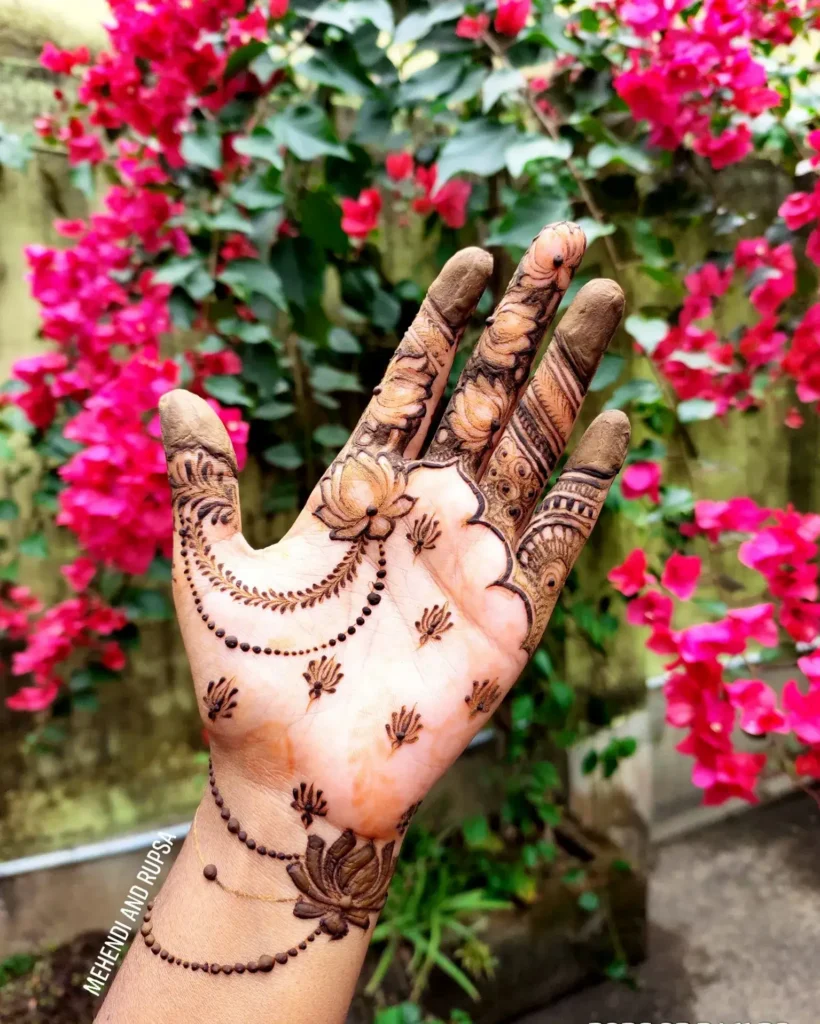
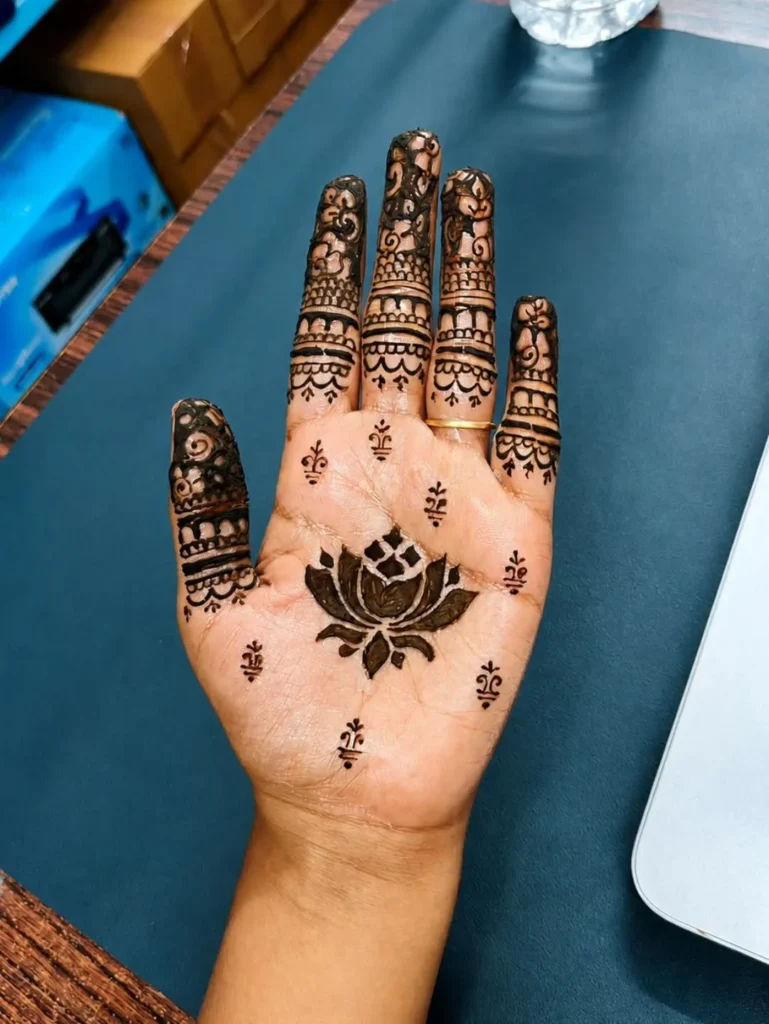
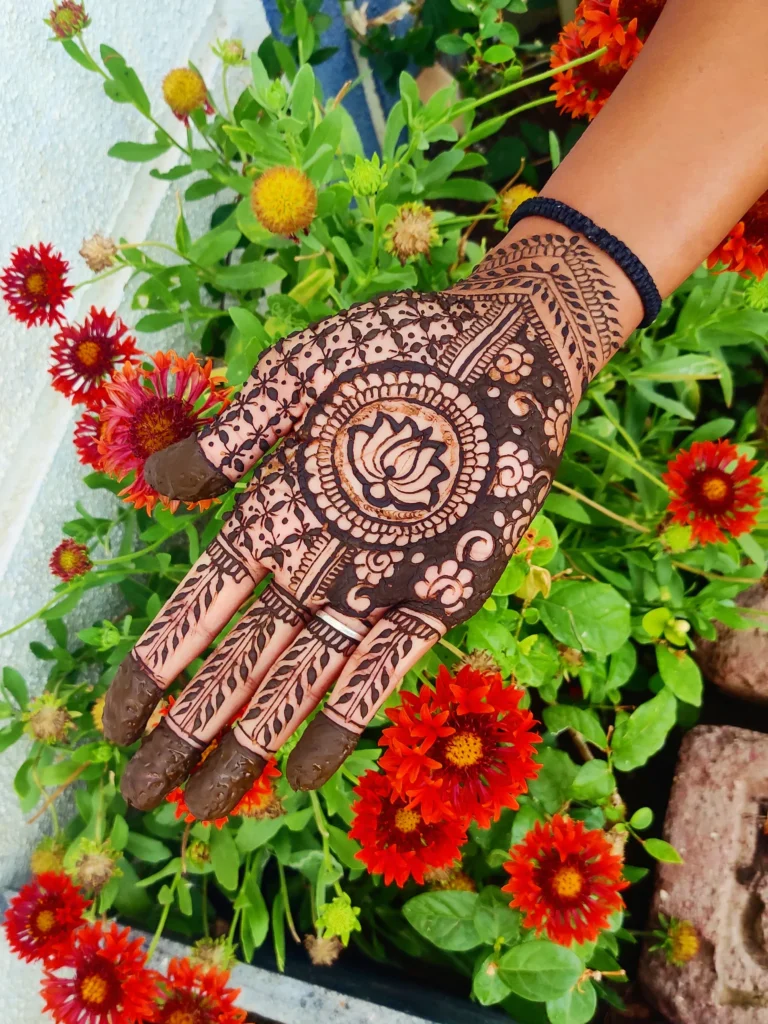
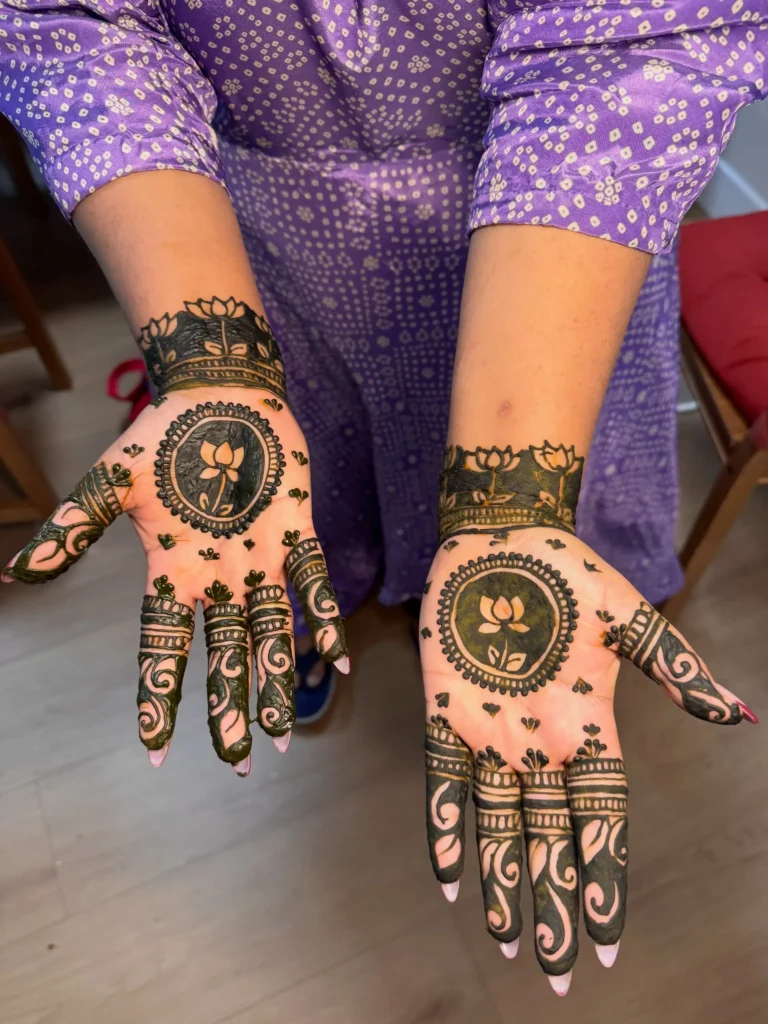
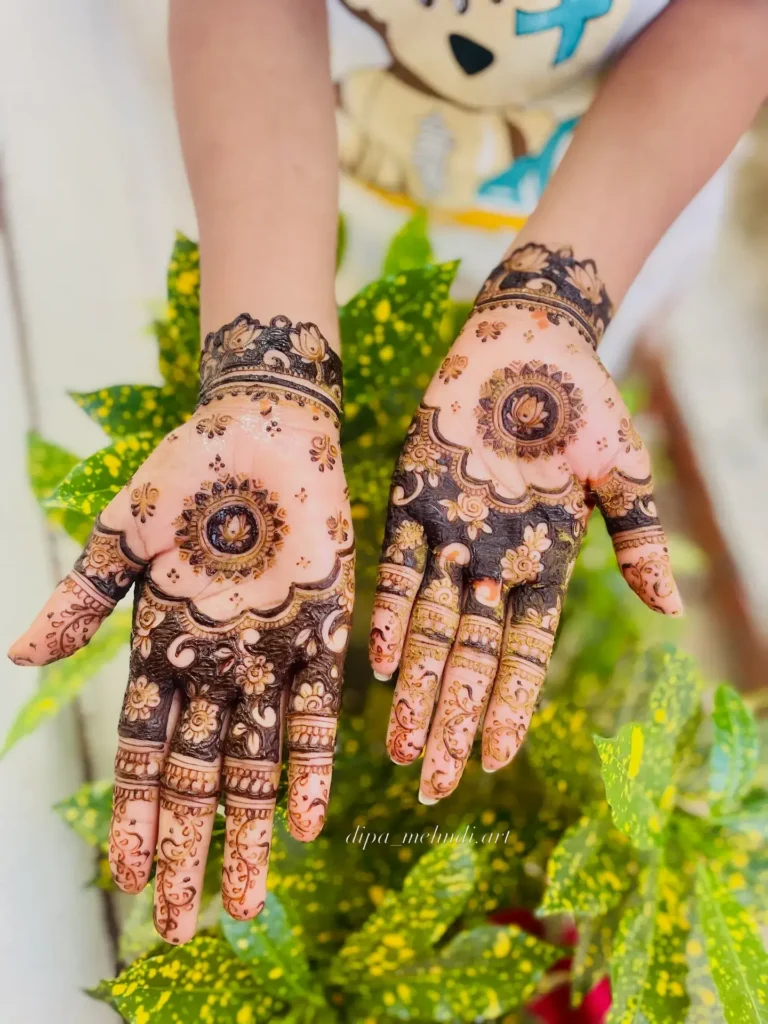
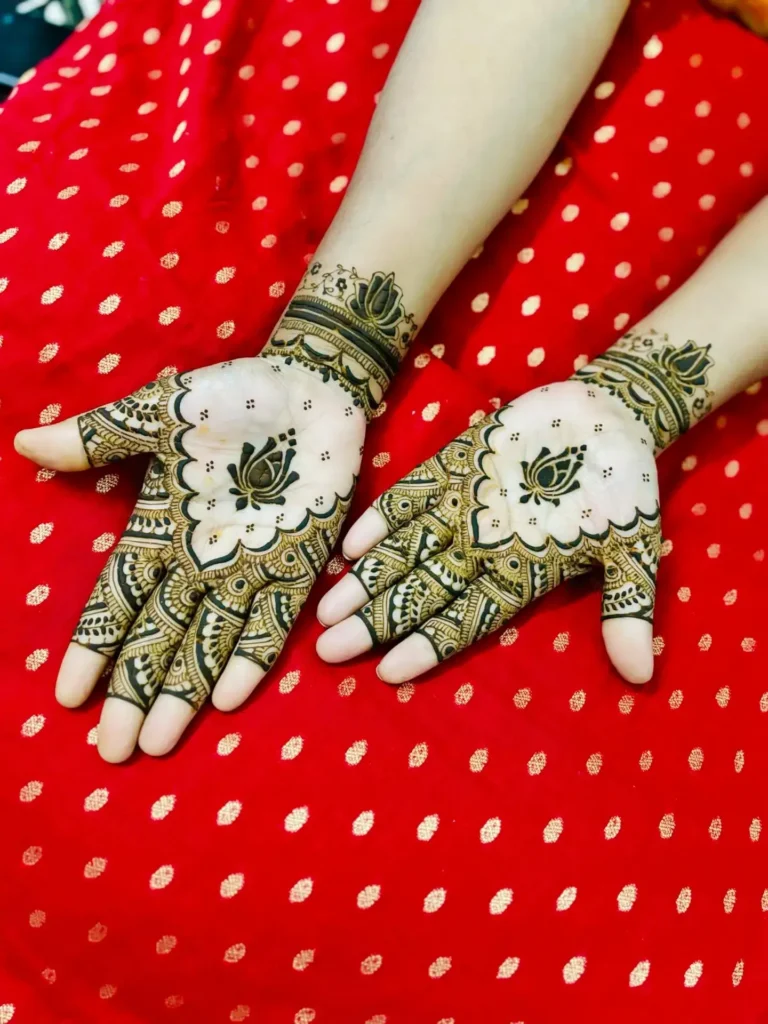
The front of the hand — the palm — is the most intimate canvas in mehndi art. It is the surface that faces upward during rituals, that opens toward the sky during prayers, and that is most visible during the sacred ceremonies of a wedding. Placing a lotus here is a deliberate act of intention.

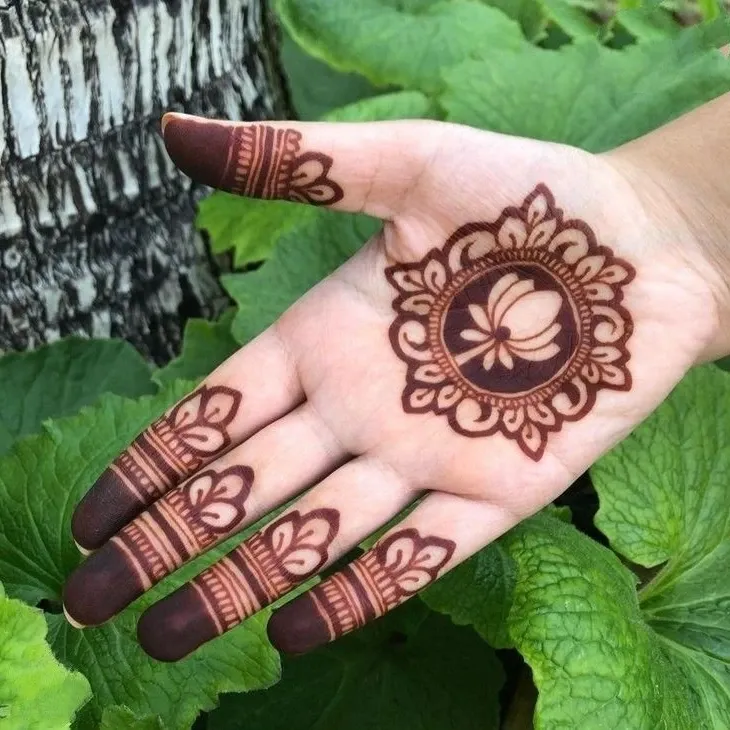
A lotus mehendi design on the front hand typically positions the flower at the center of the palm, where it naturally becomes the focal point of the entire design. The lotus here is usually drawn larger and more detailed than anywhere else on the hand, with layered petals radiating symmetrically outward and fine inner detailing that gives the flower depth and dimension. Surrounding elements — vines, dots, geometric borders — are arranged to frame and support the central lotus rather than compete with it.

What makes the front hand lotus mehandi particularly powerful is the dark stain it develops on the palm. The palm skin tends to absorb henna more deeply than the back of the hand, producing a richer, darker color that makes every detail of the lotus stand out dramatically. On a bride’s palm during her wedding rituals, the lotus in deep maroon-brown against warm skin is one of the most breathtaking sights in mehndi art.

Simple Lotus Mehndi Design

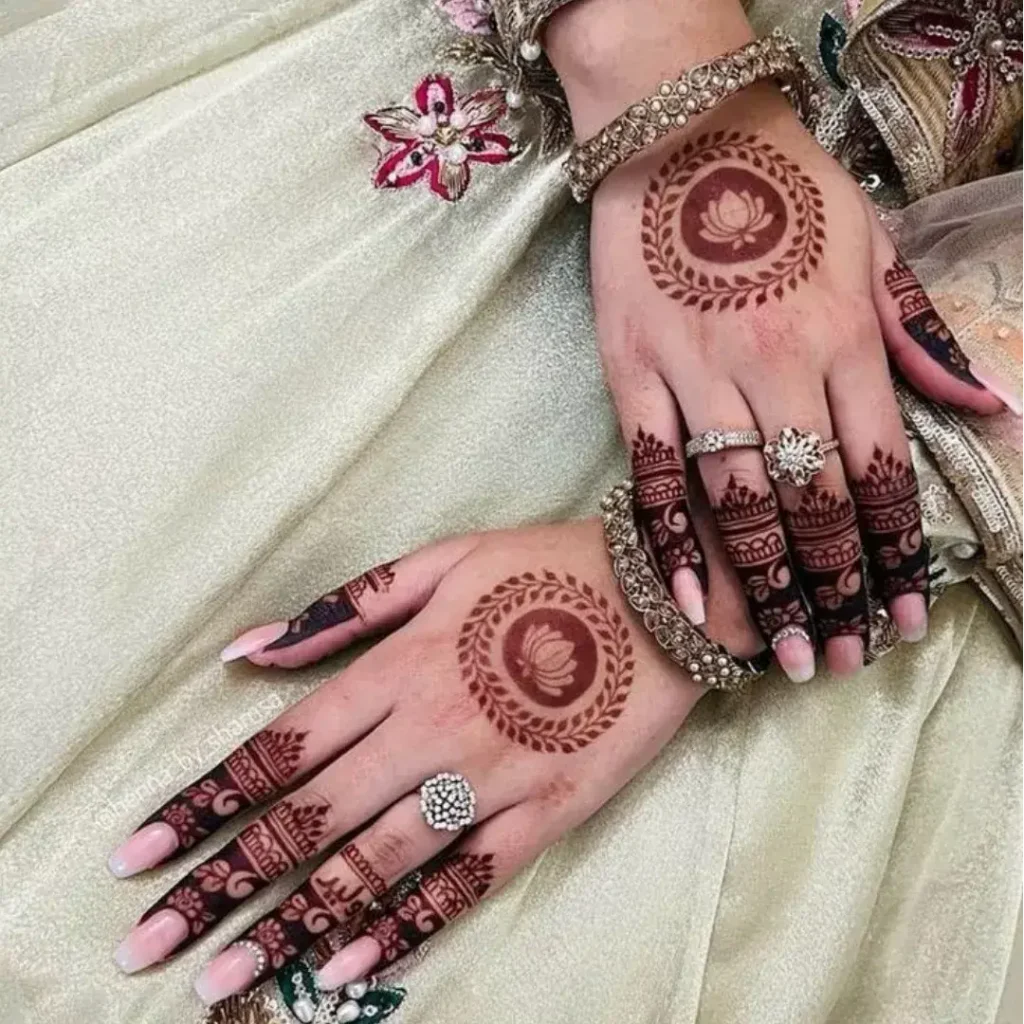
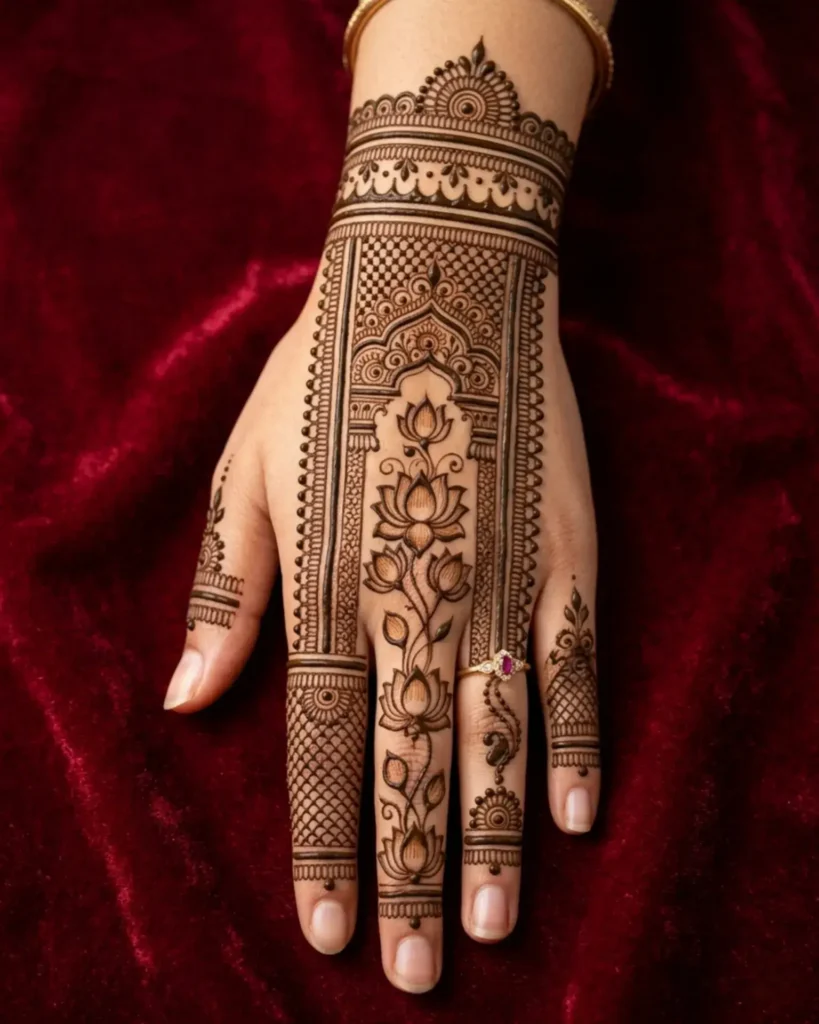
2. Lotus Mehendi Design Back Hand

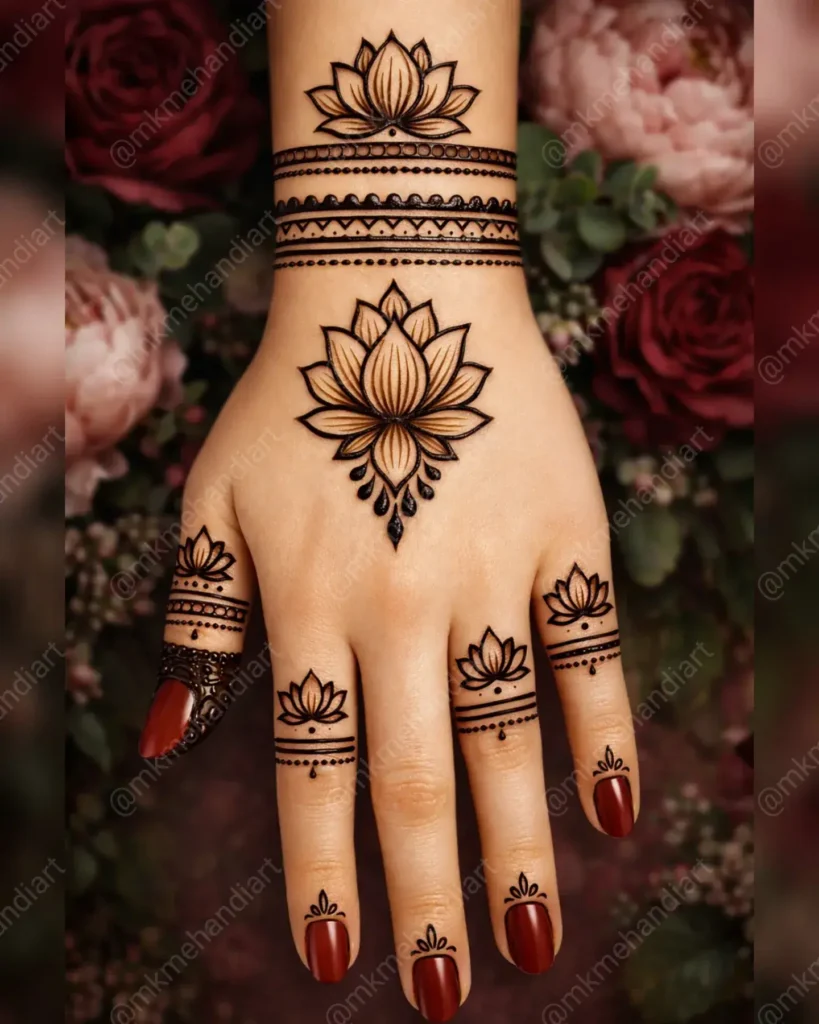
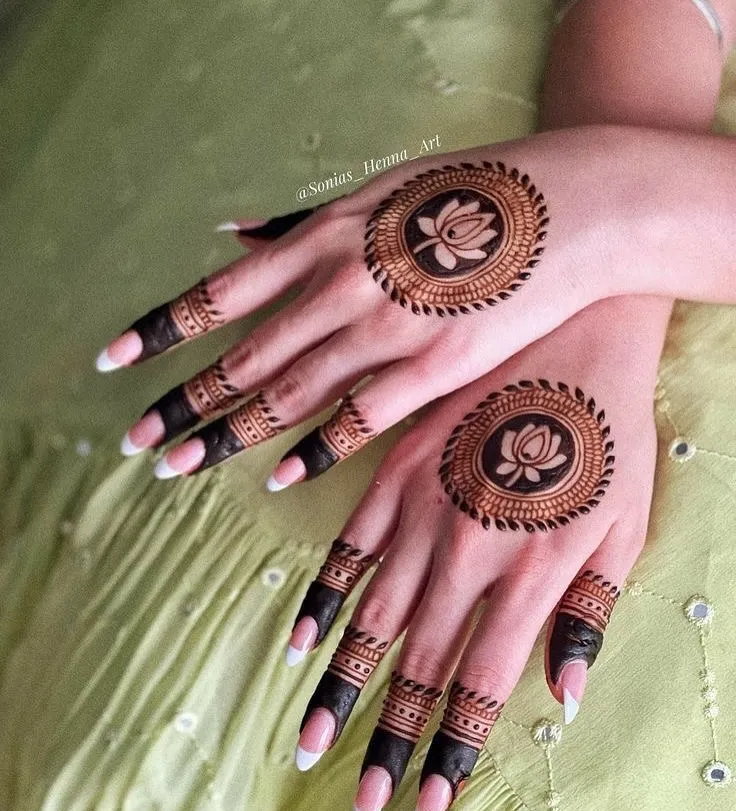
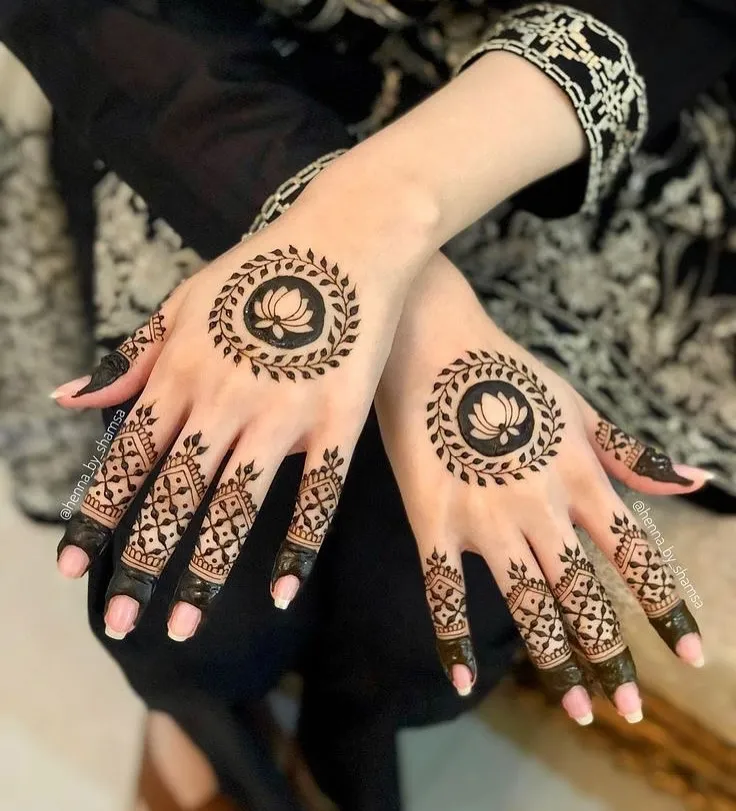
If the front hand is intimate, the back hand is expressive. The back of the hand is what faces the world — what is visible in photographs, what catches the eye across a room, what is adorned with rings and bangles. A lotus mehndi design on the back of the hand understands this visibility and uses it.

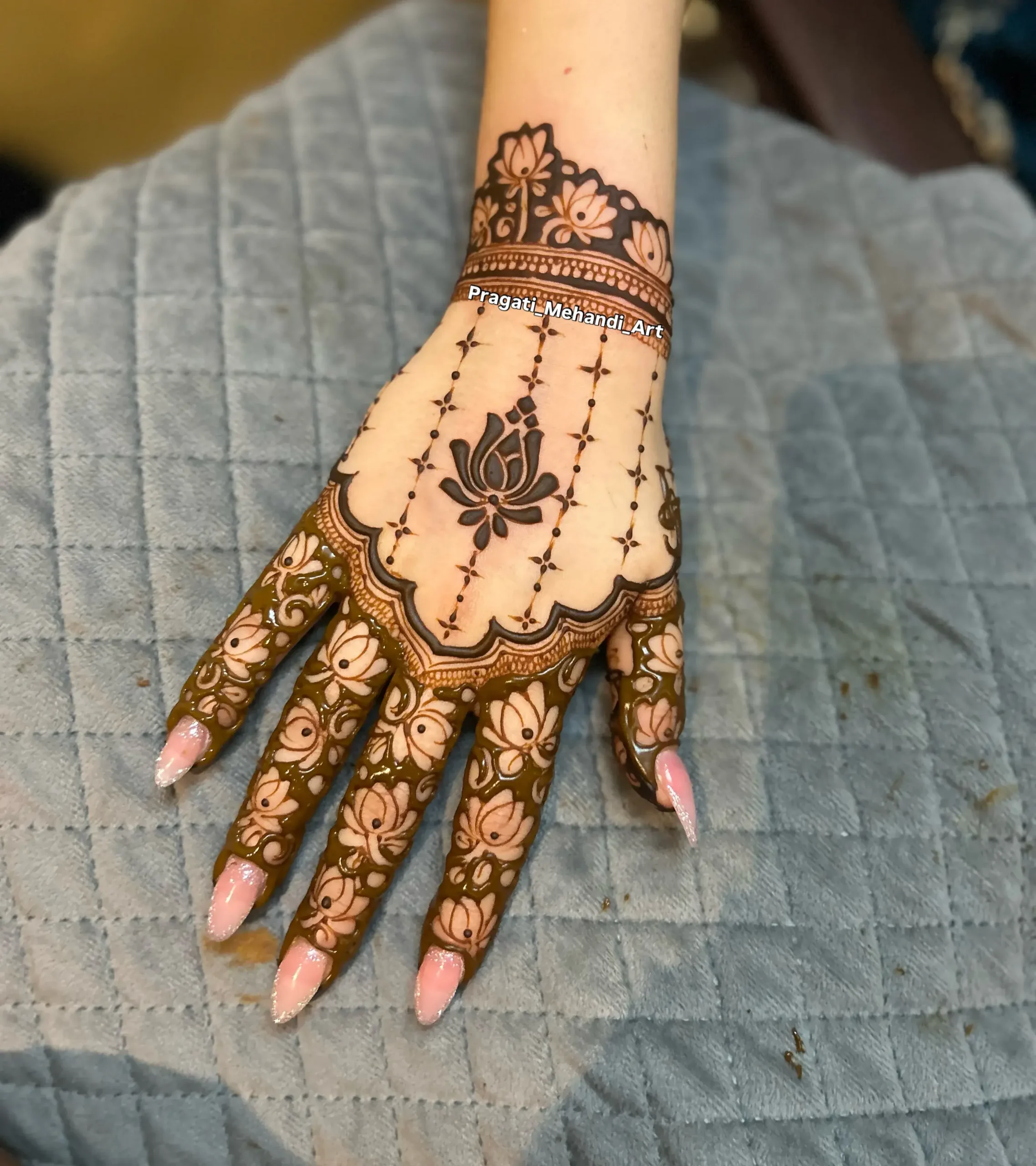
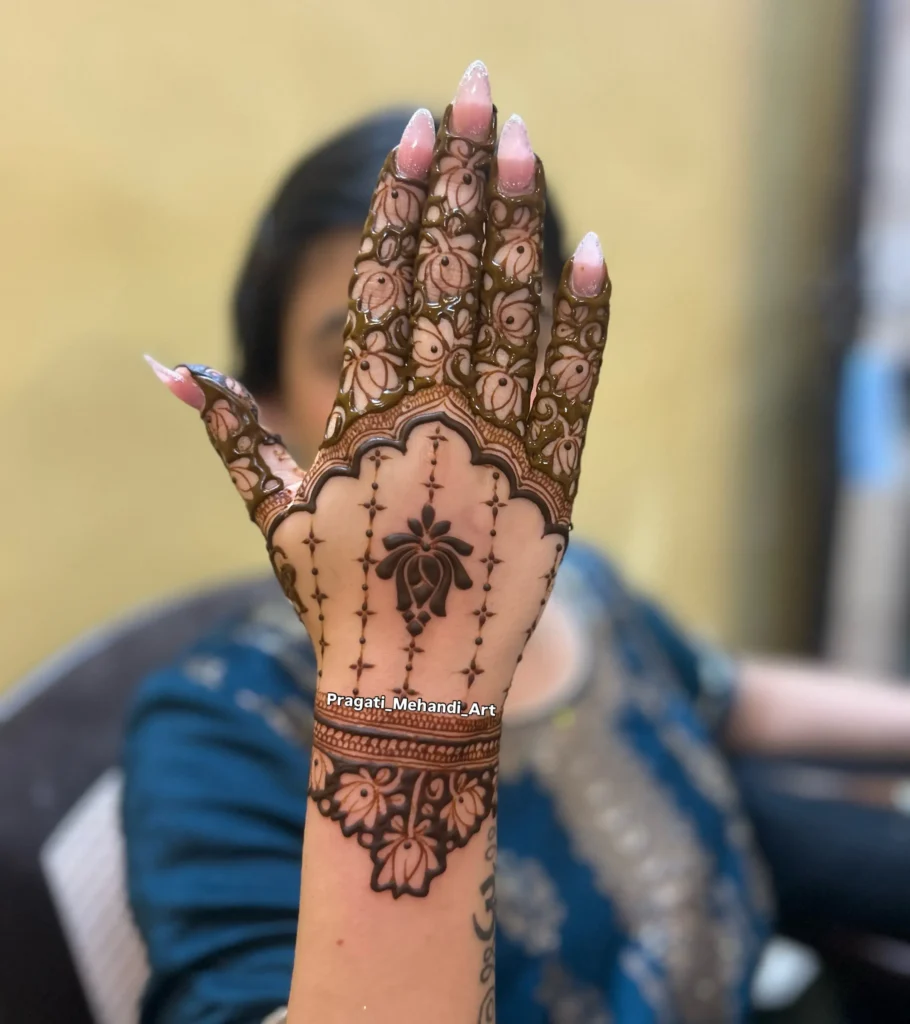
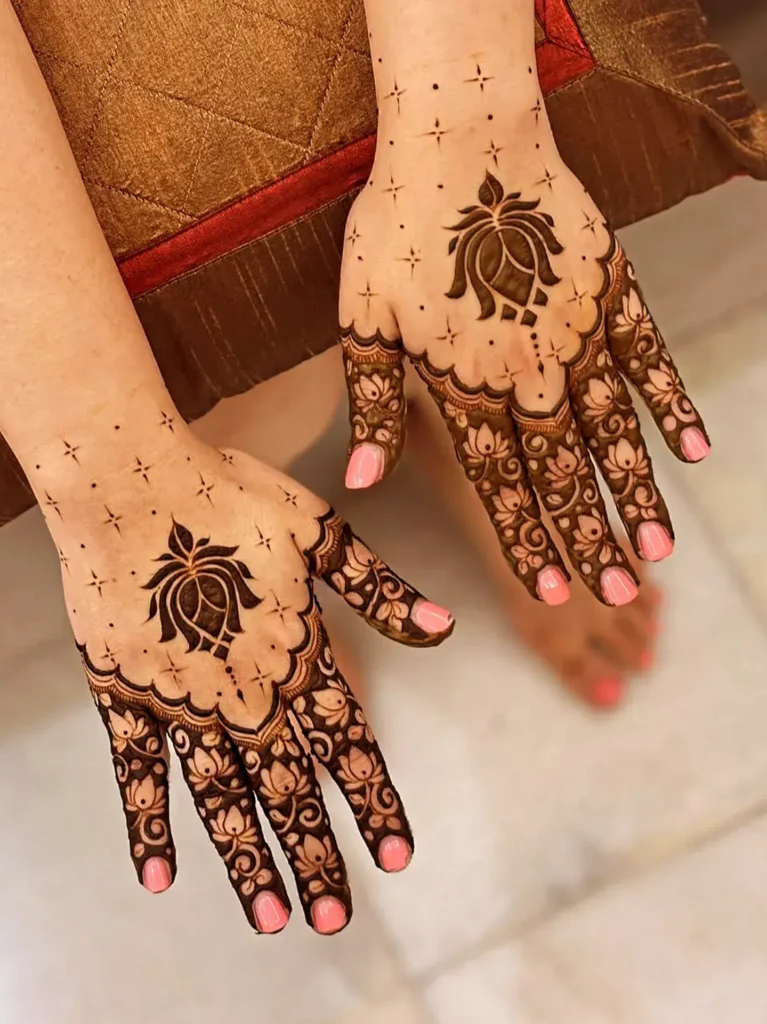
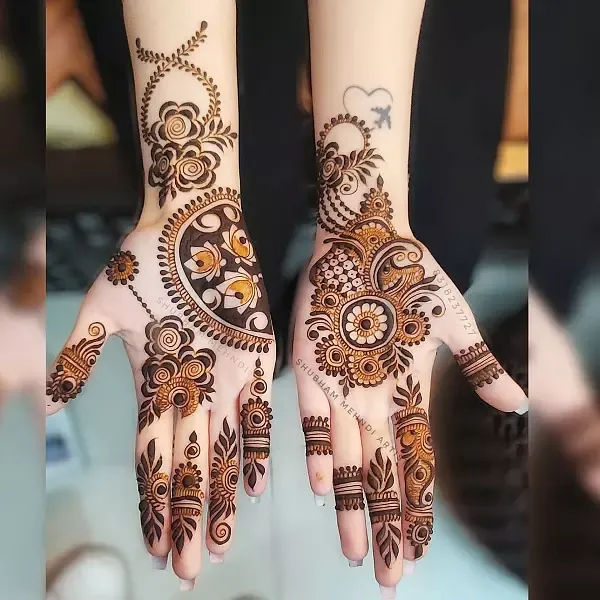
Backhand lotus designs typically feature the flower as a large, commanding centerpiece — positioned on the upper back of the hand where it has maximum visual real estate to open fully. The petals can spread wider here, the composition can breathe more freely, and the overall design can achieve a level of visual impact that is harder to attain on the palm.

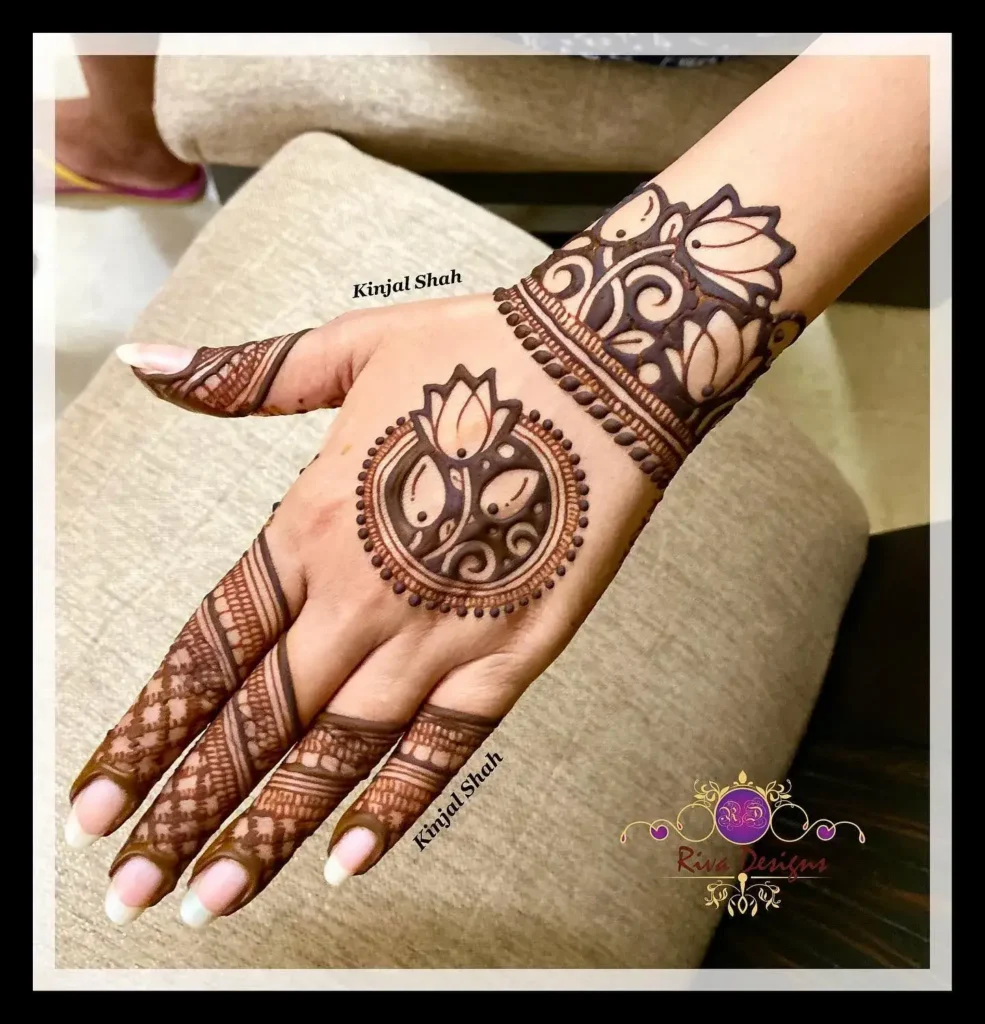
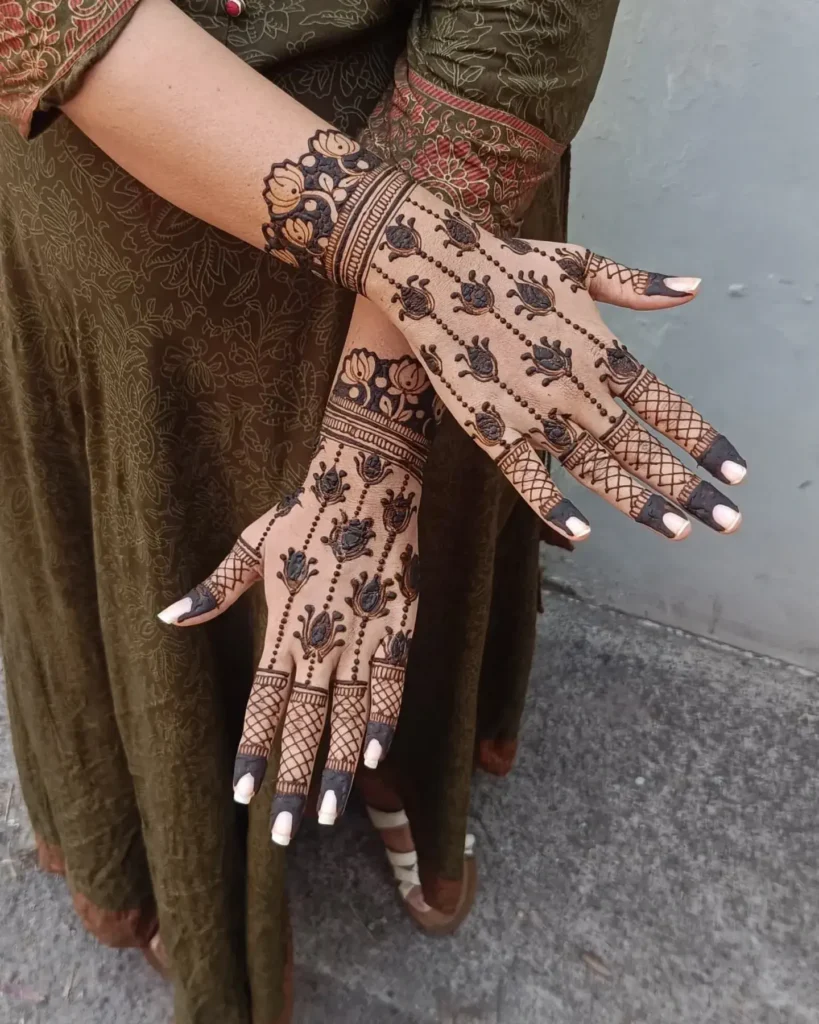
The most effective backhand lotus designs pair the central flower with flowing elements that extend naturally toward the fingers and wrist — finger chains, trailing vines, or fine border patterns — creating a connected composition that feels complete rather than isolated. When paired with rings and bangles, a well-executed backhand lotus design creates an effect that looks like jewelry and mehendi have merged into one seamless adornment.

Easy Lotus Mehndi Design

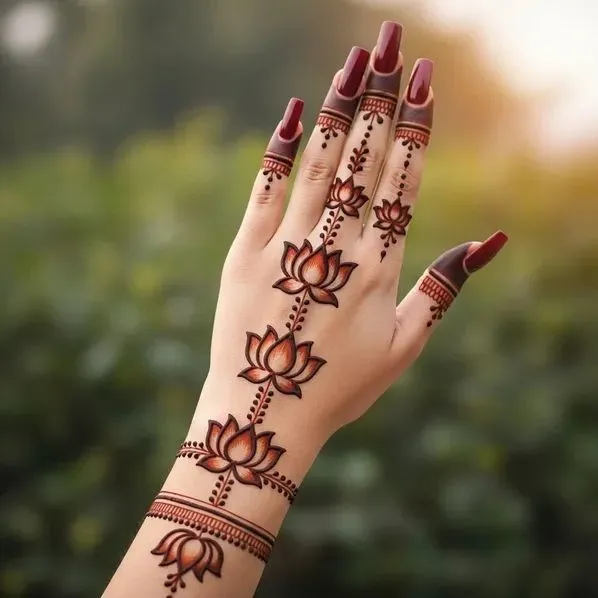
3. Lotus Mehandi Design for Fingers

Fingers are the most underutilized canvas in mehndi, and lotus finger designs are among the most underappreciated styles in the entire lotus mehandi repertoire. A lotus mehndi design for fingers brings the flower into a long, narrow space that requires a completely different compositional approach than the palm or back hand.

The most effective approach is to use individual fingers as vertical canvases — placing a small but perfectly formed lotus on one or two prominent fingers, typically the ring finger and middle finger, and connecting them with fine vine or chain patterns that flow down toward the wrist. The lotus on fingers is necessarily more compact than on the palm, which means the artist must distill the flower to its most essential elements — clean petal outlines, a strong center, and enough detail to be recognizable without being cluttered.

Lotus finger mehndi looks exceptionally beautiful in close-up photography — which is exactly why it has become so popular in the age of Instagram and Pinterest, where detailed hand shots dominate wedding and mehndi content.

Lotus Flower Simple Lotus Mehndi Design

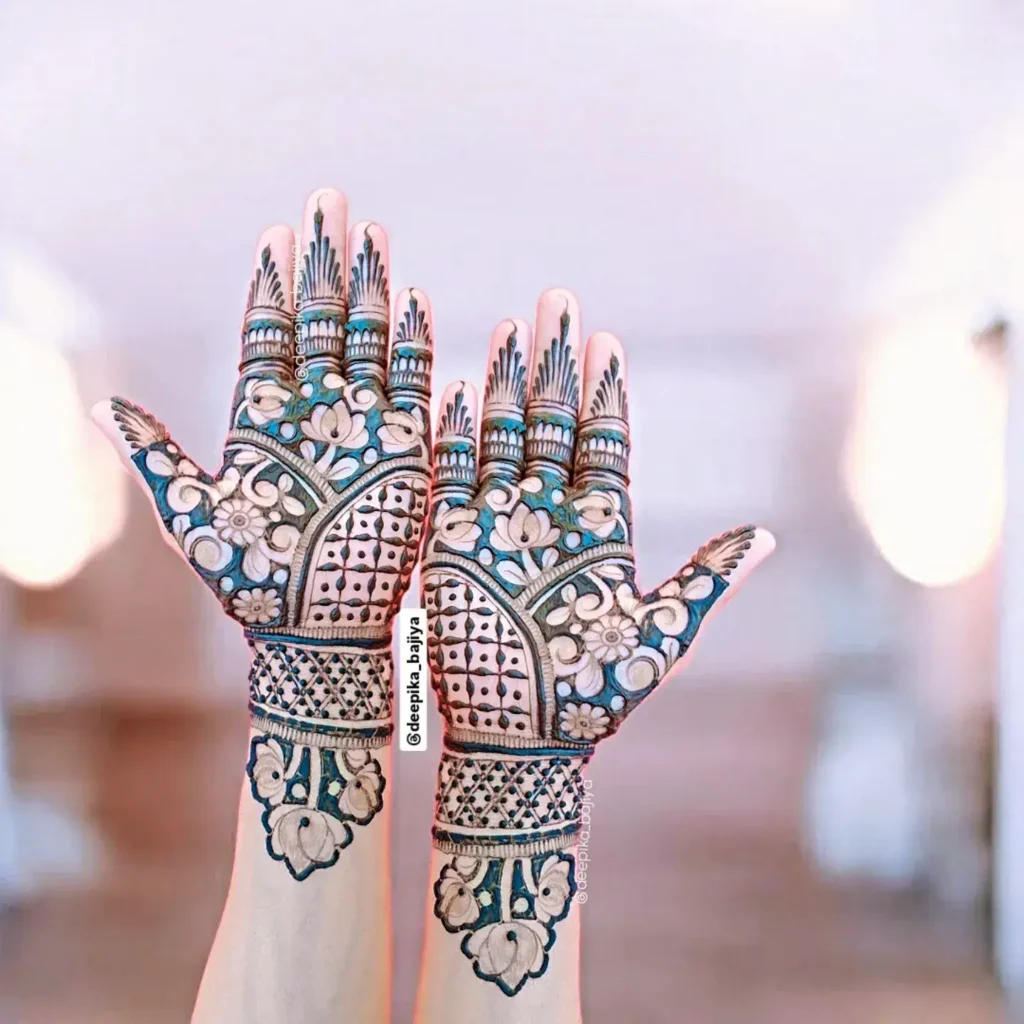
4. Full Hand Lotus Mehndi Design

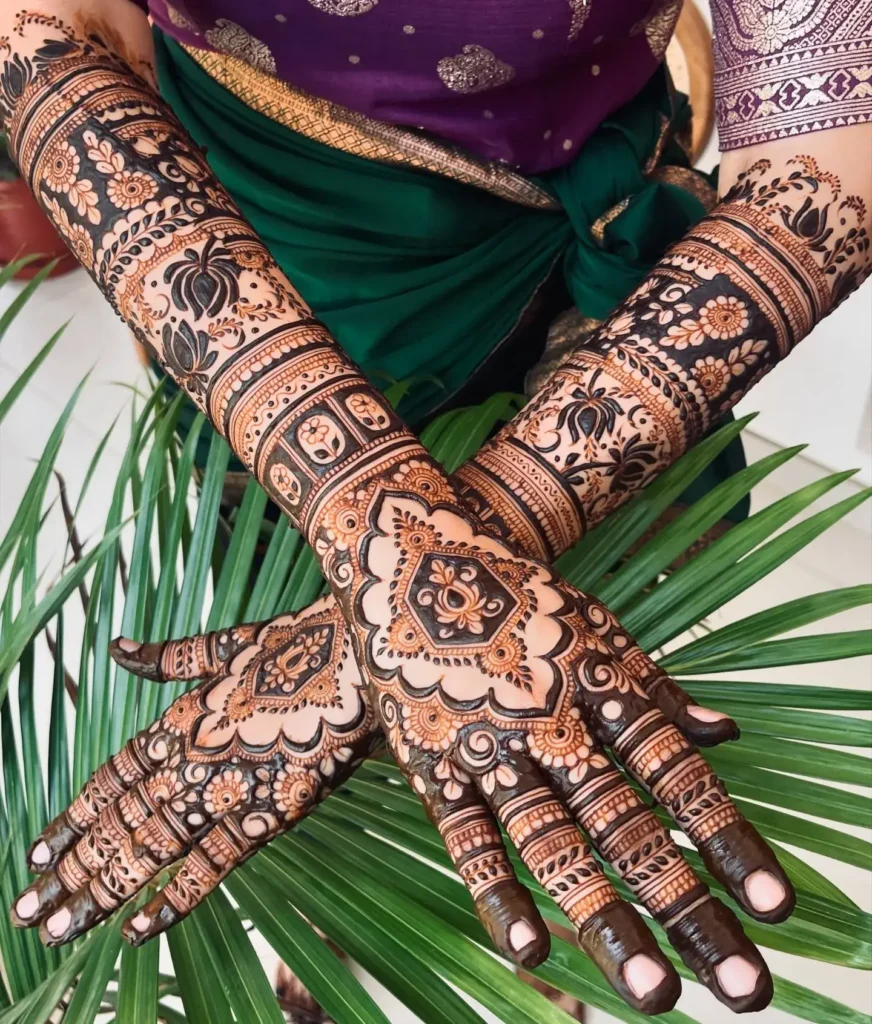
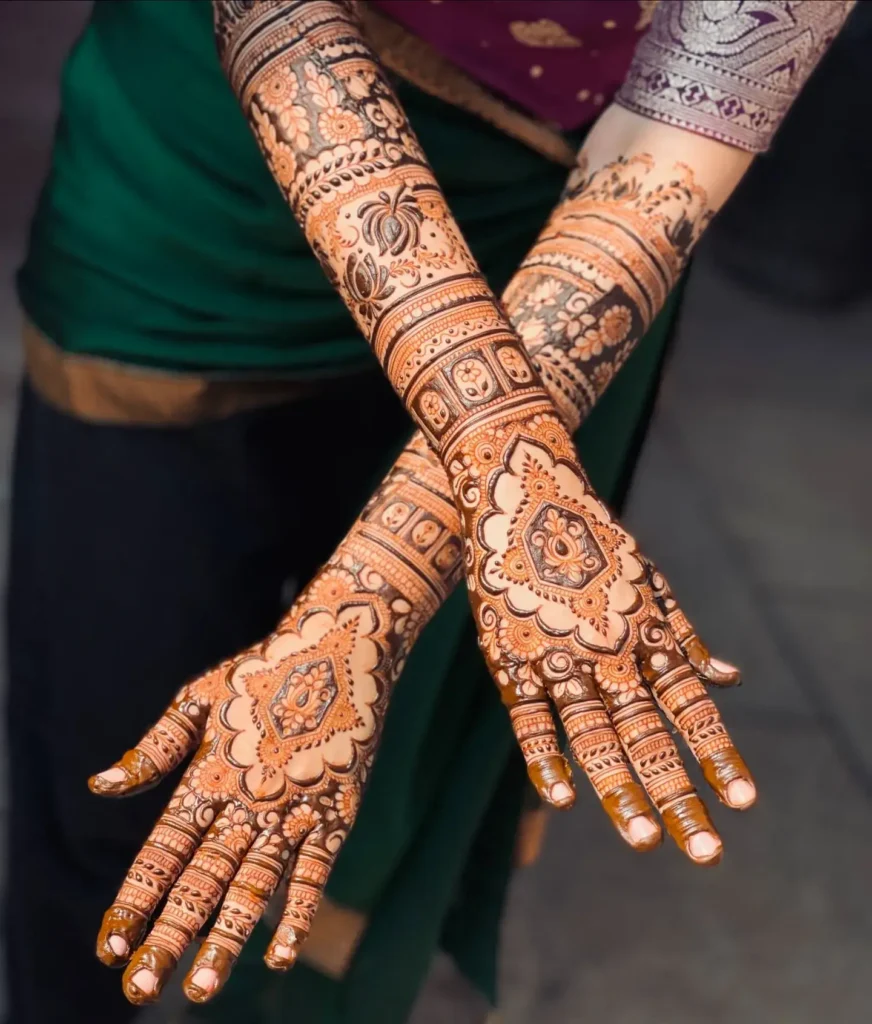
A full hand lotus mehndi design is the complete expression of lotus mehendi art — a composition that covers the entire hand, from fingertips to wrist, with the lotus as the organizing principle of the entire design.

What distinguishes a full hand lotus design from simply having a lotus somewhere on a full hand design is intentionality. In a true full hand lotus mehndi, the lotus is not one motif among many — it is the theme that everything else serves. Multiple lotus motifs may appear at different scales across the hand, creating a visual narrative where smaller lotuses on the fingers lead toward a larger central lotus on the palm or back hand, which then connects to border patterns at the wrist that echo the lotus’s petal shapes.

The result is a cohesive, deeply layered composition that rewards close examination — where every element refers back to the central theme of the lotus and the whole hand feels like one unified work of art rather than a collection of individual patterns.

Lotus Mehndi Designs

5. Half Hand Lotus Mehendi Design

The half-hand lotus mehndi design is one of the most elegant and contemporary approaches to lotus mehandi — and one that is frequently overlooked in favor of fuller coverage. This design covers only a portion of the hand — typically from the fingertips to mid-palm, or from the wrist to mid-palm — leaving the rest intentionally bare.

The power of this design lies in its use of negative space. By restricting the lotus composition to half the hand, the artist creates a design where the empty skin becomes as much a part of the composition as the mehndi itself. The lotus feels more deliberate, more considered, and ultimately more striking than it would if surrounded by patterns on all sides.

Half-hand lotus mehendi is the ideal choice for modern brides who want a design that feels contemporary and fashion-forward while still carrying cultural depth. It also photographs beautifully — the clean contrast between adorned and bare skin creates a visual drama that heavy full-hand designs sometimes lack.

Lotus Mehndi Design Simple

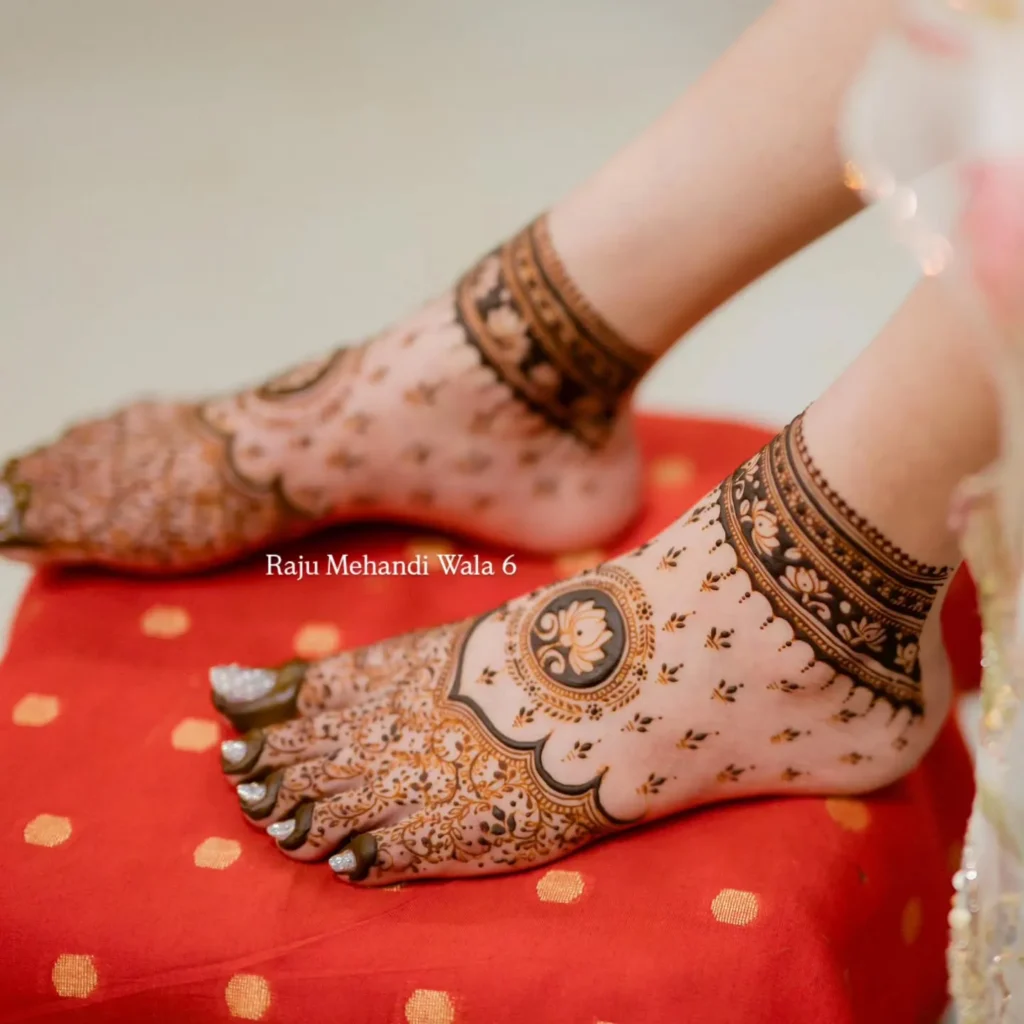
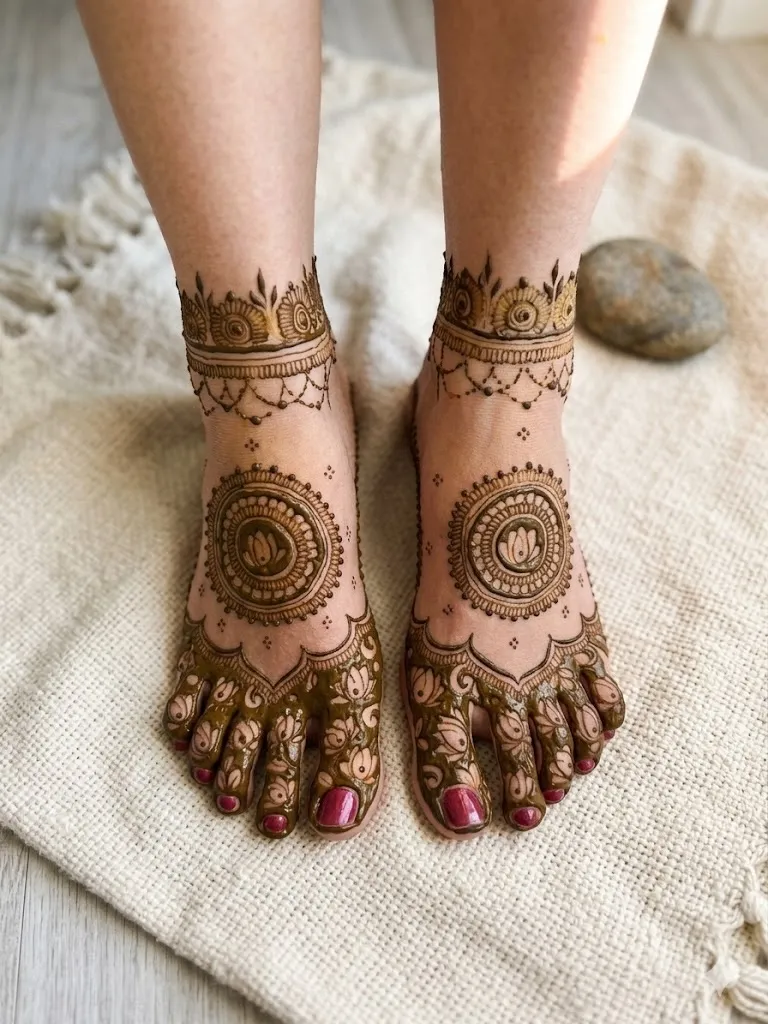
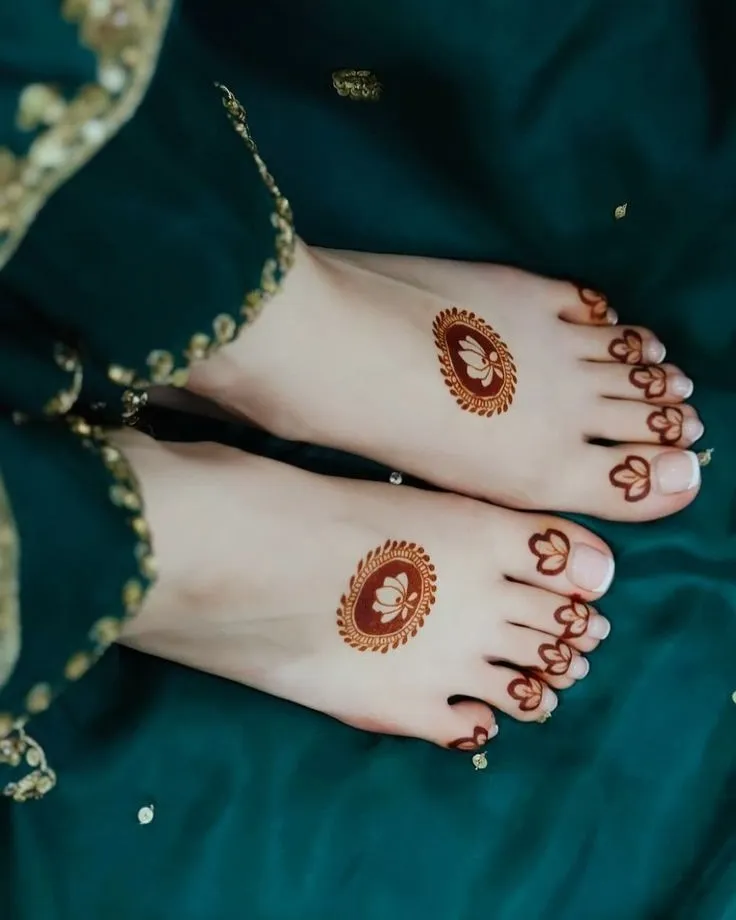
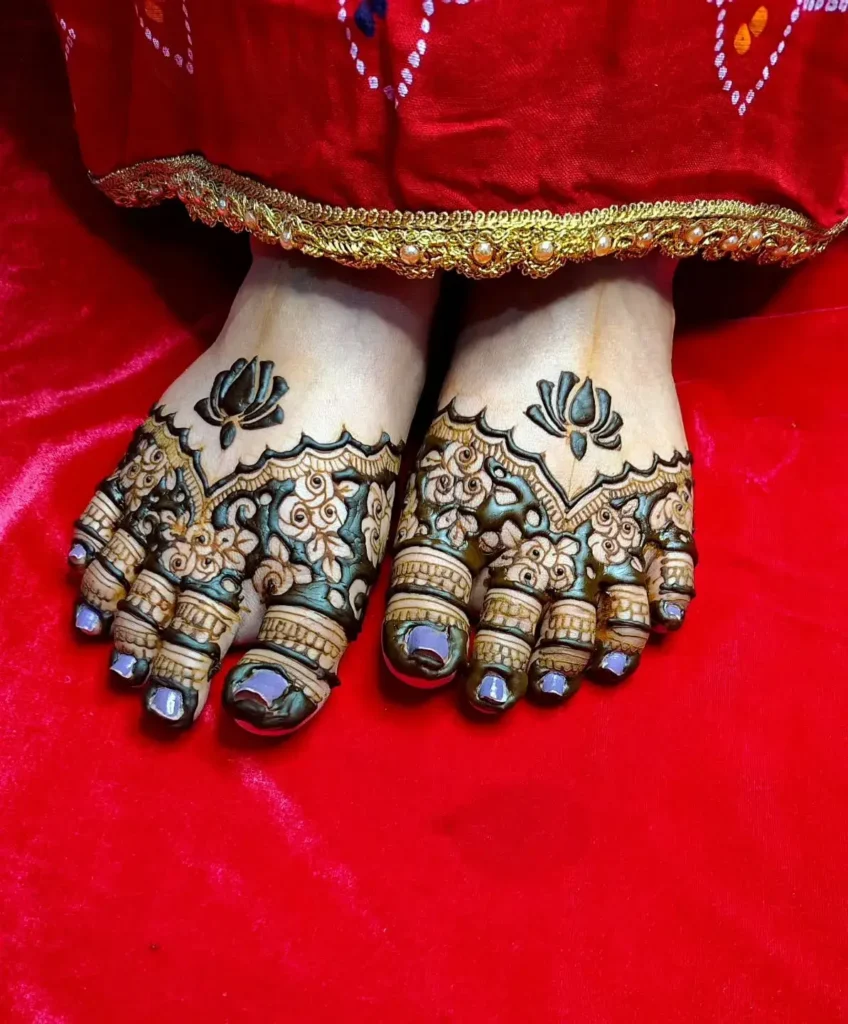
6. Lotus Mehandi Design for Feet

Feet mehndi is an art form that deserves as much attention and thoughtfulness as hand mehndi — and the lotus mehndi design for feet is one of the most beautiful ways to adorn this often-overlooked canvas.

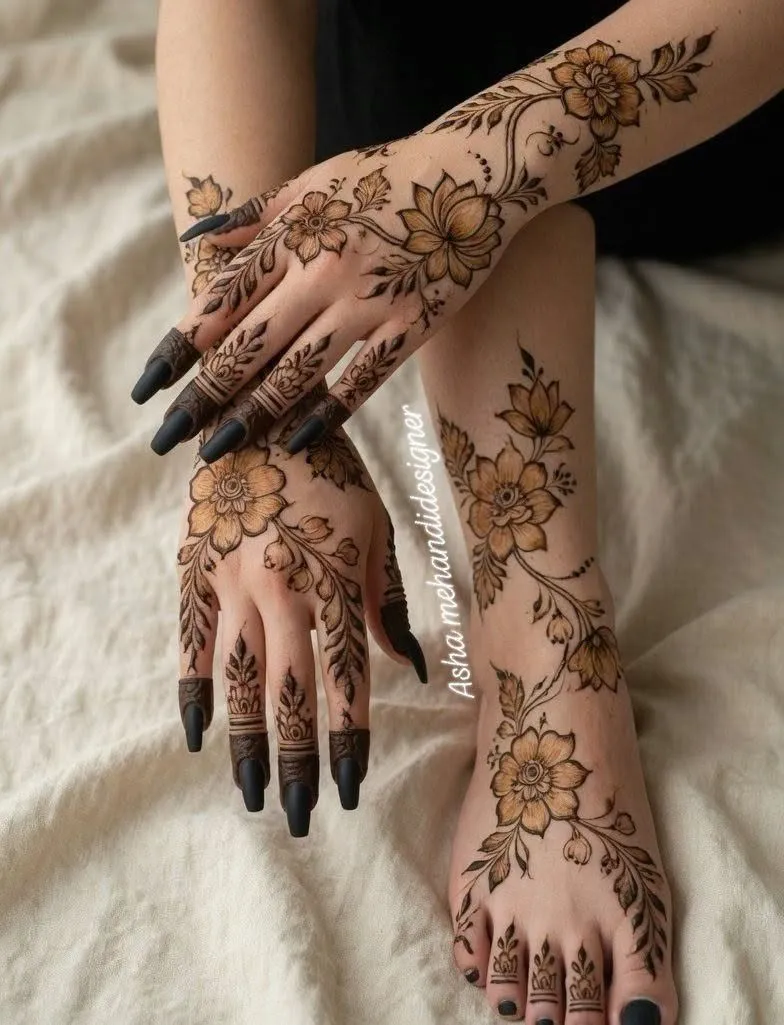
The architecture of the foot offers unique opportunities for lotus placement. The top of the foot provides a broad, relatively flat surface where a large lotus can open fully — similar to the back of the hand but with even more space. The ankle offers a natural circular canvas for lotus-inspired band designs. The toes provide a row of small, individual canvases for tiny but perfectly formed lotus accents.

The most effective lotus feet designs create a visual journey from toe to ankle — small lotus accents on the toes connecting through fine vine work to a larger central lotus on the foot, finished with a lotus-inspired anklet pattern at the wrist. When a bride with this mehandi takes her first steps as a married woman, she walks on flowers — and the symbolic resonance of that image is not lost on anyone who understands what the lotus represents.

Lotus Mehandi Design for Feet

B. Lotus Mehendi Design By Style

7. Simple Lotus Mehndi Design

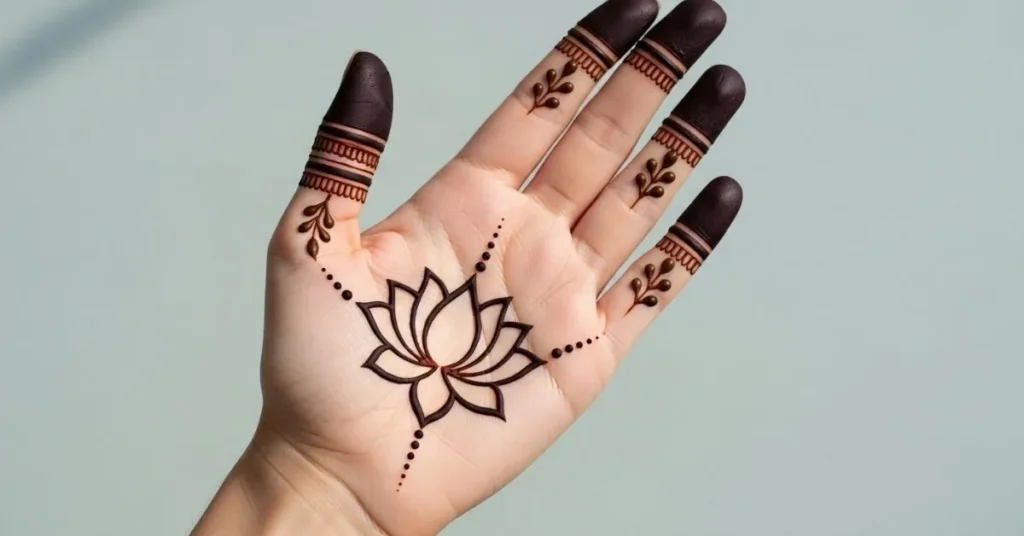
Simple does not mean ordinary — and a simple lotus mehndi design is the clearest proof of that principle in the entire lotus mehndi canon. A simple lotus design strips the flower back to its most essential, most pure form — clean petal outlines, a strong center, and minimal surrounding decoration — and trusts that the lotus itself is beautiful enough to carry the design without embellishment.

The discipline required to execute a truly great simple lotus design is actually greater than the discipline required for complex designs. When there are no surrounding patterns to draw the eye, every line of the lotus itself must be perfect. The symmetry of the petals, the confidence of the outlines, the balance of the composition — all of it is exposed and visible without the safety net of surrounding complexity. A simple lotus mehndi done well is one of the most quietly breathtaking designs in the entire mehendi world.

Lotus Mehndi Design Back Hand

8. Easy Lotus Mehendi Design

An easy lotus mehndi design is specifically structured to be achievable by beginners and those practicing at home, but this does not mean it compromises on beauty or impact. The easy lotus approach breaks the flower down into its most basic geometric components — U-shapes for petals, a small circle for the center, simple dots for accents — and builds the design from these foundational shapes.

The key insight of easy lotus mehandi is that the lotus’s natural symmetry actually makes it one of the most forgiving flowers to draw. Because the petals radiate outward from a central point in a regular pattern, small imperfections in individual petals are far less noticeable than they would be in a rose or a freeform floral design. This natural structure makes the lotus genuinely accessible to beginners while still producing results that look polished and intentional.

Mehndi Design Lotus

9. Minimalist Lotus Mehandi Design

Minimalist lotus mehndi design is perhaps the most philosophically aligned of all lotus styles — because the lotus itself is a symbol of finding beauty and meaning through clarity and simplicity rather than excess. A minimalist lotus design uses the fewest possible lines to suggest the most possible beauty — a few clean petals, deliberate negative space, and perhaps a single fine vine or dot accent to complete the composition.

What makes minimalist lotus mehndi so compelling is the way it forces the viewer’s eye to complete the image. When a design is heavily filled with patterns, the eye simply receives what is there. When a minimalist lotus is drawn with restraint and intention, the eye is invited to participate — to appreciate the spaces between the lines as much as the lines themselves. This active engagement makes minimalist lotus designs feel more alive and more personal than their more elaborate counterparts.

Lotus Mehndi

10. Aesthetic Lotus Mehndi Design

Aesthetic lotus mehndi design is where traditional mehndi art meets contemporary visual culture. This style is specifically designed to look stunning in photographs — particularly the high-contrast, carefully composed images that dominate mehndi content on Instagram and Pinterest.

Aesthetic lotus designs use a combination of fine line work, deliberate negative space, and clean geometric composition to create designs that feel modern, editorial, and visually sophisticated. The lotus in this context is often drawn with unusually thin, precise lines that give it a delicate, almost etched quality — as if it were drawn with a fine pen rather than a mehndi cone. The result is a design that feels more like wearable art than traditional decoration — and photographs with a clarity and elegance that heavier, more complex designs often cannot match.

Aesthetic Lotus Mehndi Design

11. Modern Lotus Mehendi Design

Modern lotus mehndi design represents the evolution of the lotus motif for contemporary tastes and lifestyles. It takes the timeless lotus form and reinterprets it through the lens of current design aesthetics — incorporating elements like soft shading, gradient effects, negative space composition, and fusion of cultural styles that would not have appeared in traditional lotus mehendi.

Modern lotus designs are particularly popular among urban brides and young mehndi enthusiasts who want something that feels current and personally relevant rather than simply traditional. The best modern lotus designs achieve a balance where the flower is still recognizable and culturally resonant but feels fresh and of-the-moment — neither a slavish reproduction of traditional forms nor a complete departure from the lotus’s essential beauty.

Simple Lotus Mehndi Design Front Hand

12. Single Lotus Mehandi Design

The single lotus mehndi design is a statement of confidence — the decision to let one perfectly executed flower speak for an entire design. A single lotus placed with intention and drawn with skill on the center of the palm, the back of the hand, or the wrist carries more presence and personality than many full-hand designs that crowd every inch of available skin.

The single lotus design also represents the purest expression of the lotus’s symbolic meaning. One lotus, rising alone in clean water, perfectly formed and completely self-sufficient — it is the visual metaphor of the lotus’s cultural significance made literal. For women who understand and feel connected to that symbolism, the single lotus design is not a minimal choice — it is the maximum meaningful choice.

Single Lotus Mehndi Design

C. Lotus Mehndi Design By Cultural Style

13. Arabic Lotus Mehendi Design

In the Arabic lotus mehndi design, the lotus undergoes a dramatic transformation. Arabic mehandi is defined by bold, sweeping lines, generous negative space, and a sense of confident, flowing movement — and when the lotus enters this visual language, it becomes bolder, more dramatic, and more immediately striking than in any other style.

An Arabic lotus is drawn with thick, confident petal outlines that make the flower pop against the skin immediately. The surrounding composition typically features flowing vines, large leaf forms, and bold floral trails — all drawn in the characteristically free, open Arabic style — with the lotus serving as the anchor or destination point of the overall design. The dark color that Arabic-style mehndi develops, combined with the bold structure of the lotus, creates a design that is striking from any distance and stunning in close-up.

Simple Lotus Mehndi Design Photo

14. Indian Lotus Mehandi Design

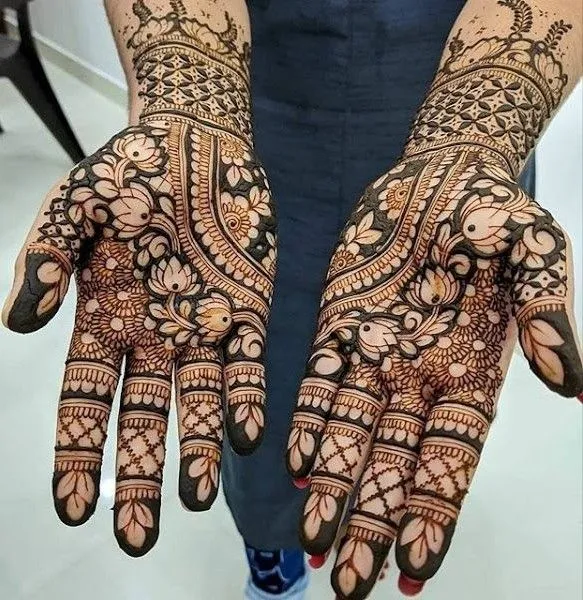
Indian lotus mehndi design takes the lotus to its most intricate and detailed expression. Indian mehndi is defined by ultra-fine line work, micro-patterns, dense layering, and a compositional richness that rewards extended examination — and the lotus in this context becomes a vehicle for extraordinary artistic complexity.

In Indian style, the lotus petals are not left as clean, bold outlines. Each petal becomes its own micro-canvas — filled with fine patterns, shading, jali work, and detailing that gives the flower extraordinary depth and dimension. The center of the lotus may contain a tiny mandala, a portrait element, or a complex geometric pattern. The surrounding composition typically extends this level of intricacy across the entire hand, creating a full-coverage design of breathtaking complexity where the lotus is the organizing principle and the ultimate focal point.

Unique Lotus Flower Mehndi Design

15. Pakistani Lotus Mehndi Design

Pakistani lotus mehndi design occupies a distinctive space between Arabic boldness and Indian intricacy — combining elements of both traditions in a way that is uniquely and recognizably Pakistani. Pakistani mehendi tends toward bold geometric structure combined with fine floral detailing, and the lotus fits naturally into this aesthetic.

In Pakistani style, the lotus is typically drawn with strong, defined outlines that give it a clear visual presence, while the interior of the petals features the fine detailing and pattern work that Pakistani mehndi is known for. The surrounding composition often incorporates characteristically Pakistani elements — geometric borders, fine jali patterns, and bold floral arrangements — that frame the lotus within a broader design language that feels deeply culturally rooted while remaining visually contemporary.

Simple Easy Lotus Mehndi Design

16. Moroccan Lotus Mehendi Design

Moroccan lotus mehndi design is perhaps the most visually distinctive interpretation of the lotus in the entire mehndi world — because Moroccan mehandi, with its emphasis on geometric precision, angular patterns, and mathematical structure, transforms the organic, flowing lotus into something almost architectural.

In Moroccan style, the lotus petals are given sharp, angular edges rather than soft curves. The surrounding composition features the characteristic Moroccan geometric patterns — diamonds, triangles, and interlocking angular forms — that echo the lotus’s natural symmetry while transforming it into a design that feels structured and almost mathematical. The result is a lotus that looks as if it were drawn from the tile work of a Moroccan palace — deeply beautiful, deeply cultural, and utterly unlike any other lotus mehndi style.

Lotus Flower Lotus Mehndi Design Back Hand

D. Lotus Mehandi Design By Occasion

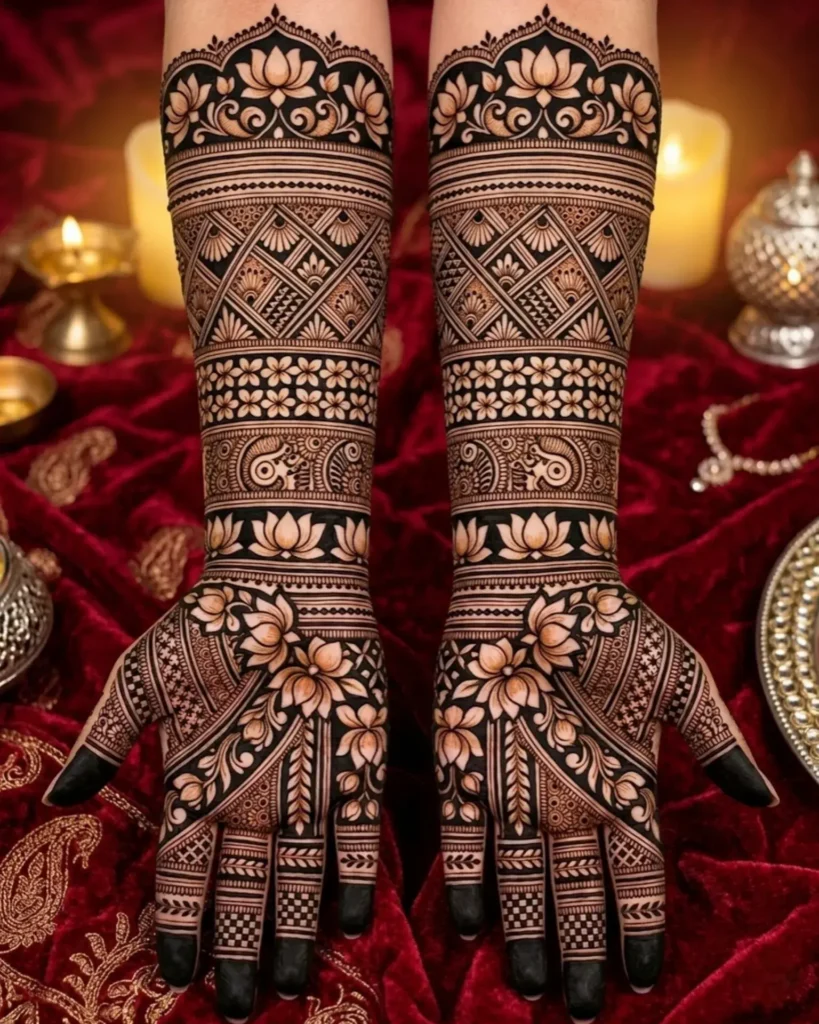
17. Bridal Lotus Mehndi Design

Bridal lotus mehndi design is the lotus at its most elaborate, most intentional, and most deeply meaningful. For a bride, the choice of lotus mehndi is never casual — it is a deliberate decision to carry the flower’s symbolism of purity, new beginnings, and divine blessing into the most significant moment of her life.

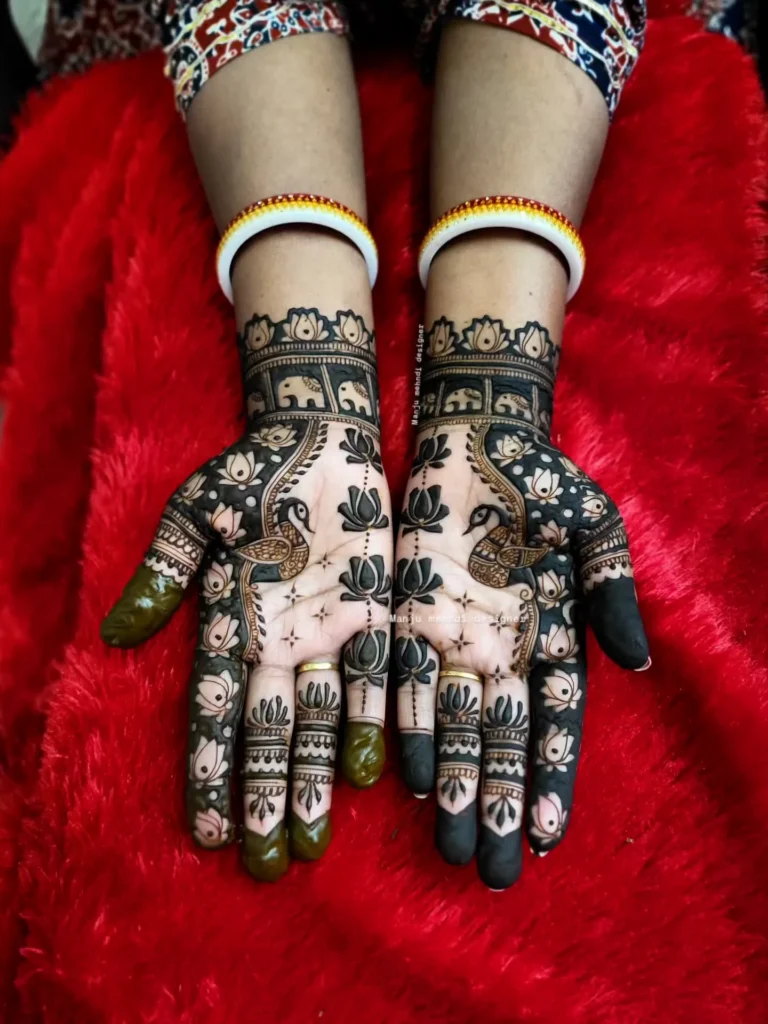
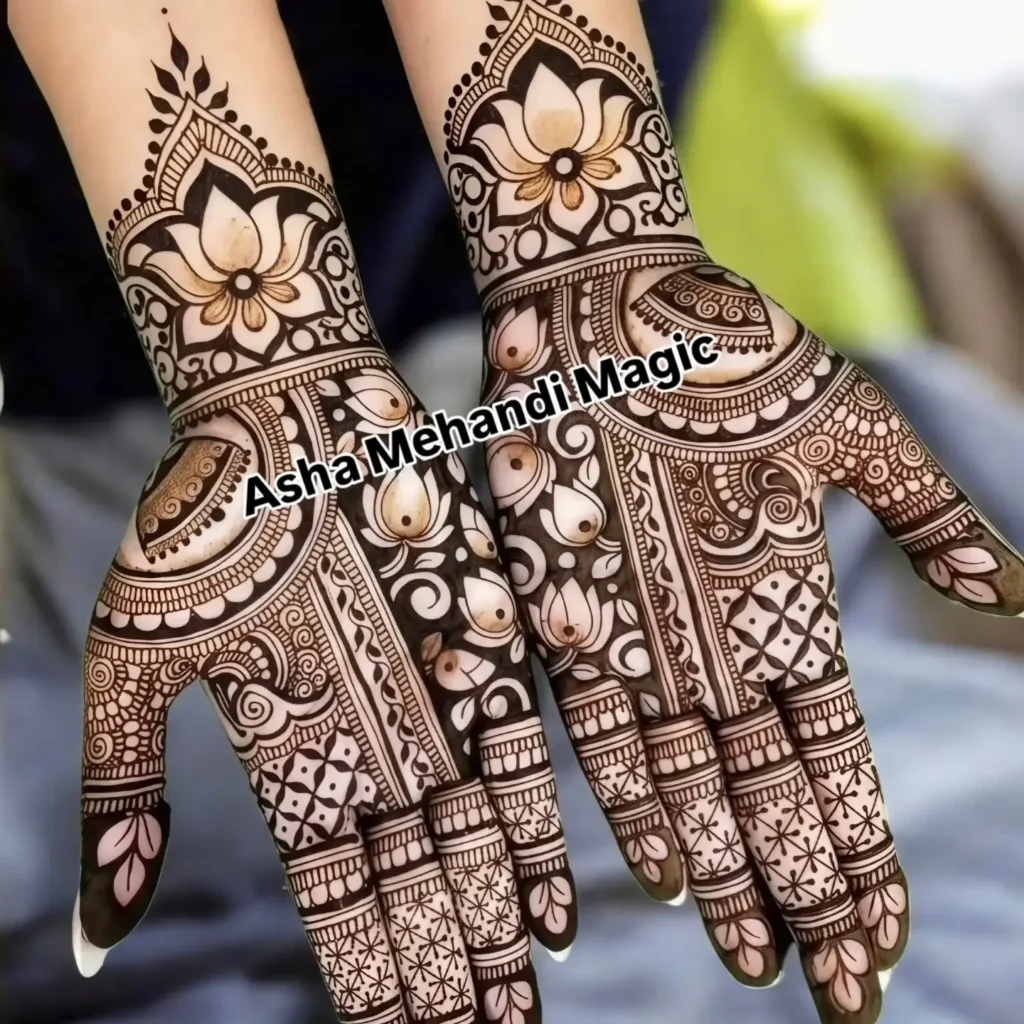
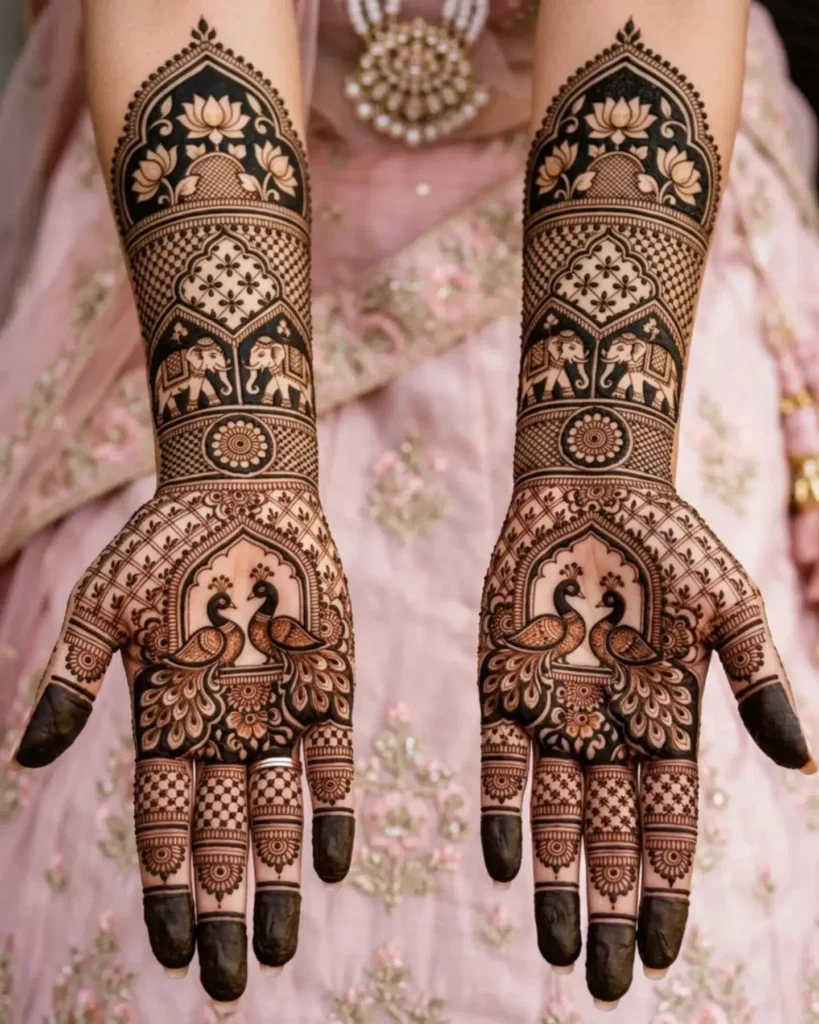
Bridal lotus mehndi typically features the flower as the undisputed centerpiece of a complex, multi-element composition that covers both hands fully. The central lotus may be drawn at an unusually large scale — occupying the entire palm or the majority of the back hand — with surrounding elements building outward from it in layers of increasing complexity. Portrait elements, peacock motifs, geometric borders, and fine jali work may all appear in a bridal lotus design, but they all serve and support the lotus rather than competing with it. The result is a bridal mehendi that tells one clear, beautiful story — the story of a woman stepping into a new chapter of her life, adorned with the flower that has symbolized that transition for thousands of years.

Lotus Flower Mehndi Design

18. Engagement Lotus Mehendi Design

An engagement is the first official declaration of a new beginning, and the engagement lotus mehndi design honors that meaning with a design that is celebratory and beautiful without reaching the full ceremonial weight of bridal mehandi. Engagement lotus designs typically feature a prominent central lotus with elegant surrounding elements — flowing vines, fine finger detailing, and perhaps a delicate wrist cuff pattern — creating a look that is clearly special and occasion-appropriate while remaining lighter and more wearable than a full bridal composition.

Lotus Mehndi Design Front Hand

19. Eid Lotus Mehandi Design

Eid lotus mehndi design is festive, fresh, and perfectly calibrated for the energy of Eid celebrations. Eid mehndi needs to be beautiful and meaningful but also relatively quick to apply — and the lotus, with its clean structure and adaptability, serves this requirement perfectly. Eid lotus designs typically feature bold, clean lotus motifs combined with flowing Arabic-style vine work — designs that are striking and celebratory without requiring the hours of application time that bridal or full-hand designs demand. These designs look beautiful against Eid outfits in any color and photograph exceptionally well in the natural light of an Eid morning.

Lotus Mehndi Design for Girl

20. Karwa Chauth Lotus Mehndi Design

Karwa Chauth lotus mehndi design carries a particularly special significance — because Karwa Chauth is a celebration of love, devotion, and the bond between husband and wife, and the lotus, as a symbol of purity and divine love, is one of the most appropriate and meaningful motifs a woman can choose for this occasion. Karwa Chauth lotus designs typically feature prominent lotus motifs on both hands, often combined with moon and star elements that reference the ritual of sighting the moon through a sieve. The overall aesthetic is romantic, traditional, and deeply intentional — mehndi that honors the meaning of the occasion rather than simply decorating for it.

Karwa Chauth Lotus Mehndi Design

E. Lotus Mehendi Design By Motif Combination

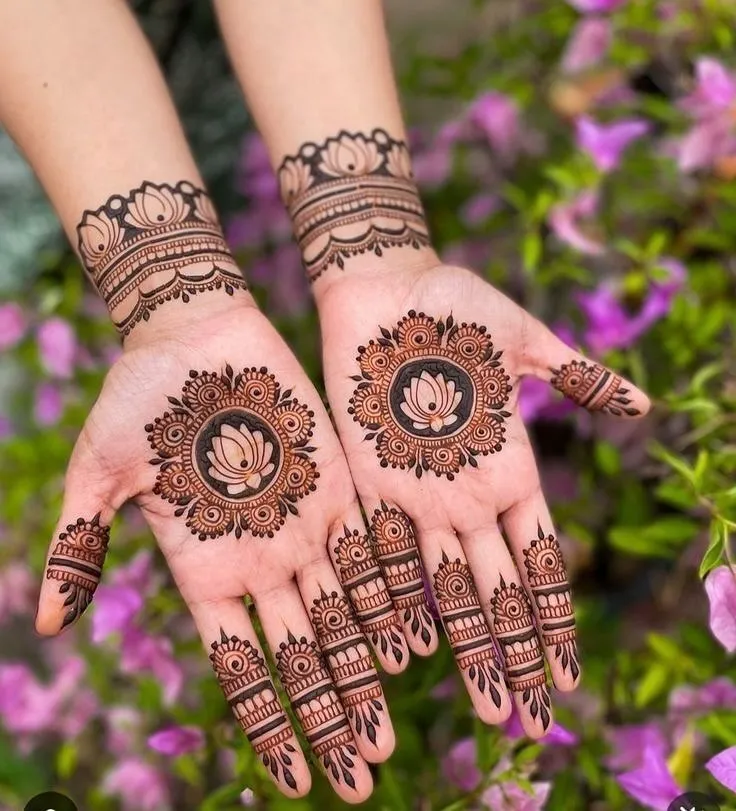
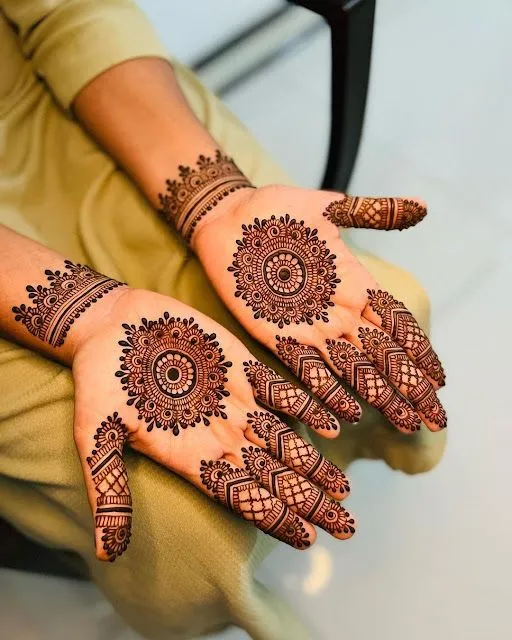
21. Lotus Mandala Mehandi Design

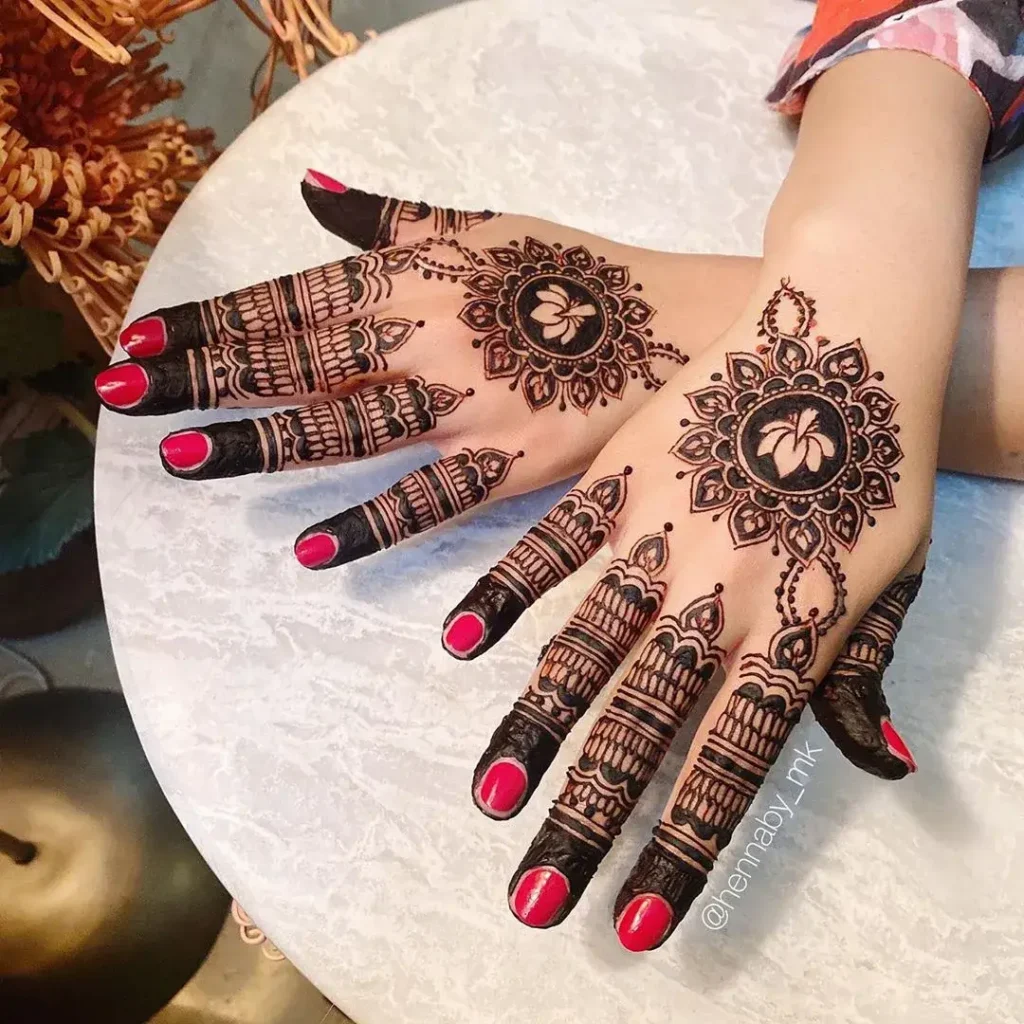
The lotus mandala mehndi design is one of the most visually and spiritually powerful combinations in all of mehendi art. The mandala — a circular, symmetrical geometric pattern that represents wholeness, the universe, and the infinite — and the lotus — a symbol of purity, growth, and enlightenment — share deep philosophical connections in both Hindu and Buddhist traditions. When they are combined in mehndi, the result is a design that operates on multiple levels of meaning simultaneously.

The most effective lotus mandala designs place the lotus at the center of the mandala composition — the flower becoming the seed or heart from which the entire mandala radiates outward. The mandala’s geometric precision provides structure and balance, while the lotus’s organic beauty provides warmth and life. The combination feels simultaneously ancient and contemporary — rooted in millennia of spiritual tradition but visually fresh and compelling for modern aesthetics.

Simple Lotus Flower Henna

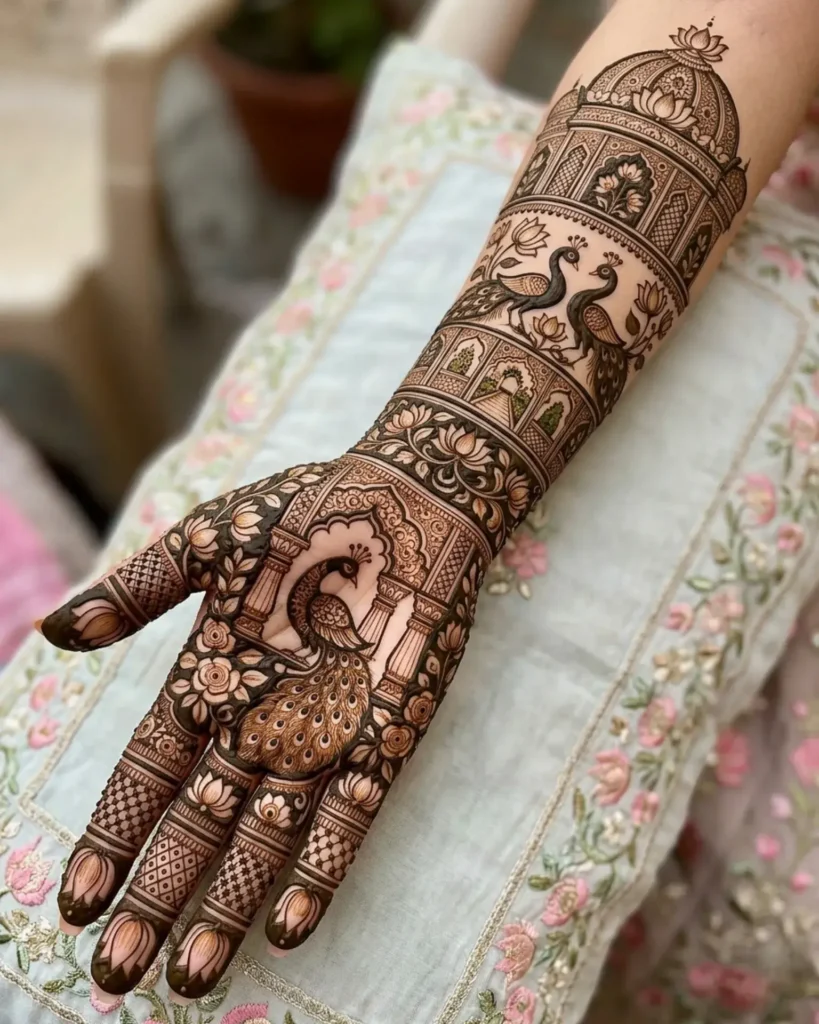
22. Lotus Peacock Mehndi Design

The lotus peacock mehndi design brings together the two most symbolically rich motifs in South Asian mehndi tradition. The peacock — India’s national bird, a symbol of grace, beauty, and good fortune — and the lotus — the symbol of purity, divinity, and new beginnings — create a combination that is visually spectacular and culturally profound.

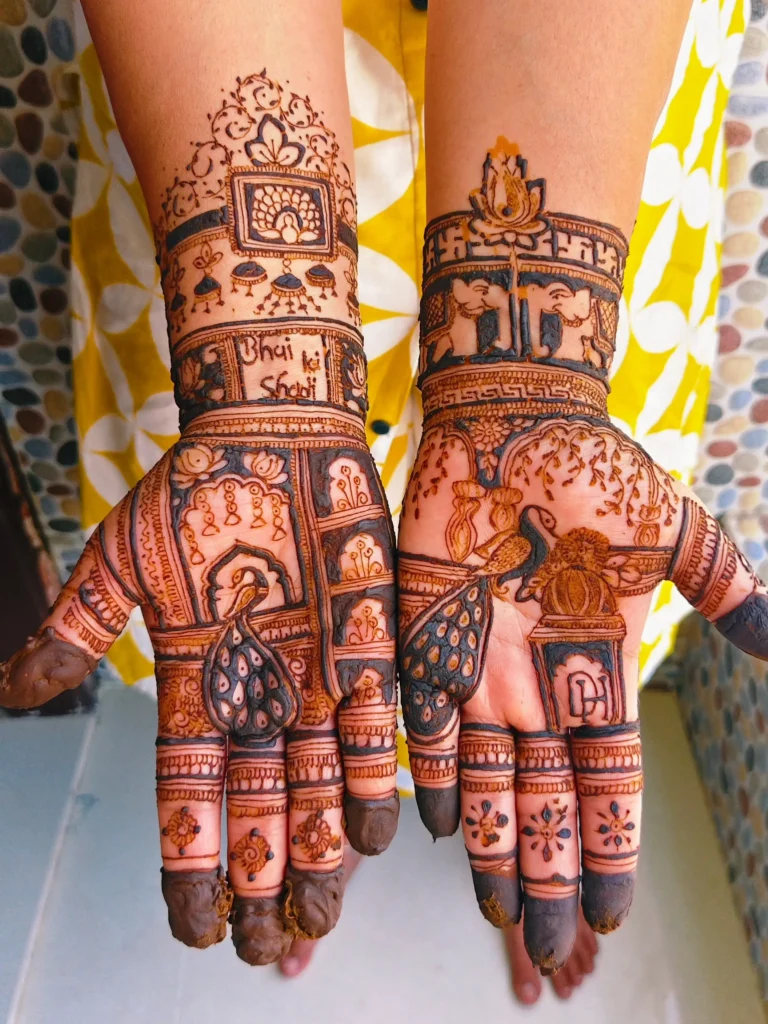
In traditional Indian and Pakistani mehndi, the peacock and lotus have always appeared together — in temple art, in miniature paintings, and in bridal mehandi compositions. The most effective lotus peacock designs position the two motifs in visual dialogue — the peacock appearing to emerge from or rest beside a blooming lotus, its intricate feather patterns complementing and contrasting with the lotus’s layered petal structure. The result is a design that feels regal, deeply traditional, and breathtakingly beautiful.

Lotus Royal Peacock Mehndi Design

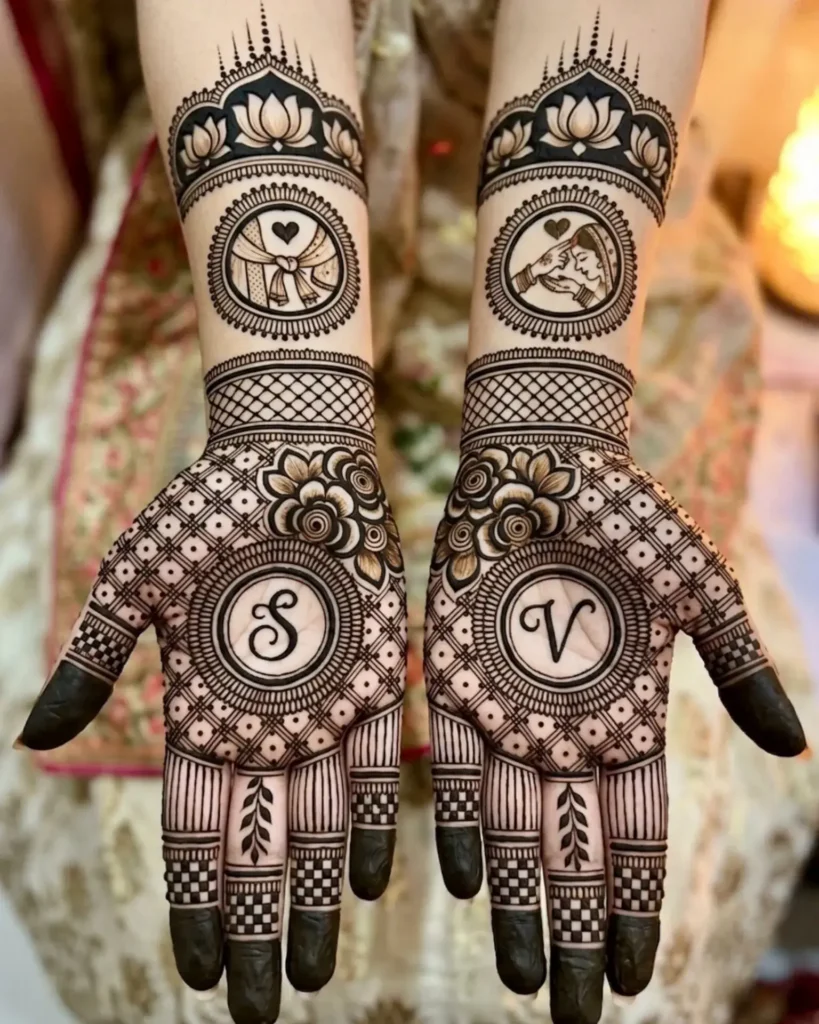
23. Lotus Portrait Mehendi Design

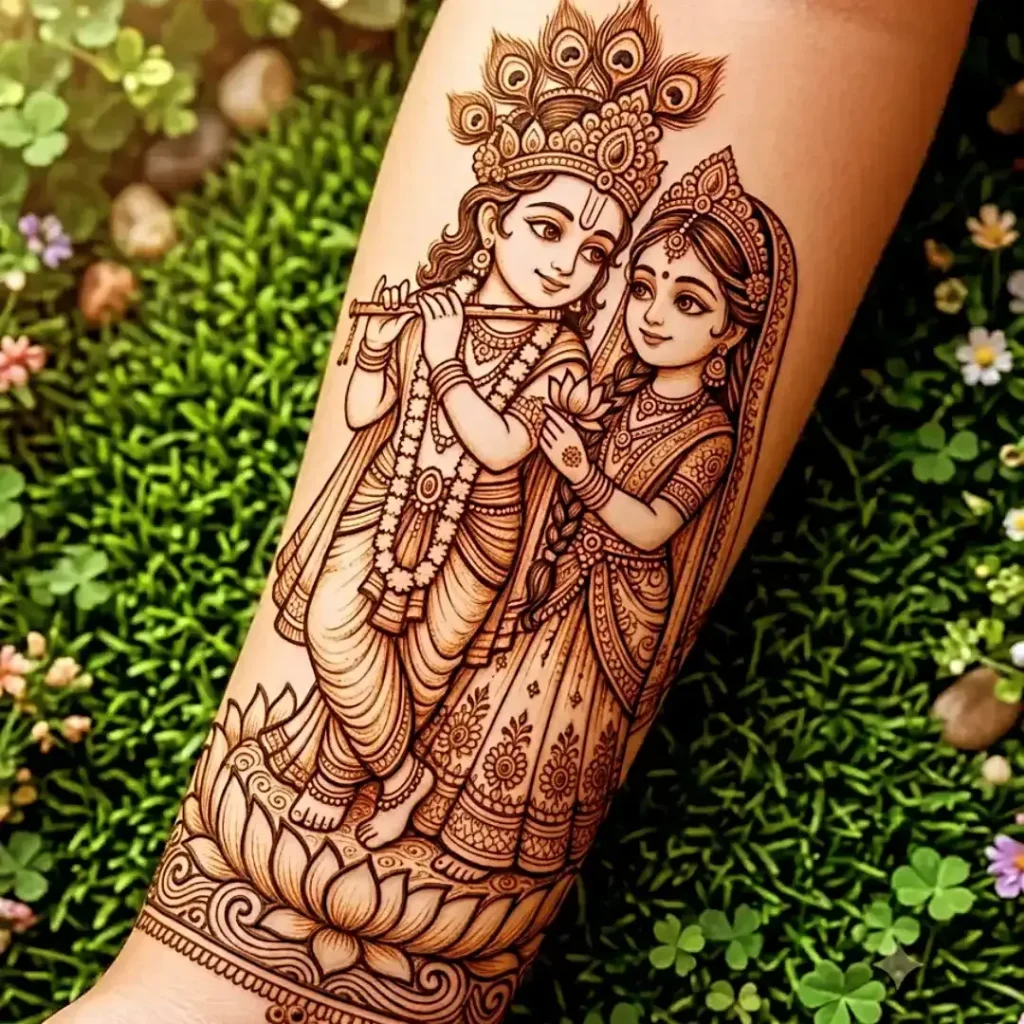
Lotus portrait mehndi design represents one of the most sophisticated and demanding combinations in contemporary mehndi art. This style incorporates detailed portrait elements — a face, a figure, or a deity — within or alongside a prominent lotus composition, creating a design that is simultaneously personal, narrative, and deeply artistic.

The most common approach is to frame a portrait element within a lotus form — the face appearing at the center of the flower, with the petals radiating outward as a natural frame. This creates a powerful compositional unity between the portrait and the lotus, and when the portrait depicts a deity — Lakshmi, Saraswati, or Ganesha, all of whom are associated with the lotus in Hindu iconography — the design achieves a level of spiritual and artistic resonance that few other mehndi styles can match.

Modern Lotus Mehndi Designs

24. Lotus Geometric Mehandi Design

Lotus geometric mehndi design explores the natural tension between the lotus’s organic beauty and the precision of geometric forms — and finds extraordinary visual richness in that tension. This design style frames the lotus within geometric structures — diamonds, hexagons, triangular compositions — or fills the lotus’s petals with fine geometric patterns that give the flower an almost architectural quality.

The most compelling lotus geometric designs use geometry not to constrain the lotus but to amplify it — the sharp precision of geometric forms making the lotus’s organic curves more beautiful by contrast, while the lotus’s natural warmth softens the coldness that pure geometric design can sometimes feel. This balance between organic and geometric is one of the defining visual characteristics of the best contemporary mehendi art.

Lotus Design Mehndi

25. Lotus Vine Mehndi Design

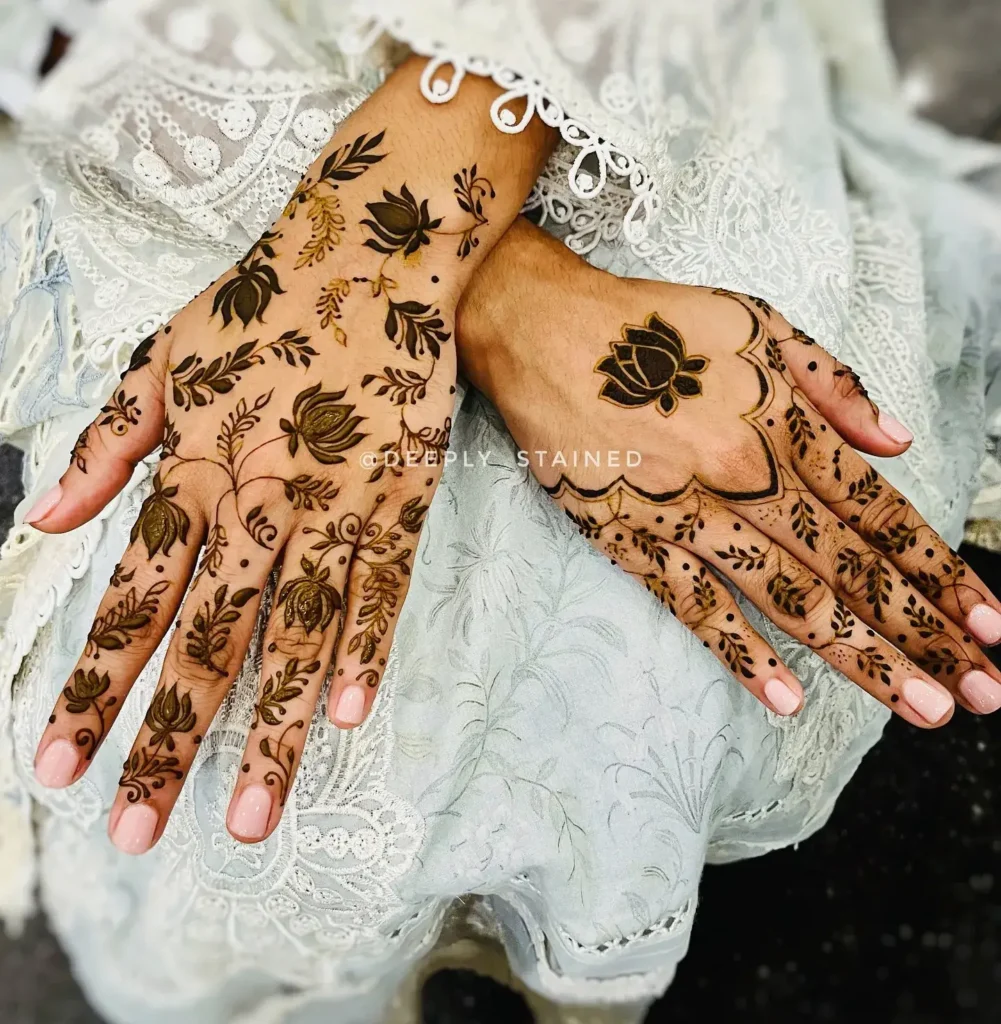
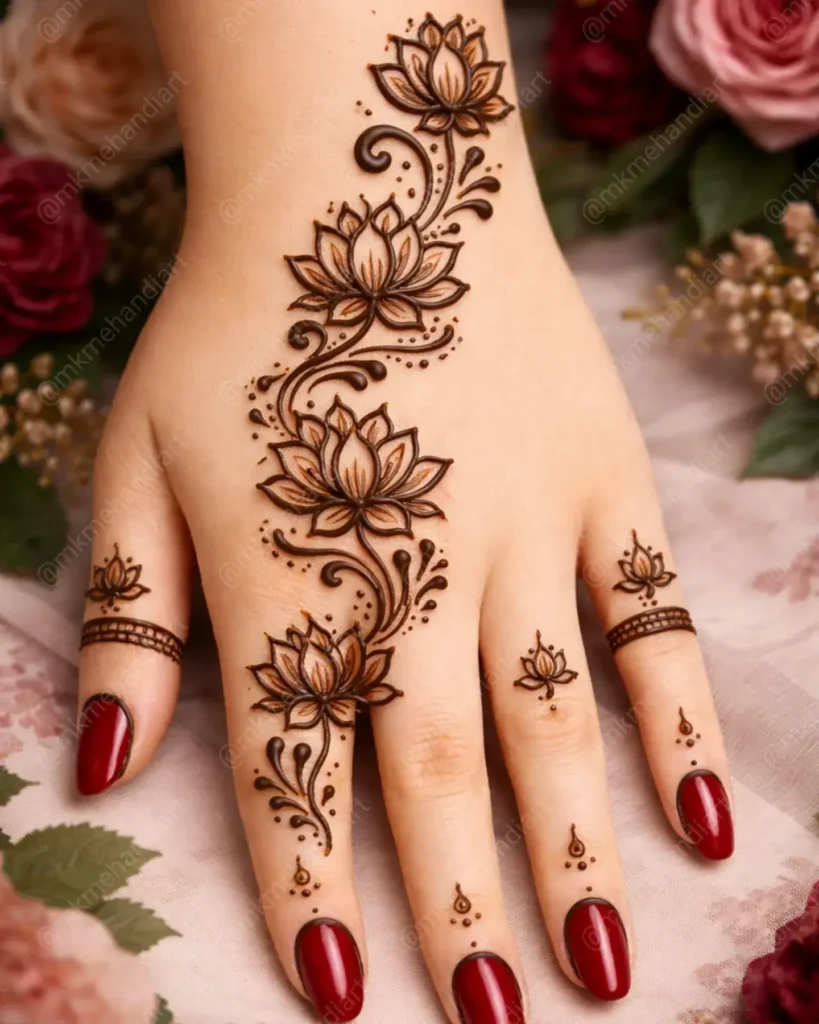
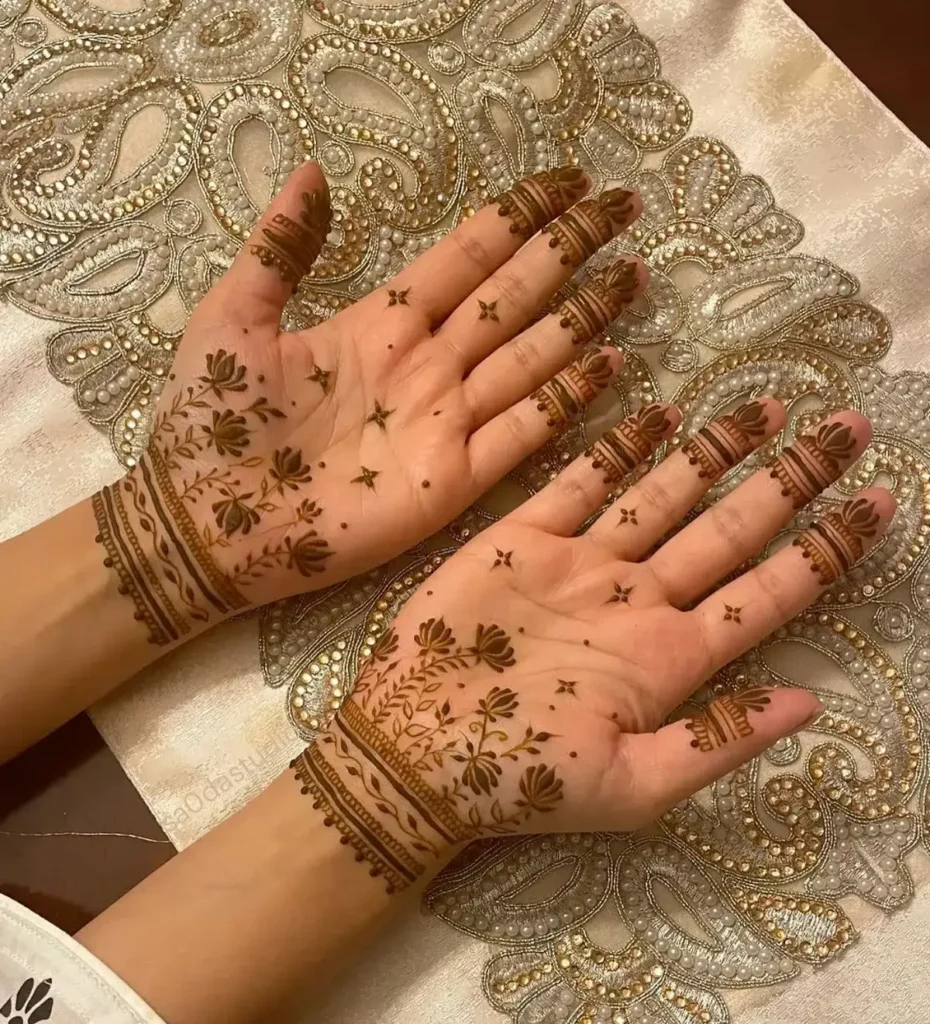
Lotus vine mehndi design captures something essential about the lotus’s natural habitat — the way lotus flowers grow on long, flowing stems that trail through water. In this design style, flowing vines become the primary structural element of the composition, with lotus flowers appearing at various points along the vine like stations on a journey — each bloom a moment of arrival and beauty within the larger flow of the design.

Lotus vine mehandi has a particularly natural, organic quality that sets it apart from more structured lotus designs. The vines create movement and flow across the hand, drawing the eye from finger to wrist in a continuous visual journey. Leaf forms, bud shapes, and fine tendrils fill the spaces between the lotus blooms, creating a composition that feels like a living garden growing across the skin.

Mehndi Lotus Design

F. Lotus Mehandi Design By Trending

26. Instagram Lotus Mehndi Design

Instagram lotus mehndi design is defined by the specific visual requirements of social media presentation — clean composition, strong contrast, fine line work, and a design that communicates its beauty immediately at thumbnail size as well as in full-resolution close-up.

The most successful Instagram lotus designs prioritize clarity and composition above all else. They use fine, precise lines that remain crisp and readable in photographs. They incorporate strong negative space that creates visual breathing room and prevents the design from looking muddy or overcrowded in photographs. And they are typically placed and composed with photography specifically in mind — positioned on the hand in ways that create natural, flattering compositions without requiring elaborate staging.

Instagram Lotus Mehndi Design

27. Lotus Mehendi Tattoo Design

Lotus mehndi tattoo design draws inspiration from permanent tattoo aesthetics — fine line work, precise placement, and a design sensibility that treats the lotus as a personal symbol rather than a traditional mehendi motif. These designs are typically smaller and more precisely drawn than traditional lotus mehndi, often placed on the wrist, the side of the hand, or a single finger rather than covering the entire hand.

The tattoo-inspired approach changes the visual language of the lotus in interesting ways — the fine lines and precise placement that tattoo aesthetics demand actually suit the lotus’s natural symmetry beautifully, creating designs that feel modern and personal while still carrying the flower’s deep symbolic resonance.

Lotus Mehndi Tattoo Design

28. Glitter Lotus Mehandi Design

Glitter lotus mehndi design represents the most contemporary and celebratory evolution of lotus mehndi — combining the traditional henna application with gold, silver, or colored glitter accents that transform the lotus into a design that sparkles and catches light like jewelry.

The most effective glitter lotus designs use glitter with restraint and intention — highlighting the tips of the lotus petals, filling the center of the flower, or tracing the vine work with a fine line of gold — rather than covering the entire design in glitter. When glitter is used to accent specific elements of a lotus design rather than obscure them, the result is a mehandi that looks simultaneously traditional and glamorous, deeply rooted in cultural art while feeling perfectly suited to the modern celebration it adorns.

Lotus Mehndi Design Back Hand Simple

How to Draw Lotus Mehndi Design at Home

One of the most common questions about lotus mehndi is whether it can be done at home without professional training. The honest answer is yes — but with an important qualifier. The lotus is one of the most forgiving mehendi motifs for beginners precisely because of its natural symmetry, but achieving results that look genuinely beautiful rather than merely acceptable requires understanding the right tools, the right technique, and the right approach before you pick up a cone.

Here is everything you need to know.

Right Cone Selection

The cone is not just a tool — it is the single most important variable in the quality of your mehndi result. Even the most skilled mehndi artist cannot produce beautiful work with a poor-quality cone, and even a beginner can produce surprisingly good results with the right one.

For lotus mehandi specifically, you need a cone that gives you two distinct capabilities — fine line control for the petal outlines and inner detailing, and consistent flow that does not skip, blob, or dry out mid-application.

For beginners: Choose a ready-made natural henna cone from a trusted brand. In Pakistan and India, Neha Mehndi and Al Jamila are consistently reliable for their smooth consistency and good color payoff. In international markets, look for cones that explicitly state natural henna ingredients and list lawsone — the active dye compound in natural henna — as the primary coloring agent.

For the lotus specifically: A cone with a medium-fine nozzle is ideal. Too fine and the paste will require excessive pressure, which causes hand fatigue and inconsistent lines. Too thick and you will lose the petal detail that makes lotus mehendi beautiful. If your cone came with a tip that feels too thick, you can carefully trim the very tip with a sharp blade to narrow the opening slightly.

What to avoid: Any cone that lists PPD (Para-phenylenediamine) or other coal-tar derivatives as ingredients. These chemicals produce a very dark color quickly but can cause severe allergic reactions, chemical burns, and permanent skin sensitization. Natural henna takes longer to develop its color but is completely safe. The shortcut is never worth the risk.

Always check the manufacturing date before purchasing. Henna paste loses its dye strength over time — fresh paste produces deep, rich color while old paste produces disappointing light results regardless of how carefully you apply it.

Lotus Mehndi Design Right Cone Selection

Step by Step Guide — Beginner Friendly

Before you begin applying mehndi to your hand, always practice the lotus on paper first. This sounds obvious, but it is consistently overlooked by beginners who are excited to start. Paper practice allows your hand to develop muscle memory for the petal shapes and spacing before you commit to skin, where mistakes are visible, and corrections are limited.

Step 1 — Prepare your hand. Wash your hands thoroughly and ensure your skin is completely clean and free of lotions, oils, or moisturizers. These create a barrier between the henna paste and the skin that prevents proper absorption and results in a lighter, patchier stain. For deeper color, some mehandi artists recommend applying a very thin layer of eucalyptus oil to clean skin before application — the oil helps the paste adhere more effectively.

Step 2 — Establish your center point. For a palm lotus, lightly mark the center of your palm with a small dot of mehndi paste. This is your anchor point — every petal will radiate outward from here. For a back-hand lotus, identify the upper-center point of the back of your hand as your anchor. Getting the placement right before you begin drawing saves you from the frustration of a beautifully drawn lotus in the wrong position.

Step 3 — Draw the inner petals first. Begin with the innermost ring of petals — typically five to seven small, rounded petal shapes drawn around your center point. Keep these petals relatively compact and evenly spaced. These inner petals form the core of the lotus and establish the spacing template that all outer petals will follow.

Step 4 — Add the outer petals. Draw the second ring of larger petals around the inner ring, positioning each outer petal between two inner petals rather than directly behind them. This alternating arrangement is what gives the lotus its characteristic layered, three-dimensional quality. The outer petals should be noticeably larger than the inner ones — this size difference is what creates the sense of the flower opening and blooming outward.

Step 5 — Define the center. Fill the center of the lotus — the area enclosed by the inner petals — with a solid dot of mehendi paste, or a small circular pattern of dots, or a tiny mandala element if your skill level allows. The center is the visual anchor of the entire flower and should feel complete and defined rather than empty or vague.

Step 6 — Add detailing. Once the basic lotus structure is established, add fine detailing to enhance the flower’s depth. Draw fine lines running from the base to the tip of each outer petal — these petal veins give the lotus a realistic, organic quality. Add small dots at the petal tips for delicacy. Add fine curved lines between the outer petals to fill any gaps in the composition.

Step 7 — Add surrounding elements. Once the lotus is complete, add the surrounding design elements — vine work, leaf forms, finger chains, or border patterns — that complete the overall composition. Work outward from the lotus rather than inward, ensuring that everything you add serves and frames the central flower rather than competing with it.

Step 8 — Leave the paste on properly. Once your design is complete, allow the paste to dry naturally for at least 30 minutes before applying the lemon-sugar sealant described below. Do not blow on the paste to dry it faster — this cools and contracts the paste, reducing the depth of the stain.

lotus mehndi design for beginners

Tips for Perfect Petals

The petals are the heart of the lotus — and getting them right is the difference between a lotus that looks beautiful and one that merely resembles a lotus. Here are the key insights for drawing petals that look genuinely skilled.

Consistent pressure is everything. The most common beginner mistake is varying the pressure on the cone mid-stroke, which produces lines that are thick in some places and thin in others. Practice applying consistent, moderate pressure throughout each stroke before attempting the full lotus.

Draw petals in one confident stroke. Each petal should be drawn in a single, continuous motion — starting at the base, curving outward to the petal tip, and returning to the base on the other side. Petals drawn in multiple hesitant strokes look broken and uncertain. The confidence of the stroke is visible in the final result.

Mirror your spacing. The most beautiful lotus petals are evenly spaced around the center. Before drawing, mentally divide the center area into equal sections — like slicing a pie — and position each petal within its section. This pre-visualization prevents the common problem of running out of space for the final petals.

Size matters. Inner petals should be noticeably smaller than outer petals. The size differential creates the sense of depth and layering that makes a lotus look three-dimensional rather than flat. A lotus with all petals the same size looks like a sun drawing rather than a flower.

lotus petals mehndi design

How to Get Dark Color

The depth and richness of your mehandi color is not determined at the moment of application — it is determined by what happens in the hours after the paste goes on. Understanding the color development process allows you to take specific actions that dramatically deepen your stain.

Leave the paste on as long as possible. The henna dye — lawsone — continues to transfer into the skin as long as the paste remains moist and in contact with the skin. The minimum for a decent stain is four hours. Six to eight hours produces significantly better results. Overnight application — sleeping with the mehndi on — consistently produces the deepest, richest color achievable with natural henna.

Apply lemon-sugar sealant. Once the paste has dried to a firm, crumbly consistency — usually 30 to 45 minutes after application — carefully dab a mixture of fresh lemon juice and sugar water over the design using a cotton ball. This mixture serves two purposes: it re-moistens the paste surface, keeping it in active contact with the skin, and the natural acids in the lemon juice help the lawsone penetrate more deeply. Reapply every 30 to 45 minutes while the paste is on.

Use clove smoke. Holding the mehndi-adorned hand over the smoke of slowly burning cloves is one of the oldest and most effective techniques for deepening mehendi color. The heat from the smoke warms the skin and paste, accelerating the dye transfer process. Hold your hand at a safe distance — close enough to feel warmth but not so close that the heat becomes uncomfortable — for five to ten minutes.

Avoid water for twelve hours after removal. Water contact in the first twelve hours after removing the paste interrupts the oxidation process that continues after the paste is removed. The stain that is visible immediately after paste removal is actually lighter than it will eventually become — over the next 24 to 48 hours, the color oxidizes and deepens from orange to its final rich maroon-brown. Water slows this process significantly.

Scrape, do not wash. When removing the dried paste, scrape it off gently with a blunt edge — the back of a butter knife, a credit card, or your fingernails — rather than washing it off with water. Washing introduces water contact immediately after removal, which, as noted above, slows the oxidation process. After scraping, apply a natural oil — mustard oil, coconut oil, or olive oil — to the stained area immediately. The oil seals the stain and gives the mehandi a rich, lustrous finish.

Keep your hands warm. Heat is the most consistently effective variable in mehndi color development. Warm skin absorbs the henna dye more deeply and rapidly than cold skin. Keep your hands warm during the application period — wrap them in a soft cloth, stay in a warm room, or use the gentle warmth of a low-heat lamp held at a safe distance.

how to get dark color of mehndi

Dos and Don’ts

Do: Practice your lotus on paper multiple times before applying to skin. Use fresh, natural henna paste from a trusted source. Keep the paste on for a minimum of six hours for the best results. Apply lemon-sugar sealant to maintain paste moisture. Use clove smoke for deeper color development. Scrape the paste off rather than washing it. Apply natural oil immediately after removal. Keep hands warm during and after application.

Don’t: Use henna cones containing PPD or other chemical additives. Apply mehndi over moisturized or oily skin. Blow on the paste to speed up drying. Wash hands with water within twelve hours of paste removal. Rush the paste removal before it has fully dried. Apply heavy pressure to the cone — it causes thick, uncontrolled lines. Skip the paper practice stage.

lotus mehendi design

Lotus Mehndi Design for Different Occasions

The lotus adapts beautifully to every occasion — but the way it should be applied, how elaborate it should be, and what surrounding elements it should incorporate varies significantly depending on the specific context. Understanding this helps you choose a lotus design that feels perfectly suited to your moment rather than simply beautiful in the abstract.

Bridal & Wedding

For a bride, lotus mehndi is not a design choice — it is a statement of intention. The wedding is the most significant occasion in a woman’s life, and the lotus — as the universal symbol of new beginnings, purity, and divine blessing — is the most appropriate and meaningful motif she can choose to carry into that moment.

Bridal lotus mehndi should be the most elaborate and carefully considered expression of the motif. The lotus should appear as the undisputed centerpiece of a rich, full-coverage composition that covers both hands and both feet. The scale of the central lotus should be generous — large enough to establish clear visual dominance over the surrounding design elements. The level of detailing should be the finest the chosen artist can produce — this is not the occasion for simplicity or restraint.

For the front hand, a large central palm lotus surrounded by fine jali work, geometric borders, and intricate vine patterns creates a composition that rewards the extended examination it will receive during wedding rituals. For the back hand, a prominent lotus centerpiece with flowing vine work extending to the fingers and a clean lotus-inspired anklet border at the wrist creates a design that photographs beautifully from every angle.

The most important advice for bridal lotus mehendi is to choose an artist who genuinely understands the lotus as a motif — not just as a shape to be reproduced, but as the visual and symbolic anchor of the entire composition. The difference between a lotus drawn by someone who understands it and one drawn by someone who is simply copying a reference image is immediately and unmistakably visible in the final result.

lotus mehndi design bridal wedding

Eid & Festivals

Festival mehndi — particularly Eid mehndi — operates under a different set of requirements than bridal mehndi. It needs to be beautiful and meaningful but also practical — achievable within the time constraints of a festive day, complementary to the festive outfit, and wearable across the activities of the celebration.

Lotus mehndi for Eid works best when it combines visual impact with relative simplicity of execution. A bold, clean Arabic-style lotus on the back hand — drawn with confident, thick outlines and surrounded by flowing vine work — creates a design that looks stunning and festive without requiring hours of application time. For the front hand, a single large lotus on the palm with fine finger accents provides a balanced look that complements Eid outfits in any color without competing with them.

For Diwali, Navratri, Teej, and other Hindu festivals, lotus mehandi carries additional significance beyond aesthetics — the lotus’s association with Goddess Lakshmi makes it particularly appropriate for Diwali celebrations, and its general auspiciousness makes it a natural choice for any festival that carries religious significance.

lotus mehndi design eid festivals

Engagement

Engagement mehndi occupies an interesting middle ground — it should be clearly special and occasion-appropriate, beautiful enough for photographs, and personally meaningful — but it should not reach the full ceremonial weight and complexity of bridal mehndi, which comes later.

The ideal engagement lotus mehndi is elaborate enough to feel celebratory and significant while maintaining a lightness and freshness that distinguishes it from bridal mehndi. A prominent central lotus with flowing surrounding elements — fine vine work, elegant finger detailing, and a delicate wrist cuff — creates a look that is unmistakably special without being overwhelming.

The engagement is the first official declaration of a new beginning — and choosing the lotus for this moment creates a beautiful symbolic continuity: the lotus appears first at the engagement, grows more elaborate through the wedding ceremonies, and ultimately represents the full arc of the transition from one life chapter to the next.

lotus mehndi design for engagement

Casual & Everyday

One of the most liberating aspects of lotus mehendi is that it does not require a special occasion to be meaningful or beautiful. The lotus’s symbolic resonance — its representation of inner calm, personal growth, and quiet strength — makes it equally appropriate for a casual Tuesday as for a wedding Saturday.

Casual lotus mehndi should be free from the obligation to be elaborate or comprehensive. A single lotus on the wrist. A small lotus at the base of the thumb. A minimalist lotus on one finger. These small, personal applications of the motif are not lesser versions of mehndi — they are personal moments of connection with a symbol that carries deep meaning, worn simply because the person wearing it values what that symbol represents.

The growing popularity of casual, everyday mehandi — particularly among young women who wear small lotus tattoo-style designs as regular self-expression rather than festival decoration — reflects a healthy evolution in the cultural relationship with mehndi. When mehndi moves from being only a ceremonial obligation to being a personal creative practice, the lotus — as its most personally meaningful and symbolically resonant motif — naturally becomes its most common everyday expression.

lotus mehndi design casual

Outfit Coordination with Lotus Mehndi

The most beautifully executed lotus mehndi can be undermined by an outfit it does not harmonize with — and conversely, a thoughtfully chosen lotus design can elevate an entire bridal or festive look when it is selected with the outfit in mind. Understanding how to coordinate your lotus mehndi with your outfit, colors, and jewelry is the difference between mehndi that looks like an afterthought and mehndi that looks like the finishing touch that completes a carefully considered look.

Which Outfits Suit Which Lotus Style

Heavy embroidered bridal outfits — heavily worked lehengas, sherwanis, and anarkalis with dense zari, gota, or mirror work — call for lotus mehendi designs that have a strong structural presence without excessive busyness. A bold central lotus with generous negative space works beautifully here — the mehndi holds its own against the richness of the embroidery without the two competing for visual attention.

Pastel and light-colored outfits — soft pinks, mint greens, powder blues, and ivory — provide a backdrop that shows off more detailed, denser lotus mehndi beautifully. Against light fabric, the rich maroon-brown of mehndi creates a warm contrast that enhances both the outfit and the design. This is the combination where full-coverage lotus mehndi shines most brilliantly.

Dark and rich outfits — deep reds, burgundies, forest greens, and navy — require careful consideration. Very dense lotus mehndi against a dark outfit can create a visual situation where both the outfit and the mehndi compete without either winning. The solution is mehndi with significant negative space — a bold lotus with open areas that allow the skin to show through, creating contrast with both the dark outfit and the mehndi simultaneously.

Contemporary and minimalist outfits — clean cuts, solid colors, and modern silhouettes — pair naturally with minimalist and aesthetic lotus mehandi designs. A single elegant lotus on the wrist or a fine-line back hand lotus with generous negative space complements a modern outfit without feeling culturally mismatched or disproportionately ornate.

Outfit Coordination with Lotus Mehndi Design

Color Coordination Tips

The color of your outfit interacts with the color of your mehndi in ways that significantly affect the overall visual impact of both.

Warm-toned outfits — reds, oranges, yellows, and warm pinks — harmonize naturally with the warm maroon-brown tones of mehndi. The color family alignment creates a cohesive, unified look where the outfit and mehndi feel like they belong together. For these outfit colors, you can afford to use denser lotus designs without worrying about visual conflict.

Cool-toned outfits — blues, greens, purples, and silvers — create a beautiful complementary contrast with warm mehndi tones. The warm mehendi against cool fabric creates a visual tension that is actually very attractive — but it works best with lotus designs that have enough negative space to prevent the warm mehndi from overwhelming the cool outfit’s color story.

Gold and yellow outfits — which are extremely common in South Asian bridal culture — are perhaps the most complementary backdrop for dark mehndi. The gold-brown family of colors in a deep mehndi stain echoes and amplifies the golden tones of the outfit, creating a look of deep, warm richness that is one of the most visually satisfying combinations in bridal dressing.

lotus mehndi design color coordination

Jewelry Pairing

The relationship between lotus mehandi and jewelry is one of the most important and most often overlooked aspects of mehndi styling.

Heavy statement jewelry — thick gold bangles, elaborate haath phool, stacked rings — works best with lotus mehndi designs that have a strong enough visual presence to hold their own alongside the jewelry without being overwhelmed by it. A bold full-hand lotus with confident outlines and strong composition will complement heavy jewelry beautifully. A delicate, minimalist lotus will disappear beside it.

Delicate and minimal jewelry — thin gold bangles, simple rings, fine finger chains — allows the mehndi to do more visual work and is ideally paired with more elaborate lotus designs that can carry the visual interest of the entire hand look without strong jewelry support.

Haath phool — the traditional hand jewelry piece that connects a ring to a bracelet across the back of the hand — creates a specific consideration for back-hand lotus mehendi. The haath phool occupies much of the same visual real estate as a backhand lotus design, which means the two must be carefully coordinated to work together rather than compete. The most elegant approach is to choose a lotus design whose composition accommodates the haath phool — positioning the central lotus where it will be visible through or alongside the jewelry rather than hidden beneath it.

No jewelry — the deliberate choice to let the mehndi speak without any jewelry — works best with the most elaborate and confident lotus designs. When there is no jewelry to share the visual responsibility of adorning the hands, the mehndi must be strong enough to carry that responsibility alone. A masterfully executed full-hand lotus design needs no jewelry — it is the jewelry.

lotus mehndi design jewelry pairing

Conclusion

The lotus has been rising out of dark water and blooming in perfect beauty for thousands of years — in temple carvings, in sacred texts, in the hands of goddesses, and in the mehndi of brides stepping into new chapters of their lives. That is not a coincidence. It is a testament to the lotus’s extraordinary capacity to carry meaning, beauty, and personal resonance simultaneously — to be, all at once, culturally profound and visually stunning, spiritually significant and artistically versatile, ancient in its roots and perpetually fresh in its appeal.

What this guide has tried to convey is that lotus mehndi is not simply a design choice among many. It is a choice to adorn your hands with one of the most symbolically rich and artistically versatile motifs that mehndi art has ever produced. Whether you choose a single clean lotus on your wrist for a quiet Tuesday or a full bridal lotus composition for the most important day of your life, you are participating in a tradition of beauty and meaning that stretches back further than any of us can fully trace.

The 28 designs covered in this guide represent the full spectrum of what the lotus can do in mehandi — from the simplest beginner-friendly single lotus to the most elaborate bridal composition, from the bold drama of Arabic lotus mehndi to the intricate complexity of Indian style, from the clean lines of minimalist design to the celebratory sparkle of glitter lotus mehndi. Within that spectrum, there is a lotus design for every occasion, every skill level, every personal aesthetic, and every meaningful moment.

Choose the one that speaks to your story. Draw it with intention. Wear it with pride.

Because that is what the lotus has always been for.

Frequently Asked Questions

What is the meaning of lotus in mehndi design?

The lotus symbolizes purity, prosperity, and new beginnings in Hindu tradition — directly associated with Goddess Lakshmi. In Buddhist tradition, it represents enlightenment and inner peace. Across South Asian culture, it universally stands for transformation, divine blessing, and beauty that rises above difficulty. This depth of meaning is why the lotus remains the most symbolically powerful motif in mehndi art.

Which hand placement is best for the lotus mehndi design?

It depends on your occasion. The palm suits weddings and religious ceremonies — it faces upward during rituals and develops the darkest color. The back of the hand is best for photographs and social events. The wrist works perfectly for casual and everyday lotus designs. For bridal mehndi, covering all placements — palm, back hand, fingers, and feet — creates the most complete and powerful result.

How long does lotus mehndi take to apply?

A simple single lotus takes 10 to 15 minutes. A moderate front and back hand design takes 30 to 45 minutes. A full bridal lotus covering both hands and feet takes 4 to 8 hours, depending on complexity. Always give your artist extra time — rushing mehndi always shows in the final result.

How can I make my lotus mehndi darker?

Follow these steps for the deepest color:

Leave paste on for 6 to 8 hours minimum — overnight is best
Apply lemon juice and sugar sealant every 30 to 45 minutes
Hold hands over the clove smoke for a deeper stain
Scrape the paste off — never wash it
Avoid water for 12 hours after removal
Apply mustard or coconut oil immediately after removal

Is lotus mehndi suitable for all skin tones?

Absolutely yes. On lighter skin, the warm maroon-brown creates a strong contrast that highlights every petal detail. On medium and olive skin, mehndi develops a rich, warm color that feels beautifully natural. On deeper skin tones, fresh, high-quality henna produces a warm, lustrous stain that looks genuinely stunning. The key for every skin tone is fresh, natural henna paste and proper aftercare.

How long does lotus mehndi last on the skin?

Natural lotus mehndi lasts one to three weeks, depending on skin type, placement, and aftercare. Palms and finger joints fade faster due to friction and frequent washing. The back of the hand and feet last longer. To maximize longevity, moisturize with natural oils regularly, avoid prolonged water exposure, and keep harsh soaps away from the mehndi area.

Read more:

Leave a Reply

Your email address will not be published. Required fields are marked *