60+ Stylish Back Hand Mehndi Designs You Must Try in 2026!
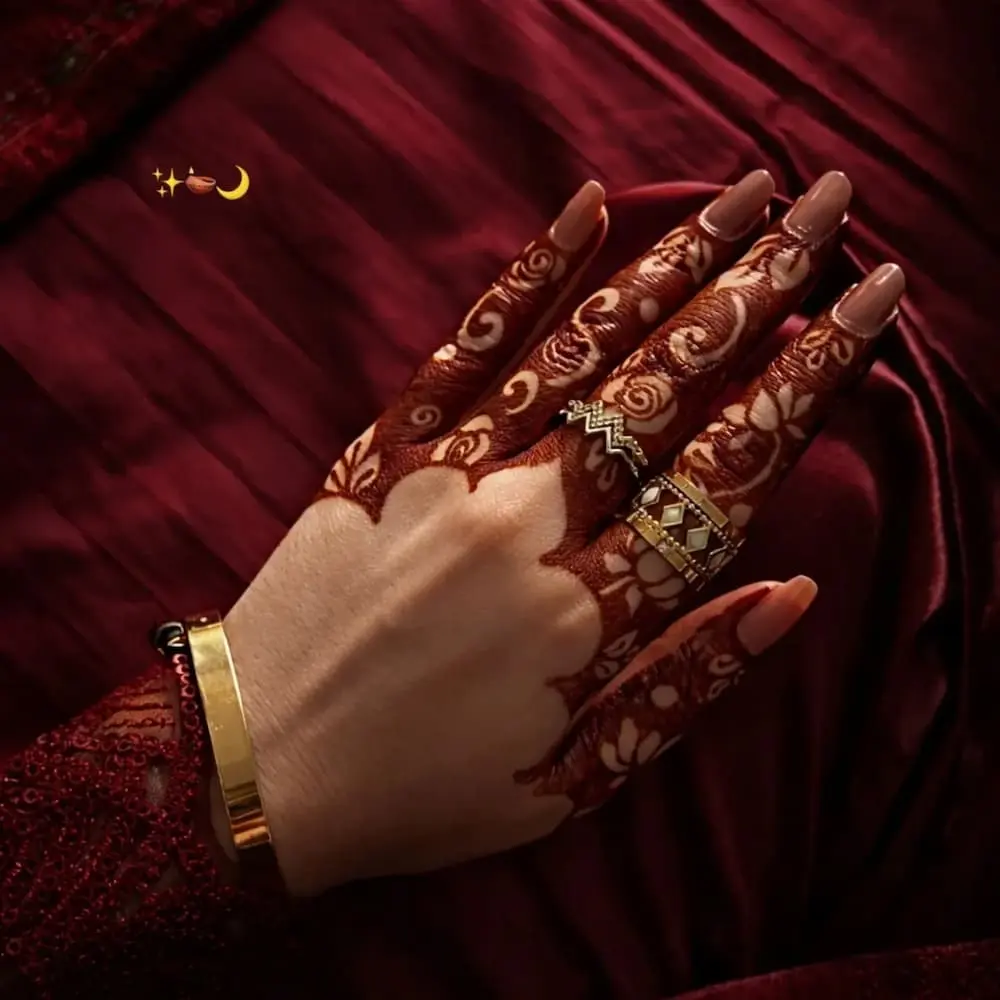
Back hand mehndi designs cover henna patterns drawn on the outer side of your hand, the side that faces up when your palm is down. Unlike palm mehndi, which sits hidden most of the time, this placement stays visible while you talk, eat, or take photos. That visibility is why it has become the go-to choice for weddings, festivals, and everyday styling.
This guide covers everything you need before your next mehndi session. You will find a full style breakdown across 60+ designs, from bold Arabic trails to delicate Khafif work. You will also learn how to apply the design yourself, how to get a stain that stays dark for days, and how to keep your skin safe while doing it.
2026 has pushed back hand mehndi in a new direction. Brides now ask for hidden initials and wedding dates instead of only florals. Minimalist single-finger trails sit next to full jewelry-style coverage. The placement stayed the same, but the designs got more personal and more varied than ever before.
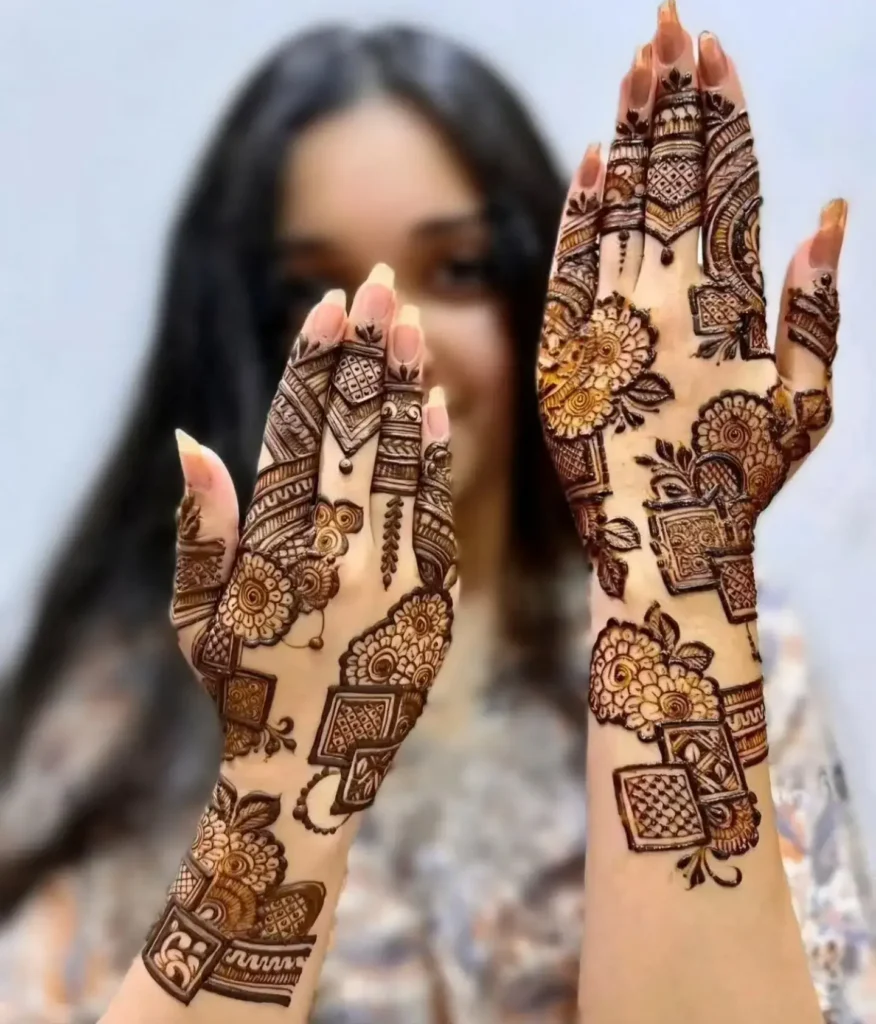
Most Importantly: This guide ensures your safety by helping you identify and avoid harmful “black henna.” The U.S. Food and Drug Administration (FDA) strongly warns against black henna temporary tattoos because they illegally contain p-phenylenediamine (PPD). As documented in PubMed (National Institutes of Health), PPD is a potent chemical sensitizer that can trigger severe allergic contact dermatitis, painful blistering, and lifelong chemical sensitivities or permanent scarring.
Editor’s Note: Simplemehandidesigns.com shares beautiful mehndi inspiration for weddings, festivals, celebrations, and everyday occasions. We feature designs sourced from real mehndi artists and provide credit or a source link whenever available. We do not use AI-generated mehndi images or rely on anonymous, unverifiable sources. Our team reviews the artist or original source before featuring a design. Some links may be affiliate links, at no extra cost to you.
60+ Easy and Stylish Back Hand Mehndi Designs
These 60+ designs are grouped into 12 categories based on technique and origin, not picked at random. Arabic and Khafif styles come from Gulf henna traditions. Bharwa, Jharokha, and Haath Phool come from Indian and Pakistani bridal art. Mandala, geometric, and minimalist styles reflect newer, structure-first approaches.
Each category serves a different need. Arabic and minimalist designs work well if you want something quick and bold. Bharwa and Jharokha suit brides who want dense, detailed coverage. Personalized and 2026 fusion designs fit anyone who wants a modern, individual touch.
Arabic and Indo-Arabic Back Hand Mehndi Designs
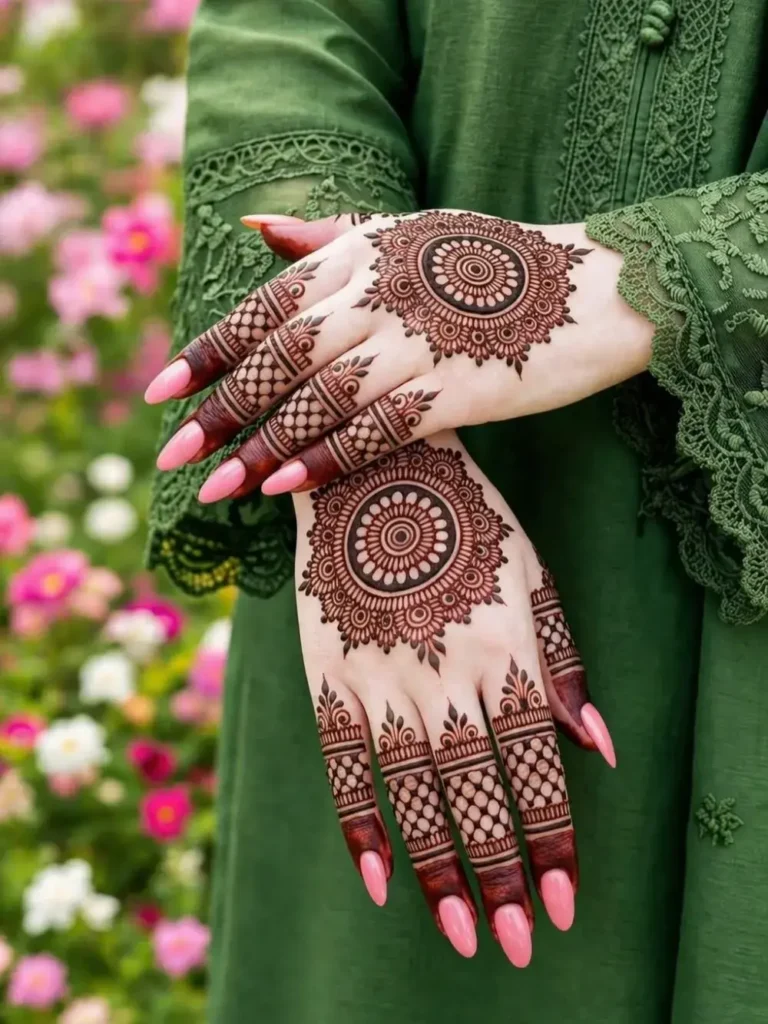
Arabic mehndi is built on the bail, a diagonal trail that runs from the wrist to the tip of the index or middle finger. It uses five-petal blooms, scrolling leaves, and droplets, spaced out to leave bare skin between elements. Indo-Arabic fusion keeps that bold Arabic outline but fills the interior with fine Indian detailing like crosshatching and tiny paisleys, giving it more depth without losing the open, airy look.
1. Classic Arabic Bail Design
A single diagonal trail runs from the wrist to one finger, built from large florals and leafy scrolls. It applies fast and suits any occasion where you want a bold look without full coverage.
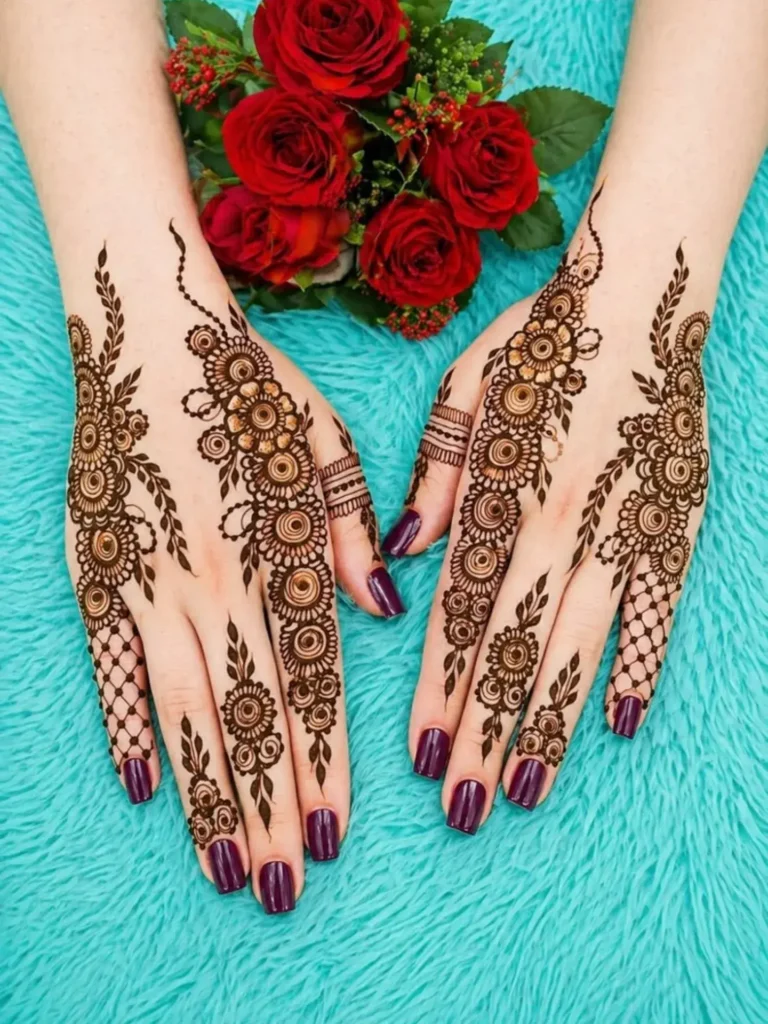
2. Indo-Arabic Fusion Design
This combines a heavy Arabic outline with fine Indian fillers inside the petals and leaves. It reads bold from a distance but rewards a closer look with detailed linework.
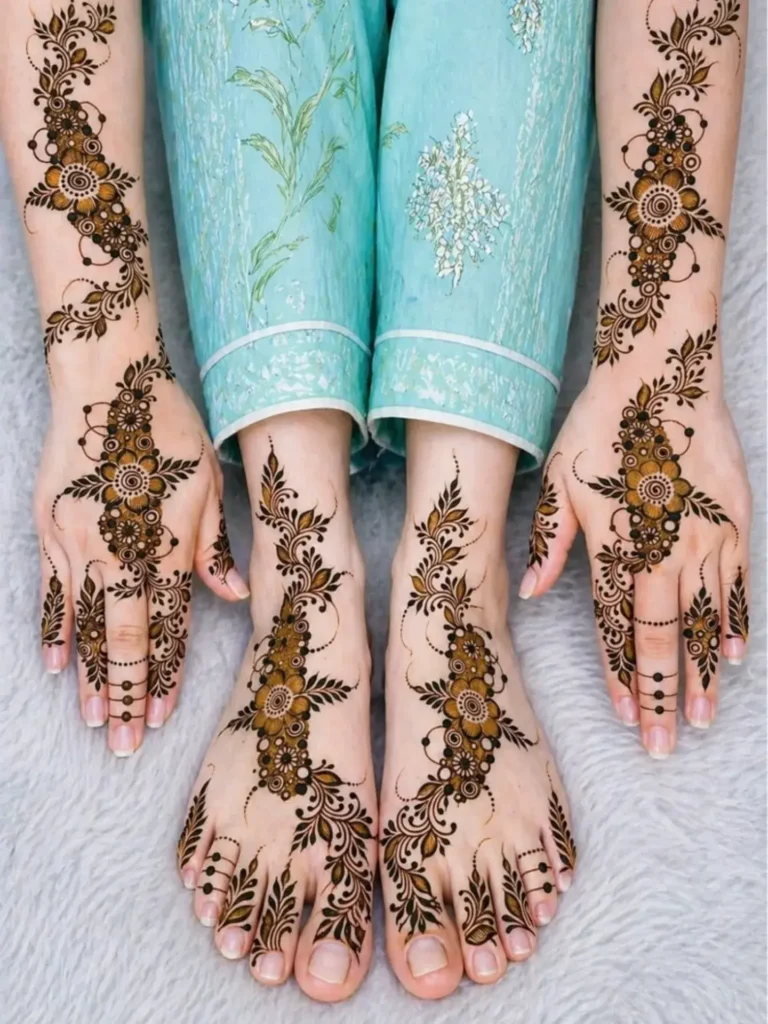
3. Arabic Mandala Design
A circular mandala sits at the center of the hand, framed by Arabic-style florals branching outward. It balances structure with the loose, flowing feel of traditional Arabic work.
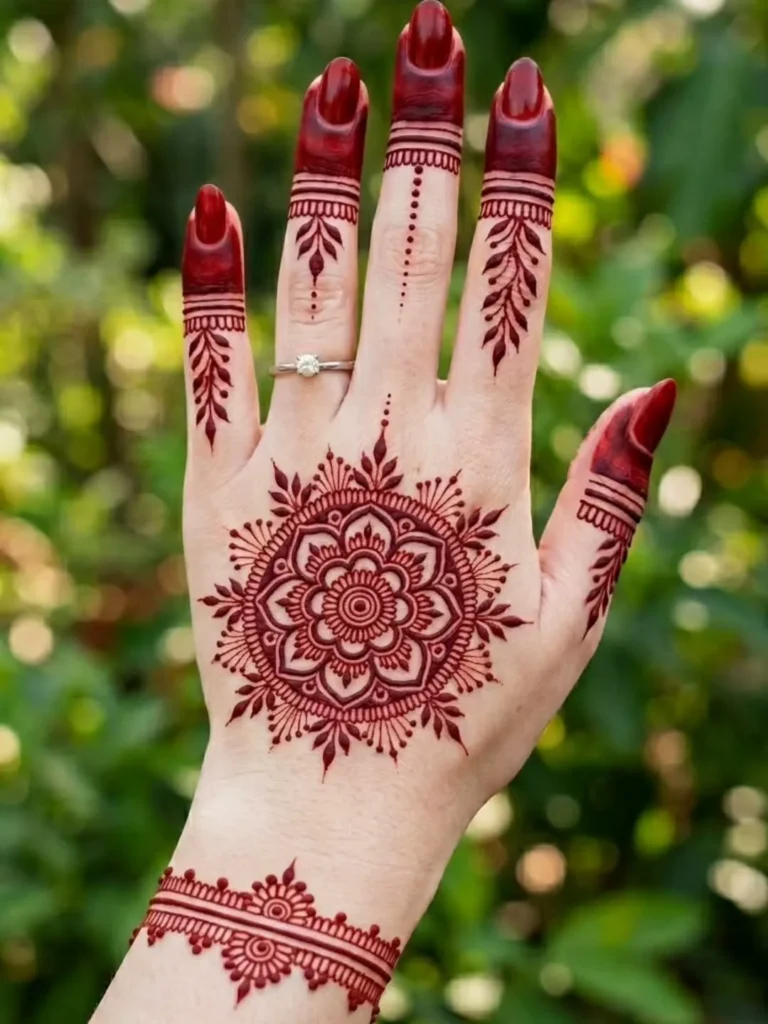
4. Arabic Design With Droplets
Small teardrop shapes fill the gaps between the main floral trail, adding texture without crowding the design. This works well for anyone who wants Arabic mehndi with a slightly denser finish.
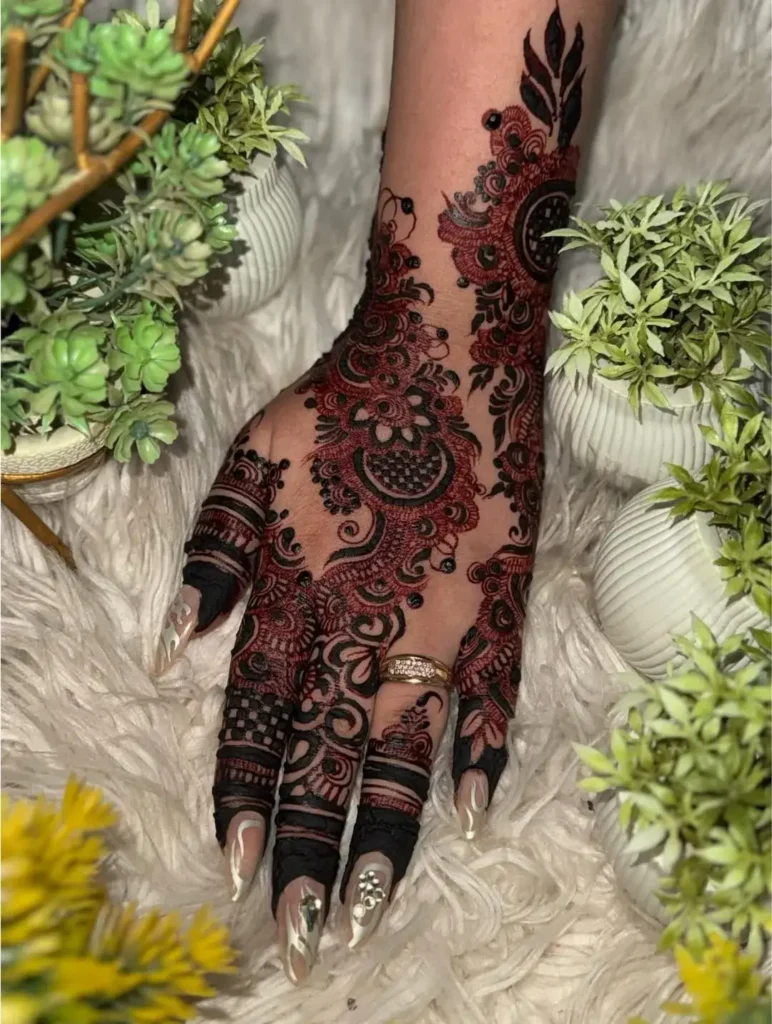
5. One-Finger Arabic Design
A compact bail pattern covers just one finger, leaving the rest of the hand bare. It suits casual events or anyone who wants a fast, low-commitment design.
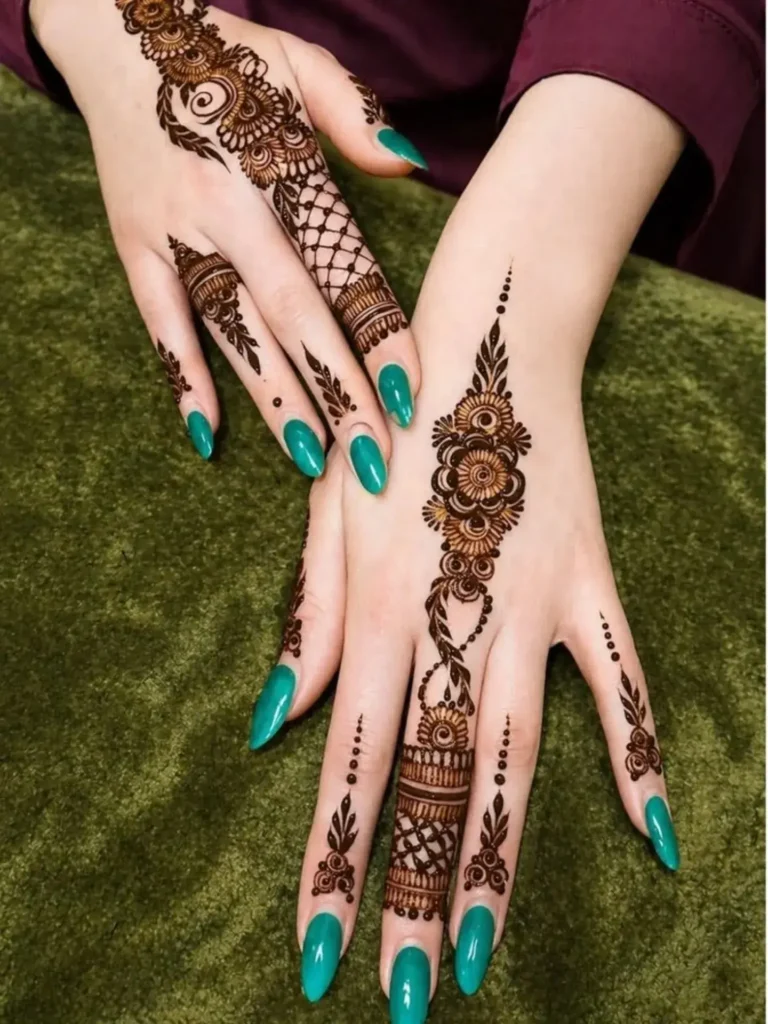
6. Spiral Arabic Design
Curving spiral lines replace the usual straight bail, giving the design more movement. It pairs well with rounded floral motifs for a softer take on Arabic style.
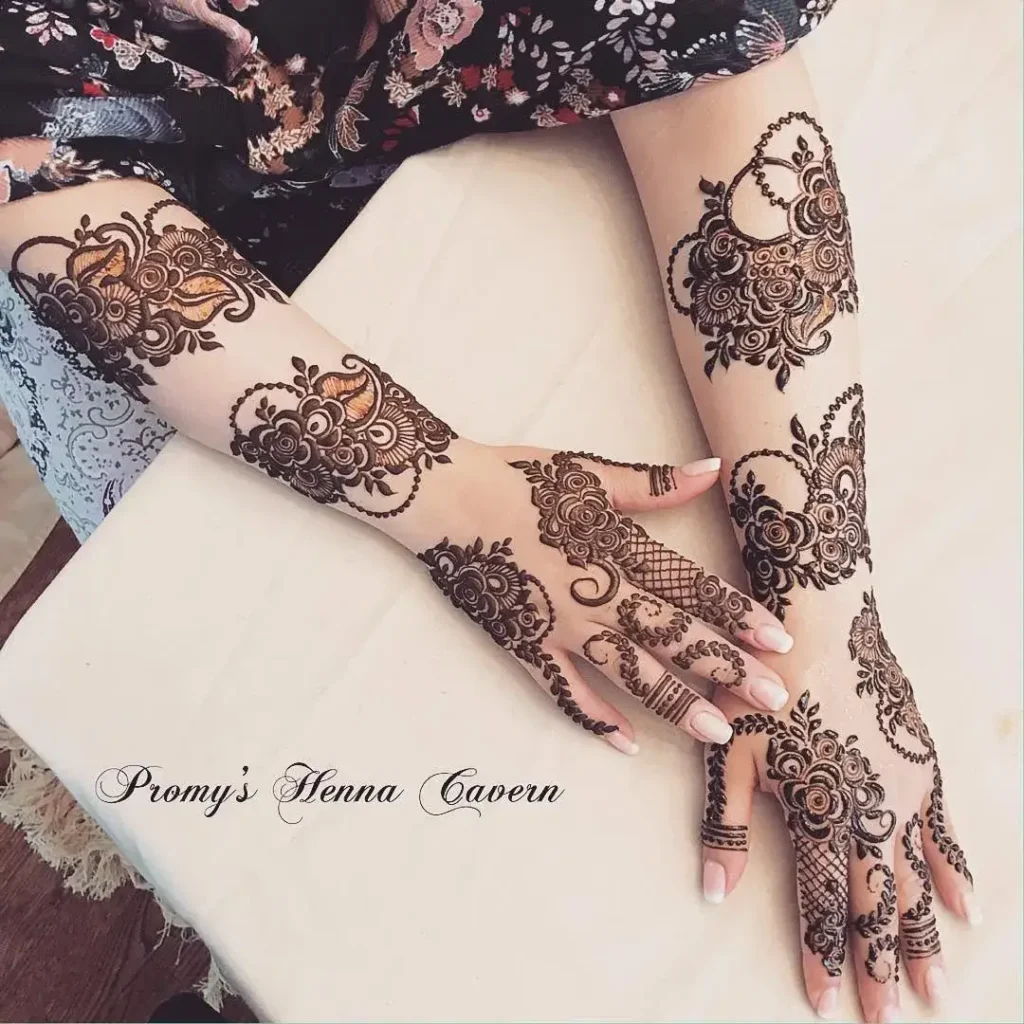
7. Bridal Arabic Design
This scales up the classic bail with denser florals, finer detailing, and wrist-to-forearm coverage. It suits brides who want an Arabic look with more visual weight for wedding photos.
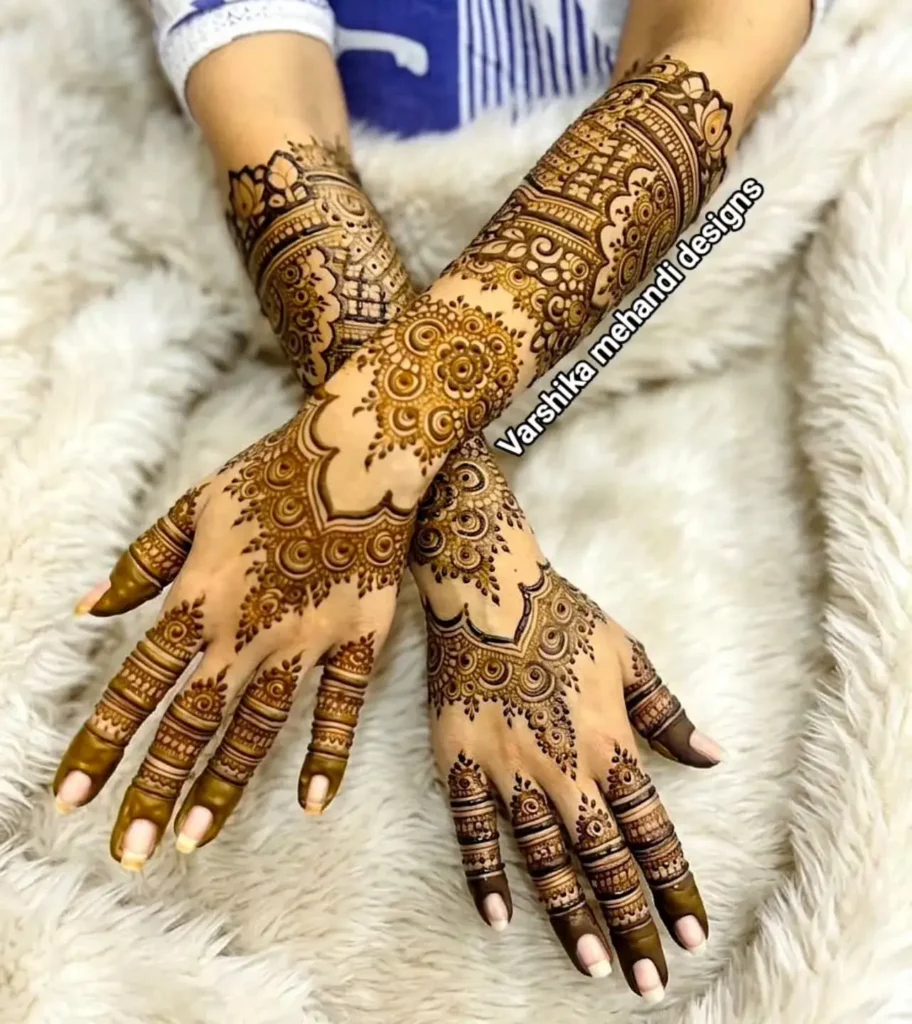
8. Stencil Arabic Design
A stencil creates clean, uniform Arabic patterns in minutes instead of hours. This is the fastest way to get a professional-looking Arabic design without freehand skill.
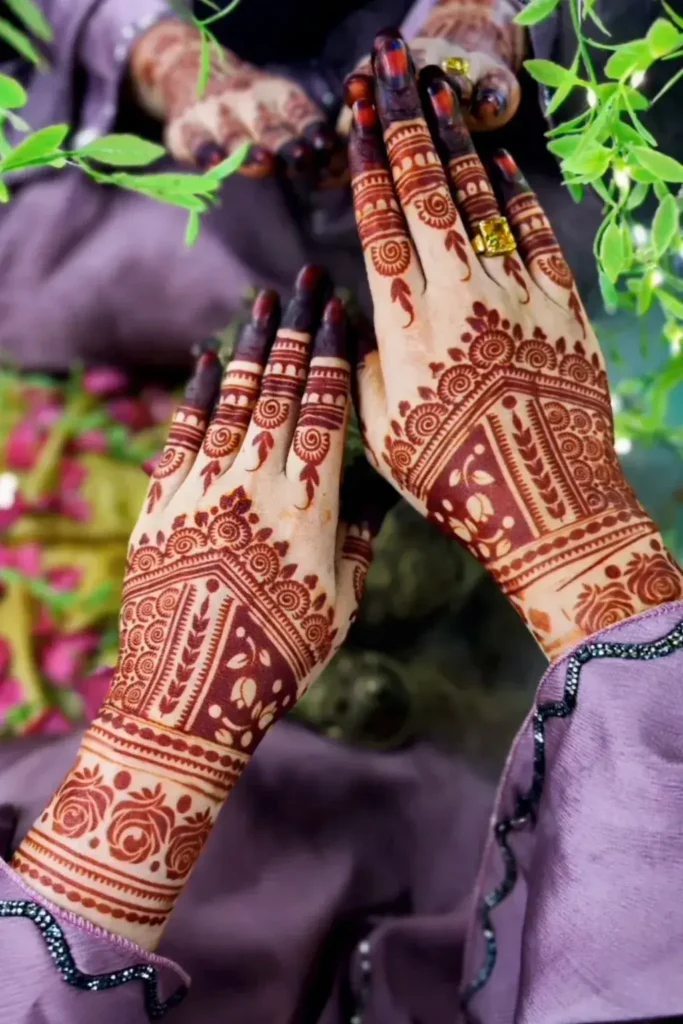
Khafif Back Hand Mehndi Designs
Khafif is Arabic for “light” or “delicate.” Artists use a narrow cone tip, around 0.35 to 0.45mm, to pipe fine lines and small floating motifs instead of solid filled blocks. Rather than covering the hand, Khafif designs place decorative clusters across open skin, creating the look of a fine lace glove.
9. Classic Khafif Design
Small floral clusters and fine spirals sit scattered across the back of the hand, connected by thin lines. The open spacing keeps the design light and easy to wear for hours.
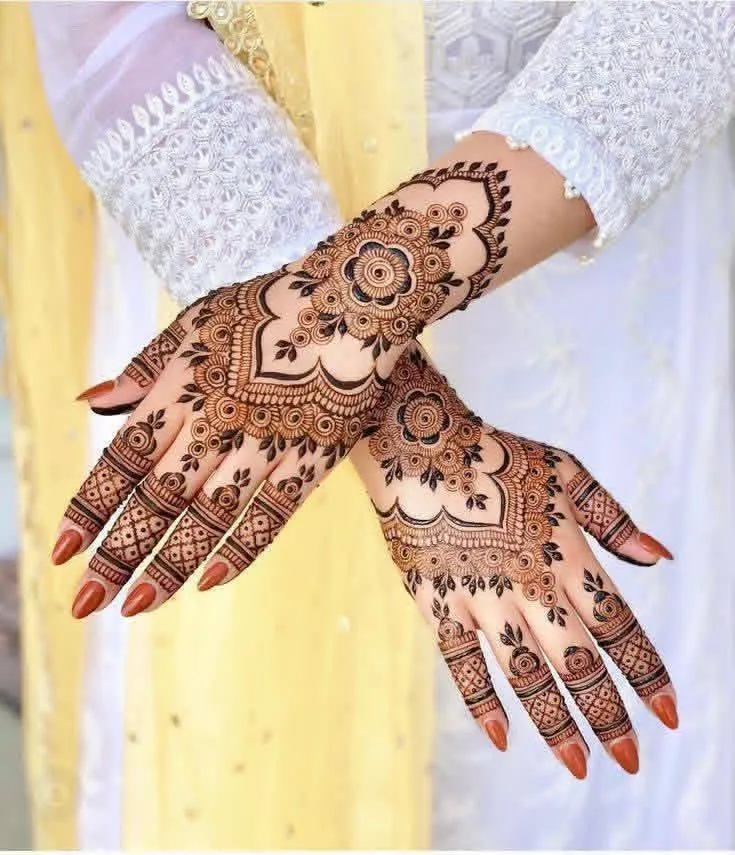
10. Khafif Lace Design
This version leans further into the lace effect, using layered petals and graduated shading to mimic an embroidered pattern. It suits anyone who wants intricate detail without heavy coverage.
Bharwa Back Hand Mehndi Designs
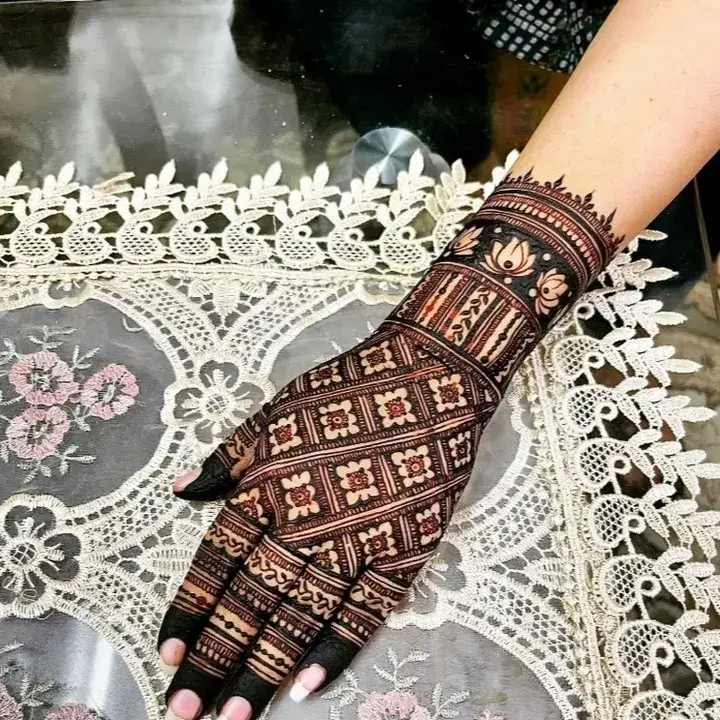
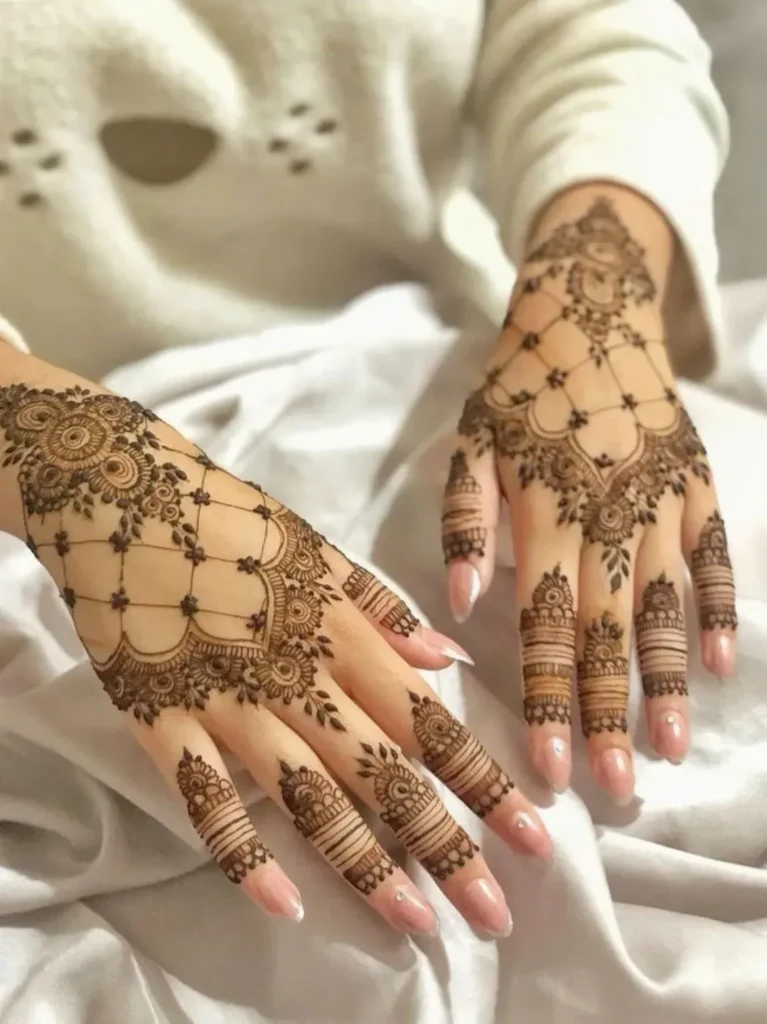
Bharwa means “filled,” and it is the opposite of Arabic’s open spacing. This style covers the hand almost completely, often extending down to the mid-forearm, with little to no bare skin left showing. It suits occasions that call for maximum visual impact and dense detail.
11. Traditional Bharwa Design
Paisleys, florals, and fine fillers cover the entire back of the hand in dense, rhythmic patterns. This is the classic full-coverage look seen at weddings and major festivals.
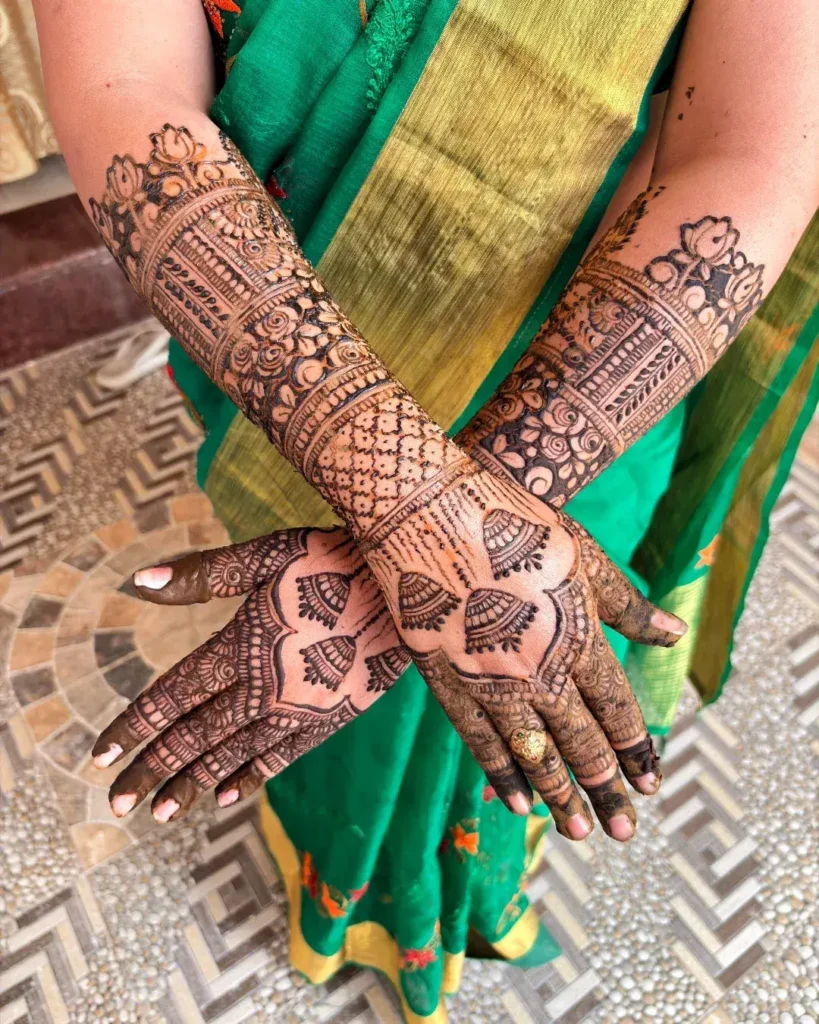
12. Bridal Bharwa Design
This extends the same dense coverage from the fingertips to the forearm, often adding personal motifs or wrist cuffs. Brides choose this when they want a rich, heavy design that holds up in close-up wedding photos.
Jharokha and Pichwai Mehndi Design for Back Hand
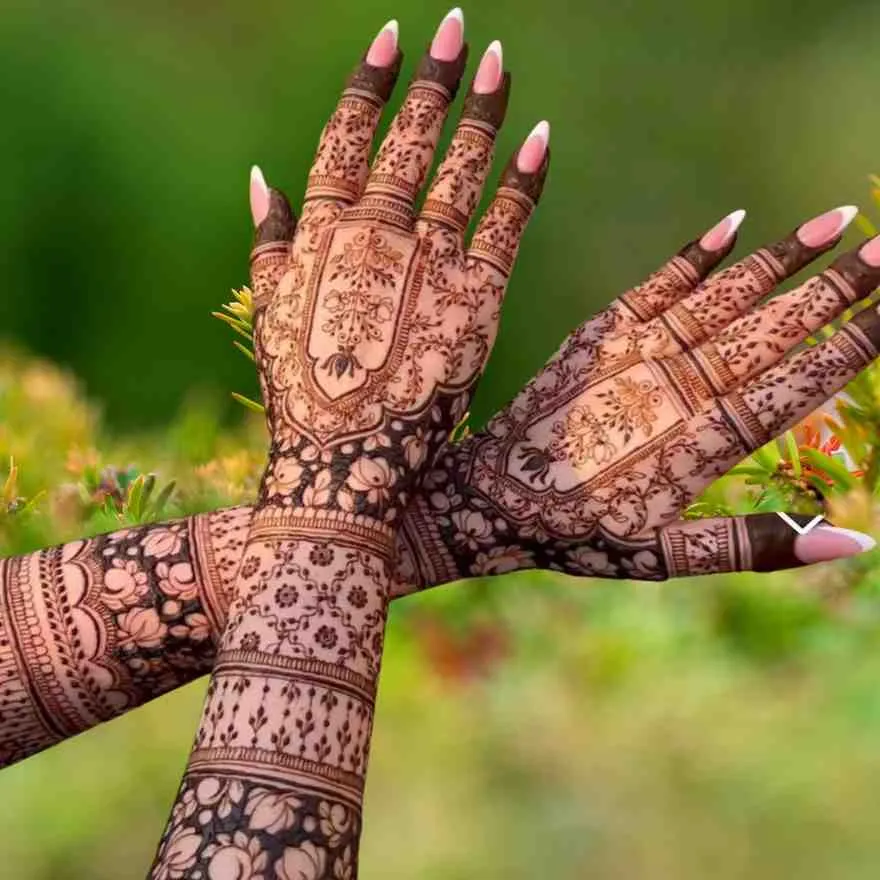
Jharokha designs borrow from Rajasthani and Mughal palace architecture, framing the hand with stone-lattice balcony shapes. Inside these frames, artists often add small scenes like a bridal procession or a portrait of the bride and groom. Pichwai designs draw from a different tradition, using temple art motifs like Krishna, lotuses, and peacocks to create a devotional look.
13. Jharokha (Architectural) Design
An arched frame sits at the center of the hand, filled with fine lattice work and a miniature scene inside. It suits brides who want a design with a strong cultural and architectural story.
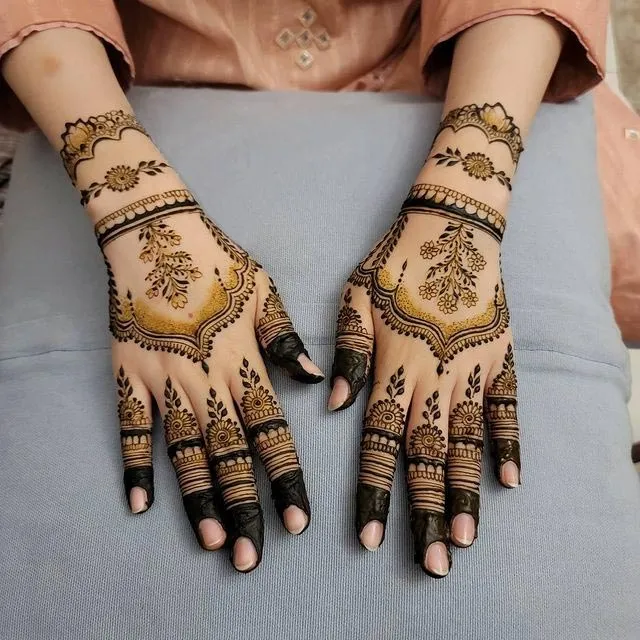
14. Modern Jharokha Design
This keeps the arched frame but simplifies the interior to clean lattice lines instead of detailed scenes. It works well for anyone who likes the structure of Jharokha without the heaviest level of detail.
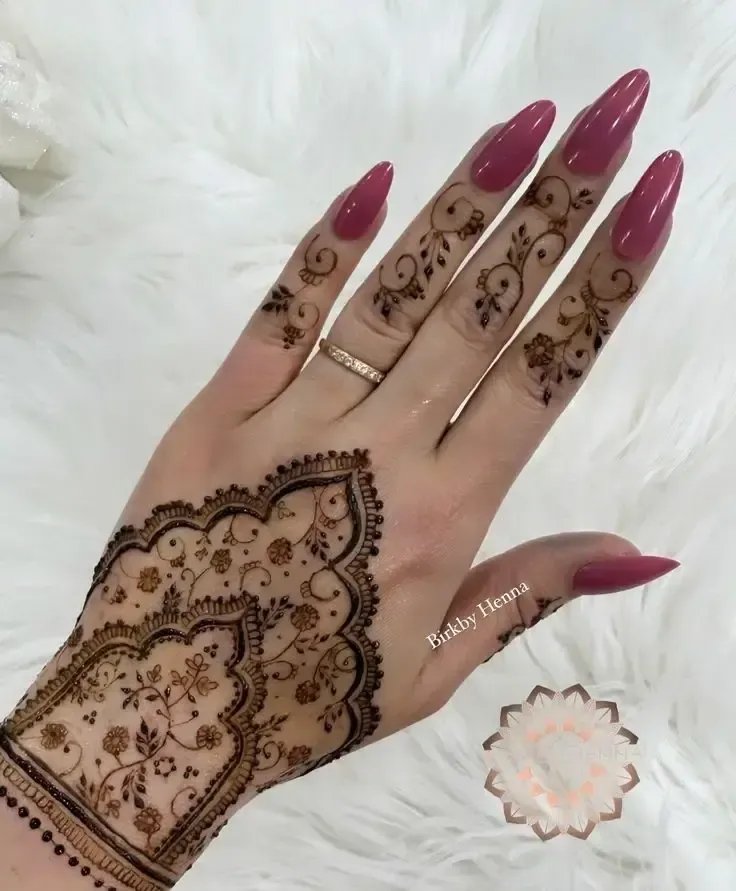
15. Pichwai-Inspired Design
Lotus, peacock, and temple motifs fill the back of the hand in a style inspired by Pichwai paintings. This suits festive occasions and brides who want a design with religious or devotional meaning.
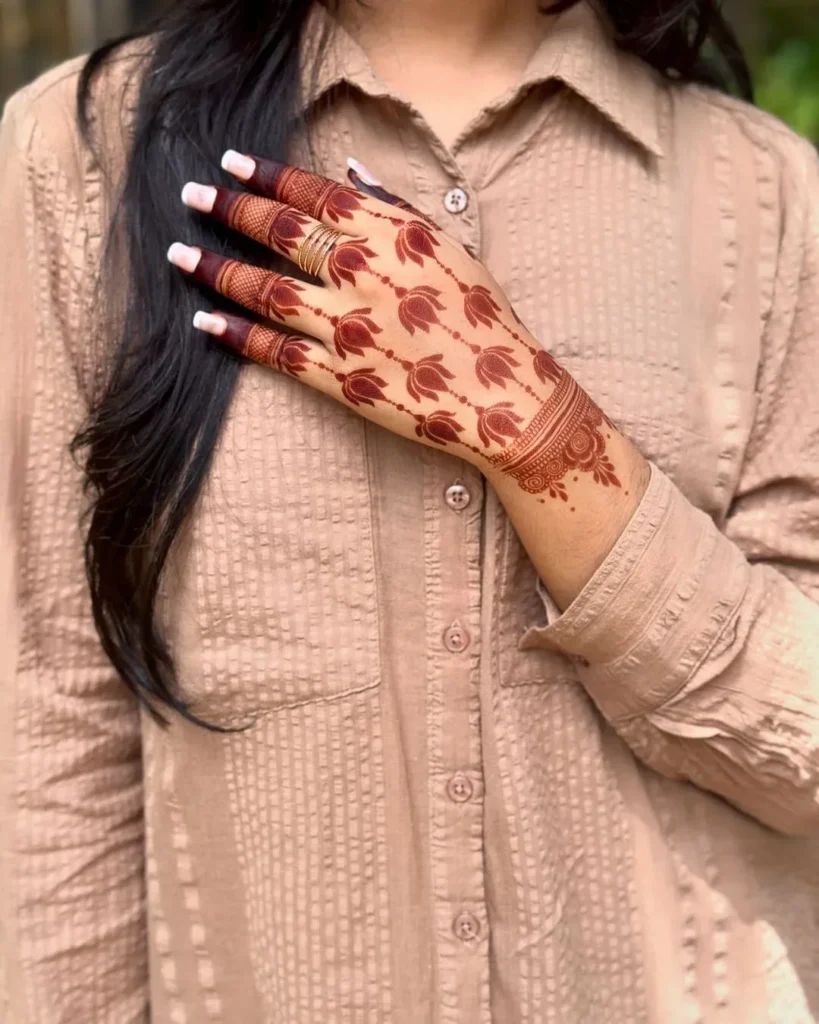
Haath Phool and Jewelry-Inspired Mehndi Designs for Back Hand
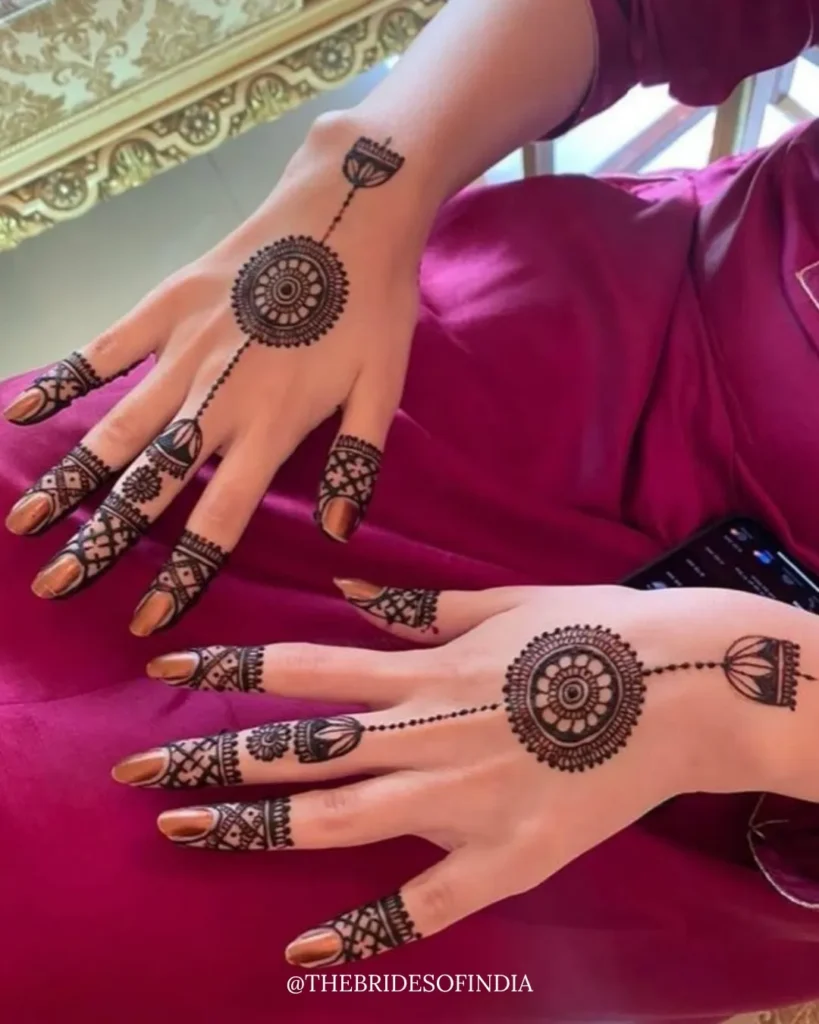
Haath phool means “hand flower,” and the design copies the structure of real hand jewelry. A cuff or bracelet shape sits at the wrist, then thin chains of dots or teardrops run across the back of the hand to small rings drawn at the base of each finger. Most of the skin in between stays bare, which is what creates the jewelry illusion.
16. Classic Haath Phool Design
A wrist cuff connects to finger rings through single chains of dots, mimicking a traditional hand ornament. It works well for brides who want the look of jewelry without wearing an actual haath phool.
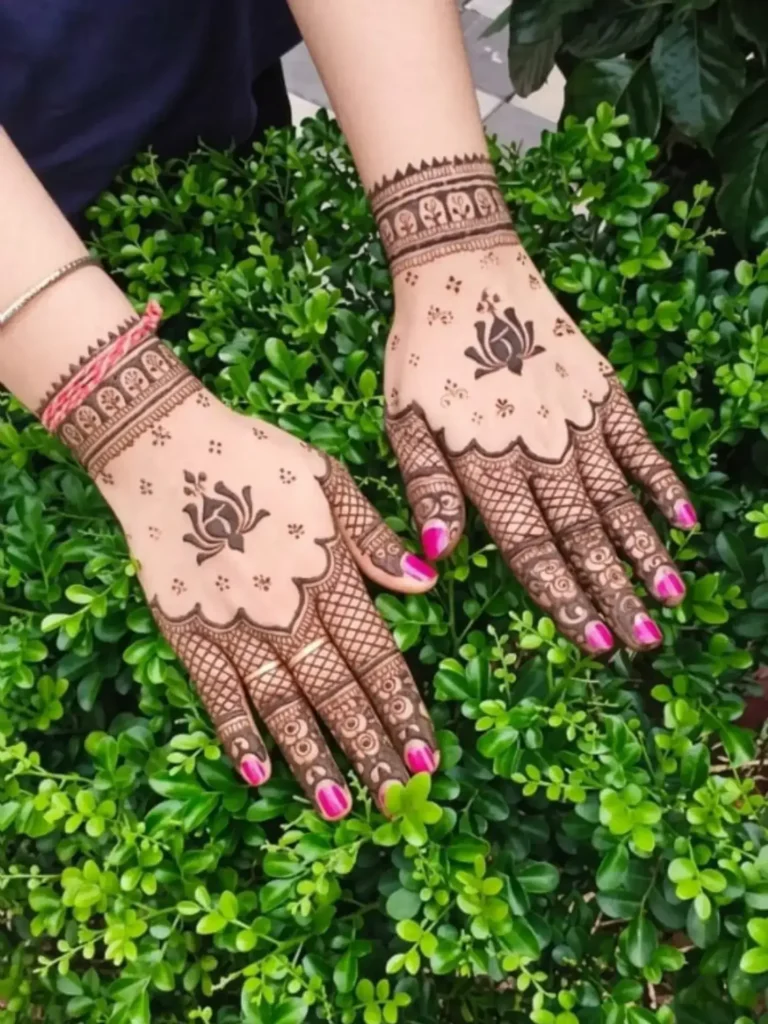
17. Bracelet-Cuff Design
This focuses only on the wrist, with a detailed cuff pattern that does not extend into finger chains. It suits anyone who wants a jewelry-style accent without covering the rest of the hand.
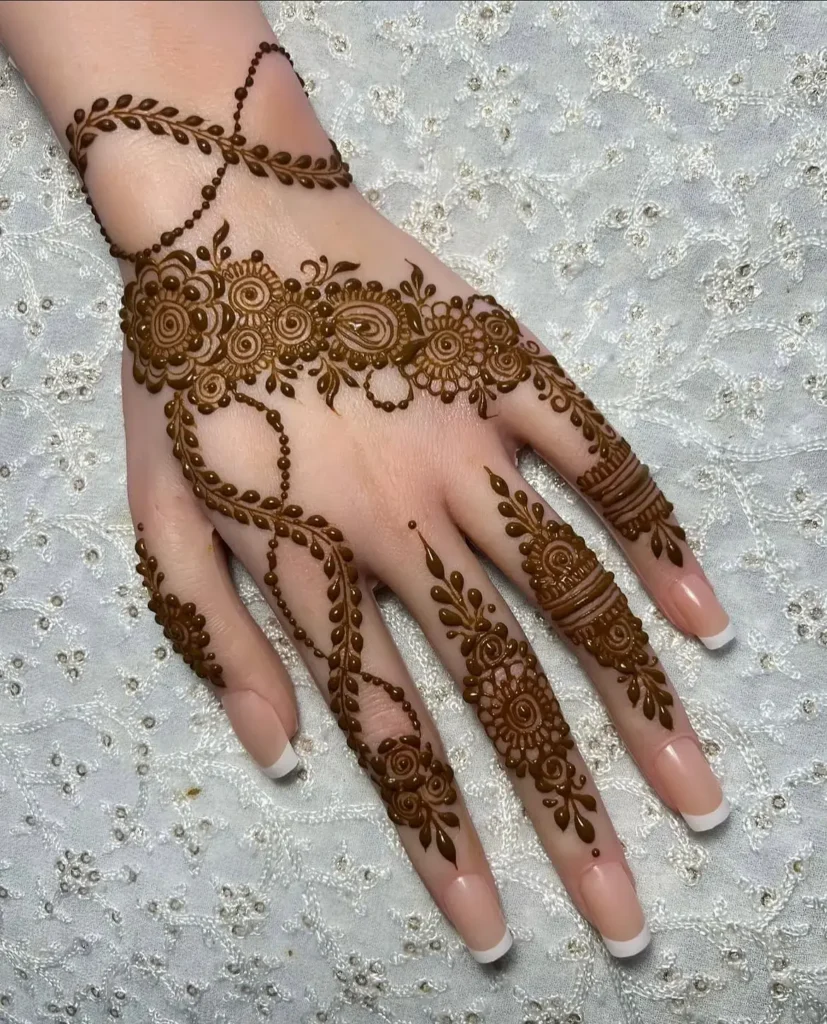
18. Ring-Chain Jewelry Design
Multiple thin chains link the wrist to two or three fingers, each ending in a small ring motif. The layered chains give more visual detail than the classic single-chain version.
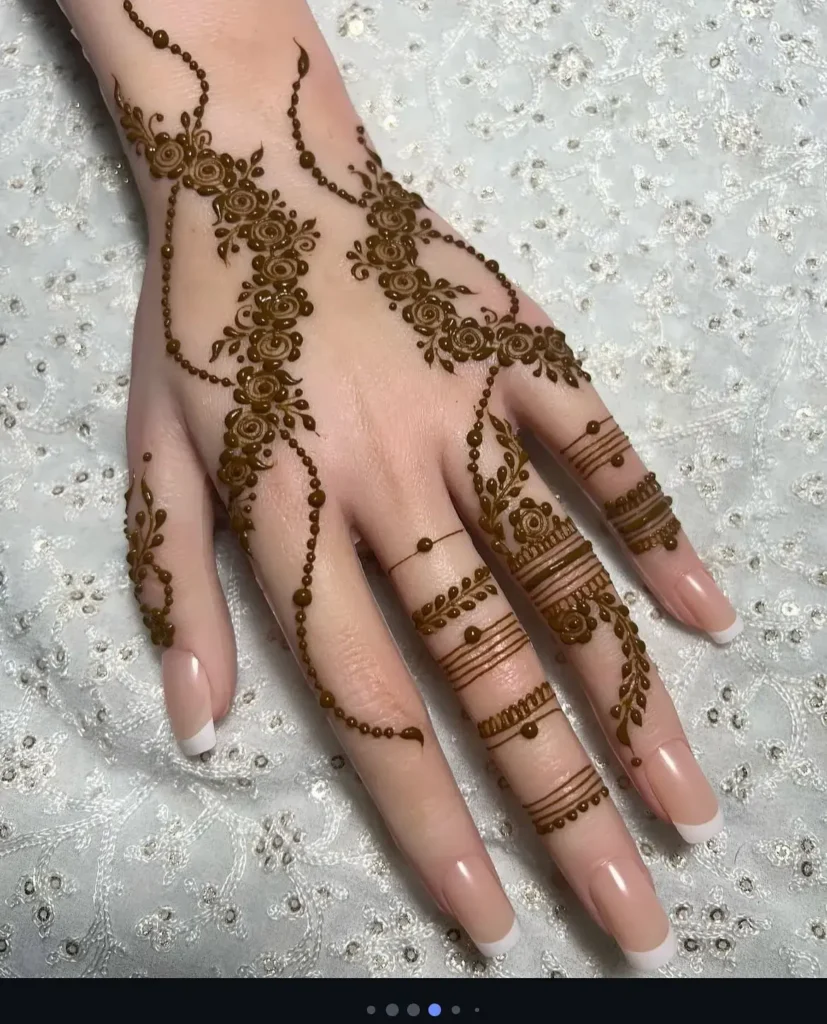
19. Jewellery and Rose Combo Design
Small rose motifs sit along the jewelry chains instead of plain dots or teardrops. This adds a floral touch while keeping the overall jewelry structure intact.
Mandala and Geometric Back Hand Mehndi Designs
Mandala designs start from a single dot at the center of the hand, then build outward in concentric rings of petals, scallops, and dots. Semi-mandala versions cut this circle in half, anchoring it at the wrist instead of the center, which gives a similar structured look with less coverage. Geometric designs drop the circular base entirely and use straight lines, grids, and repeating shapes instead.
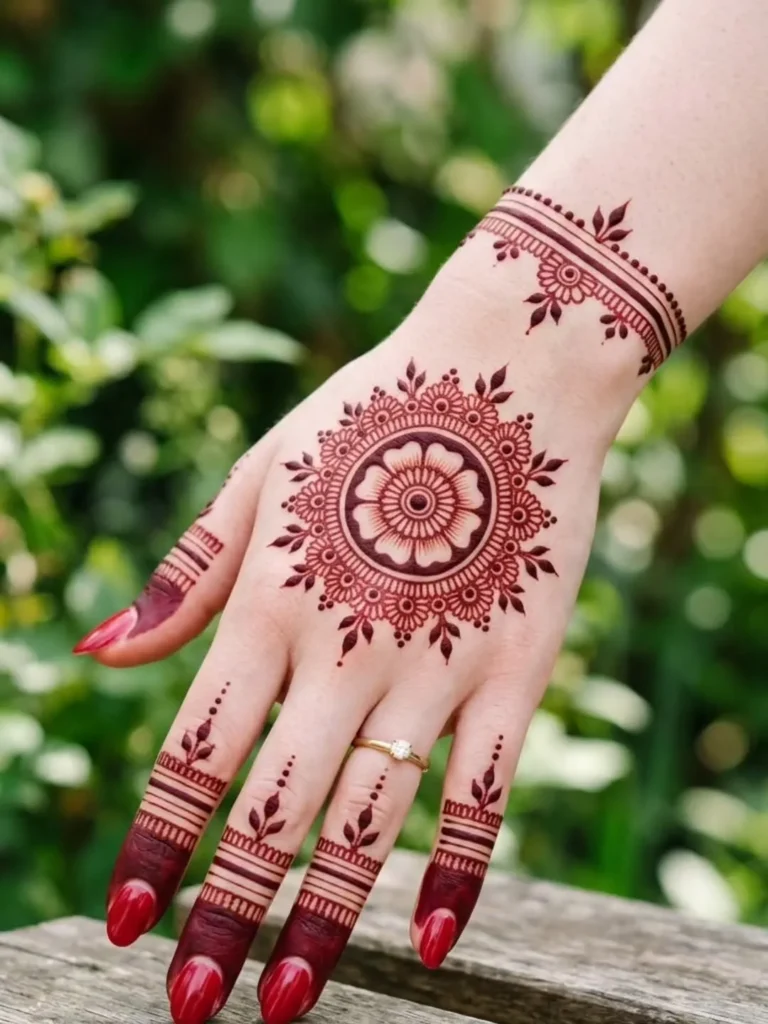
20. Full Mandala Design
A complete circular medallion sits at the center of the hand, ringed by petals and fine dot borders. It gives a symmetrical, balanced look that works for both festive and bridal occasions.
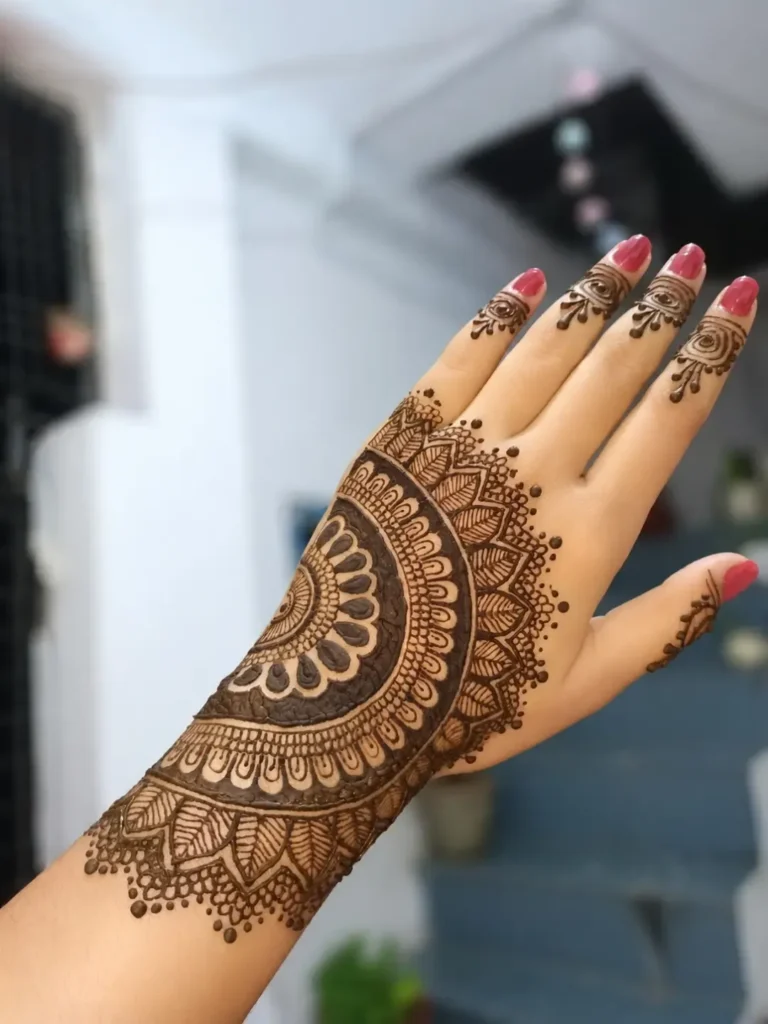
21. Semi-Mandala (Half-Mandala) Design
Half of the mandala pattern anchors at the wrist, with the rest of the hand left open or lightly detailed. This suits anyone who wants the mandala look with a shorter application time.
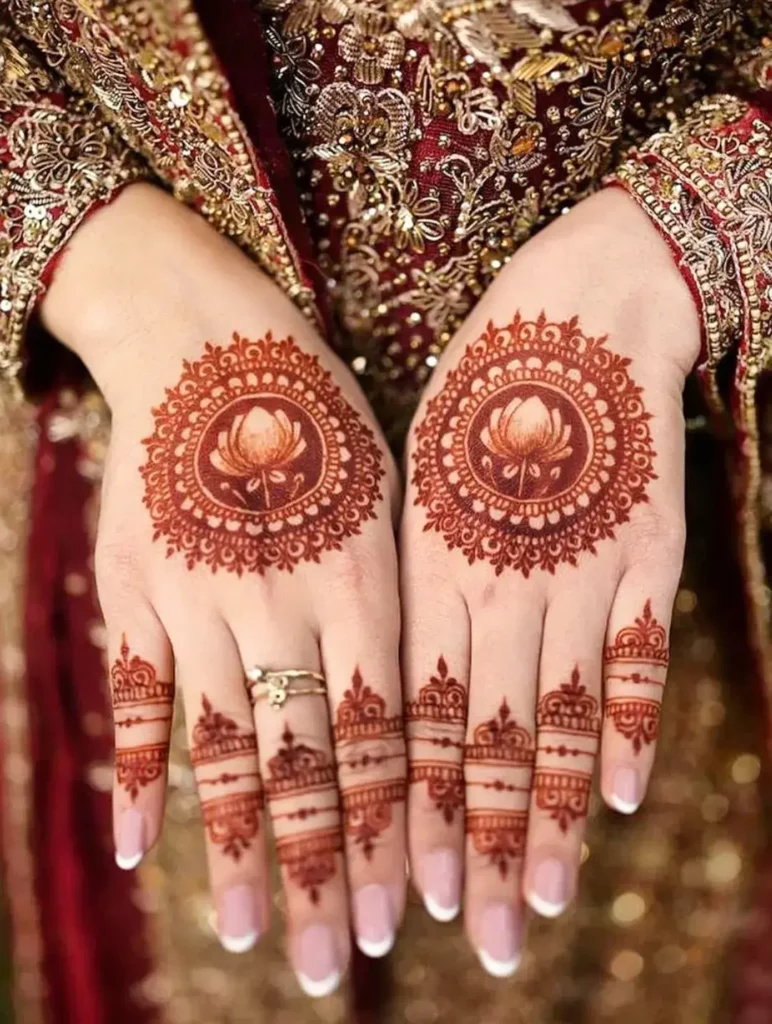
22. Lotus Mandala Design
The mandala’s center is shaped like a blooming lotus instead of plain concentric circles. It adds a floral, symbolic element to the usual geometric structure.
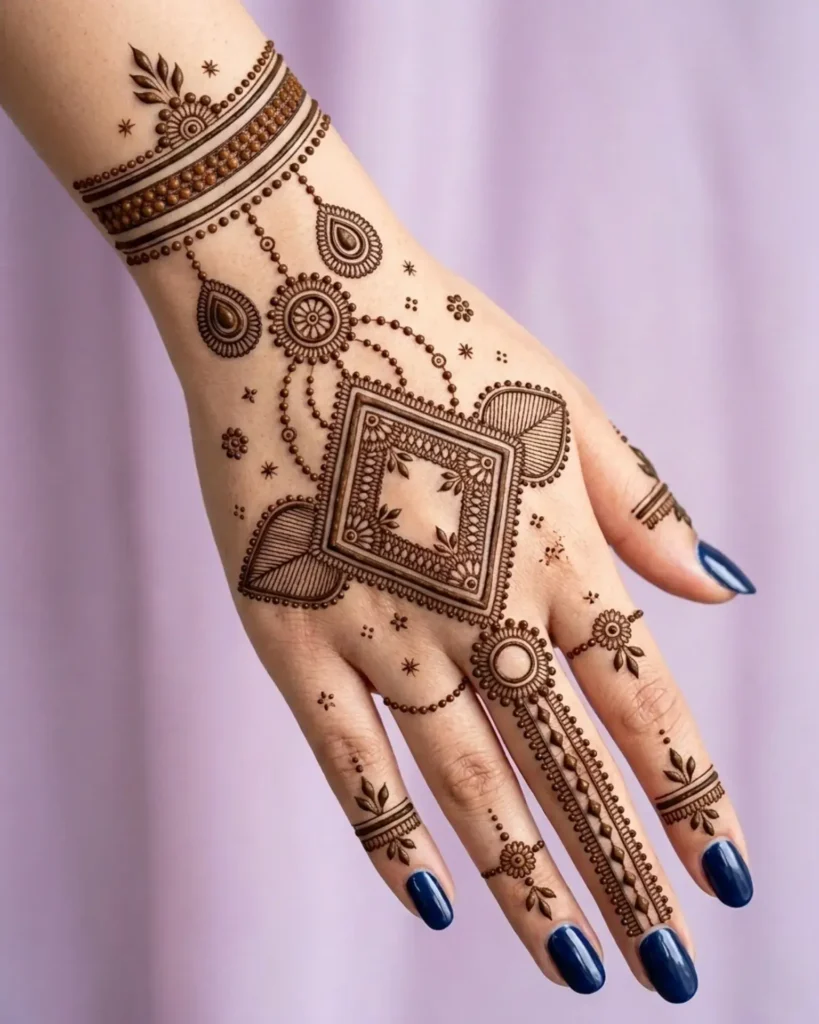
23. Geometric Pattern Design
Triangles, hexagons, and grid lines replace the curved lines of traditional mehndi. This gives a modern, clean look that suits minimalist styling.
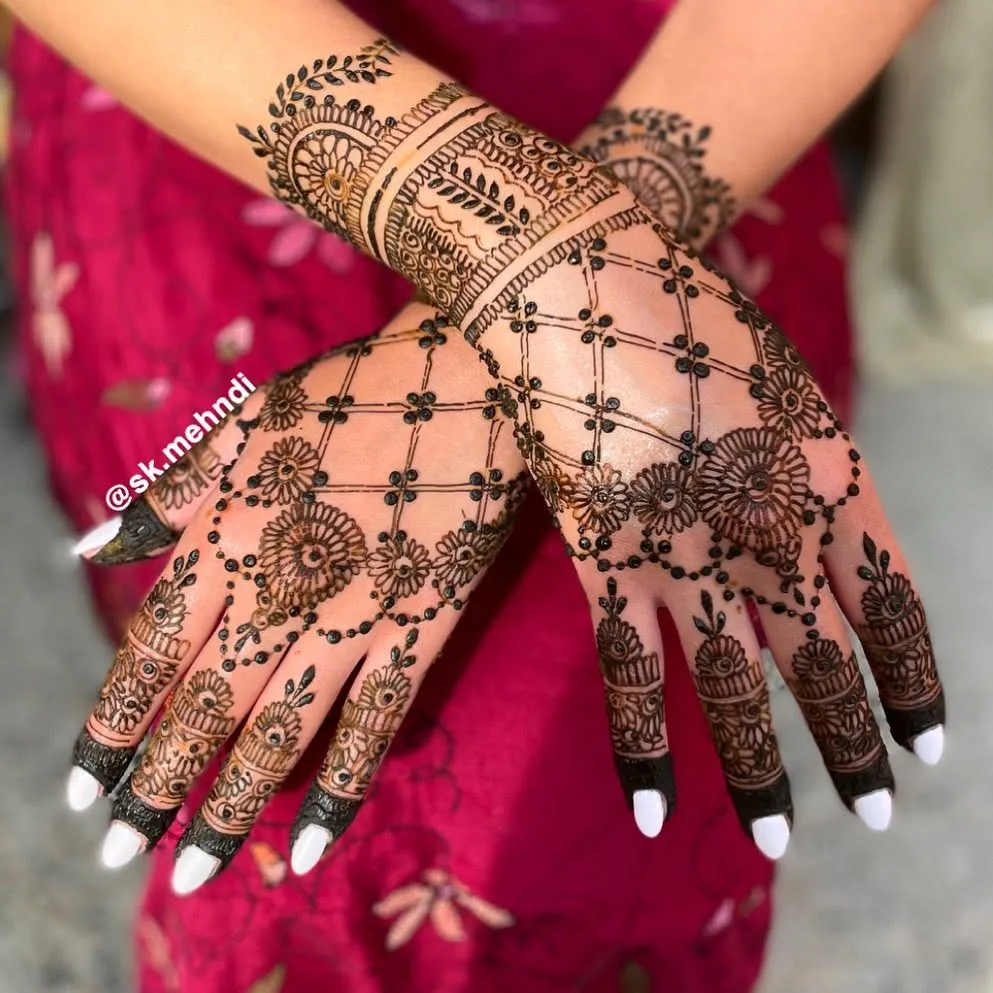
24. Criss-Cross Design
Diagonal lines intersect across the back of the hand to form a woven or net-like pattern. It works well as a base layer, with small motifs added inside each intersecting space.
25. Spiral Design
Curving spiral lines wind across the hand instead of straight geometric shapes. This softens the geometric look while still keeping a structured, repeating pattern.
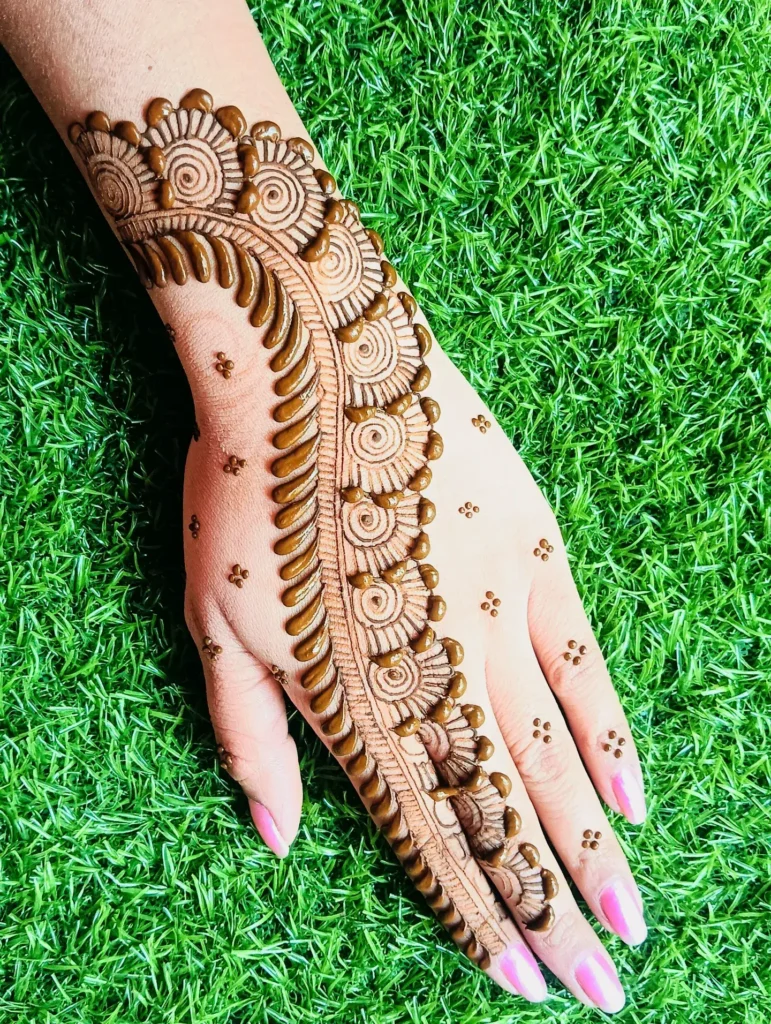
26. Columned Design
Vertical bands run from the wrist to the fingers, each filled with a different small motif or pattern. This creates an organized, column-like layout instead of a single central focus.
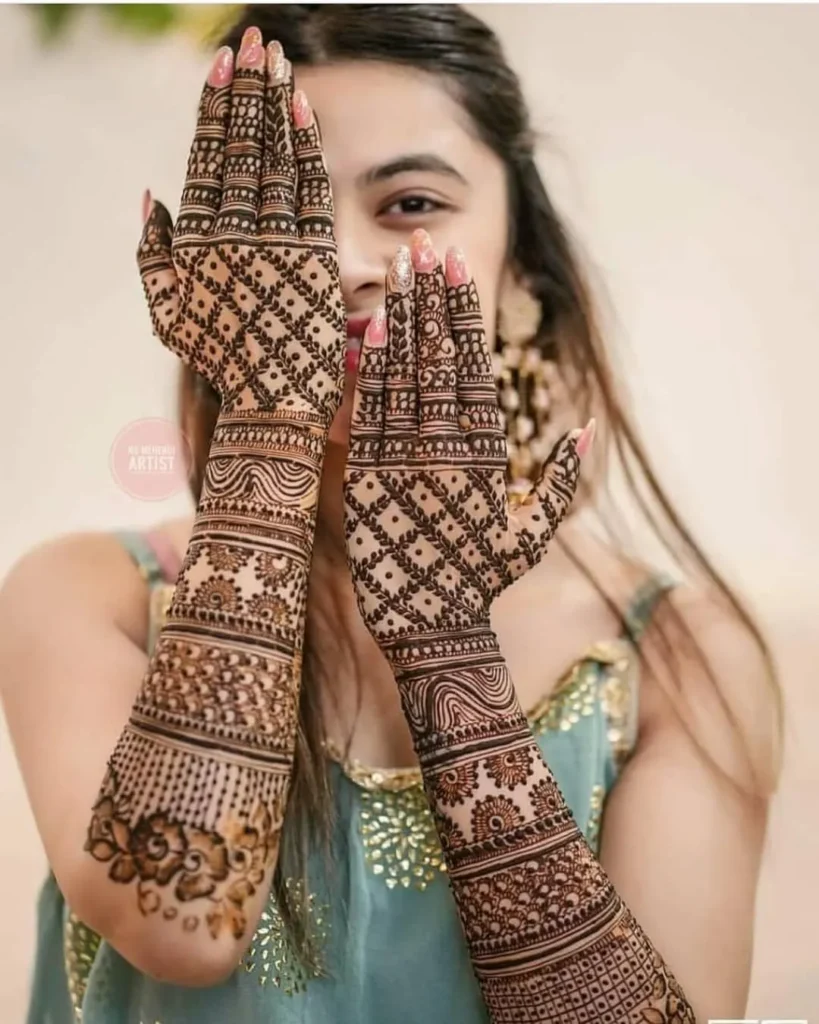
27. Line Art Design
Thin, continuous lines form the entire pattern with no filled or shaded areas. It gives a modern, sketch-like look that applies quickly and reads clean in photos.
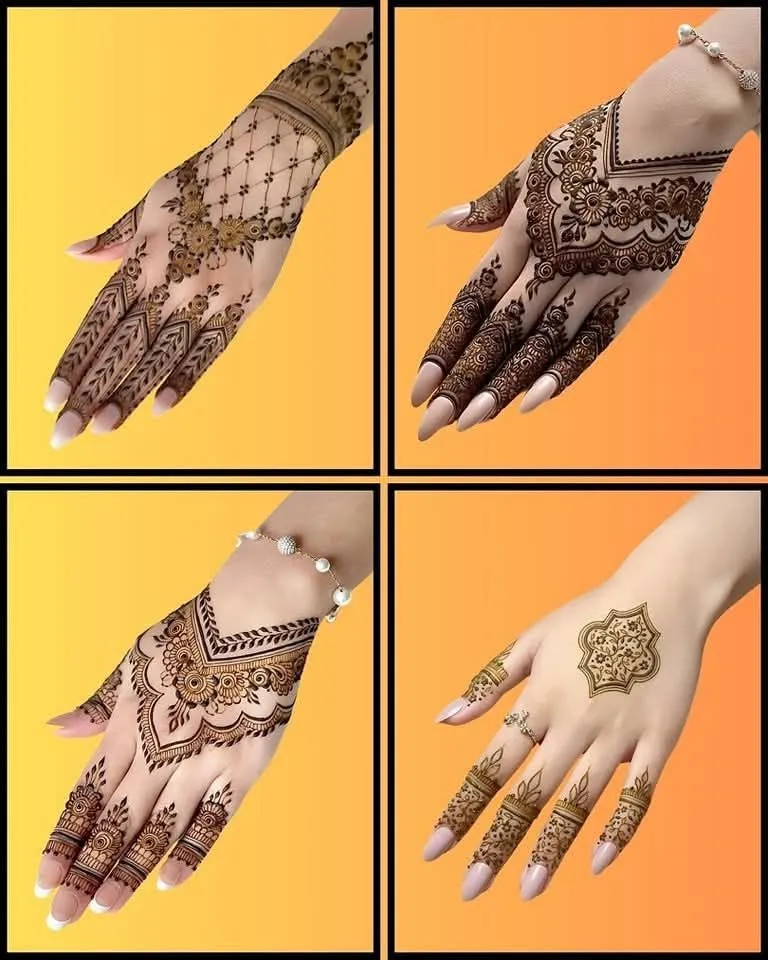
Floral and Nature-Inspired Mehndi Designs for Back Hand
Floral designs stay close to nature, using vines, roses, lotuses, and leaves as the main building blocks. Rose-cut florals with layered, defined petals are one of the biggest trends in 2026, replacing simpler flat flower outlines. Garden-inspired designs take this further, combining several plant motifs into one composition instead of repeating a single flower.
28. Rose Mehndi Design
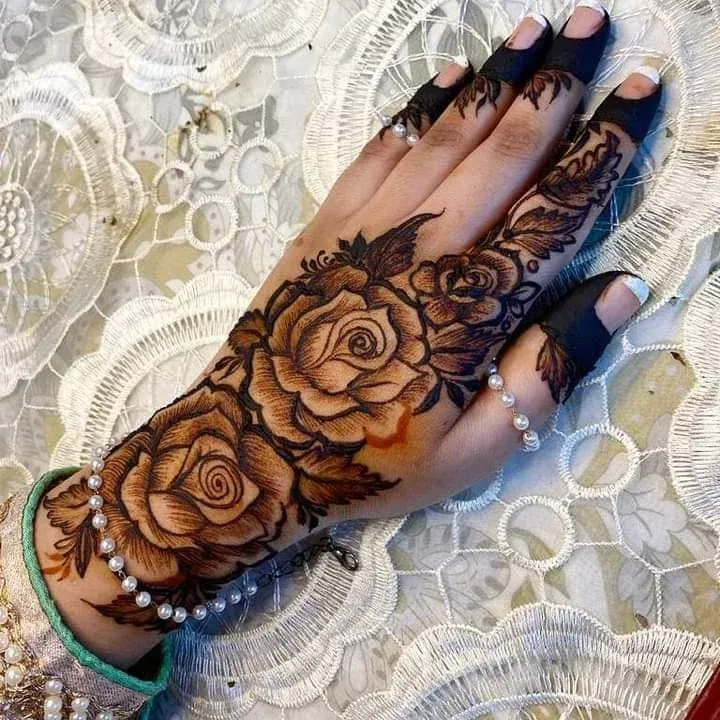
Layered petals build a detailed rose shape, usually placed as a focal point on the back of the hand. The 2026 version favors bold, defined outlines over the older flat, shaded style.
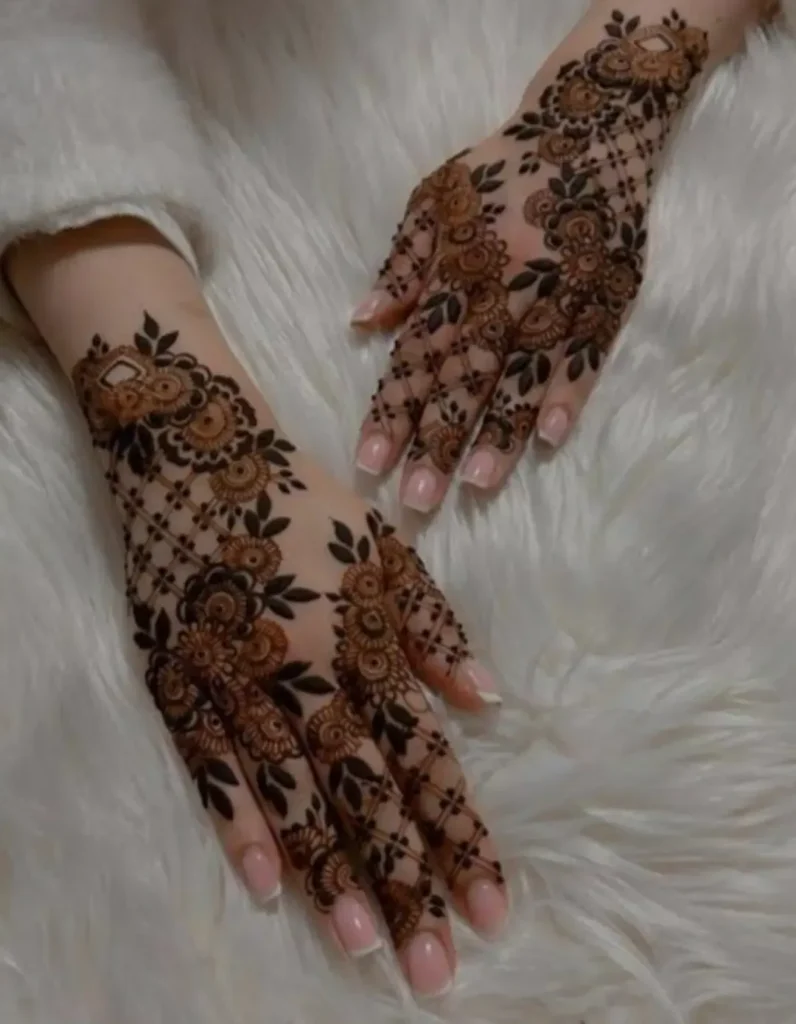
29. Lotus Mehndi Design
A lotus flower anchors the design, often at the center of the hand or wrist. It carries symbolic meaning in South Asian tradition and pairs well with mandala or Pichwai elements.
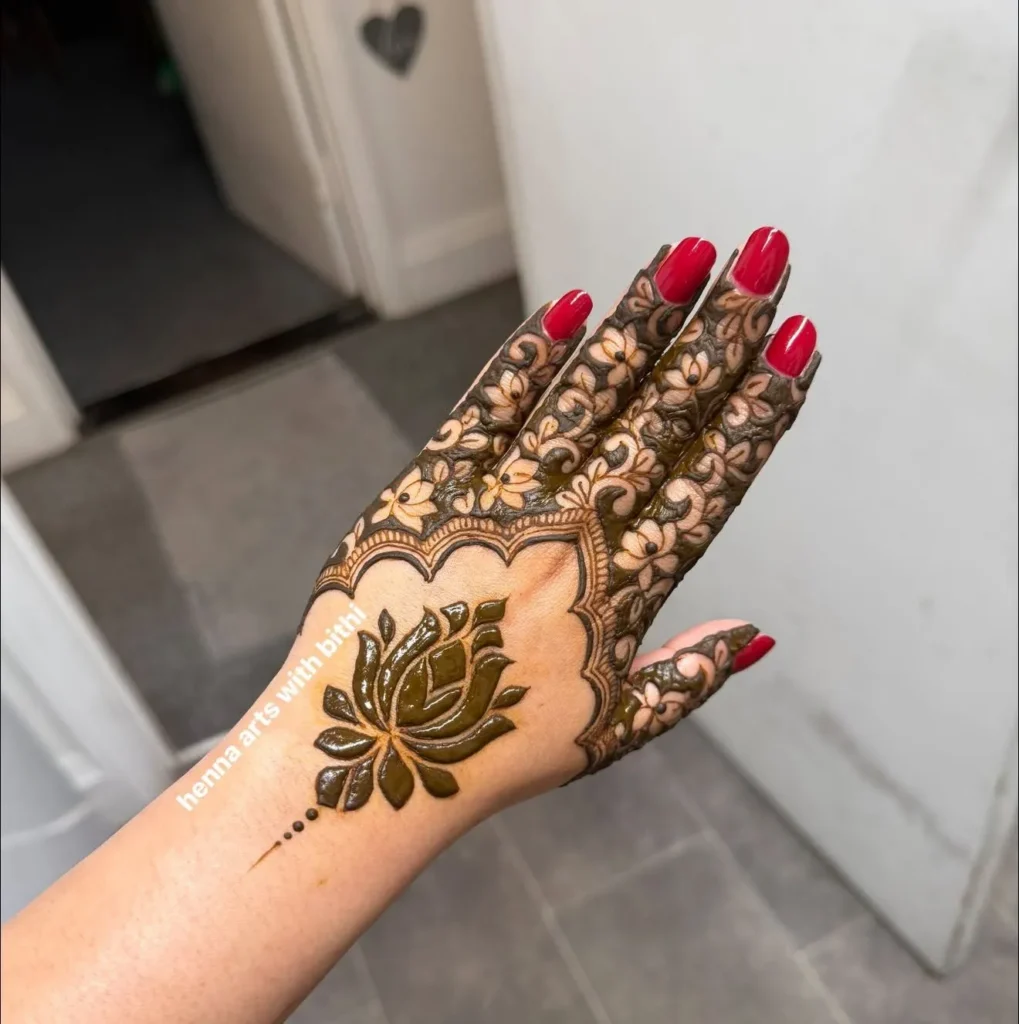
30. Floral Vine Design
A single vine of leaves and small flowers trails diagonally across the hand, similar in structure to an Arabic bail. It gives a natural, flowing look with less density than a full floral cluster.
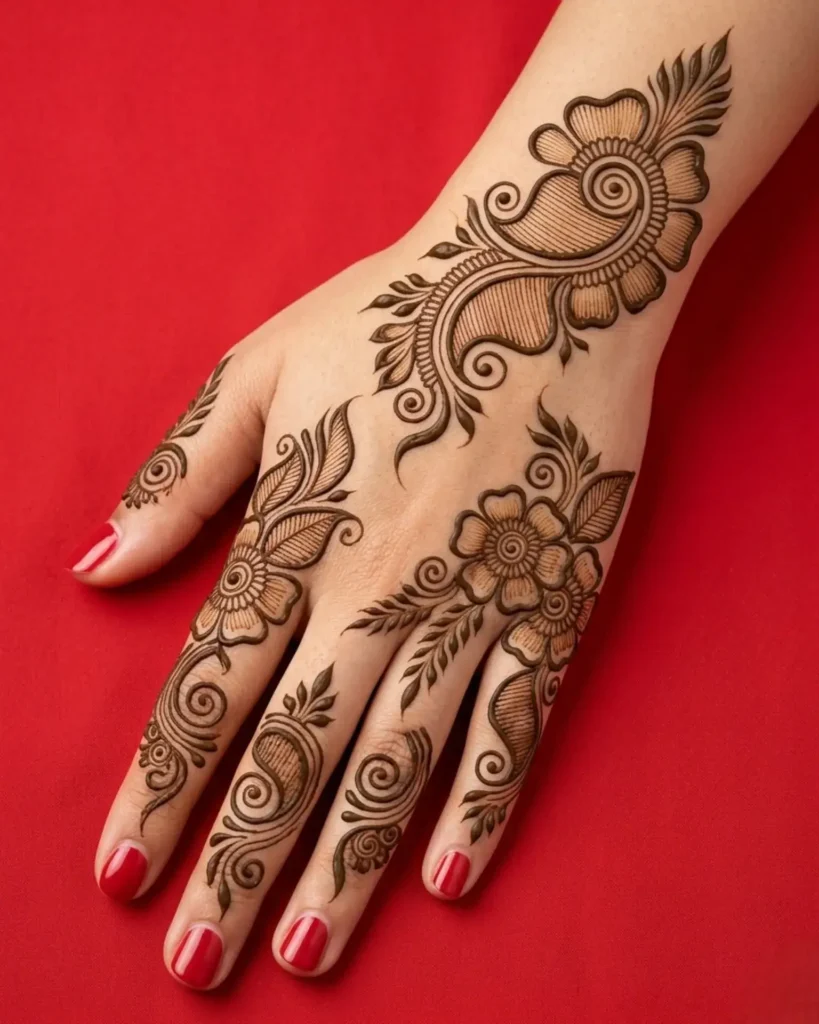
31. Garden-Inspired Design
Multiple flower types, leaves, and vines combine into one layout instead of focusing on a single motif. This suits anyone who wants a fuller floral look without switching to dense Bharwa coverage.
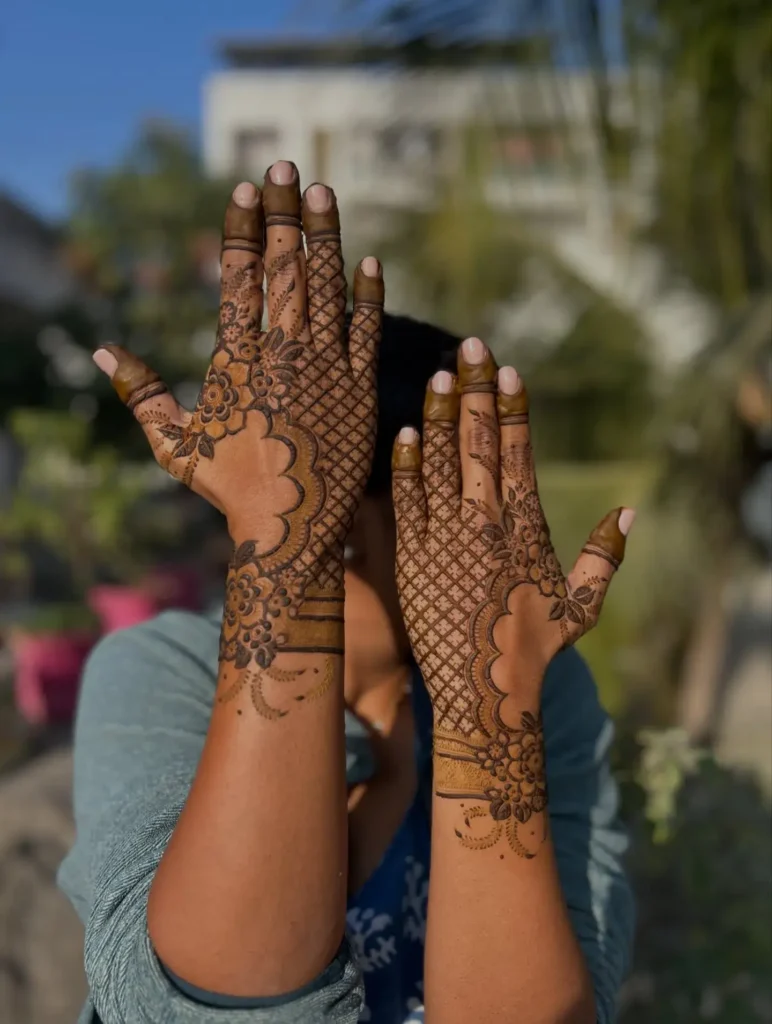
32. Droplets Design
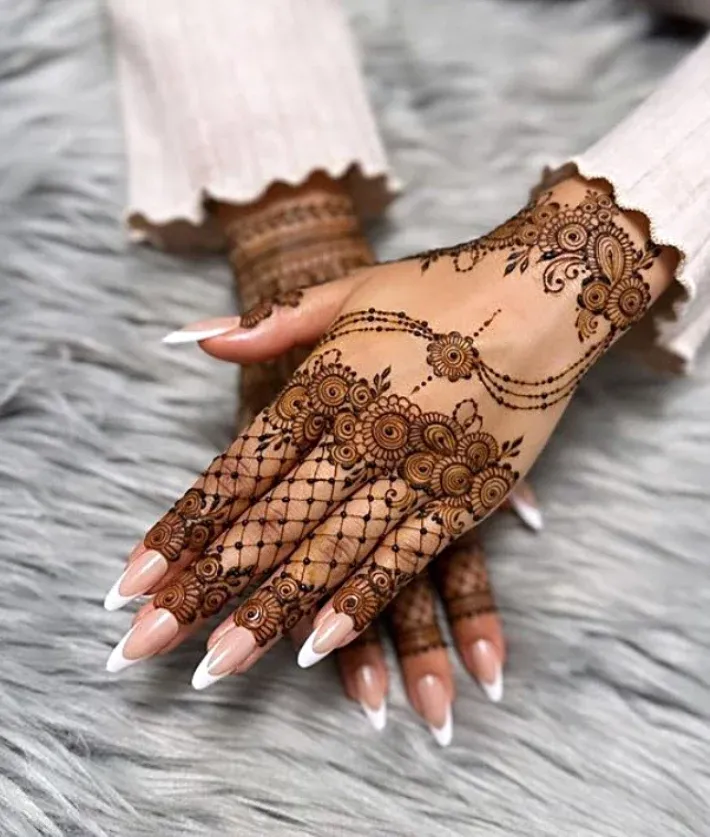
Small teardrop shapes cluster around a central floral or geometric motif. They add texture and fill negative space without the weight of solid shading.
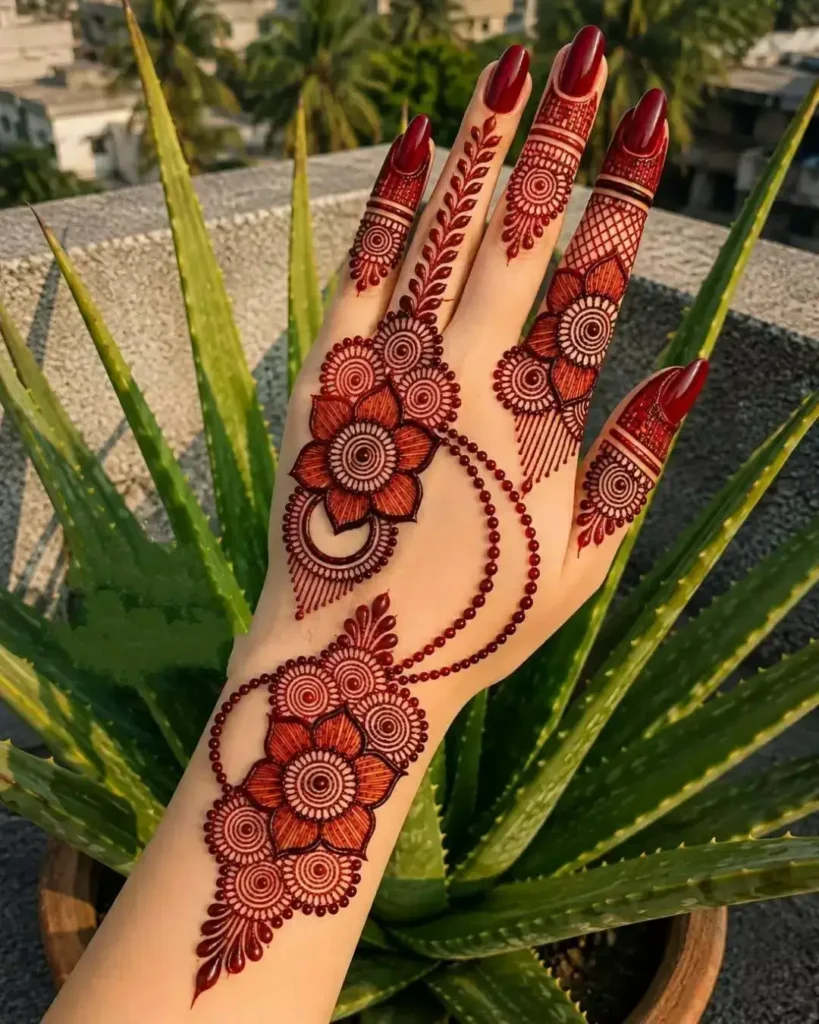
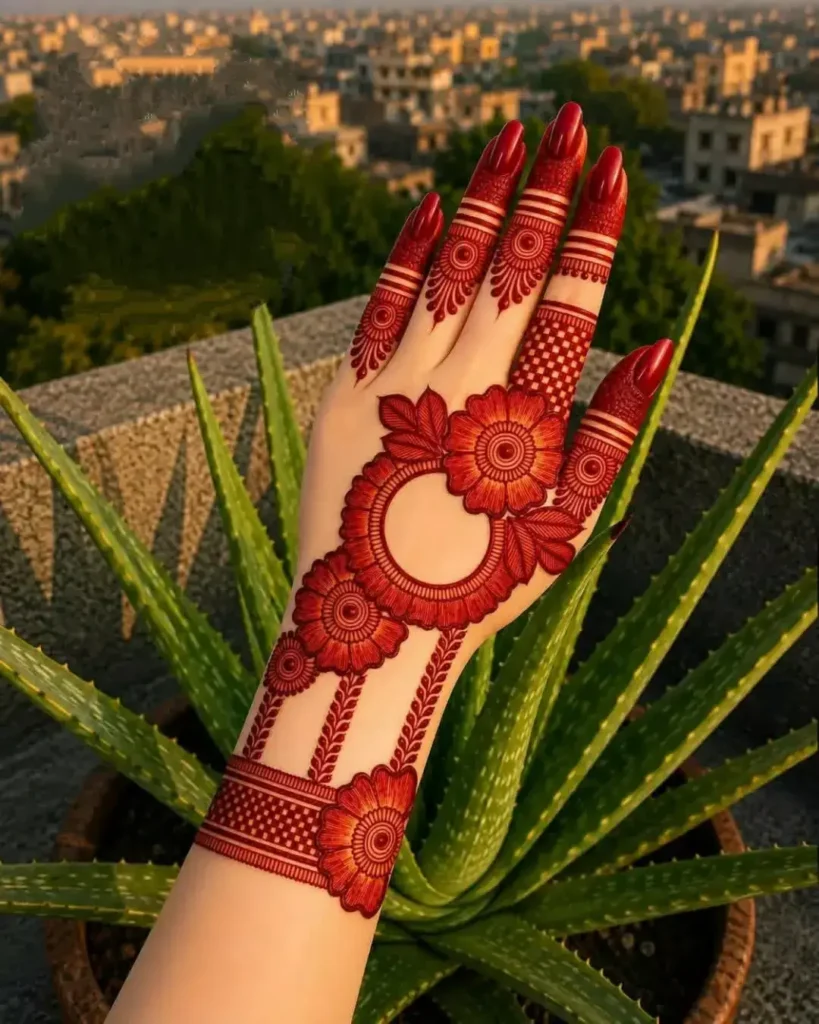
33. Floral Jaali Design
A net-like lattice pattern forms the base, with small flowers placed inside each open section. This combines the structure of geometric jaali work with a softer, floral finish.
Motif-Based Traditional Back Hand Mehndi Designs
These designs center on symbols with deep roots in Indian tradition. Peacocks represent grace and are linked to royal imagery. Elephants symbolize good luck and prosperity, especially at weddings. Jaali patterns come from architecture, echoing the carved lattice screens found in palaces and temples.
34. Peacock Motif Design
A detailed peacock, often with a fanned tail, sits as the main feature on the back of the hand. Fine feather lines and dot work fill the tail for added detail.
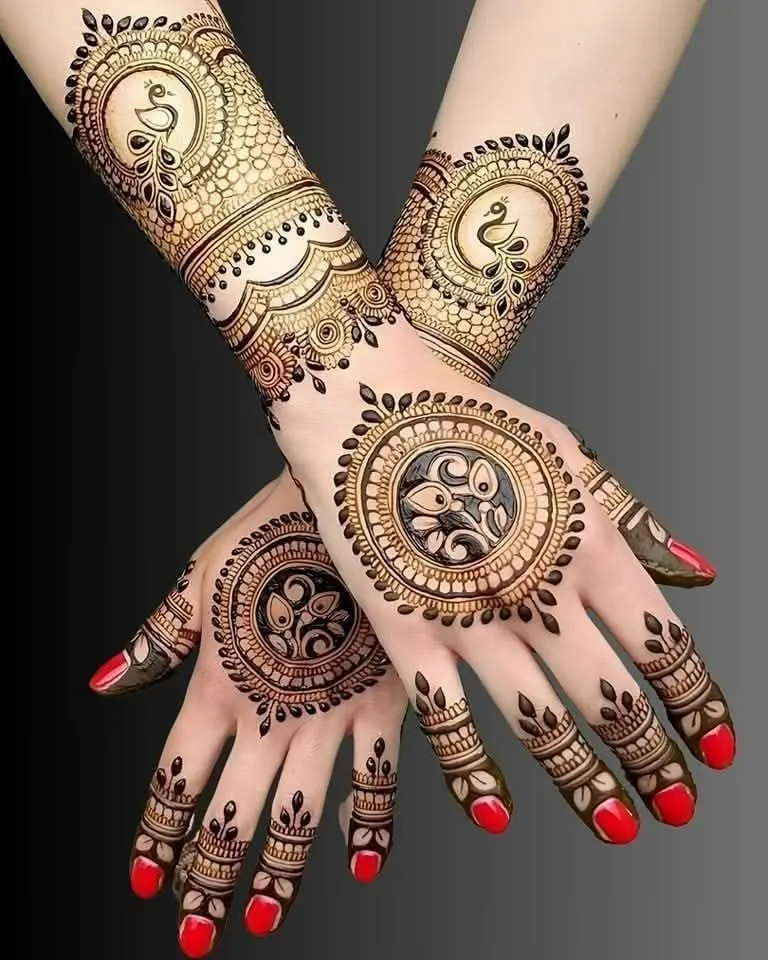
35. Elephant Motif Design
One or more elephants appear within the design, sometimes as a bridal procession scene. This motif is popular for wedding mehndi due to its association with good fortune.
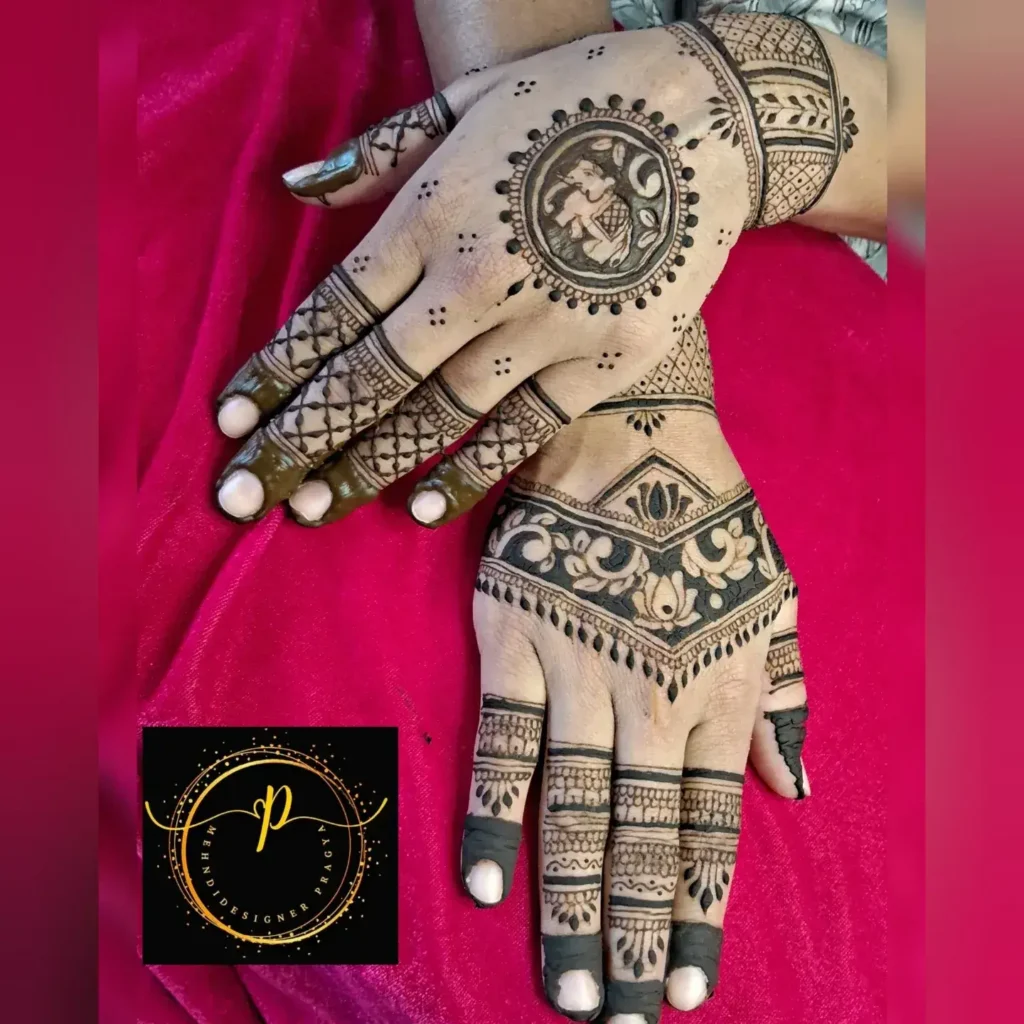
36. Jaali (Lattice) Design
A net-like grid of intersecting lines covers the hand, similar to carved stone screens. It works well as a full pattern or as a frame around another central motif.
Minimalist and Modern Mehndi Designs Back Hand
2026 has pushed mehndi toward restraint, with more bare skin and fewer dense patterns. Negative space is a specific technique here, not just a style choice. The artist outlines a motif, then fills the surrounding skin with paste instead of the motif itself. Once removed, the untouched skin forms the light shape against a dark background.
37. Minimalist Design
A few small motifs sit scattered across mostly bare skin, keeping the overall look light and simple. This suits anyone who wants mehndi without heavy coverage or a long application time.
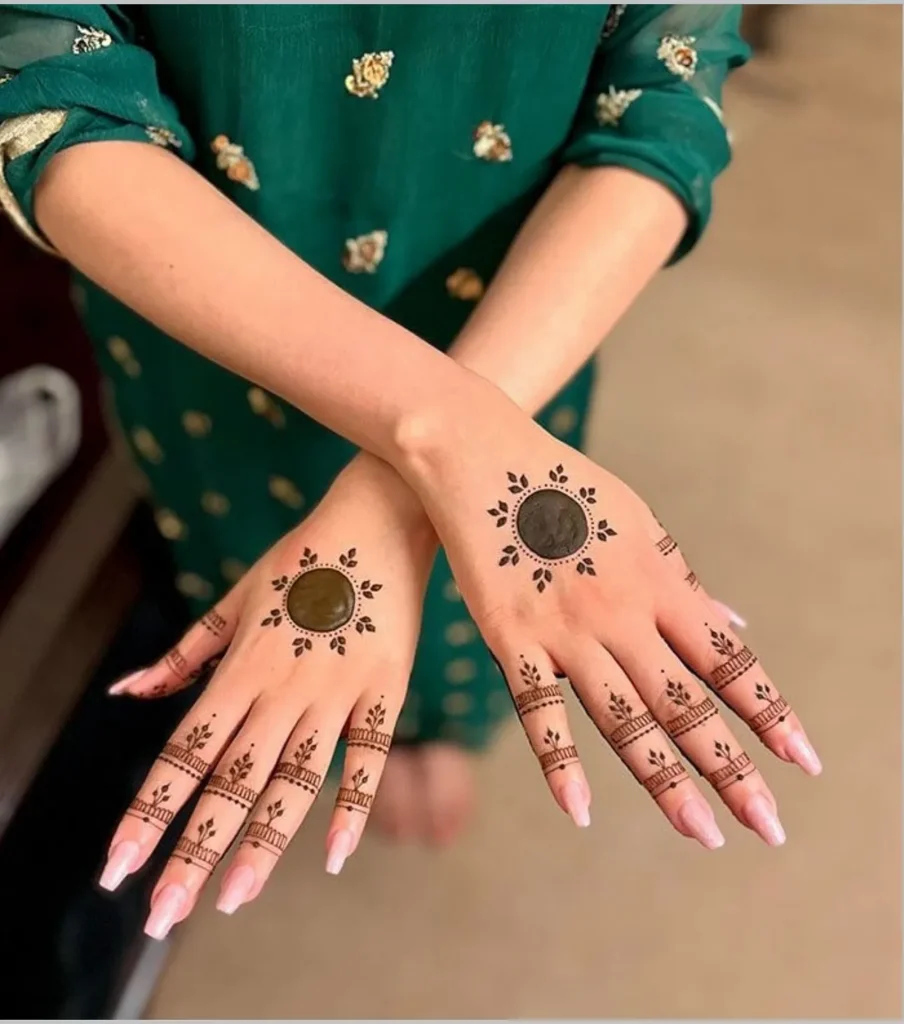
38. Micro-Minimalist Finger Vine Design
A single thin vine travels up one or two fingers, leaving the rest of the hand untouched. It applies fast and works well for everyday wear or casual events.
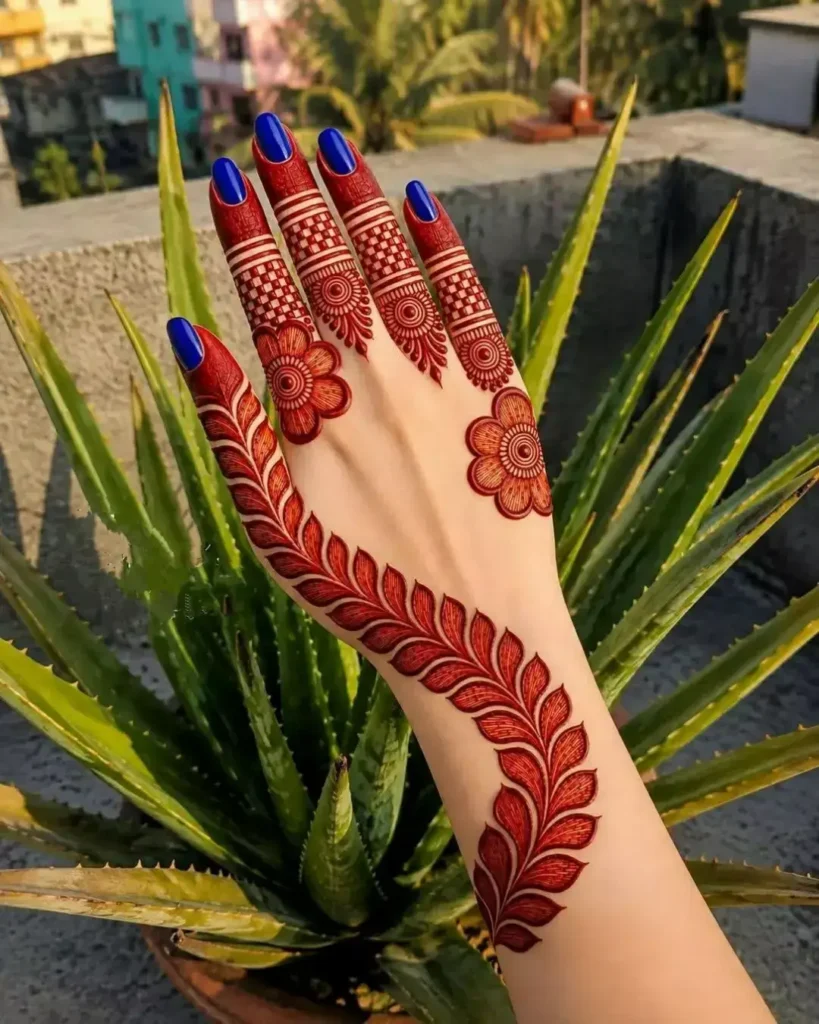
39. Negative Space Design
Bare skin becomes part of the pattern, with motifs drawn as outlines rather than solid fills. This creates a graphic, high-contrast look that photographs well.
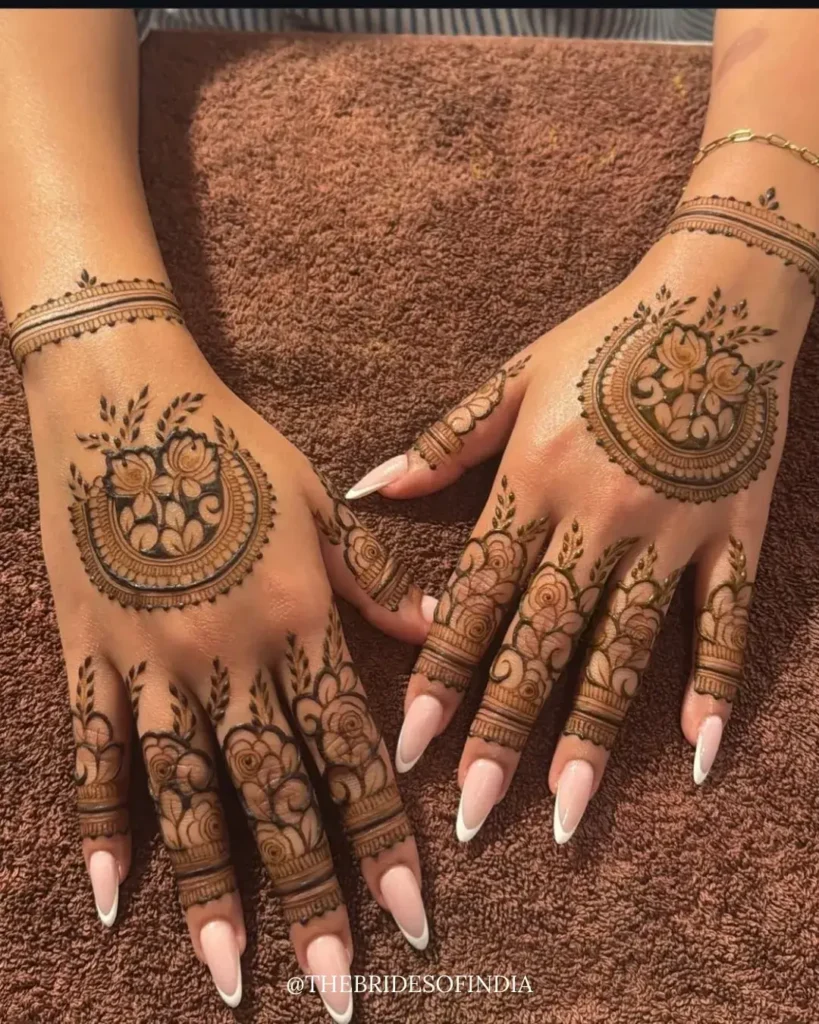
40. Reverse Negative Space Design
The artist outlines a flower or motif, then fills the background around it with solid paste. Once the paste is removed, the untouched skin forms the light motif against a dark border.
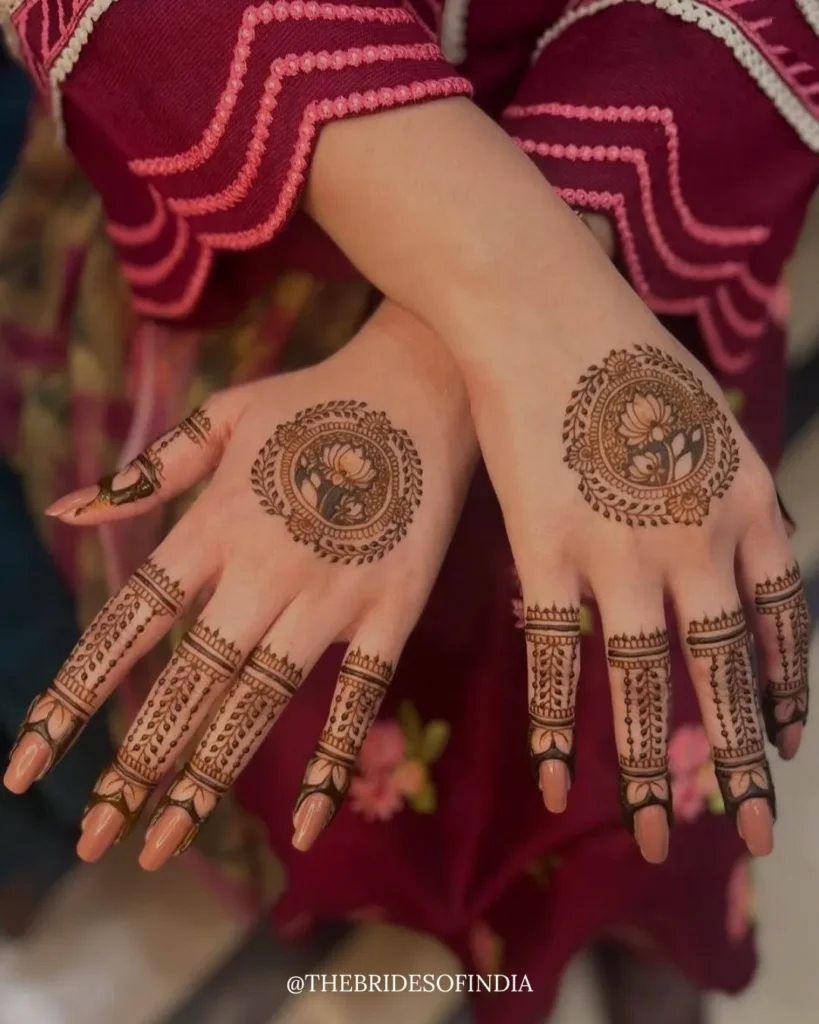
41. Free-Style Modern Design
The layout skips traditional structure, using asymmetrical lines and shapes placed by feel rather than a fixed pattern. This gives each design a one-of-a-kind look.
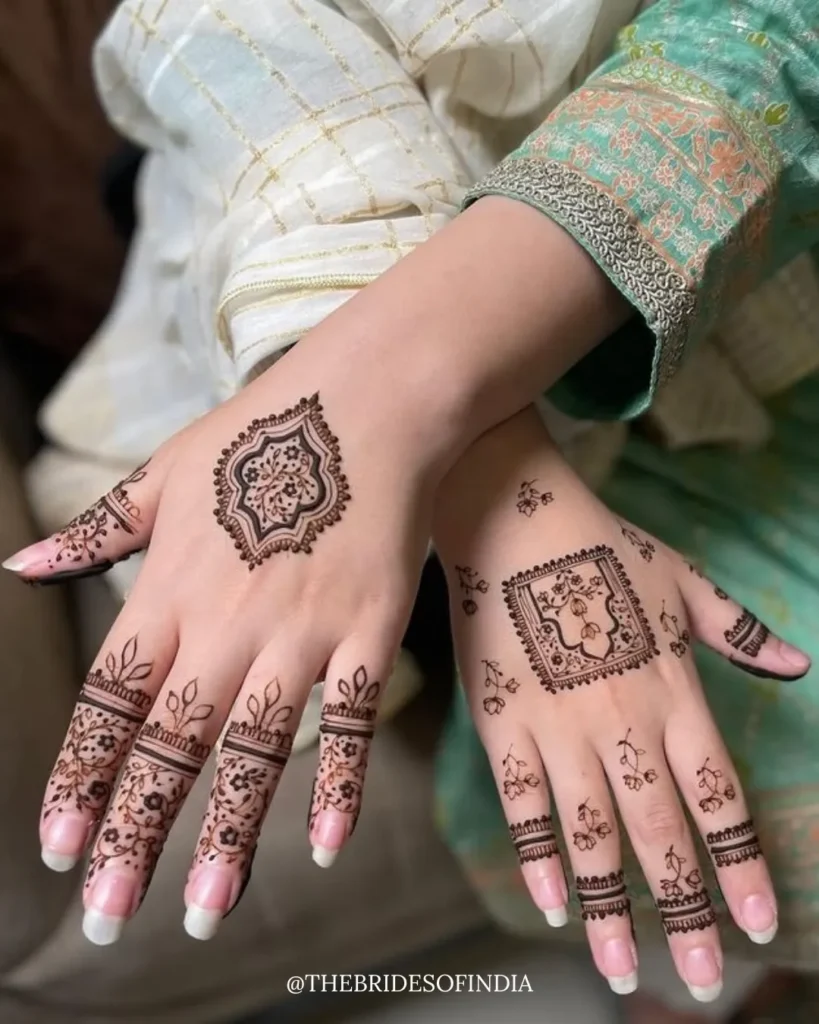
42. Design With Panels
The hand is divided into a few distinct sections, each filled with a different small pattern. This gives a structured, modern look without covering the entire hand.
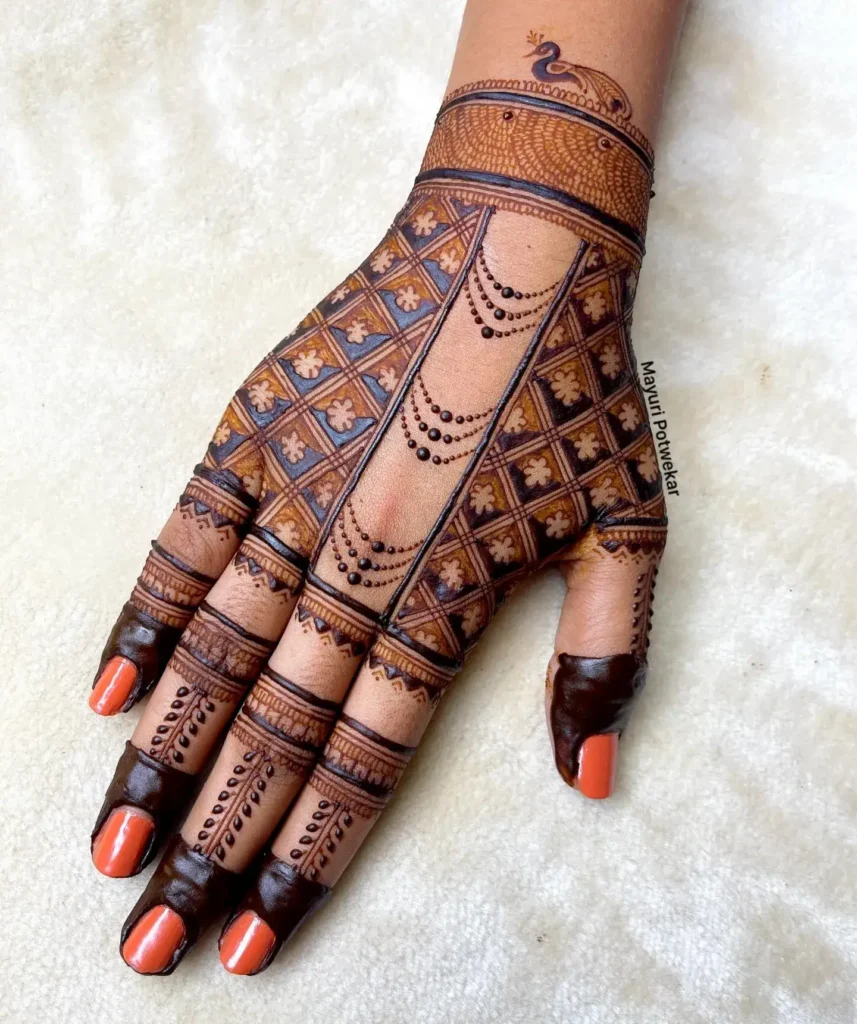
Personalized and Storytelling Mehndi Design Back Hand
Personalization is one of the strongest mehndi trends of 2026. Instead of relying only on generic florals, artists now work meaningful details directly into the pattern. These elements are usually hidden inside the design rather than placed as an obvious label, so they read as art first and reveal their meaning up close.
43. Initials and Date Design
Small letters or numbers are worked into the vines, petals, or negative space of the pattern, often placed near the wrist or a finger. A common technique is shaping a flower’s petals or a vine’s curves to double as the letters, so the initials only stand out once someone looks closely.
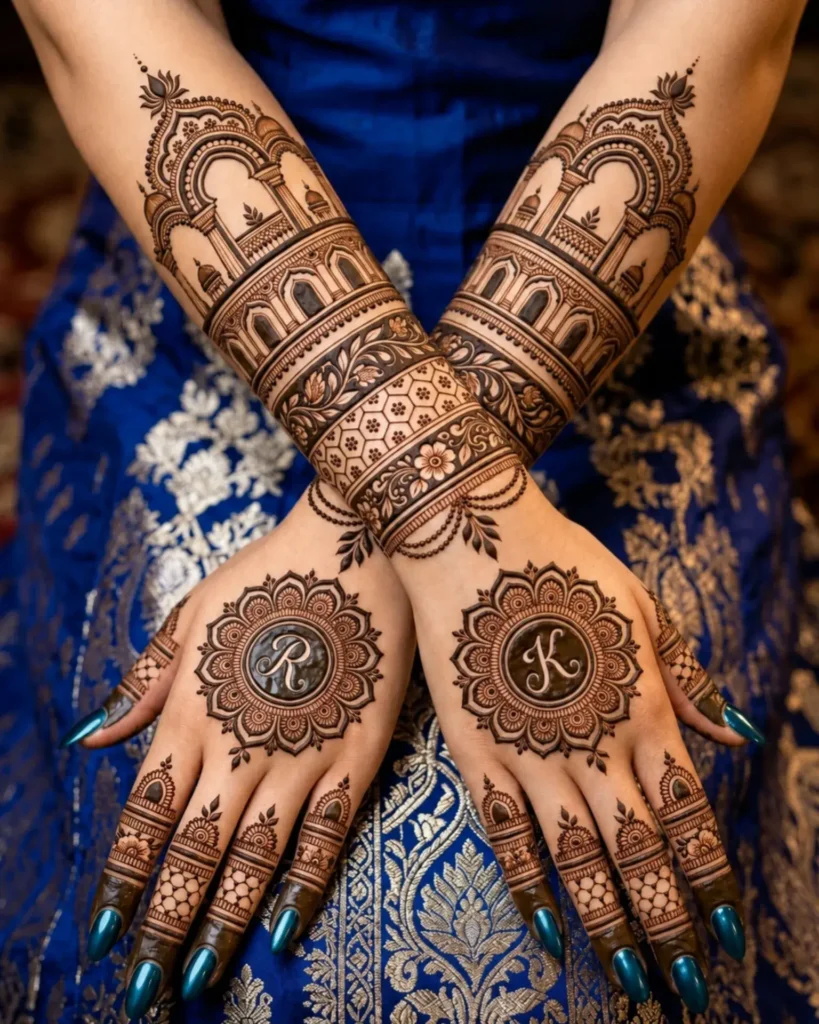
44. Eternal Vows (Couple Motif) Design
A small silhouette of the bride and groom, or two mirrored symbols representing them, sits within the larger design. This works best framed inside a small medallion or arch, similar to a Jharokha scene, so it reads as a focal point rather than a random addition.
Some brides carry the match down to the feet with a matching foot and leg mehndi design.
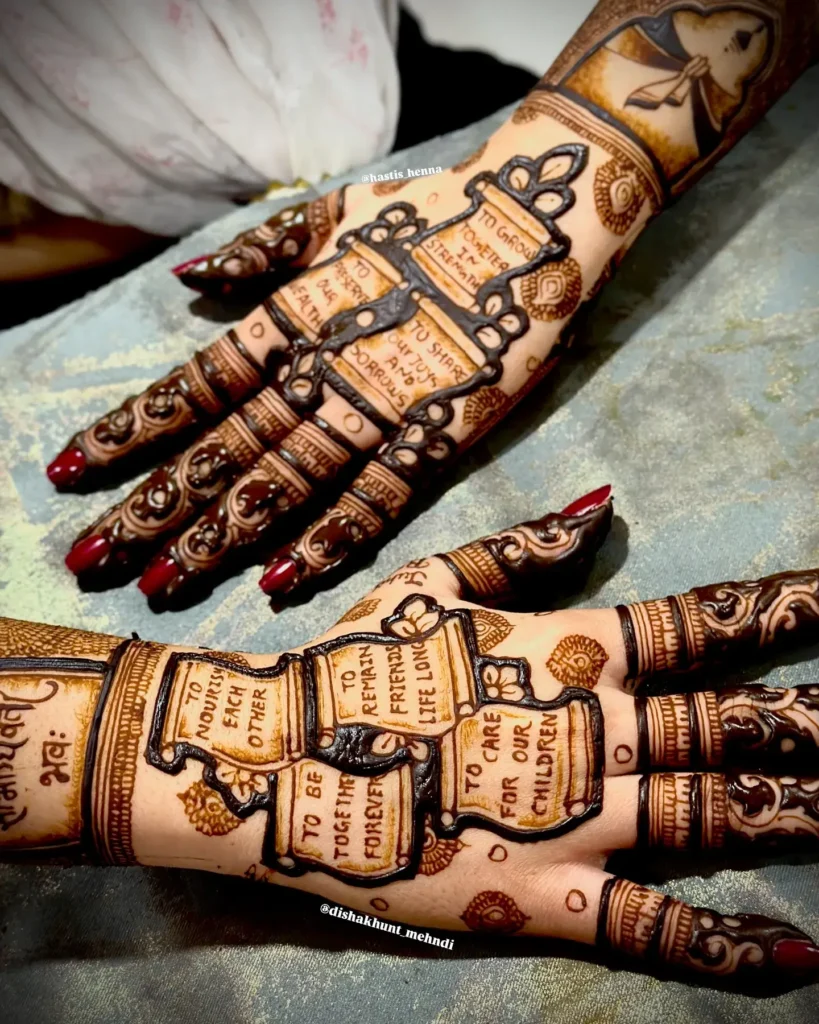
45. Zodiac and Symbol Design
A zodiac sign, birth flower, or personal lucky symbol is placed as a small standalone motif, usually near the wrist or on one finger. This gives a design personal meaning without changing the overall structure of the pattern around it.
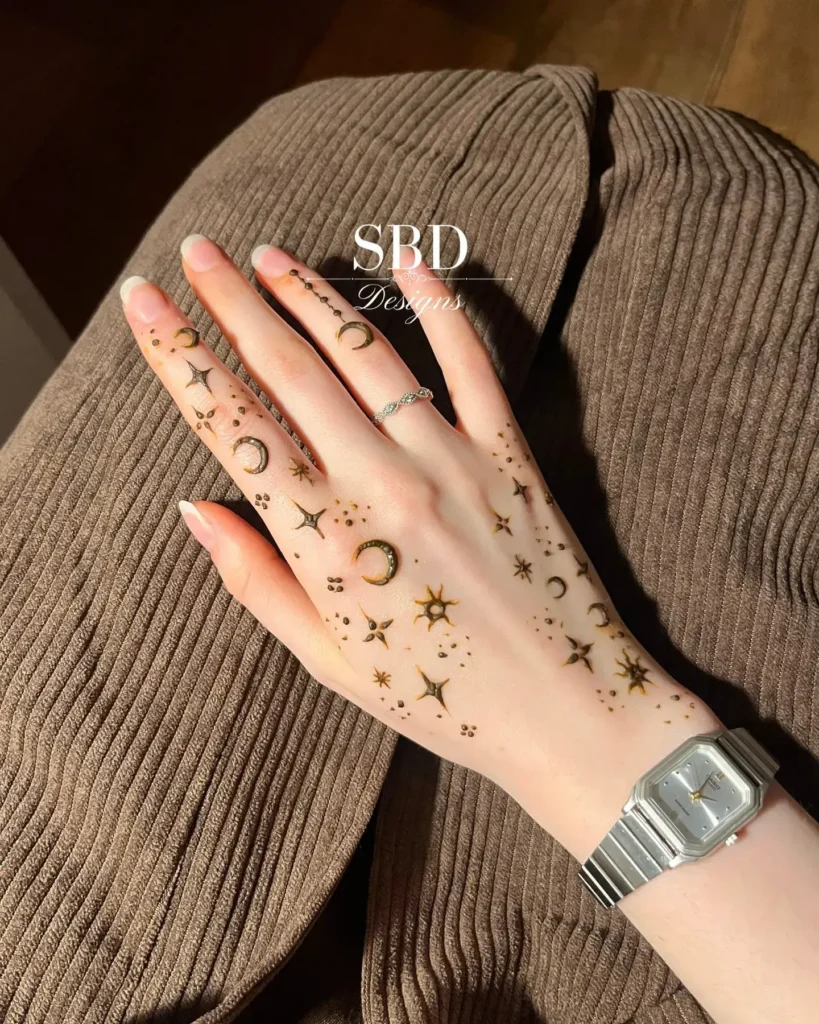
Finger-Focused and Placement-Specific Back Hand Mehndi Designs
These designs work by choosing where the pattern sits, not by a specific motif or origin. A single finger, a row of knuckles, or half the hand can carry the full design while the rest of the skin stays bare. This group covers placement approaches you can pair with any style already covered above.
46. One-Finger Design
The detail sits entirely on one finger, using rings, bands, or a small motif instead of a trail that connects to the wrist. This differs from a finger vine or trail design since the pattern stays contained to that single finger rather than extending outward.
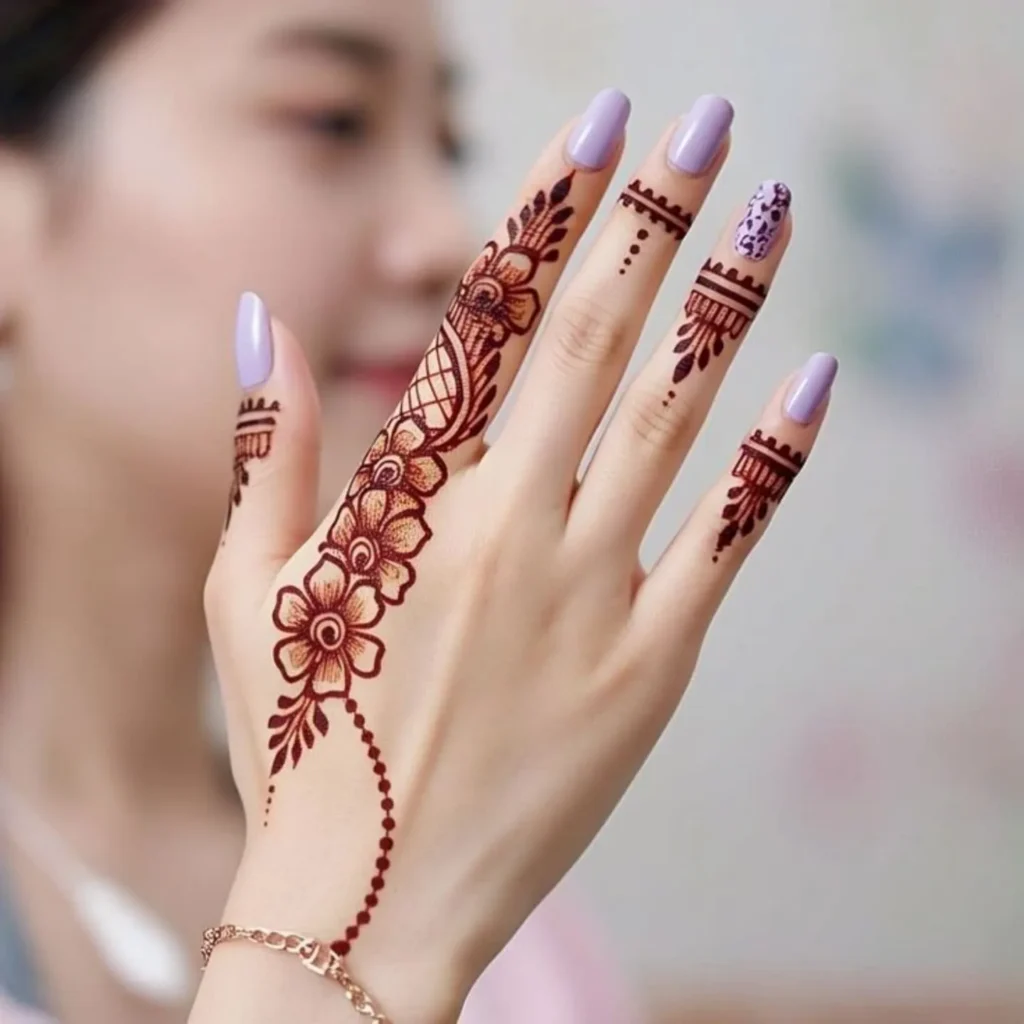
47. Finger-Only Trail Design
A line of small motifs, like dots or short leaves, runs along the length of one or two fingers without touching the rest of the hand. Unlike a wrist-to-finger bail, this pattern starts and ends on the finger itself.
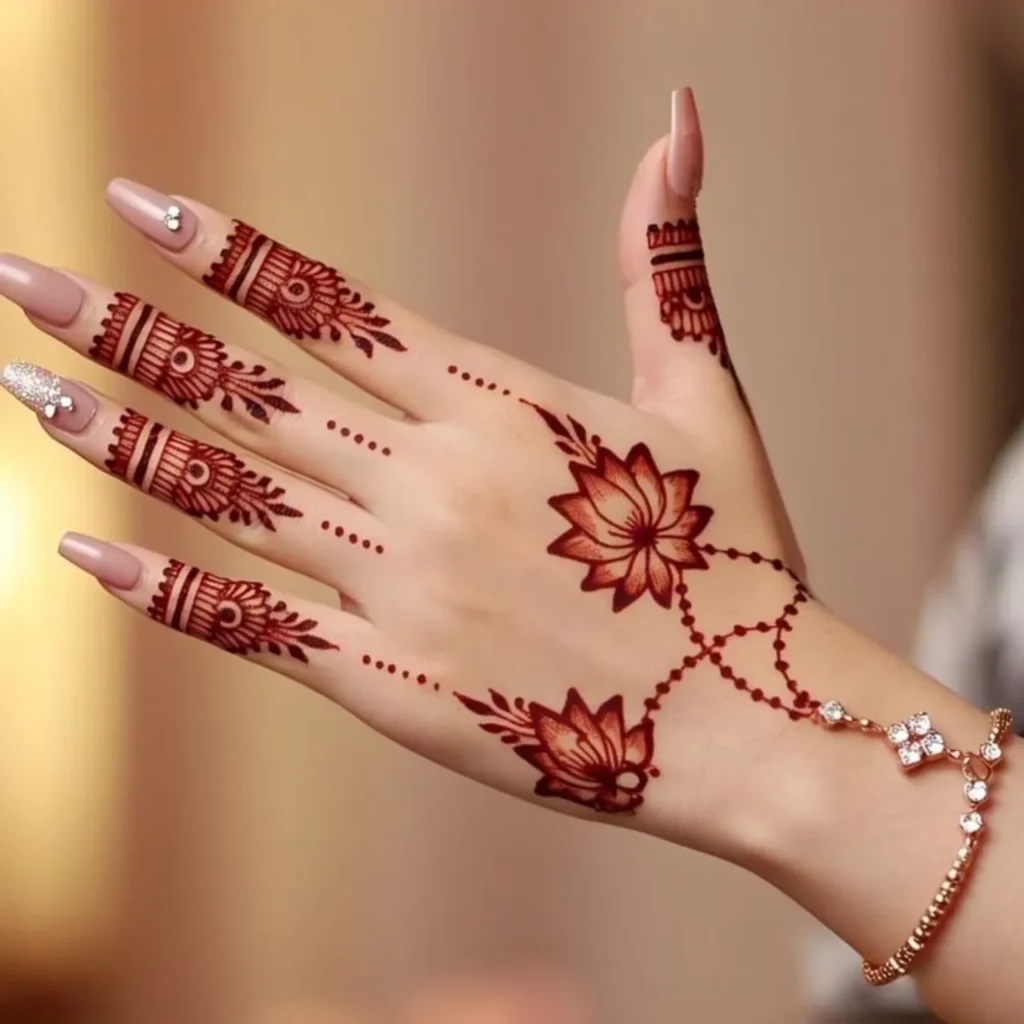
48. Half-Hand Design
Coverage stops at the midpoint of the hand, either the upper half near the fingers or the lower half near the wrist, leaving the other half bare. This works for anyone who wants a visible design without covering the full back of the hand.
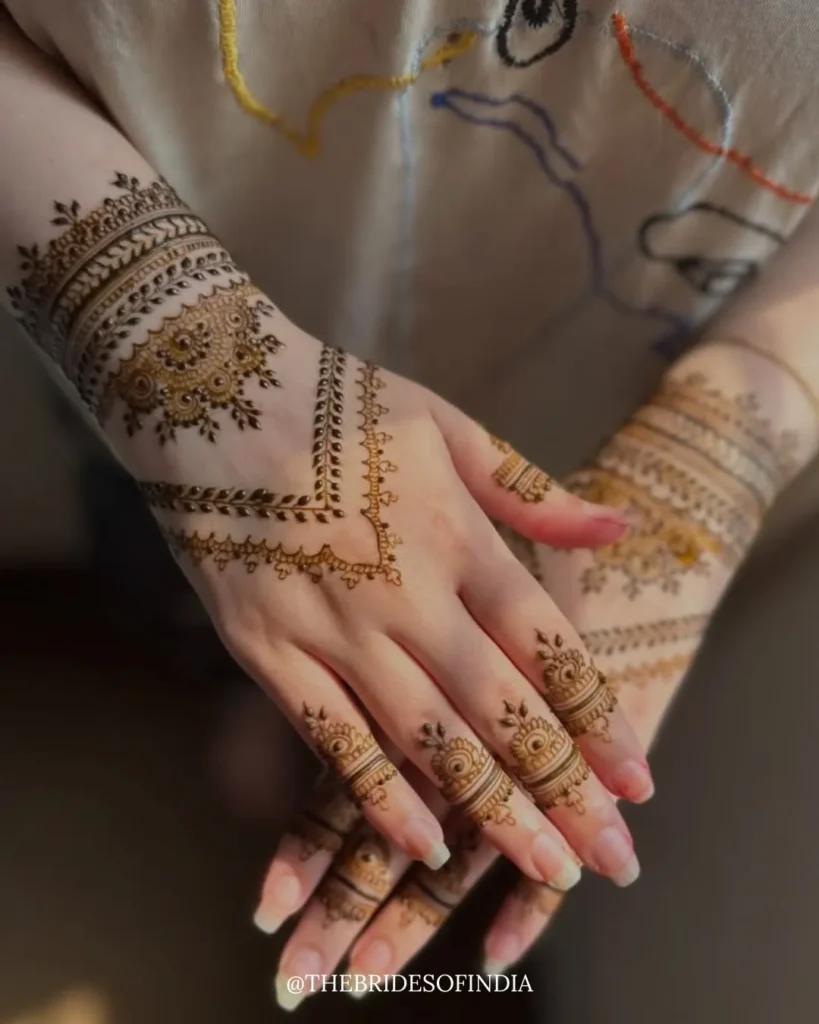
49. Mitten-Glove Design
The pattern wraps around all the fingers and knuckles like a glove, while the center of the hand stays mostly bare. This gives full-hand impact from the fingers alone without the time needed for complete coverage.
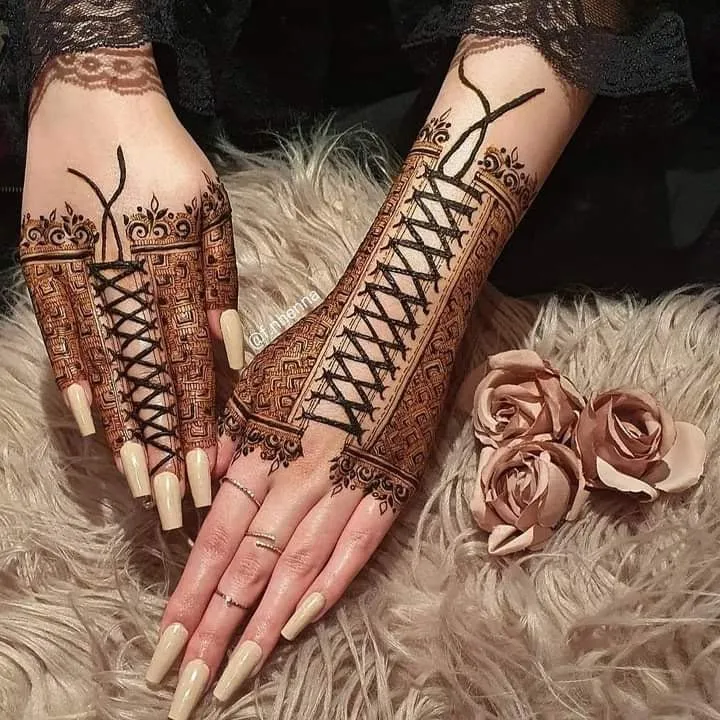
2026 Fusion Trend Mehndi Designs for Back Hand
These designs move away from traditional henna techniques, mixing in new materials or effects that gained traction on social media through 2025 and into 2026. They work as standalone styles or as an added finish on top of a more traditional pattern.
50. Ombre Henna Design
The stain fades gradually from a darker tone near the wrist to a lighter tone toward the fingers, or the reverse. This effect comes from layering henna paste at different thicknesses rather than a special dye, so it still uses natural henna.
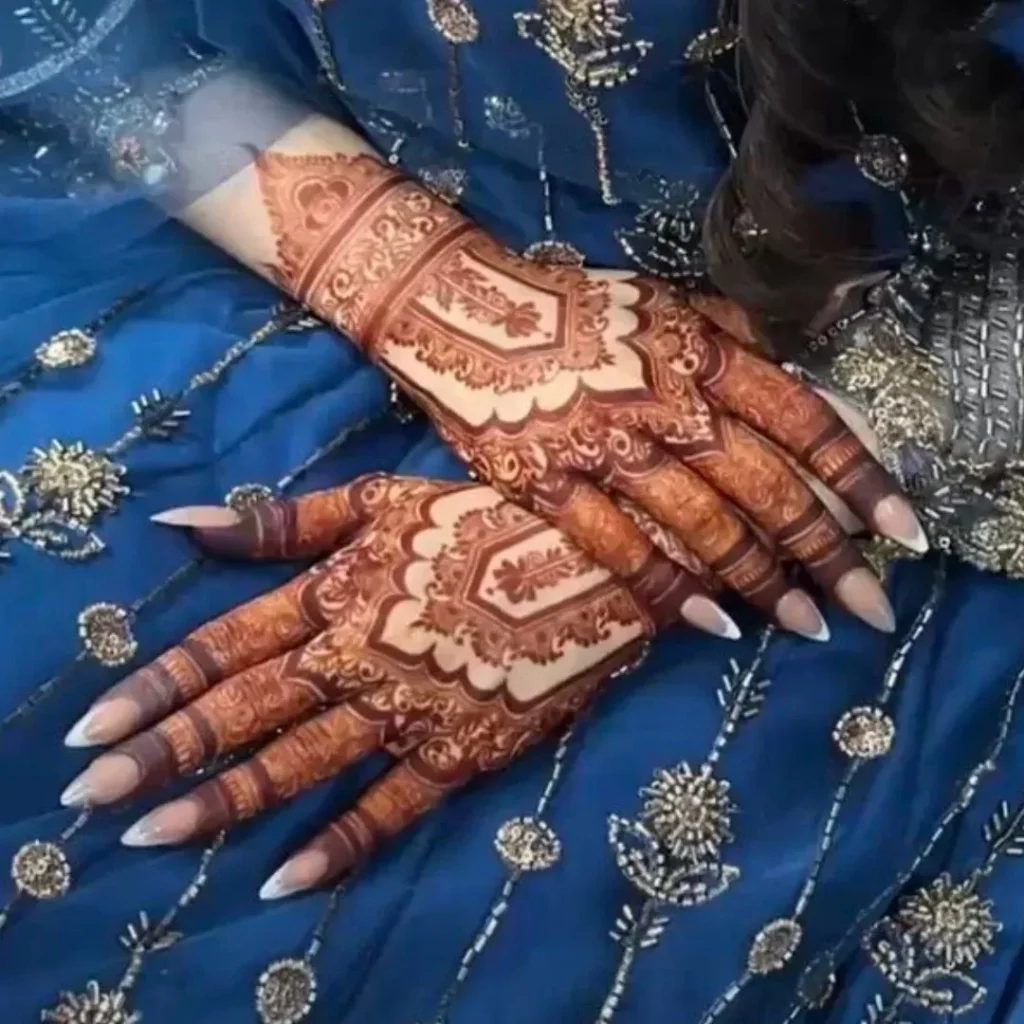
51. Glitter Mehndi Fusion Design
Cosmetic glitter is pressed onto the henna paste before it dries, or added over the finished stain with a skin-safe adhesive. This suits parties and festive events where the mehndi needs to stand out under lights.
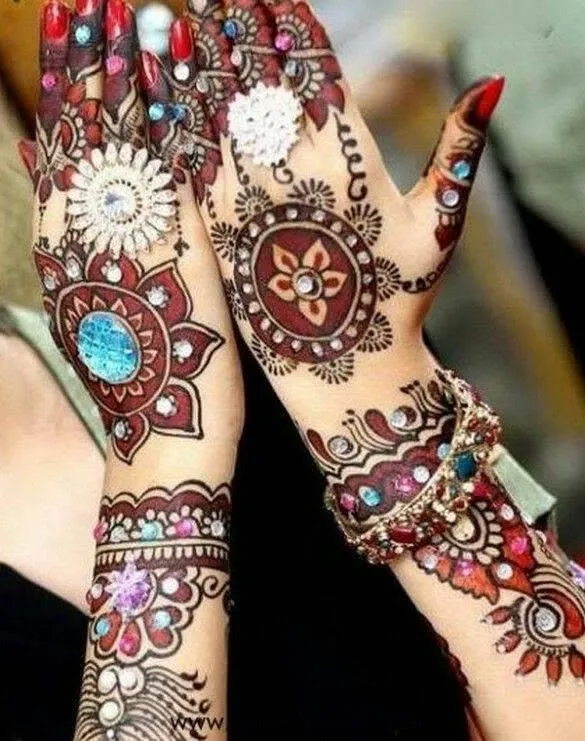
52. Tattoo-Style Mehndi Design
Bold, solid outlines mimic the look of a fine-line tattoo instead of traditional shaded or dotted henna work. This style skips fine detailing in favor of clean, graphic shapes that read clearly from a distance.
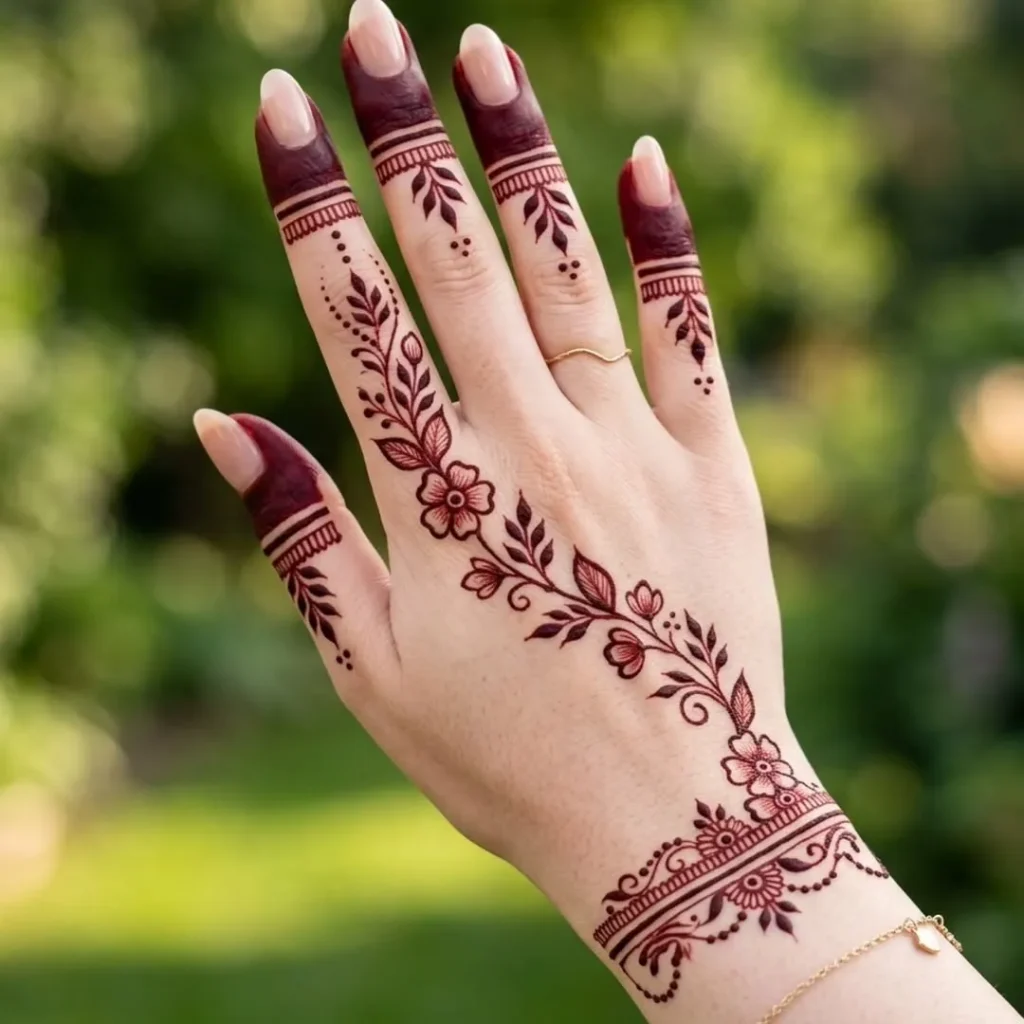
Back Hand Mehndi Designs by Occasion
The right design depends on the event. Bridal functions need dense, lasting coverage, while festive days need something that dries fast and still looks finished.
53. Bridal Back Hand Mehndi Design
Dense coverage with personal touches like hidden initials or dates. Layout leaves space near the wrist and fingers for jewelry. Both hands are usually planned to mirror each other.
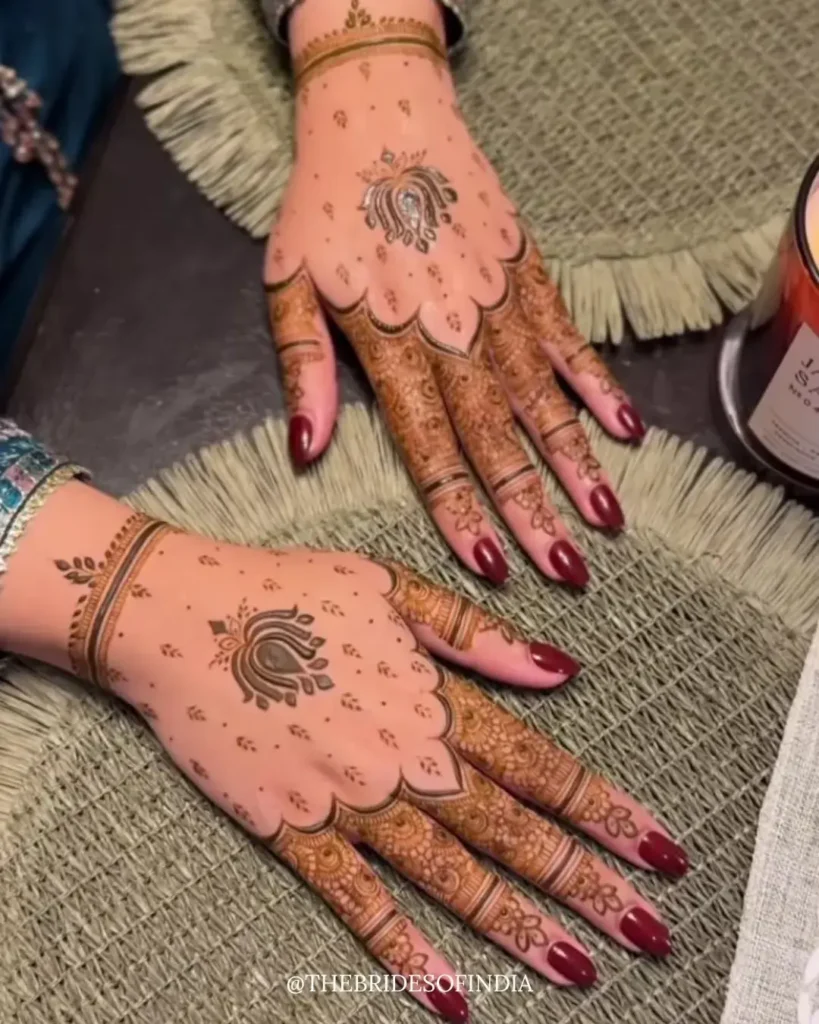
54. Engagement and Pre-Wedding Mehndi Design
Lighter coverage that keeps the ring and jewelry visible. Haath phool and semi-mandala styles work well, with a shorter application time.
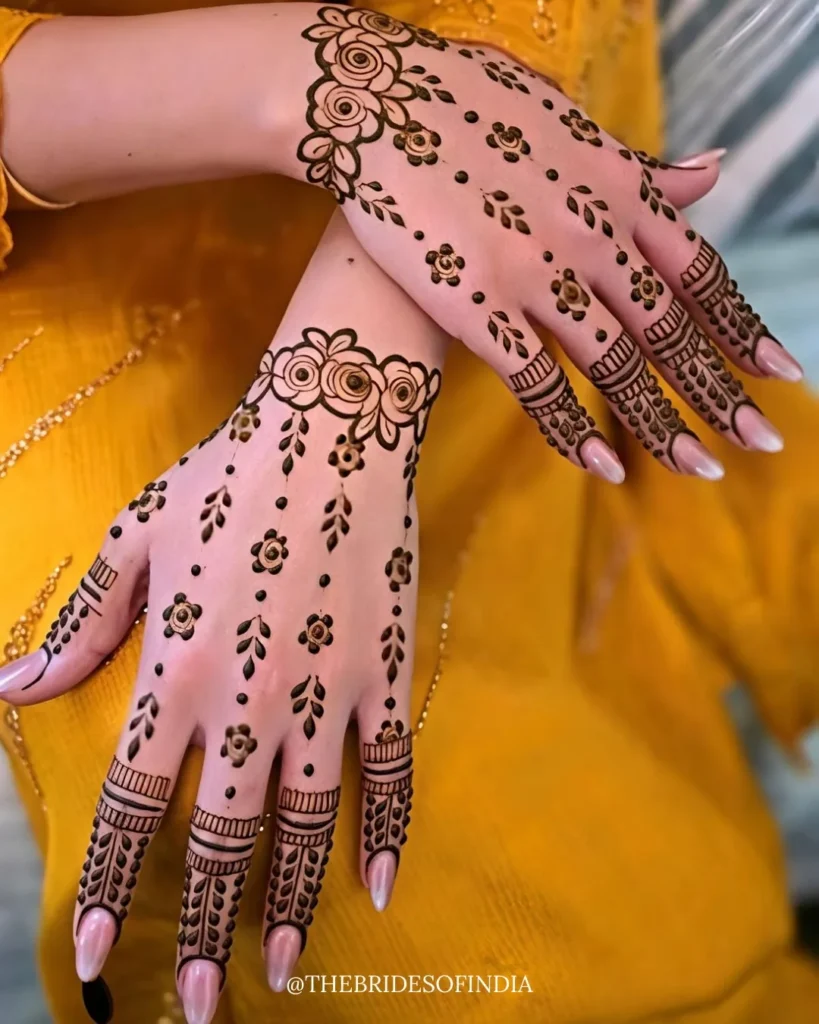
55. Eid, Diwali, Karwa Chauth, and Teej Mehndi Design
Medium-density designs like Arabic bails or floral clusters. Bold outlines matter more than fine detail, since fast drying fits the day’s schedule better.
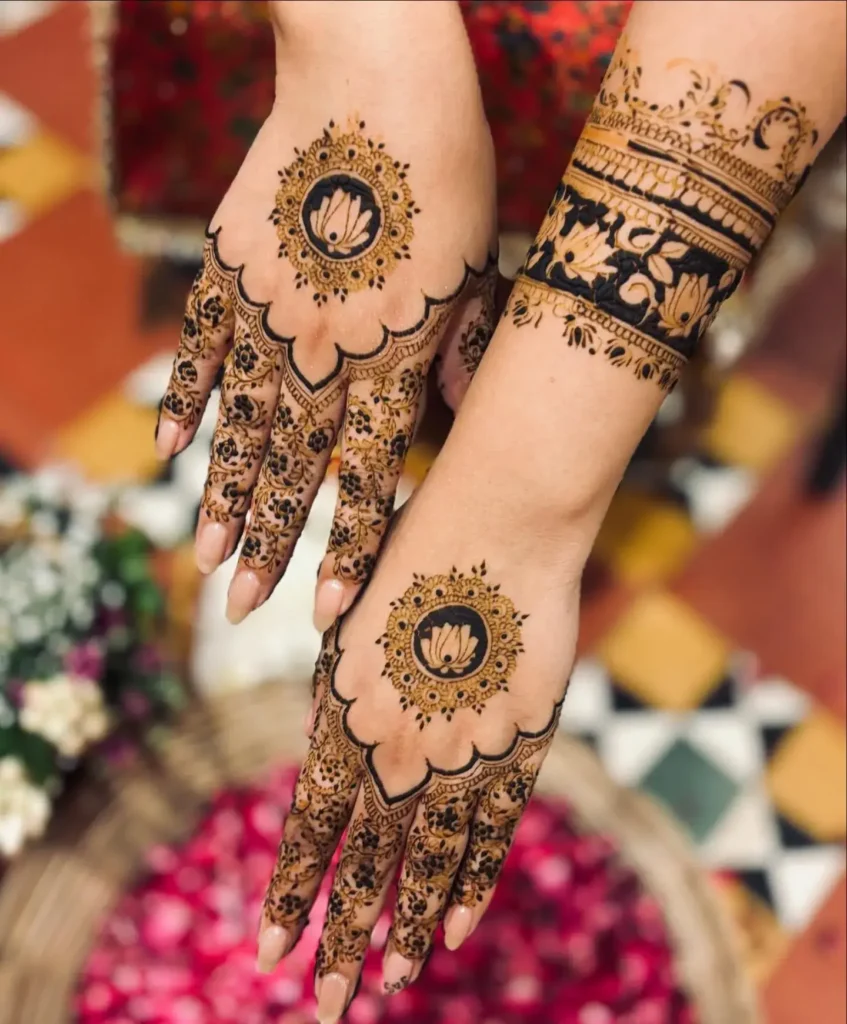
56. Raksha Bandhan Back Hand Mehndi Design
Light, quick designs suit a day packed with other rituals. Simple florals or Arabic trails give a festive look without a long sitting.
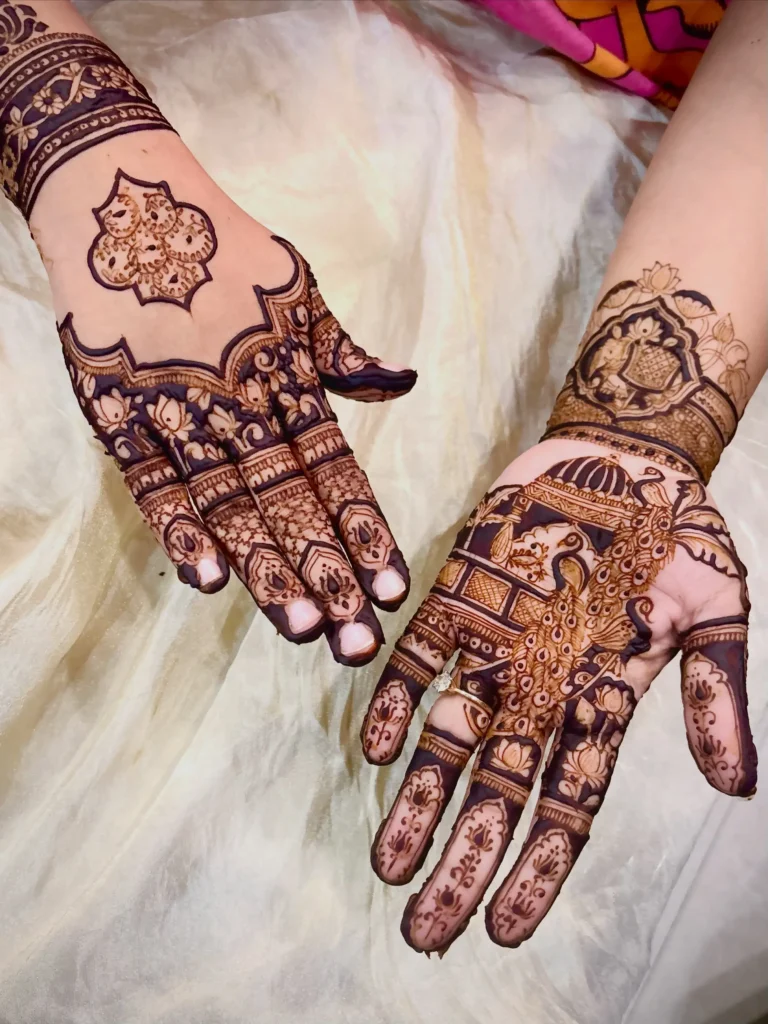
57. Bridesmaid Back Hand Mehndi Design
Sits between bridal and casual density. Often a smaller version of the bride’s design, like a lighter Bharwa panel or a single trail, to keep the bridal party coordinated.
| Occasion | Coverage Density | Application Time | Primary Goal |
| Bridal | 80 to 100 percent | 2.5 to 6 hours | Ceremonial impact, deep color, photo clarity |
| Engagement / Pre-Wedding | 40 to 60 percent | 45 to 90 minutes | Elegant look while keeping jewelry visible |
| Festive (Eid, Diwali, Teej) | 30 to 50 percent | 30 to 60 minutes | Fast application, festive styling, quick drying |
| Raksha Bandhan | 20 to 40 percent | 20 to 45 minutes | Quick, light coverage that fits a busy day |
| Bridesmaid | 40 to 60 percent | 45 to 90 minutes | Coordinated look without full bridal density |
Back Hand Mehndi Designs by Skill Level and Audience
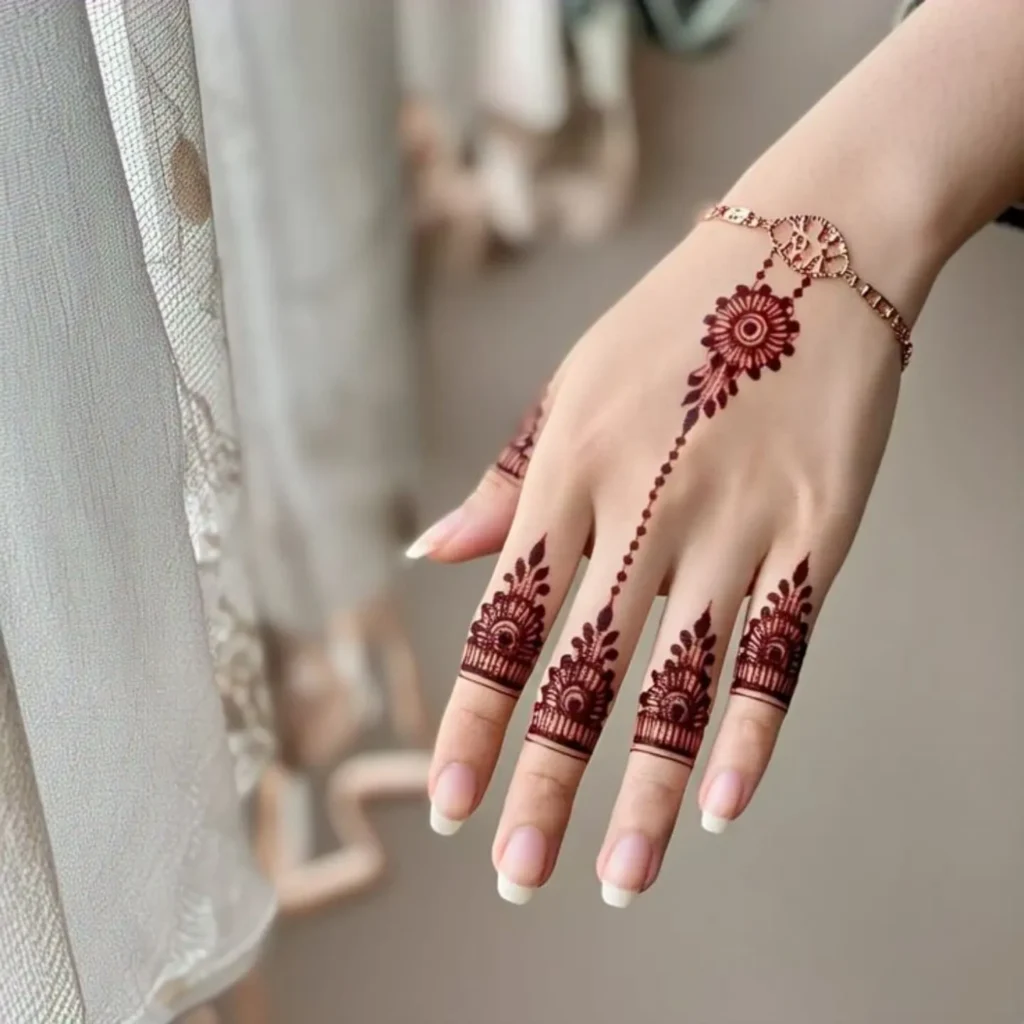
58. Simple and Easy Back Hand Mehndi Designs for Beginners
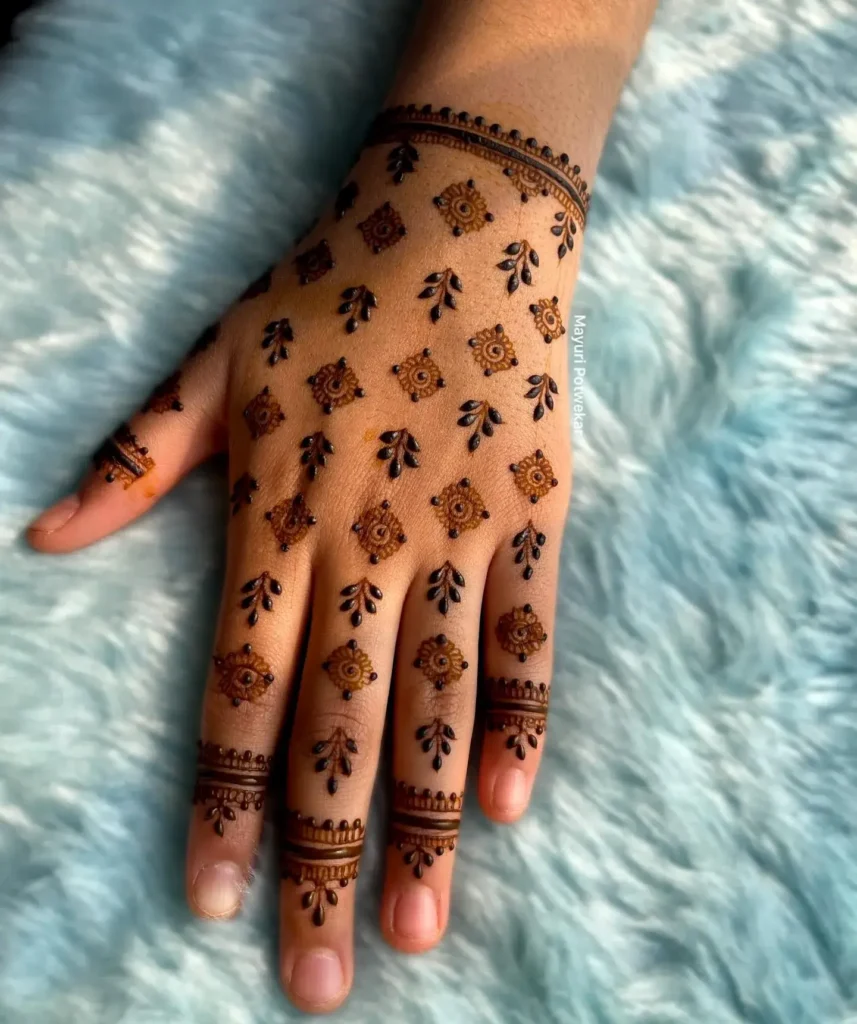
Dots, lines, circles, and single leaves form the base of most easy designs. A single vine trail or a small floral cluster near the wrist gives a finished look without needing precise control. These designs also dry fast and forgive small mistakes, making them the best starting point for anyone new to mehndi.
59. Back Hand Mehndi Designs for Kids
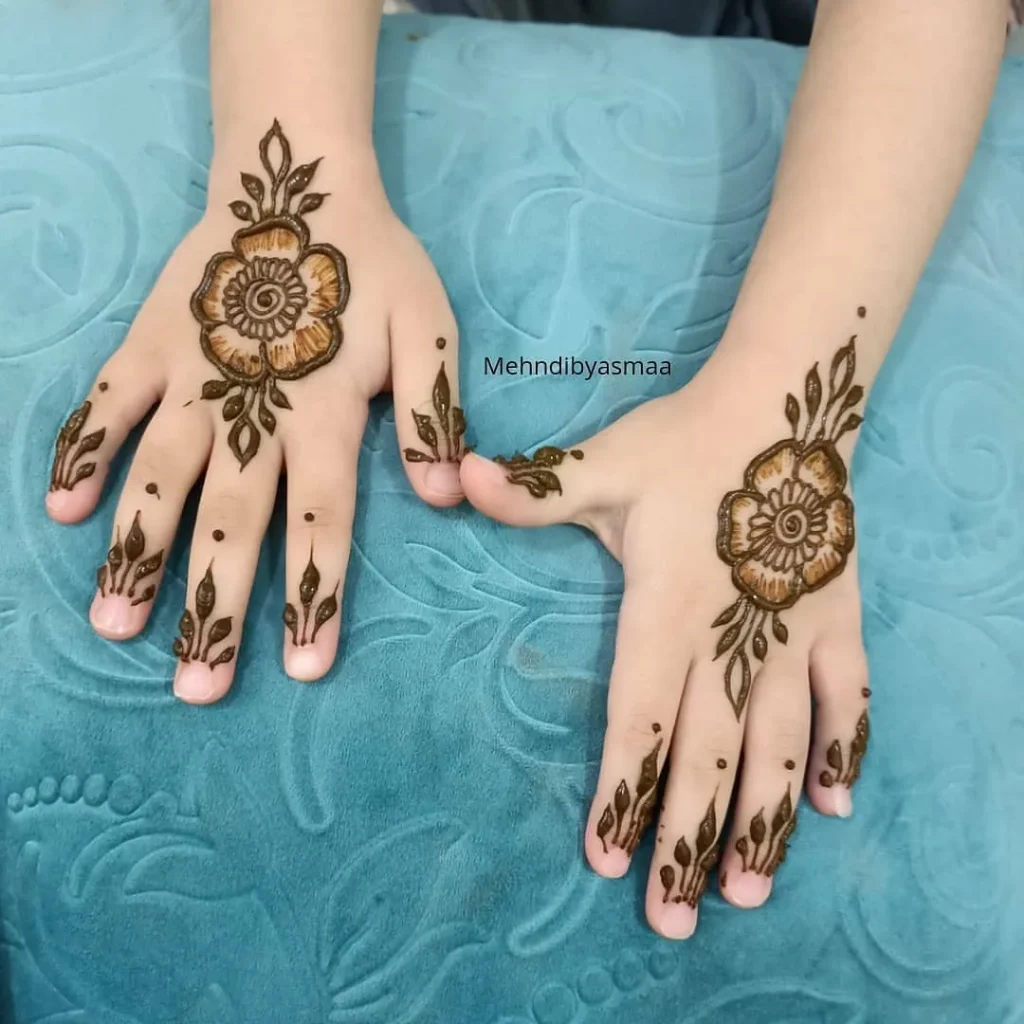
Kids’ designs stay small, simple, and fast to apply, usually a single flower, a few dots, or a short vine on one or two fingers. Short application time matters most here, since kids have less patience for sitting still.
60. Back Hand Mehndi Designs for Girls
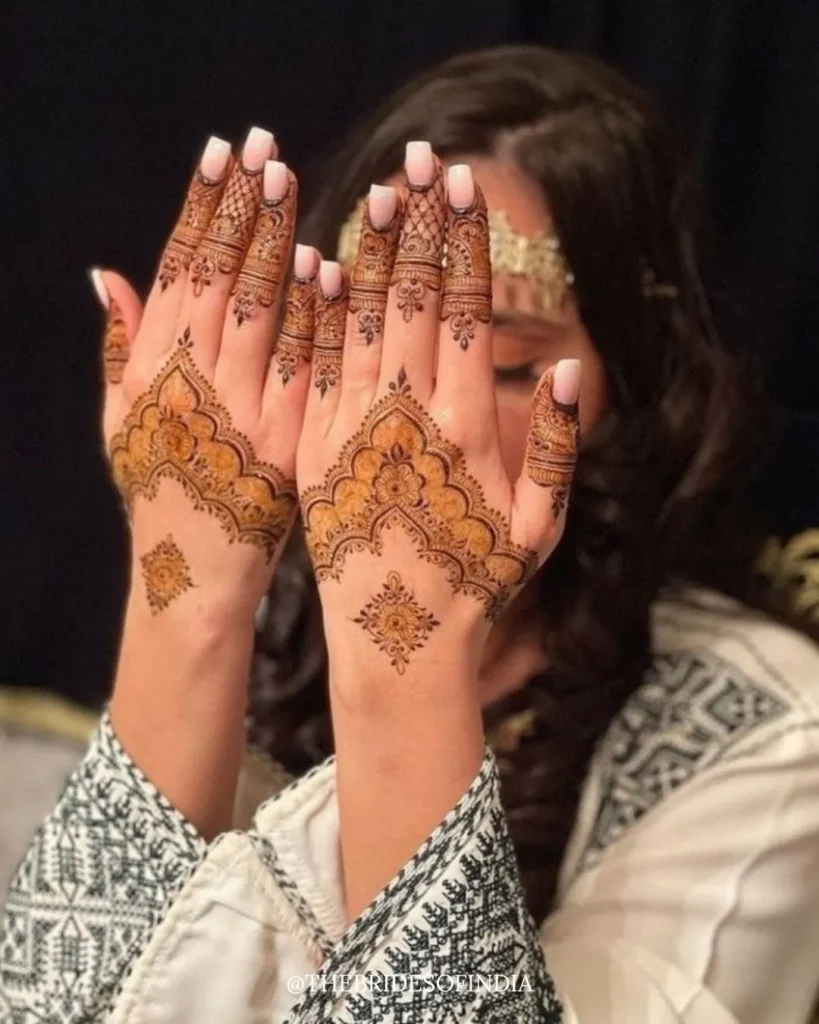
Girls often prefer designs that sit between kids’ simplicity and full bridal detail, like a floral cluster, a small mandala, or a light Arabic trail. These give a stylish look for parties or festivals without the time commitment of bridal coverage.
61. Back Hand Mehndi Designs for Grooms and Men
Mehndi is not limited to women. Grooms traditionally wear a small design on the palm or back of the hand, often just initials, a simple motif, or a thin band around one finger. This keeps the look understated while still following wedding tradition.
How to Choose Your Design: Understanding Hand Anatomy and Placement
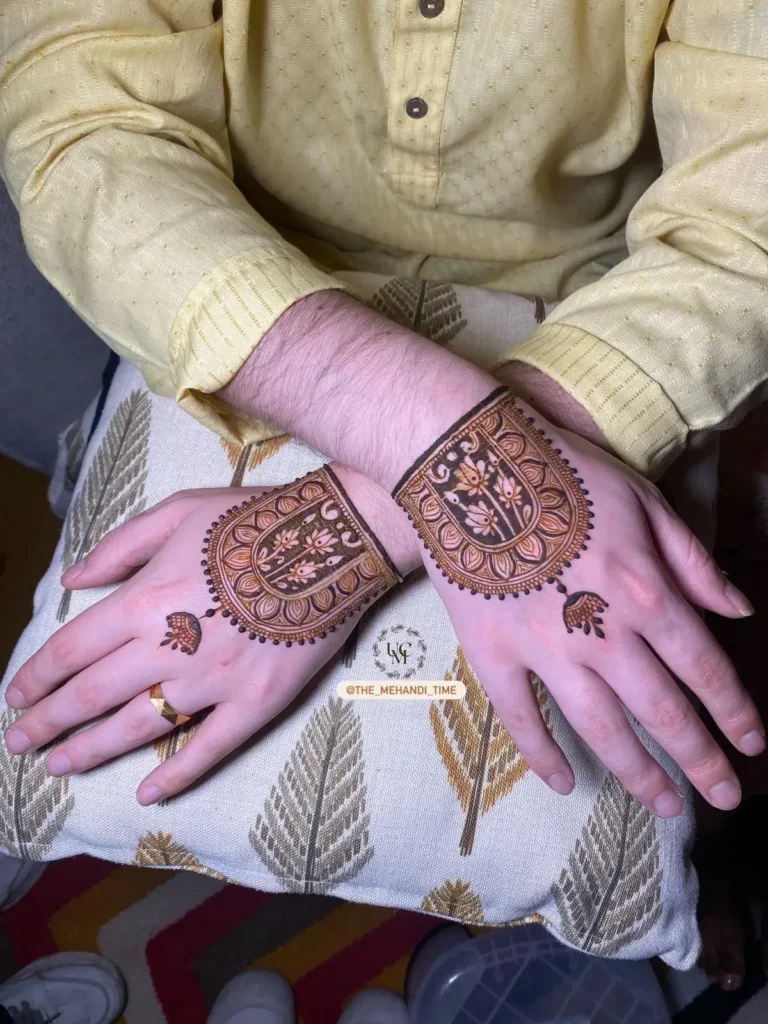
Every back hand design builds across three zones: the wrist, the main hand surface, and the fingers. Understanding how these work together makes it easier to pick a style that fits your hand.
The Wrist (Carpal Anchor): Setting the Design’s Base
The wrist acts as the visual base for the whole design, usually shaped as a cuff, a V-band, or a curve following the wrist bone. A well-defined wrist line grounds the pattern and gives it a clear starting point.
Takeaway: A narrow wrist suits a slim cuff or single-line band. A wider wrist can carry a fuller bracelet-style base, like the ones used in Haath Phool designs.
The Back of the Hand (Metacarpal Field): The Main Canvas
This flat area between the wrist and knuckles is the most visible part of the hand, and it carries the main design element, whether that is a mandala, a Jharokha frame, or a diagonal Arabic trail.
Takeaway: A smaller or narrower hand shows a single centered motif more clearly than a spread-out pattern. A larger hand has room for wider compositions like full mandalas or panel-style layouts without feeling crowded.
The Fingers (Phalangeal Accents): Finishing the Look
Fingers extend the design and tie it together. Detailing all five fingers unifies the look, while decorating only the middle or index finger draws the eye along the hand’s natural line.
Takeaway: Shorter fingers often look cleaner with simple bands or dots rather than detailed fingertip fills, which can appear cramped. Longer fingers have more room for chains, rings, or small motifs without looking crowded.
How to Apply Back Hand Mehndi: A Step-by-Step Guide
Preparing Your Skin Before Application
Wash your hands with soap and water, and skip any lotion, cream, or oil beforehand. These act as a barrier and stop the henna from absorbing properly. Soaking your hands in lukewarm water for a few minutes before you start also helps soften the skin.
Choosing and Testing Your Henna Cone
Snip a small piece off the cone’s tip and test the flow on a sheet of paper first. This shows you how much pressure to use before you start on your skin. Hold the cone like a pen, near the bottom, and squeeze gently with your thumb and index finger for steady control. Practice a few straight lines and small circles on paper before moving to your hand.
Step-by-Step Application for Beginners
- Clean your hands and let them dry completely.
- Test your cone’s flow on paper and adjust your grip.
- Start with the wrist line to anchor your design.
- Work outward across the back of the hand, building the main motif.
- Finish with the fingers last, since they are easiest to smudge.
- Let the design air-dry undisturbed for at least 20 to 30 minutes before touching anything.
Common Mistakes to Avoid
- Applying lotion or oil before the design, which blocks absorption
- Rushing the cone test and starting with an uneven flow
- Drawing over knuckles while the hand is clenched, which cracks the paste
- Blow-drying or fanning the design, which can smudge fine lines
- Touching the paste before it fully sets
How to Get a Darker, Longer-Lasting Mehndi Stain
Why Back Hand Mehndi Stains Lighter Than Palm Mehndi
Henna’s color comes from lawsone, a dye that binds to skin protein. Palms have thicker skin and absorb more dye, so they stain darker. The back of the hand has thinner skin, so it absorbs less and stains lighter, even with the same paste.
Post-Application Care: The First 12 Hours
Leave the paste on as long as possible, ideally overnight. Avoid water and lotion during this time, and cover your hands loosely so the paste does not flake off early.
What Actually Works to Darken Mehndi (and Why)
A lemon-sugar mix keeps the dye easier to absorb and helps the paste stick longer. Warm clove steam raises skin temperature slightly, which speeds up dye binding. Both work by extending contact time, not through any special ingredient.
How Long Does Back Hand Mehndi Last?
Most back hand mehndi lasts one to two weeks, fading as the skin sheds naturally. Since it starts lighter than palm mehndi, it often fades within 10 to 14 days depending on washing and hand sanitizer use.
Conclusion
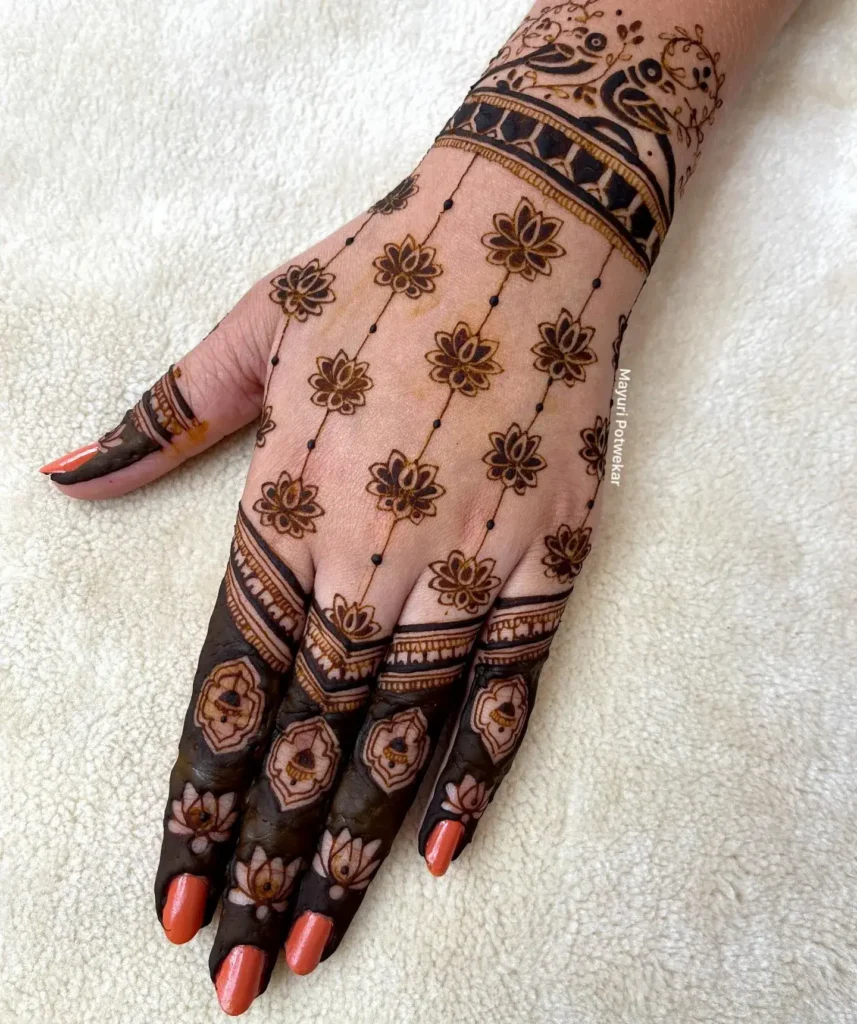
Back hand mehndi is a placement, not a single style. The right design depends on your occasion, your skill level, and the shape of your hand, not just what looks good in a photo.
If you are trying this for the first time, start with a simple mehndi design like a single vine or a small floral cluster before moving to denser styles like Bharwa or Jharokha. Getting comfortable with the basics first makes every design after it easier to apply well.
Frequently Asked Questions
Which mehndi design is best for the back hand?
There is no single best design; it depends on the occasion and how much time you have. Arabic and minimalist styles work well for quick, everyday wear. Bharwa and Jharokha suit bridal functions where you want dense, detailed coverage.
Why do girls love mehndi so much?
Mehndi is tied to celebration, tradition, and self-expression. It marks festive occasions like weddings and Eid, and the temporary nature lets people try bold, detailed designs without any long-term commitment.
Is back hand mehndi more or less painful than palm mehndi?
Mehndi application does not hurt on either placement, since the paste sits on top of the skin rather than breaking it. Some people find the back of the hand slightly more sensitive due to thinner skin, but this is minor and not true pain.
What’s the difference between mehndi and henna?
Henna is the plant, Lawsonia inermis, and its powdered leaves. Mehndi is the paste made from that powder and the art of applying it to skin. In everyday use, most people use both words to mean the same thing.
